Green Lab Project

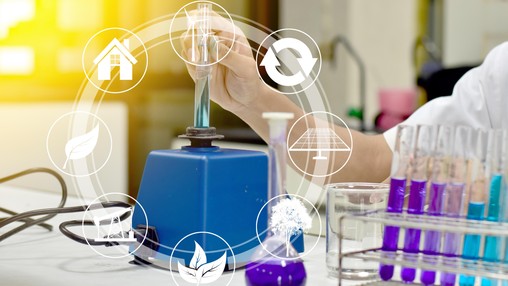
The School of Life Sciences seeks to calculate and reduce CO2 emissions from its laboratories while preserving the quality of research projects.

The Green Lab project is an ambitious project to make our laboratories more sustainable. We evaluate a wide range of criteria in order to understand the activities and needs of our laboratories. Thus, we deploy solutions adapted to the realities of research and of our scientists to reduce their environmental impact.

The objectives of the project are the following:

  • Raise awareness on the issue of CO2 emissions using a holistic and quantified approach,
  • Create a community of researchers who are advocates for green labs,
  • Evaluate CO2 emission sources in laboratories with the aim of reducing them,
  • Continue the development of our carbon accounting methodology and potentially extend it to the other schools at EPFL,
  • Encourage and implement projects for the reuse and recycling of scientific materials.

Green Academy

Did you check our next event?

As part of this project, the Zero Emission Group association presented the “Carbon accounting” project to Act For Change Lab.

Eight student members of this student association, stemming from various EPFL schools and academic levels, were trained by Quantis, the company that carried out EPFL’s annual CO2 assessment. In collaboration with Quantis, the group worked with two Pilot Labs, the Laboratory of Cell and Membrane Biology and the Segmentation Timing and Dynamics Laboratory.

Both laboratories obtained similar results:

  • 50% of emissions are due to professional flights
  • 20% are due to electricity consumption
  • About 17% arise from consumer goods
  • The remaining emissions are due to heating and commuting.

These results have been summarised in an executive summary, which includes ideas for further methodological improvement as well as guidelines for sustainable laboratory practices.

The full report is also available and contains our detailed methodology and interpretations.

As a continuation of the project with Act 4 Change Lab, the Center of PhenoGenomics was the subject of a life cycle assessment (LCA), conducted by Zero Emission Group. We evaluated the impact of housing the mice as well as the impact of the dedicated cleaning facility.

CO2 emissions decreased by 13% between 2012 and 2019 due to two factors:

  • The increase in operational efficiency;
  • The decrease in the number of mice housed in the facility.

The results of this LCA have been synthesized in an executive summary.

The Histology Core Facility installed a recycling machine for ethanol on their premises. Quantis helped us estimate the environmental benefits of this new installation. The study identified that the recycling of this solvent allows the core facility to save about 150 kg of CO2 emissions per year

For more information, please refer to the report.

In our efforts to reduce the environmental impact of the School, it is essential to integrate the electrical consumption of the laboratories. Refrigerators (+4°C) and freezers (-20°C and -80°C), which are heavily used by out scientists, are among the main contributors to this consumption.

The SV Sustainability Office has therefore carried out a carbon assessment of these refrigerators and freezers, in order to have a better understanding of the climate impact and subsequently deploy appropriate and concrete measures to reduce CO2 emissions.

This assessment has brought to light several points:

  • -80°C Freezers carry the highest environmental impact.
  • It is sometimes wiser to replace old equipment, which becomes more energy-consuming as it ages.
  • For some applications, a temperature of -70°C is acceptable, which considerably reduces the consumption of -80°C freezers and thus the CO2 emissions.

The complete study can be viewed online. If you have any questions, John Blanc will be happy to address them!

To help our community of scientists integrate more sustainable practices into their daily routines, we offer this green labs handbook for more sustainable laboratories.

Contact us

Questions or suggestions? write to us!

Project manager:
Joan Suris
[email protected]

How to find us

EPFL SV-DO
SV 3811 (Bâtiment SV)
Station 19
CH-1015 Lausanne