News and Events

Memento

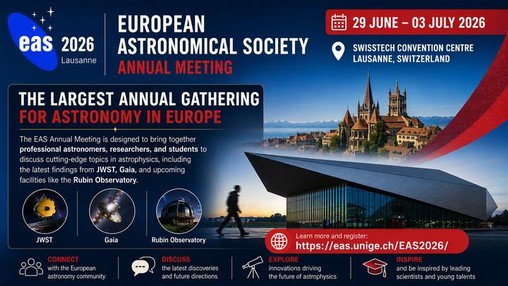
European Astronomical Society (EAS) Annual Meeting

 29.06.202603.07.2026   09:0018:30

Speaker: See programme: https://eas.unige.ch/EAS2026/program.jsp 
Location:  SwissTech Convention Center
Category: Conferences – Seminars
Target audience: Informed public

NGC 602 (Webb image)

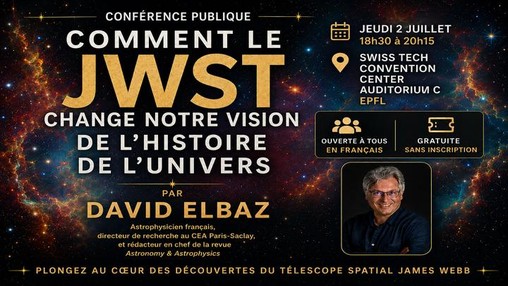
Comment le JWST change notre vision de l'histoire de l'univers

 02.07.2026   18:3020:15

Speaker: David Elbaz est un astrophysicien français, directeur de recherche au CEA Paris-Saclay, et rédacteur en chef de la revue Astronomy & Astrophysics, principal journal européen d’astrophysique. Il a également exercé les fonctions de conseiller scientifique auprès de l’Agence spatiale européenne. Il est internationalement reconnu pour ses travaux pionniers sur l’Univers jeune, notamment pour l’obtention de certaines des images astronomiques les plus profondes jamais réalisées, permettant de retracer la formation des galaxies au cours du temps cosmique. Ses contributions ont été distinguées par le Prix Jaffé de l’Académie des sciences (2017) et le Prix Chrétien de l’American Astronomical Society (2000). Classé en 2020 parmi les 1 % de chercheurs les plus cités au monde (Clarivate Analytics), il a été élu membre de l’Academia Europaea en 2019, et est membre actif des sociétés savantes française et européenne en astronomie (SF2A, EAS). Très impliqué dans la médiation scientifique, il conçoit des spectacles originaux mêlant sciences et arts, tels que Dans les étoiles (seul-en-scène joué au théâtre de la Gaîté-Montparnasse à Paris), Magicosmologie, Jonglerie Astrale ou encore La Danse des Galaxies. Il est également auteur de plusieurs ouvrages de vulgarisation, et intervient régulièrement en conférences, documentaires et émissions de radio. Il est co-auteur de la série Web-TV Origines, un conte de la lumière pour la chaîne Arte. 
Location:  SwissTech Convention Center – Auditorium C
Category: Conferences – Seminars
Target audience: General public

See all events

Latest news

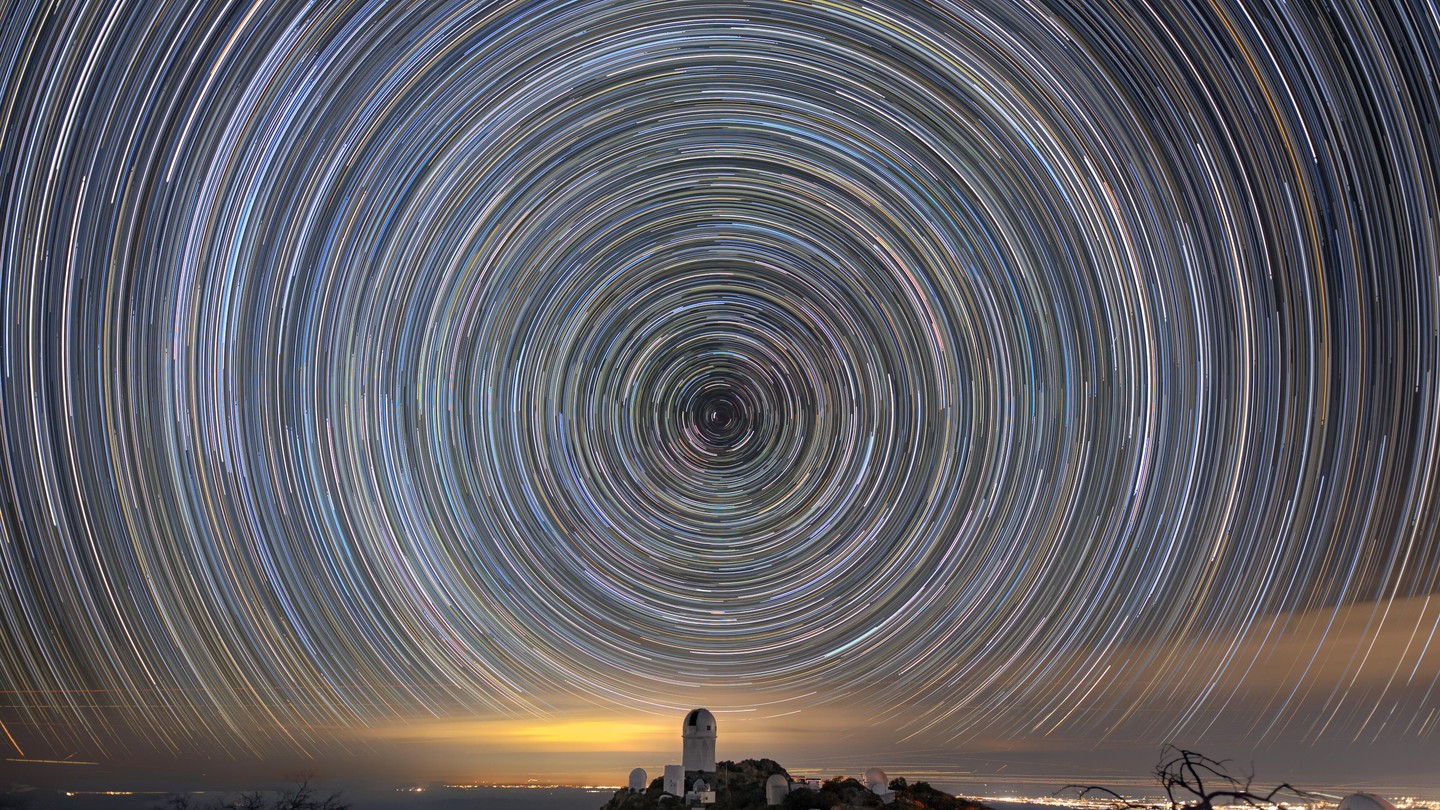
© Star trails over the Mayall Telescope that houses DESI. Credit: Luke Tyas/Berkeley Lab and KPNO/NOIRLab/NSF/AURA

EPFL helps complete the largest 3D map of the universe ever made

— The Dark Energy Spectroscopic Instrument has completed its five-year mission to map more than 47-million galaxies and quasars.

© 2025 EPFL

Launch of EU-funded project ODISSEE

— Launch of EU-funded project ODISSEE: Using AI to cope with data deluge from SKAO and CERN's HL-LHC and lead the ground breaking work needed in the quest for dark matter The ODISSEE project, funded by the European Union, aims to develop innovative technologies and methodologies to process the unprecedented volume of scientific data produced by research infrastructures such as CERN's HL-LHC and SKAO. It notably plans to develop on-the-fly AI data processing, which is a major challenge in research in the physical sciences, and where the contribution of SLICES RI will be decisive. Coordinated by Damien Gratadour, researcher at the CNRS Laboratory for Instrumentation and Research in Astrophysics (CNRS/Observatoire de Paris-PSL/Sorbonne Université/Université Paris Cité), ODISSEE is leveraging the European HPC ecosystem to open up a new era in science, helping to unravel fundamental mysteries such as the nature of dark matter.

© 2024 EPFL

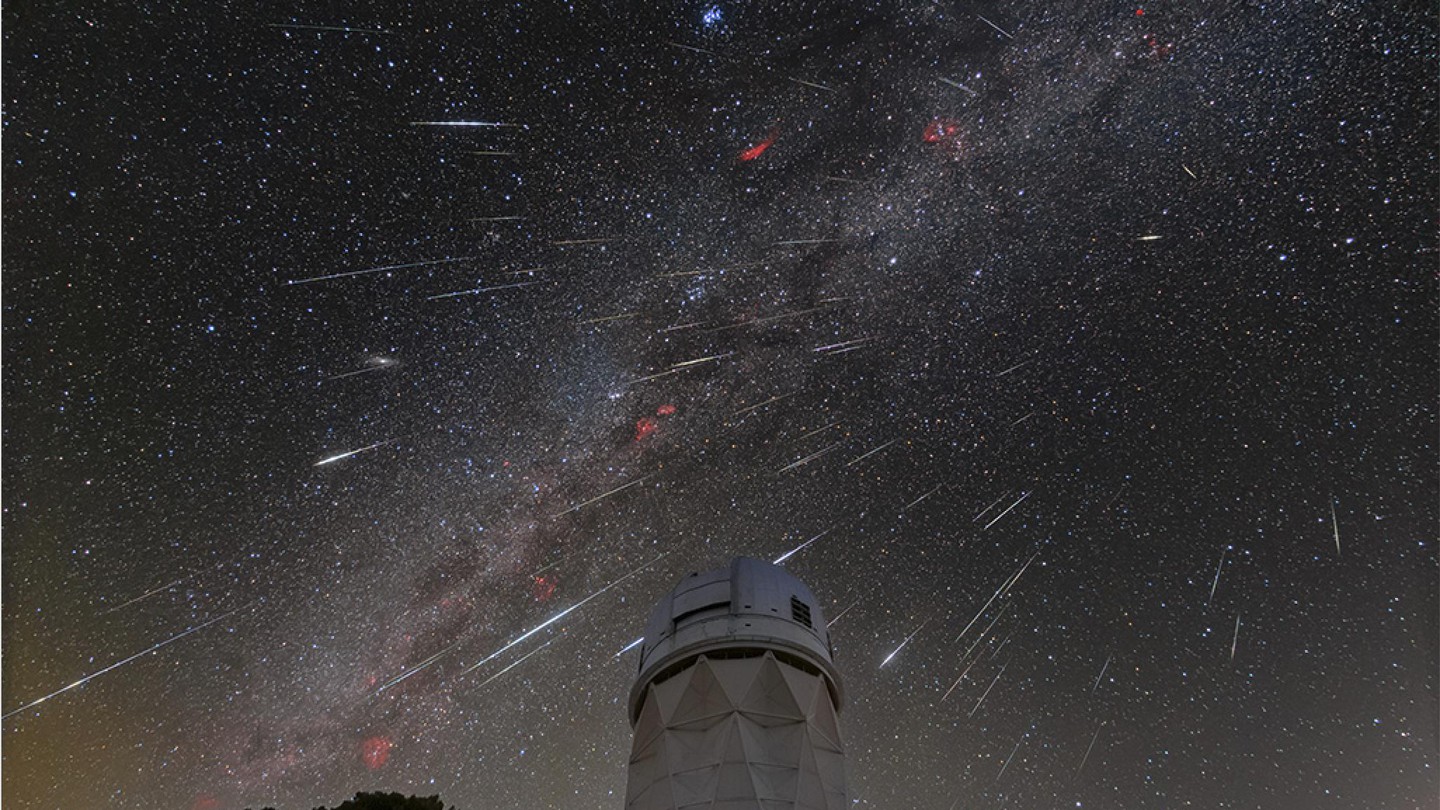
New cosmic research results confirm Einstein's Theory of Gravity

— The Dark Energy Spectroscopic Instrument is a large-scale astronomical survey designed to map the universe in three dimensions, aiming to deepen our understanding of the cosmos, particularly focusing on dark energy and gravity at cosmological scales. In its first year of data collection, DESI hs mapped nearly 6 million galaxies across 11 billion years of cosmic history. These observations confirm Einstein's theory of general relativity on cosmological scales with greater precision than in the past twenty years.

© 2024 EPFL

Purchase credit cards – SDG2 switch to Demat invoice system

— New purchasing credit card for processing monthly statements via Sesame.

© 2023 EPFL

Picture the Universe: CSCS and PASC project supports future SKA

— The Square Kilometre Array Observatory is scheduled for completion by 2030. Once operational, it will generate 600 petabytes of astronomical data per year. Scientists in Switzerland are working diligently to develop part of the supercomputing infrastructure and software that will process this enormous amount of data efficiently. CSCS is lending its expertise from many years of experience in handling large amounts of data, while a project financed by the PASC initiative and led by EPFL researchers is increasing the efficiency of the data processing software.

All news