
Work equipment can present various hazards such as mechanical, electrical and chemical. It is essential that operators are fully informed about the specific risks associated with work equipment and receive thorough training to ensure its safe and correct use.
The legal framework is based on the Ordinance on the Prevention of Accidents and Occupational Diseases (OPA), the Product Safety Act (LSPro), the CFST Directive 6512 “Work Equipment”, and the Ordinance on the Safety of Machinery (OMach; RS 819.14), which incorporates into Swiss law the provisions of the European Machinery Directive 2006/42/EC.
Responsibilities: as defined in EPFL LEX 1.5.1 (Article 12), the head of unit ensures compliance with occupational health and safety rules within their team, and approves the purchase, the use and the installation of work equipment in laboratories or workshops.
Work equipment: work equipment refers to machines, installations, devices, and tools used at work. This definition also includes items that are not directly used for performing work tasks but are part of the work environment (such as ventilation, heating, lighting, etc.), as well as personal protective equipment (PPE).
Standard: set of rules or specifications established to ensure safety and minimize risks, with SN, EN, and ISO representing national (Swiss – SN), European (EN), and international (ISO) bodies responsible for developing these standards to guarantee product safety and quality.
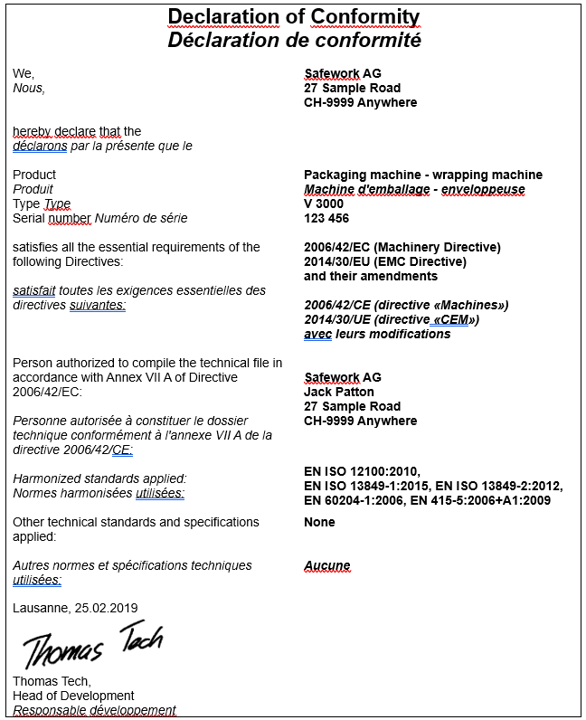
Declaration of conformity: document issued by the manufacturer certifying that the work equipment (including personal protective equipment – PPE) complies with the applicable legal safety requirements (European, Swiss, etc.) and the relevant safety standards.
Example of declaration of conformity :
CE certification: it stands for “Conformité Européenne” – European Conformity – and it certifies that the product complies with the essential safety, health and environmental protection requirements defined by European Union legislation. This usually involves the intervention of a third party notified certification body. The CE marking allows a product to be placed on the European Union market regardless of its country of manufacture.
European conformity and China Export: the CE logo for compliance with European Union legal requirements and safety standards is very similar to the China Export logo, which does not represent any form of official certification or compliance with European Union requirements and standards.

In case of doubt, the declaration of conformity specifies the legislation and standards with which the work equipment complies. The declaration of conformity, as well as the CE (European Conformity) certificate of conformity, must be made available by the manufacturer and are generally included in the equipment’s user manual or provided as an annex.
- What function must the work equipment fulfill?
- Where is the installation to be located (evacuation routes, logistics paths, ground resistance)?
- How is the installation to be set up and used?
- How should maintenance and repairs be carried out?
- What is the noise (sound emissions) and vibration level of the work equipment?
- Is the equipment explosion-proof?
- Is the equipment intended to operate in a potentially explosive atmosphere?
- Are any harmful substances released?
- Is specific training required for the use of this equipment?
- Is the use of personal protective equipment (PPE) required during operation?
The safety of work equipment begins with the purchasing process. All equipment installed in a laboratory or workshop must comply with legal safety requirements. Each work equipment must be accompanied by a declaration of conformity confirming compliance with the applicable regulations and safety standards, and must have CE certification.
Like new work equipment, second-hand work equipment must meet the essential health and safety requirements. The head of the unit must ensure that a declaration of conformity and CE certification, as well as a user manual, are available. In the absence of a declaration of conformity and CE certification, an approved certification body must assess the work equipment in question.
Homemade work equipment refers to any tool, machine, or installation that is designed, manufactured, modified, or assembled by an individual or team within EPFL, rather than purchased from a commercial manufacturer.
In such cases, the employer (group leader or principal investigator) is legally considered the manufacturer and is responsible for ensuring that the equipment complies with all applicable safety and conformity requirements before being put into service.
Homemade work equipment must therefore meet the requirements of the Ordinance on the Prevention of Accidents and Occupational Diseases (OPA), the Product Safety Act (LSPro), the CFST Directive 6512 “Work Equipment”, and the Ordinance on the Safety of Machinery (OMach; RS 819.14).
Safety and Compliance Plan for Homemade Equipment
A hazard assessment must be carried out and documented to define and implement appropriate safety measures.
The “Safety and Compliance Documentation for Homemade Work Equipment” supports this process and includes:
- User manual
- Standard Operating Procedure (SOP)
- Personal Protective Equipment (PPE) requirements and instructions
- Training records
- Declaration of conformity
- Identification of hazards and protective measures
If internal expertise is lacking, a qualified safety engineer or accredited body must perform the hazard assessment.
The work equipment must be supplied with user manual written in the user’s own language. The user manual must be readily available near the equipment.
The user manual must include :
• Instructions for using the equipment in accordance with its intended use, as well as assembly instructions for partially assembled machines.
• Information on the personal protective equipment that must be worn when using the equipment. The corresponding pictograms must be displayed on the equipment.
• Information on equipment maintenance.
• Information on the specific training that users must undergo.
• Information on installation, commissioning, description of intended use (normal use), as well as contraindications (misuse), residual risks and troubleshooting, based on experience.
Following the reception of work equipment, the following steps must be carried out:
• Verification of the presence of the declaration of conformity and the user manual.
• Inspection of the equipment for any visible defects.
• Identification of an appropriate location for the equipment. The installation must not create new hazards, and the load-bearing capacity of the floor must be respected.
• Verification of the presence and proper functioning of safety devices (e.g., safety lock or interlock).
• Verification of the availability of necessary personal protective equipment and the display of corresponding pictograms on the equipment.
• Organization of maintenance for the work equipment.
• Identification of any foreseeable incorrect usage.
• Organization of specific training if the equipment requires special instructions for users.
• Identification of residual risks (risks remaining after implementing all safety measures).
Training
In accordance with Article 6 of the OPA and Chapter 5.5 of CFST Directive 6512 “Work Equipment”, all workers must be informed of the risks to which they are exposed during their activities and instructed in occupational safety measures. Training is required if the use of work equipment involves hazards. This training must be based on the manufacturer’s instruction manual and must be repeated at regular intervals or whenever the machine is modified.
It is the responsibility of the unit head to ensure that all individuals required to use the equipment have received adequate training in accordance with the safety instructions provided by the manufacturer. They must also ensure that users can operate the equipment safely and that they have fully understood the instructions given.
Written proof of the training provided must be kept. This document must include, at a minimum: to whom, by whom, and when the training was given, as well as the content of the training. For this purpose, a template titled “Training Record” is available for your use.
Maintenance
In accordance with Article 32b of the OPA and Chapter 6.1 of CFST Directive 6512, work equipment must be maintained following the manufacturer’s instructions.
Maintenance includes:
• Inspection: measurements, checks, data recording
• Servicing: cleaning and routine maintenance
• Repairs: replacement of parts, improvements
Maintenance must be carried out by individuals who are properly trained or instructed for this purpose. The head of the unit is responsible for ensuring the safety of the person performing the maintenance and must provide a safe environment for the task (e.g., suspending activities in the room if necessary).
Maintenance can be performed either internally or by an external company. The maintenance instructions are provided in the user manual supplied by the manufacturer of the work equipment.
The head of the unit is responsible for the maintenance of their equipment. Infrastructure equipment (such as chemical fume hoods, Nederman arms connected to ventilation systems, and hoists) is not included and is maintained separately by EPFL’s Facility Management Service, or by external companies.
Maintenance operations must be documented in written form. Maintenance records must include at least the following information: who performed the maintenance, on what date, and on which piece of equipment. The date of the last maintenance as well as the date of the next scheduled maintenance must be indicated on the equipment. For this purpose, a template titled “Maintenance records” is available for your use.
Example of maintenance control sticker:

“Safety sheets” for work equipment provide practical guidance for safe and correct use. They must be in A4 format (single-sided) and clearly displayed near the relevant equipment. They specify, in particular:
- The checks to be carried out before use.
- The required personal protective equipment (PPE).
- Prohibitions, as well as the potential hazards and the corresponding preventive measures.
This section provides both examples of “machine safety sheet” and a blank Word template that can be used for your own equipment.
Examples of machine safety sheets
Word template
Specific work equipment
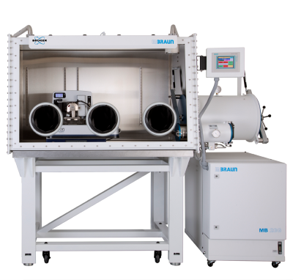
Gloveboxes
Guidelines and best practices for the use and maintenance of gloveboxes at EPFL
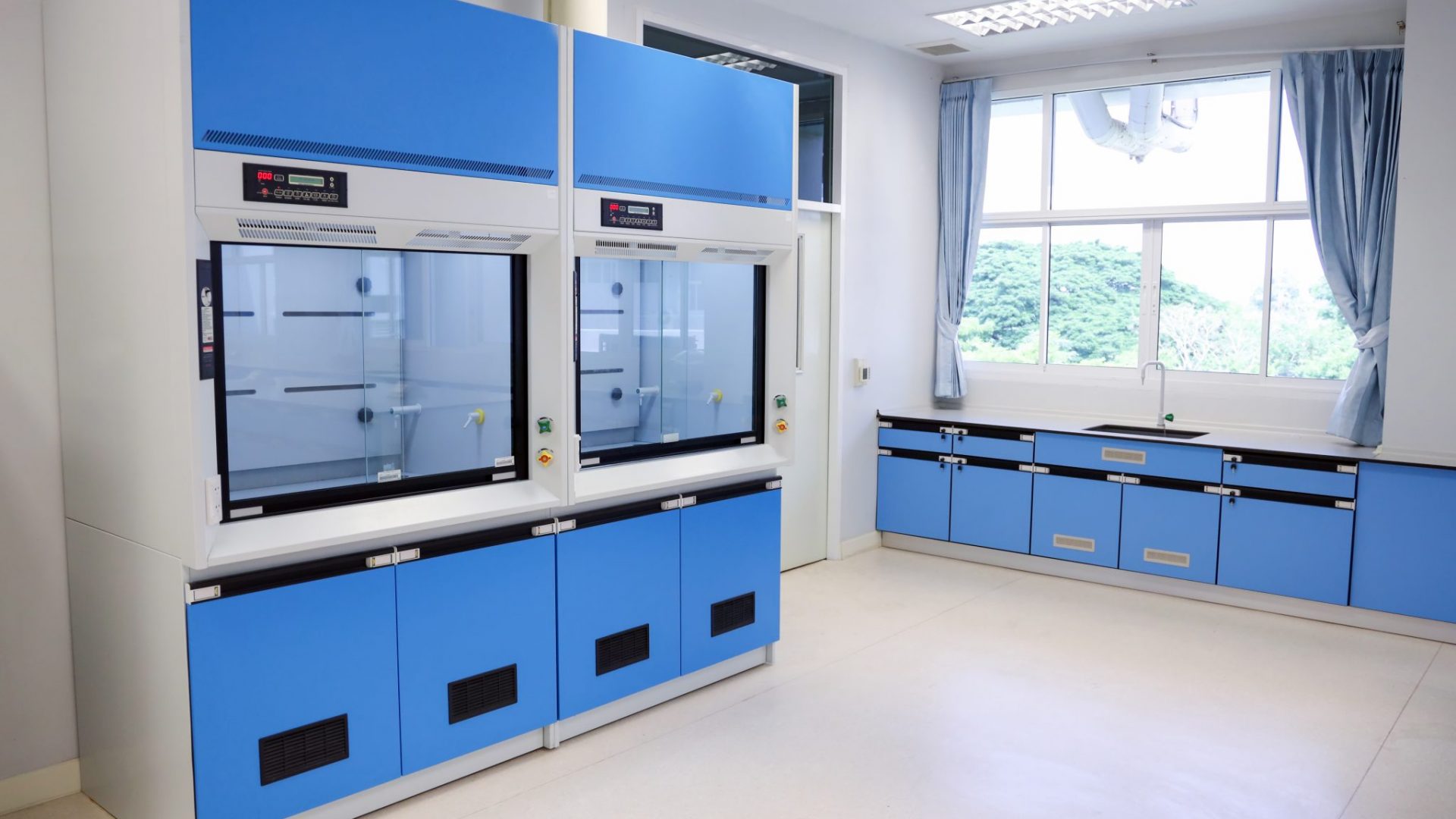
Laboratory fume hoods
Use and good practice of laboratory fume hoods
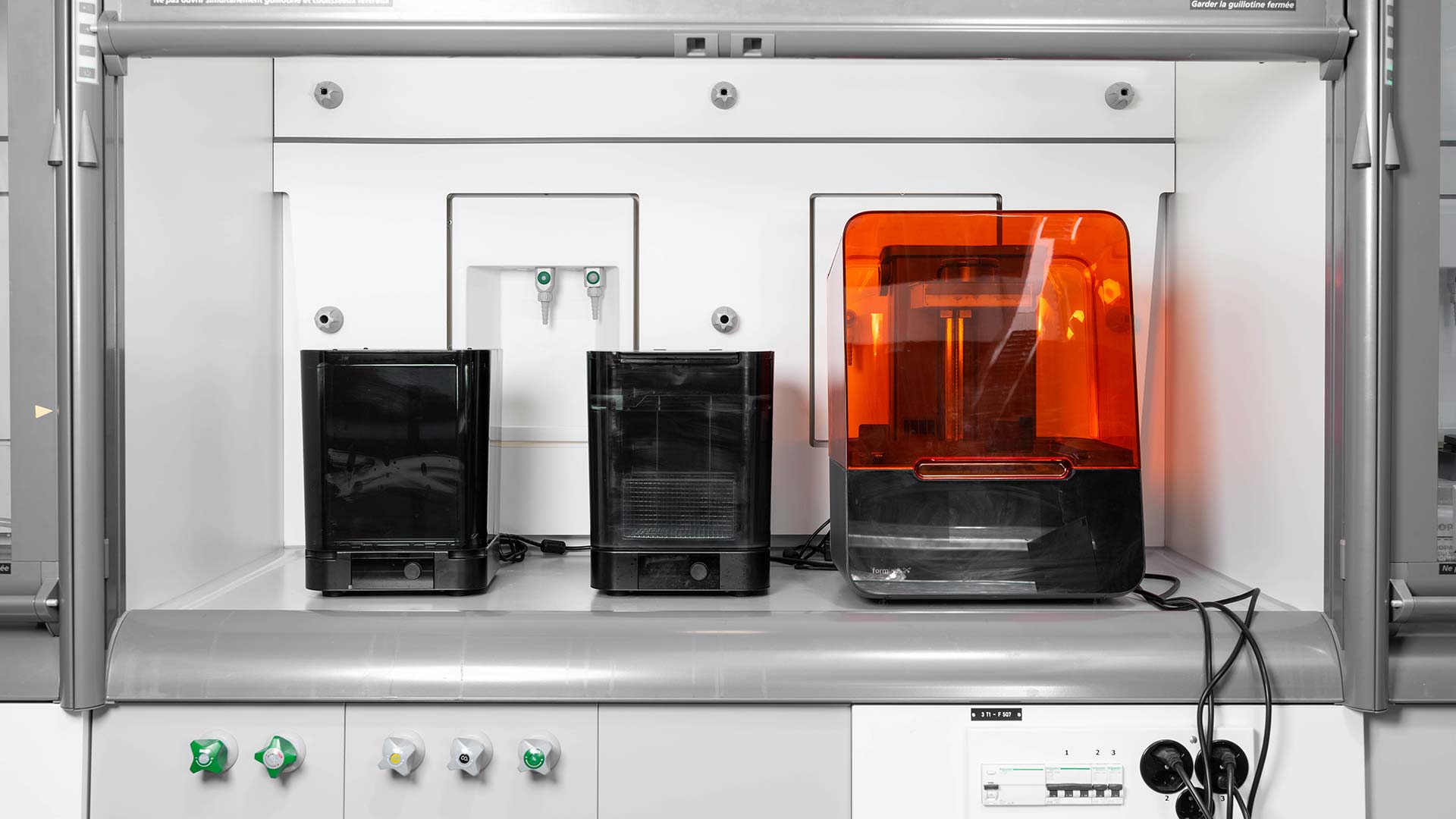
Workbench 3D printers
Guidelines for tabletop 3D printers
Biosafety cabinets
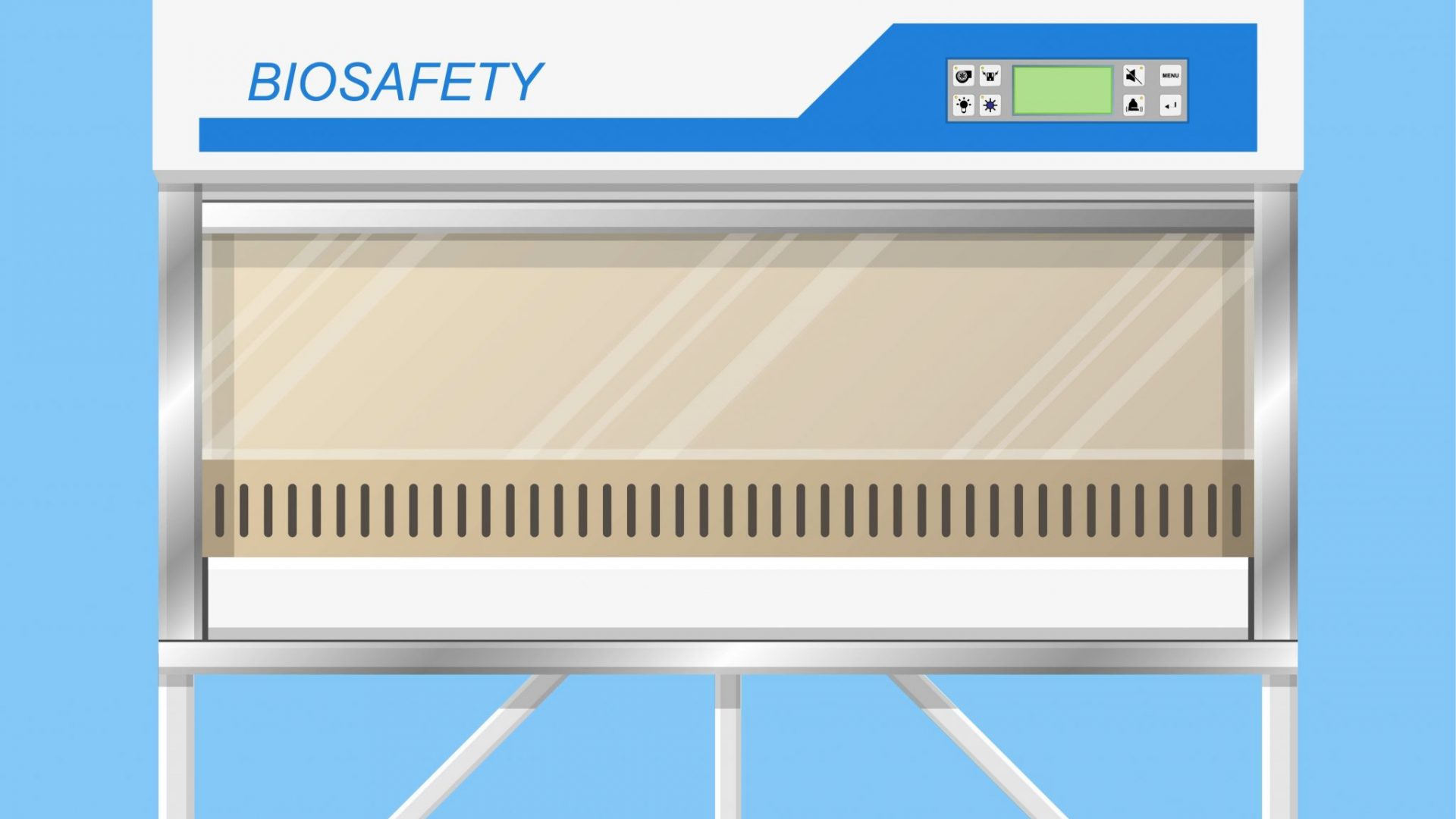
When working with microorganisms, care must be taken to protect:the user against infectionsthe environment from contaminationA biosafety cabinet meets both these criteria, as it is a physical barrier consisting of an airflow to protect the user from aerosols, and a glass screen to protect the user from minor spills and splashes.As they often look alike, (…)
Outdoor extension cords
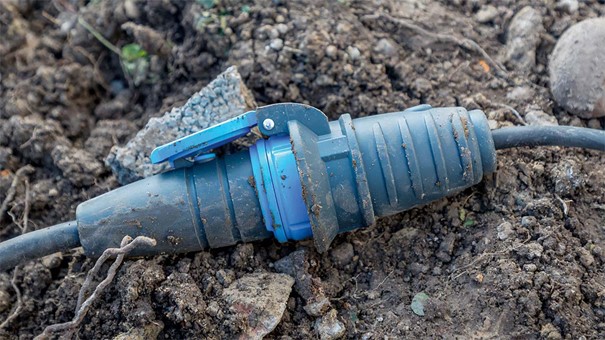
Extension cords and reels that comply with the new IP55 standard now offer effective protection against dust and splashing water, regardless of the angle at which they are projected and whether they are plugged in or not.

Lithium batteries
Lithium batteries pose risks due to their thermal instability. Overcharging, short-circuiting, or physical damage can induce thermal runaway, resulting in fire and/or explosion of the battery. These incidents can cause serious injuries and fires, highlighting the importance of handling, storing, and recycling these batteries with caution.General Rules- Follow the supplier’s instructions. – Avoid: heat sources, (…)

Lifting equipment
Lifting equipmentFor the laboratories located on the Ecublens site, the maintenance of lifting equipment (hoists, overhead cranes) is the responsibility of the EPFL exploitation service (as are fume hoods and chemical cupboards). Lifting accessories maintenance is the responsibility of users.Lifting accessoriesLifting accessories maintenance is the responsibility of users. The head of the research unit must (…)
Cryostat microtome
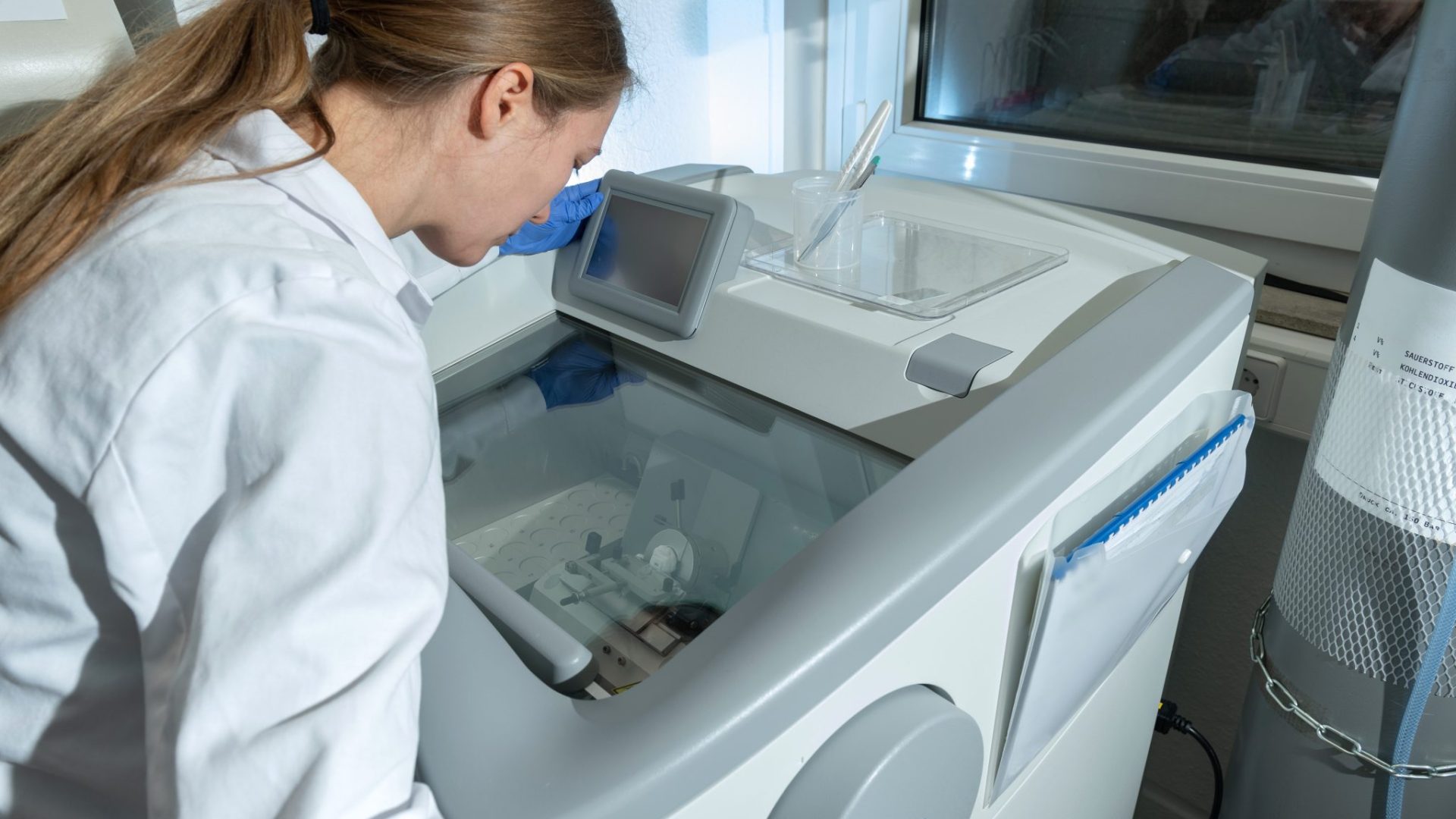
Adherence to the Microtome/Cryostat safety procedure and wound management guidelines is essential to prevent and effectively manage exposure to biohazards and sharps injuries.Microtome/cryostat: safety procedure and wound managementGuidelines for Prion-like proteins

Aspiration system (for biosafety cabinets)
Vacuum‑based aspiration systems (such as the VACUSAFE) are designed for the aspiration of aqueous solutions, including biological buffers and cell culture media. It is essential never to use the vacuum‑based aspiration system without a filter, as the filter protects the vacuum source from liquid overflow and aerosol contamination.The filter must be replaced regularly, at least (…)