Vincent Escola

Description :
Lyncée Tec is a leading provider of integrated software and hardware solutions in the field of Digital Holographic Microscopy (DHM) with experience across a wide range of clients and applications.
The DHM technology, as the name suggests, requires numerous image-processing steps to transform the acquired image into meaningful and usable measurements. In this chain of image-processing algorithms, one particular processing, the 2D-phase unwrapping, emerges as a major bottleneck in terms of both computational speed and quality of the final measurement.
The objective of this internship was therefore to investigate and implement techniques to improve the existing implementation of the 2D-phase unwrapping procedure.
My main contributions included the optimization of the existing path-following unwrapping implementation, improvements to its robustness and temporal stability, and the implementation of two additional unwrapping algorithms, namely DCT- and PCG-based methods.
These developments alleviated both the robustness and computational performance limitations of the existing implementation, thus making the path-following unwrapping algorithm more suitable for practical use. Moreover, although they did not necessarily outperform the optimized path-following implementation in all respects, the DCT- and PCG-based algorithms offered complementary trade-offs between computational performance and robustness, and were therefore better suited to specific application scenarios.
Overall, my contributions provided a significant improvement to the unwrapping procedure at Lyncée Tec, enabling robust quantitative measurements across a broader range of applications
Jan Zgraggen

Description :
Bell Labs: Founded in 1925, Bell Labs is one of the world’s most renowned industrial research institutions, with a legacy of 10 Nobel Prizes and 5 Turing Awards. It is recognized for innovations such as the transistor, the C and C++ programming languages, early solar cell technology, pioneering work in AI (robotic mouse, Shannon; CNNs, LeCun), as well as fundamental contributions to modern 5G and 6G communications. Today, Bell Labs serves as Nokia’s research arm, conducting cutting-edge research in networking, communications, artificial intelligence, and quantum technologies.
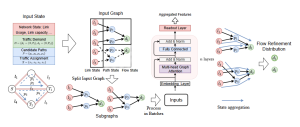
Project: I was part of the ML & Systems Research Group (Paris, France site) within the AI Research Lab, where I worked on accelerating Traffic Engineering by applying Graph Neural Networks to Multi Commodity Flow optimization problems. The objective of the project was to develop and implement novel AI methods and learning frameworks that overcome the limitations of existing state-of-the-art approaches to AI-accelerated Traffic Engineering.
The Experience: I gained insight into the world of corporate research by participating in the entire research process from end to end. From studying papers, adapting and implementing machine learning codebases, conducting and analyzing experiments, deriving new research ideas from findings, to communicating insights through presentations and technical documentation. Beyond that, the internship provided valuable experience in conducting independent research: how to identify meaningful research questions, determine which observations and ideas were worth pursuing, and prioritize tasks and experiments in an open-ended research environment.
Figure 1: Graph Neural Network Pipeline of the current SOTA AI based TE acceleration (LO-TE)
IMG SOURCE: C. Liu, H. Deng, V. Aggarwal, Y. Yang, and M. Xu, ”Shooting Large-scale Traffic Engineering by Combining Deep Learning and Optimization Approach,”Proceedings of the ACM on Networking, vol. 3, no. CoNEXT1, Art. 17, pp. 1–21, 2025. doi: 10.1145/3709372.
Antoine Auberger
Description :
Aon est un groupe international de services professionnels spécialisé notamment dans le conseil, la gestion des risques, la santé et la prévoyance. Mon stage s’est déroulé dans les bureaux de Nyon, au sein de l’équipe “Pension Actuary”, qui accompagne principalement des caisses de pension suisses dans leurs problématiques actuarielles.
Ma mission principale a consisté à développer une application de simulation stochastique permettant d’estimer la valeur actuelle des engagements associés à un portefeuille de prévoyance. Le modèle, développé en Python, repose sur des simulations de Monte-Carlo et utilise des tables de mortalité actuarielles. Il permet de tester différentes hypothèses, notamment concernant la mortalité et les taux d’actualisation, puis de produire des statistiques globales, des mesures de risque, des distributions de résultats et des analyses individuelles par assuré. Sur des cas de référence pour lesquels la valeur des engagements peut être calculée de manière déterministe, le modèle atteint systématiquement une erreur relative inférieure à 1% à partir d’environ 100’000 simulations, ce qui confirme la stabilité et la fiabilité des estimations. J’ai également conçu une interface afin que l’outil puisse être utilisé directement par des collaborateurs sans connaissances en programmation.
En parallèle, j’ai participé à plusieurs projets d’analyse de données et d’automatisation. J’ai notamment développé un outil de production de statistiques sur les départs à la retraite, réalisé une étude financière sur différents scénarios de couverture des absences et automatisé plusieurs contrôles et traitements de fichiers Excel à l’aide de Python, de VBA et d’un outil interne d’intelligence artificielle.
Ce stage m’a permis de mettre en pratique mes connaissances en analyse de données, modélisation probabiliste, simulation numérique et programmation dans un contexte professionnel. J’ai également appris à concevoir des solutions robustes, documentées et accessibles à des utilisateurs non techniques, tout en découvrant le domaine de la prévoyance professionnelle suisse et en développant mon autonomie dans la conduite de projets.
Michele Lanfranconi

Description :
Logitech is a Swiss-based multinational technology company, headquartered in Lausanne, that designs personal peripherals and video-collaboration hardware – including the webcams and conferencing cameras that motivate this project.
The internship developed a single-view relighting pipeline for such cameras, capable of running in real-time (<33ms per frame), on consumer grade GPU (the targeted device was an NVIDIA RTX4090).
The approach developed is based on a Machine Learning component – a lightweight multi-task network which recovers a compact physical description of the scene (its albedo, depth, surface normals and roughness) – and a Computer Graphics component – a deferred-shading renderer which then uses the predicted components to relight under arbitrary, user-controlled lighting the scene. This can be used in a variety of applications as well as used as an interactive, virtual webcam for third party apps for conferencing and streaming, allowing lighting quality enhancement and video SFXs.
Through the internship I gained end-to-end ownership of an open-ended applied-ML problem, both on the technical side (dataset creation, architecture design, model compression, performance profiling…), on the theoretical one (more mathematically driven tasks such as the real-time physically-based rendering), as well as the professional one (defending engineering trade-offs and presenting the obtained results).
Thomas Michel

Description :
Meteomatics is a Swiss weather forecasting company headquartered in St. Gallen, specializing in numerical weather prediction, meteorological data services, and weather monitoring technologies. I joined the Numerical Weather Prediction (NWP) team, which develops and operates the company’s high-resolution weather forecasting model. As an AI intern, my role was to develop deep learning solutions to improve forecast quality by enhancing the data assimilation process and post-processing model outputs.
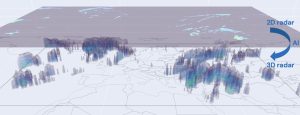
During my internship, I designed and implemented a reusable deep learning framework covering data collection, preprocessing, model training, evaluation, and deployment into the operational forecasting system. This framework was then applied to several meteorological applications. The first project focused on reconstructing three-dimensional radar reflectivity fields from two-dimensional radar observations, satellite imagery, and numerical model outputs, enabling the use of synthetic 3D radar data during data assimilation. The resulting model significantly outperformed the previous interpolation-based approach and improved precipitation analysis. The second project generated spatially continuous cloud base height fields from sparse ground observations combined with atmospheric and satellite data, producing more accurate and physically consistent analyses than traditional interpolation methods.
In the second part of my internship, I developed a deep learning post-processing model to improve short-term solar radiation forecasts. Using numerical weather prediction outputs together with satellite observations and ground measurements, the model corrected systematic forecast errors and reduced the prediction root mean square error by approximately 8%. Throughout these projects, I collaborated closely with meteorologists and machine learning engineers while deploying the developed models into Meteomatics’ operational forecasting pipeline.
Roy Turk

Description:
WindShape specializes in the design and manufacture of fan-array wind generators, commercially known as WindShapers. It also provides a flow-measurement solution in the form of a five-hole pressure probe, optically tracked in 3D, allowing users to measure wind speed and direction at different points by sweeping the measurement domain with the hand-held probe. The goal of the internship was to build a flow reconstruction algorithm from sparse measurement data, capable of running at the probe’s acquisition frequency and integrated into WindShape’s existing user interface.
My work mostly focused on taking measurements using the WindShapers, the probe, the tracking cameras, and a robot used to move the probe along different trajectories. I built a ground truth from dense sweeps, then applied the interpolation algorithm to a separate dataset generated from random probe movements, testing different flow patterns, wind speeds, and distances downstream of the WindShapers.
In the end, the algorithm was directly implemented in WindShape’s user interface and is now ready for use by clients. The project struck a good balance between the numerical and experimental sides of fluid mechanics. I gained hands-on experience with hardware use and management, as well as strong communication skills, from presenting my work within the company to collaborating with teammates and sharing a laboratory with them.
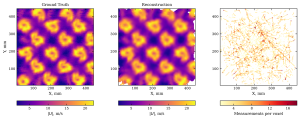
Figure 1 Wind field reconstruction on a checkerboard pattern.
Aaron Dinesh
Description :
Logitech is a Swiss provider of software and computer peripherals, with its headquarters located at the EPFL Innovation Park. The company is a global leader in designing products that connect people with digital experiences, with a diverse portfolio spanning gaming, video collaboration, music, and smart home devices. Logitech also offers a dynamic internship environment, hosting a diverse cohort of more than 30+ interns each semester.
My internship focused on the intersection of large language models (LLMs) and audio processing. As part of Logitech’s Audio Innovation Team, I developed AURORA, a system that enables natural-language control of digital signal processing (DSP) pipelines. Users can describe a desired audio transformation in natural language, and either a cloud-based or local language model automatically constructs a DSP chain using VST effects available on the user’s system.
Beyond the technical development of AURORA, I had the opportunity to present my work to several teams across Logitech and explore potential business applications for the technology. This experience allowed me to combine research and engineering with a broader understanding of how emerging technologies can be translated into practical features and applied across Logitech’s product portfolio.
Ismaël Gomes Almada Guillemin

Description :
Novelis is a global leader in aluminum rolling and recycling, providing sustainable and high-performance aluminum solutions for industries such as automotive, packaging, and aerospace. The internship was carried out within the R&D Department Sierre. The mission of this center is to continuously improve Novelis products while developing new aluminum alloys that are both high-performing and more sustainable.
During my internship, I worked on improving the predictive capabilities of particle nucleation and growth model KiNG (Kinetic Nucleation and Growth) used to simulate Mg₂Si precipitation in high recycled-content 6xxx-series aluminum alloys during hot rolling and thermal treatments. My work involved the development of new objective functions to compare simulated and experimental precipitate size distributions, the implementation of optimisation algorithms and the optimisation of the KiNG model to reduce computational time. The project led to the calibration of key model parameters, the identification of limitations in the current modeling framework, and the proposal of a new modeling strategy separating bulk and grain-boundary precipitation mechanisms.
Christophe Michaud-Lavoie

Description :
Alpiq is a leading clean energy producer based in Switzerland, primarily specialising in hydroelectricity but also including wind, solar, thermal, hydrogen, and battery storage systems across Europe.
My internship took place within the hydro innovation team at Alpiq’s headquarters in Lausanne. Here, I developed a handful deliverables, primarily software-based, which accelerate the calculation of asset-specific hydroelectric energy coefficients. Reliable energy coefficients are necessary for reporting, optimisation, environmental assessment, and energy trading operations at Alpiq, but suffer from instrument errors and sensor drift. My work, in collaboration with various teams within Alpiq as well as asset operators and automation experts at Hydro Exploitation, served to identify necessary measurements for the calculation of energy coefficients, and developing a unified computational pipeline which estimates a list of indirect energy coefficients adaptable to the asset’s structure and the availability of measurements.
The evolution of annual energy coefficients for numerous assets was overlaid with the dates of key maintenance activities, helping to assess whether major maintenances align with significant changes in the asset’s efficiency. Results vary significantly by asset, but this work has identified several plants where flow meters require recalibration, where thermodynamic measurement assays are needed to recompute efficiency regressions, and where nominal coefficient values should be updated to reflect the new state of a plant post-maintenance.
Saransh Chopra

Description :
Logitech is a Swiss company founded in Apples, Vaud, Switzerland. The company primarily produces computer peripherals, such as mice, webcams, keyboards, and the complementary software for these peripherals. Logitech is headquartered in Lausanne, at the EPFL innovation park, but its offices are spread across the globe, including major presence in China, India, Ireland, Taiwan, and the US. The internship was carried out at Logitech’s Technology Office, located in the Borel Innovation Centre (BIC) of EPFL Innovation Park. The centre houses several software and hardware groups (100+ employees), including but not limited to Webcam Engineering, Cognitive AI, Camera AI, Audio ML, Edge AI, and Human-Computer Interaction.
Within the Technology Office, I worked in the Cognitive AI group on Gaze Tracking. The work was divided into three phases. The first was data collection, where I designed two user studies to evaluate gaze estimation under controlled lighting conditions. The second phase was research and development. I built a normalization pipeline that recovers head pose and re-renders every frame into the canonical view the estimator expects, which produced the evaluation data everything downstream depends on. On that data, I benchmarked five published gaze estimators against a family of fine-tuned DINOv3 Vision Transformers. Subsequently, I proposed 3 new self-correcting calibration models that continuously run in the background, using day-to-day interactions as calibration anchors (implicit calibration). The third phase was analysis and dissemination, where I performed statistical comparison between models, and presented my work to the employees and at a public event organised at Logitech.
The work paves the way for integrating Gaze Tracking in Logitech Webcams without any specialized hardware. Moreover, this work enables users to use Gaze Tracking for fine-grained interactions across long sittings, without ever performing calibration. At the moment, I am preparing a conference manuscript for my work on implicit calibration.
Danael Robert-Nicoud

Description :
HeMoLab (Hemodynamics Modeling Laboratory) is a group based at the National Laboratory for Scientific Computing in Petrópolis, Brazil. The laboratory develops scientific computing tools for cardiovascular modeling and simulation with applications in clinical practice and collaborates with clinicians in hospitals around the world.
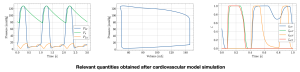
During my internship, I implemented a closed-loop lumped-parameter cardiovascular model in Python, from scratch, incorporating the Mynard cardiac valve model. After validating the implementation by comparing the simulated hemodynamics with expected physiological behavior, I performed a Sobol global sensitivity analysis to quantify the influence of selected aortic valve parameters on relevant hemodynamic outputs. The results notably showed that the parameters associated with stenosis and regurgitation had the strongest influence on the considered outputs and should therefore be carefully calibrated. This work provided information that will help the research group assess the suitability of the valve model for integration into its current modeling toolbox.
Through this project, I gained experience in computational hemodynamics, numerical modeling, nonlinear equation solving and global sensitivity analysis. I also had the opportunity to work in an interdisciplinary environment, regularly discuss my work and the challenges encountered with members of the research group, and present my project and results to my colleagues. More broadly, the internship gave me valuable experience contributing to a product-oriented development process, where the results of my work could support modeling tools ultimately intended for clinical use.
Aleksandrina Streltsova

Description :
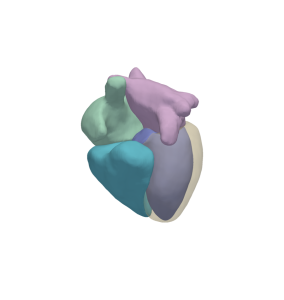
The internship took place at ADIS SA, a Lausanne-based company developing a platform to assist cardiac ablations, in a small team working in close contact with clinicians. The project focused on the company’s cardiac MRI pipeline, which builds a beating 3D model of the heart from cine MRI. It uses deep-learning-based models to segment and construct the beating 3D heart model.
This internship allowed me to gain hands-on experience with computer vision and machine learning, from dataset preparation to model training and evaluation. It was also my first work in medical image analysis, and coming from a software development background, I learned to set up and judge experiments rather than only to write the code that runs them.