
ENAC-IT4R
We act as a Data Help Desk, guiding researchers and students toward the right resources for data management, data science, and scientific valorization, in addition to the standard ENAC-IT’s Support. We also provide Advanced services tailored to the needs of EPFL academic community, throughout data lifecycle — from building data acquisition pipelines to deploying custom data visualization tools, such as open research databases or interactive teaching materials. These advanced services can be funded through grants, eligible to SNSF system, and follow the U1 tarification system.

Data & Code Help Desk
Pilot Projects
SNSF Open Research Data Funding "Bonus"

Grantees are obliged to make available to the public in an appropriate manner the research results obtained with the help of SNSF funding.
Unlock CHF 10,000 to strengthen your research impact
SNSF Support for Open Research Data
The SNSF believes that managing and sharing research data as openly as possible is a core principle of good scientific practice. Under Article 47 of its Funding Regulations, grantees are obliged to make research results available to the public in an appropriate manner.
To help researchers meet this obligation, the SNSF may allocate up to CHF 10,000 per grant specifically for Open Research Data (ORD) activities — on top of your regular budget envelope.
At EPFL, we recommend that every researcher include this line. It costs nothing extra, and unlocks professional support to make your outputs more impactful, reproducible, and discoverable.
How to request the 10kCHF ?
1 – Add a dedicated ORD budget line (at submission time)
In the budget section of your application, add a separate line item labelled “Open Research Data Activities” for up to CHF 10,000. This is in addition to, not taken from, your core budget request.
A general statement regarding Open Research Data is sufficient. Mention that expert EPFL research data and software engineers will work with you on the valorisation of your research outputs.
2 – Contact a technical Research Support team
Reach out to us, or other EPFL research engineering teams below, such as Imaging, RCP or SCITAS — we will work with you to define the best use of the funds and maximise your research impact. You may contact us prior to submission or once the grant is funded; either works perfectly.
EPFL recommended use of technical teams
CHF 10,000 is roughly one month FTE of a professional research data or software engineer — EPFL experts who have worked across dozens of labs and know exactly how to orient your budget for maximum impact.
Our team can help with Data cleaning and curation, Code packaging and pipelines reproducbility enhancements, tailored data valorization tools or other FAIR compliance or data support that would benefit your research. Other sister teams on campus, such as Imaging, C4DT, RCP or SCITAS can best support with more domain expertise.
No need to reduce the core budget !
If the grant budget is below the SNSF celing, which almost no EPFL proposal requests, this line can be added as “bonus”, in addition to the global requested budget.
Advanced Services
Software development
- Full-stack web development of tailored applications
- Research scripts refactoring & packaging
- Educational software tools for students and teachers (e.g. sandboxed environments and notebooks)

Data valorization
- Custom data visualisation
- Open Databases
- Interactive web applications design, development and deployement
Coding support
- Research scripts packaging
- Code optimization & refactoring
- Code migration and adaptation

Data analysis & science
- Collaborative data projects shaping and set-up, students co-supervision
- Consulting and support on data analysis/science: tools and methods
- Coordination with other expertise on campus.

Infrastructure
- Database management, advanced storage
- Server management, containers deployment
- Advising on infrastructure choices and data governance structures
Data stewardship
- Data acquisition pipelines & automation
- Data pre-processing and curation
- Access to new data streams
Featured projects
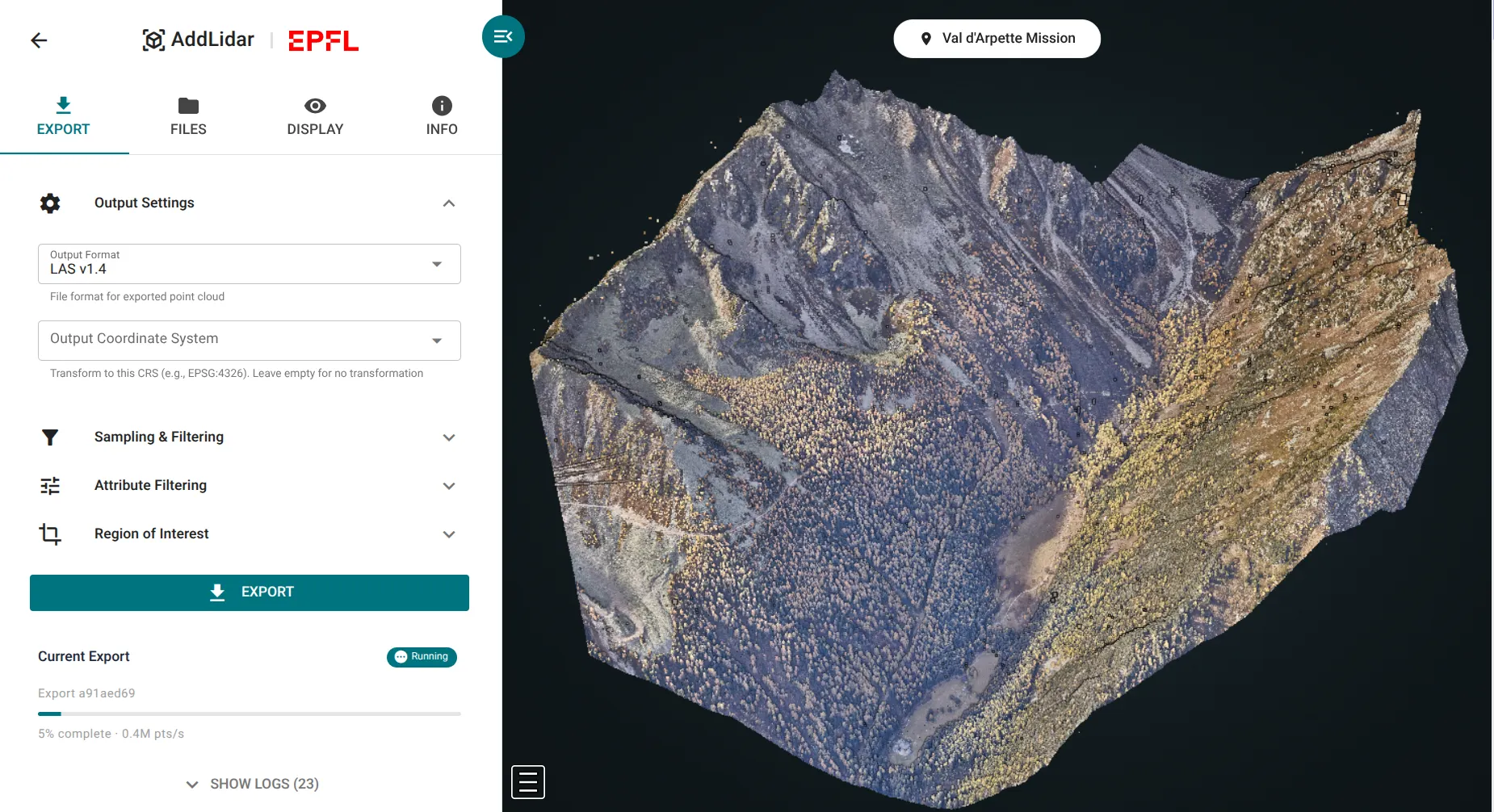
AddLidar: Automated LiDAR Processing & 3D Visualization Platform
The AddLidar platform enables researchers at EPFL’s ESO laboratory to efficiently manage, process, and visualize massive airborne LiDAR datasets through a web-based interface. Built on a Kubernetes-based infrastructure, the system automates the pipeline from raw data ingestion to interactive 3D visualization, handling datasets exceeding 100GB with automated compression, conversion, and web optimization.Researchers can upload new (…)
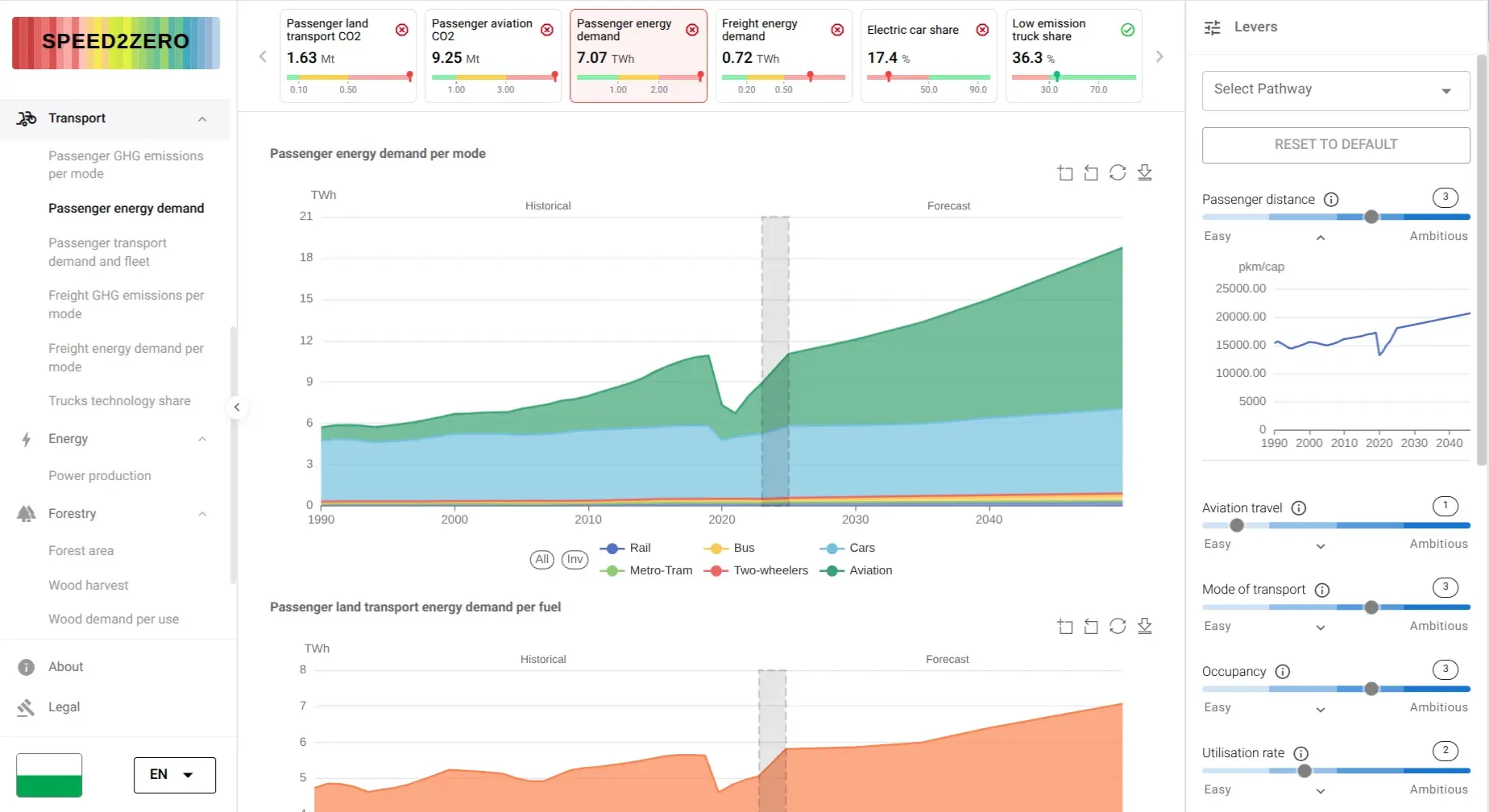
Transition Compass Web Platform for Policy Impact on Climate
The TransitionCompass web tool enables policymakers and researchers to visualize how policy decisions impact climate outcomes. The platform uses PyCalc computational models to provide real-time projections of greenhouse gas emissions, temperature changes, and environmental indicators across transport, buildings, energy, agriculture, and industry sectors.Users adjust policy “levers”, representing regulatory approaches from strict to lax, and immediately (…)

Bridge Traffic Load Web Calculator (ASTRA 82001)
The Bridge Traffic Load Web Calculator (based on norm Astra 82001) is a free online tool that helps engineers analyze bridge safety according to Swiss standards. Developed by ENAC-IT4R and RESSLab for the Federal Roads Office (FEDRO), it’s available in English, French, Italian, and German.The calculator is designed for standard bridge assessments, helping engineers evaluate how (…)
Team




Resources
CODE & DATA RESOURCES
– ENAC’s Code Repository, including many ENAC-IT4R’s projects & template repositories
– Research Data Storage Solutions @ EPFL
– Code Publishing recommendations : Guidelines & Poster Cheat Sheet
– The Turing Way handbook to reproducible data science.
– EPFL Library’s Research Data Management Guides
ON-CAMPUS SERVICES
– EPFL’s Scientific Computing : SCITAS, RCP.
– EPFL Library’s Research Data Management Team
– EPFL Statistical Consulting Service
FUNDING