

Bionanophotonic Systems laboratory
Prof. Hatice ALTUG
At the BIOnanophotonic Systems Laboratory, we develop ultra‑sensitive spectroscopy and sensing platforms for real‑time, label‑free, high‑throughput detection of trace biomolecules. Our work uses nanoplasmonics, metamaterials, and micro‑/nanofluidics to enable precise analyte trapping and manipulation. We also introduce new fabrication methods for low‑cost, large‑area, high‑throughput device production. In addition to biochemical sensing and spectroscopy, we investigate nanophotonic approaches for on‑chip optical communications.

Laboratory of Integrative Systems Physiology
Prof. Johan AUWERX
Our lab uses systems genetics and systems biology approaches to map the signaling networks that coordinate the communication between the nucleus and the mitochondria and as such regulate organismal metabolism in health, aging, and disease. Insights obtained from our basic studies are translated into novel preventive and therapeutic strategies for common age-related diseases, as well as for rare inherited mitochondrial diseases.

Programmable Biomaterials Laboratory
Prof. Maartje BASTINGS
The Bastings Lab focuses on designing and engineering DNA-based nanomaterials to control biological interactions at the nanoscale. Their mission is to develop programmable biomolecular tools for applications in immunotherapy, drug delivery, and mechanobiology, leveraging DNA nanotechnology to precisely manipulate multivalent cellular processes and enhance diagnostic strategies.

Brisken Lab – Hormones : Keys to Breast Cancer Prevention and Therapy
Prof. Cathrin BRISKEN
Prof. Cathrin Brisken leads the Brisken Lab at EPFL’s School of Life Sciences, studying how estrogen, progesterone, and androgens regulate mammary gland development and drive breast cancer. Using mouse genetics, intraductal xenografts, and patient-derived models, her team explores how hormones shape cellular interactions and tissue dynamics. Their work has identified paracrine factors like Wnt4, RANKL, and ADAMTS18 that govern stem cell activity, tissue remodeling, and cancer risk, with the goal of advancing breast cancer prevention and therapy.

Laboratory of Systems Biology and Genetics
Prof. Bart DEPLANCKE
The Laboratory of Systems Biology and Genetics (LSBG) studies genome organization, regulation, and variation through three pillars: “Adipo” explores mesenchymal stromal cell function in adipose biology, “Geno” examines how regulatory variation shapes diversity, and “Techo” develops advanced microfluidic, sequencing, and computational tools to drive discoveries in both areas.

Institute of Health Sciences, Nestlé Research
Dr. Jérôme FEIGE
We study the mechanism through which skeletal muscle adapts to nutrition and lifestyle and declines during aging and sarcopenia. Our work focuses on understanding the contribution of stem cells and mitochondrial metabolism in these processes using transversal approaches using model organisms, human cellular models and clinical studies.

Gallini lab – Empowerment of healthy cells to prevent skin cancer
Prof. Sara GALLINI
Our lab studies how healthy skin stem cells control and suppress pre-cancerous mutant cells. We use in vivo imaging and molecular approaches to uncover the cellular and signaling mechanisms that preserve tissue integrity and prevent tumor initiation.

Laboratory of Life Sciences Electronics
Prof. Carlotta GUIDUCCI
At the forefront of this innovation, our research focuses on miniaturizing analytical and processing workflows using cutting-edge microfluidics and microsystem technologies. Working at the intersection of fundamental research and applied bioanalytics, we are committed to bridging the gap between laboratory innovation and clinical application—developing tools that are not only technically advanced but also accessible, scalable, and impactful for real-world healthcare.
Laboratory of Computational Systems Biotechnology
Prof. Vassily HATZIMANIKATIS
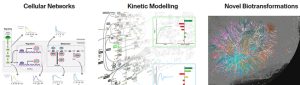
At the Laboratory of Computational Systems Biotechnology (LCSB), we work at the interface of synthetic and systems biology to identify the design principles of biological processes for medical and biotechnological applications.
Our research areas of interest include: Cellular Networks, Kinetic Modelling, Novel Biotransformations.

Laboratory for Soft Bioelectronic Interfaces
Prof. Stéphanie LACOUR
The Laboratory for Soft Bioelectronic Interfaces (LSBI) conducts research at the intersection of microfabrication, neurotechnology, and bioelectronics to develop next-generation neural implants and soft materials for seamless in vitro and in vivo interfaces. Our work spans fundamental science to translational research, bridging engineering and medicine to advance neurotechnology for clinical applications.

Laboratory of Microbiology and Microtechnology
Prof. John MCKINNEY
In the Laboratory of Microbiology & Microtechnology, we use time-lapse microscopy, microfluidics, and microtissue models (organoid, organ-on-chip) to study the dynamics of host-pathogen interactions at the single-cell level. Our studies focus on the mechanisms used by pathogenic bacteria to establish persistent – even lifelong – infections and evade clearance by the host immune response or antimicrobial therapies.

Laboratory of Computational and Systems Biology
Prof. Felix NAEF
Prof. Felix Naef leads the Computational Systems Biology Lab at EPFL. His team develops quantitative models and computational approaches to understand the dynamics of gene regulation and cellular rhythms. By integrating genomics, mathematical modeling, and biophysics, they investigate how biological clocks, circadian rhythms, and regulatory networks govern cellular behavior and maintain physiological balance.

Laboratory of Chemical Nanotechnology
Prof. Nako NAKATSUKA
Improving human health requires monitoring biomarkers that regulate complex biological processes in the body. Our team innovates chemical nanotechnologies to enable quantitative monitoring of disease biomarkers by tackling remaining challenges of continuous monitoring in biofluids.
Microbial Mechanics lab
Prof. Alex PERSAT
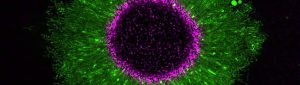
The Persat lab uses an interdisciplinary bioengineering approach to investigate bacterial infections and the rise of antibiotic resistance. We combine tissue-engineered organoids with omics and imaging to decode the contributions of mechanics during bacterial infections and to discover novel therapeutic strategies to combat resistant pathogens.
Laboratory of Nanoscale Biology
Prof. Aleksandra RADENOVIC
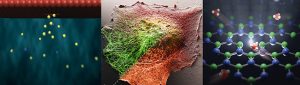
LBEN pioneers single-molecule biophysics, nanoscale imaging, sensing, and neuromorphic computing with ions, developing advanced optical, nanopore-based, and ionotronic techniques to study biological and molecular processes with unprecedented precision. By integrating super-resolution microscopy, nanofluidics, and development of ionic memristors, the lab pushes the limits of imaging, sensing, tracking, and computing at the nanoscale.
Laboratory of Metabolic Signaling
Prof. Kristina SCHOONJANS
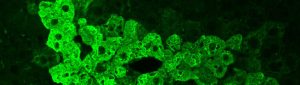
The liver-gut-brain axis is a physiological system specialized in the sensing and processing of nutrients. Our research aims to focus on this system and gain insight into the mechanisms by which nutrient-derived metabolites, in general, and bile acids, in particular, coordinate metabolism, immune function, and cancer.
Laboratory of Biomaterials for Immunoengineering
Prof. Li TANG
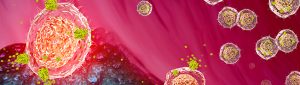
Tang Laboratory is developing novel strategies to engineer the multi-dimensional immunity-disease interactions from various aspects, an emerging field called ‘immunoengineering’, in order to create safe and effective therapies against cancer and infectious diseases. Specifically, we leverage the power of metabolic and cellular bioengineering, synthetic chemistry and material engineering, and mechanical engineering to achieve controllable modulation of immune responses against diseases.

Laboratory of Computational Neuro-Oncology
Prof. Sebastian WASZAK
Prof. Sebastian Waszak leads the Laboratory of Computational Neuro‑Oncology at EPFL. His team uses genomics and computational approaches to understand pediatric brain tumors, focusing on their evolution, classification, and clinical impact. By integrating molecular data with clinical studies, the lab aims to improve diagnosis, prognosis, and treatment for childhood cancers.
NeuroNA Chair in Epigenomics of Neurodevelopmental disorders – EpiGN
Prof. Fides ZENK
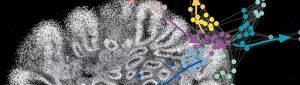
We engineer brain organoid systems to model early human development and uncover the molecular logic of brain formation. By developing and applying cutting-edge single-cell genomics technologies, we map how gene regulation and chromatin dynamics guide cell fate decisions.

Laboratory for Bio-Iontronics
Prof. Yujia ZHANG
At the Laboratory for Bio-Iontronics (BION), our research is highly interdisciplinary. The mission is to make bioiontronic systems for biointerfaces and hybrid intelligent systems.