
Urban Systems
This process relies increasingly on the availability of data, whose growing volume calls for innovative design approaches to apprehend a system as a whole and find relevant solutions.
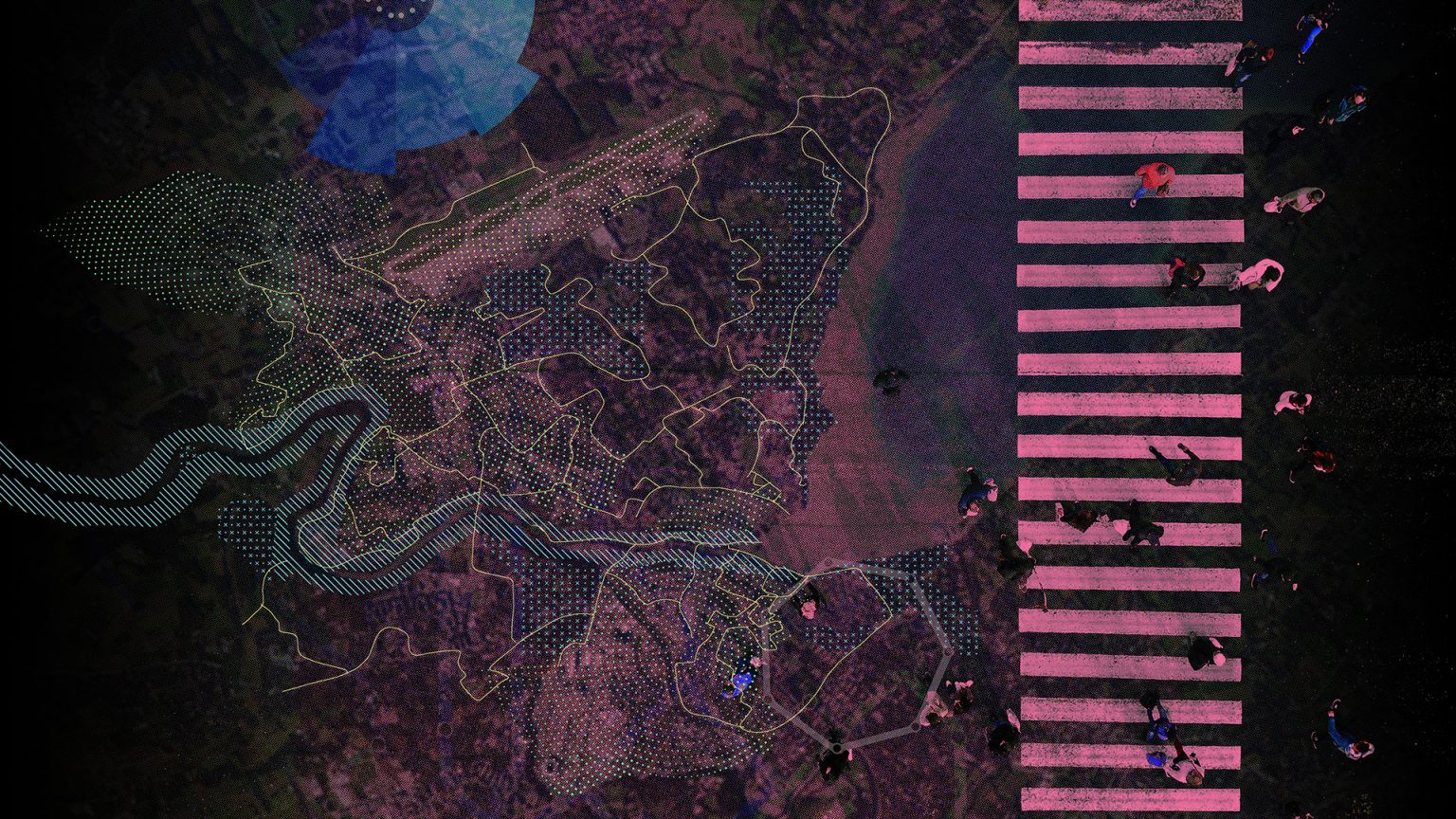
The program in Urban Systems is designed to equip students with the foundations needed to tackle the complex challenges of ecological sustainability in urban areas and their surrounding territories.
Students from engineering and architectural disciplines will learn to navigate the intricate interactions between technological and physical systems, regulatory frameworks, and human behavior, and to become primary actors in the implementation of sustainable urban agendas.
Program’s objectives
This Master’s program in Urban Systems educates professionals aiming to take on leadership roles in this transition. Graduates of the program will be able to:
- define the values that should guide change in urban agendas
- map and analyze interactions among diverse stakeholders
- leverage legal frameworks to unlock opportunities
- anticipate and address the social conditions for public acceptance of transition projects
- assess and manage economic risks
- design and implement effective transition strategies
Students may also choose to pursue one of the following specializations:
- Mobility and transportation in a changing climate
- Sustainable transitions in urban systems
- Health and well-being in the urban environment
Graduates’ versatility and expertise allows them to pursue a wide variety of positions in urban, environmental, and territorial planning. The program emphasizes project-based learning and practical experience in order to prepare students for active roles in the implementation of sustainable agendas
Simplified study plan
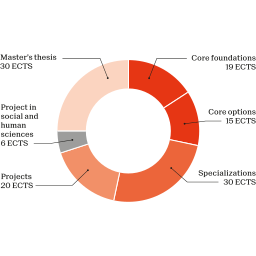
Please note that the information regarding programs’ structure as well as the simplified study plans may be subject to change and that they are not legally binding. Only the official regulations and study plans are binding.
Admission criteria
This Master’s program is consecutive to a Bachelor’s degree in Civil Engineering or in Environmental Sciences and Engineering obtained at EPFL.
- Non-EPFL degrees
- Bachelor’s degrees obtained in the same fields but from another institution are eligible on the basis of an application dossier and must be accompanied by excellent academic records.
- EPFL degrees
- EPFL Bachelor’s degrees in Architecture or in another related field of science and engineering are also subject to a dossier-based analysis and are eligible if they meet certain prerequisite in engineering, computer science and mathematics (i.e. introduction to machine learning for engineering; engineering a sustainable built environment; information, computation and communication; probability, linear algebra; analysis etc.).
The acquisition of additional credits to fill any gaps may be required.
Please note that meeting all of these criteria is no guarantee of admission.
Informations complémentaires sur les conditions d’admission
Teaching languages
English and French. It is possible to complete this program in English entirely.
Diploma and title obtained
Upon completion of their Master’s curricula, students obtain an EPFL Master of Science MSc in Urban Systems. The diploma also gives graduates the right to use the title of EPF qualified Engineer.


Contact
To learn more about this program, please use the following contacts:
+41 21 693 80 71