
Secondary schools–EPFL Interface
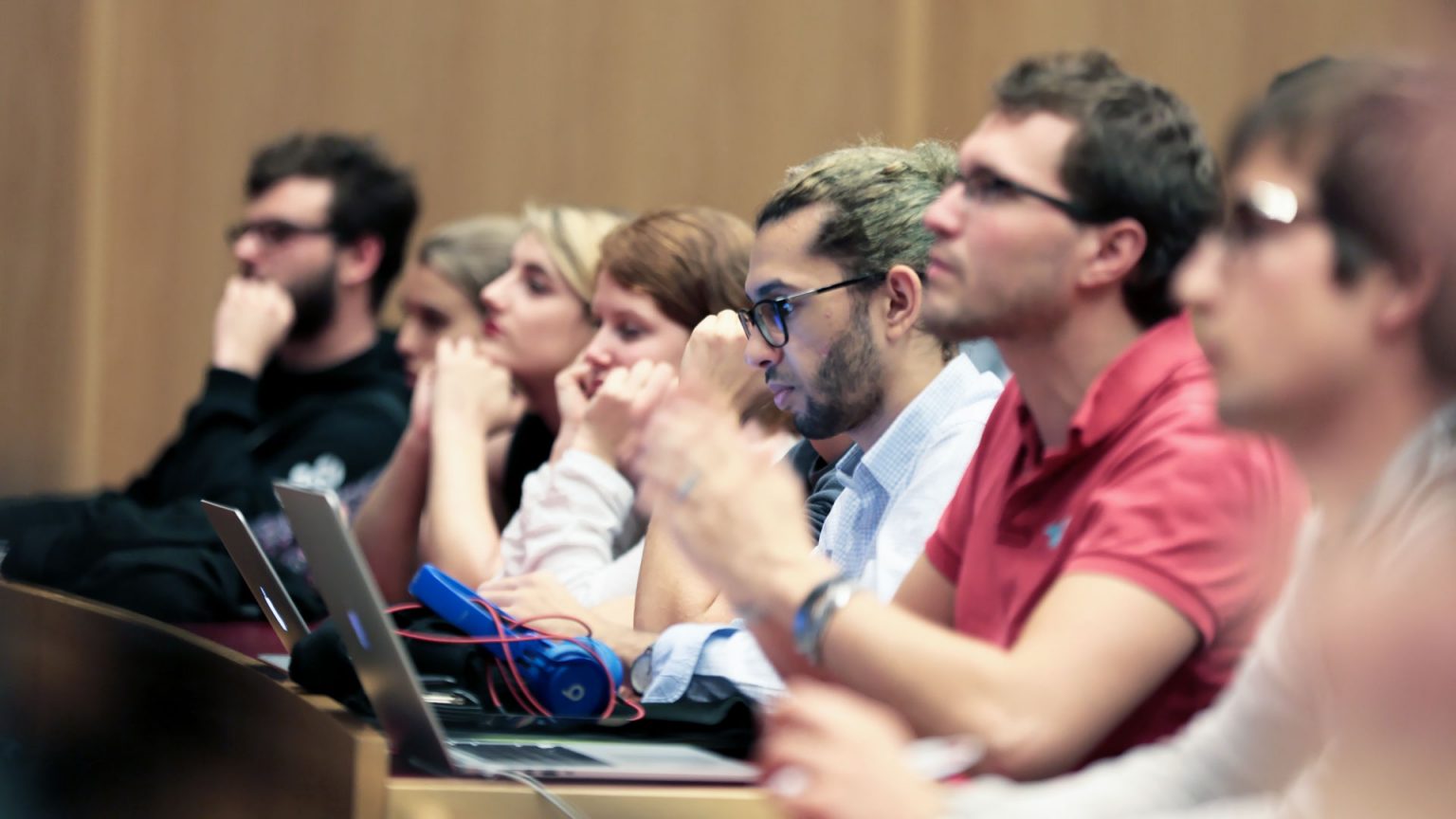
The Secondary schools–EPFL Interface, part of the Associate Vice Presidency for Education and coordinated by its Education Outreach Department, brings together highly committed teachers from all faculties as well as several experts on specific topics related to students’ transition from upper secondary school to EPFL.
Education policy
The Secondary schools–EPFL Interface is a platform that enables reflection on education policy and the development of action strategies. It ensures coordination, promotes initiatives, and monitors ongoing projects among the various stakeholders. Examples include:
- work related to the revision of the Matura (Matu2023) and the resulting curricula,
- work related to the reform of the upper secondary school Matura in the Canton of Vaud (MAT-EO),
- collaboration in the implementation of new subjects in upper secondary schools (e.g. computer science),
- changes to curricula, study programs, or admission requirements at EPFL (e.g. introduction of the MAN, s’EPanouir-FLourish project).
Organisation
involves the EPFL leadership as well as teachers engaged in transition-related issues within the faculties: Prof. Nicolas Grandjean (Associate Vice President for Education), Prof. Cécile Hébert (member of the Secondary school–Universiy Commission – KGU), Prof. Marco Picasso, Prof. Jérôme Scherer and Dr Orane Pouchon (SB), Prof. Jean-Philippe Thiran (STI), Prof. Alcherio Martinoli (ENAC), Prof. Félix Naef and Dr Alexandra Bezler (SV), Dr Olivier Lévêque and Dr Barbara Jobstmann (IC).
involve the Propaedeutic Center (Cepro), the Course of Special Mathematics (CMS), the LEARN Center and the Education Statistics Unit: Prof. Simone Deparis, Dr François Genoud, Prof. Francesco Mondada and Eric Bachmann.
werden im Wesentlichen vom SPE koordiniert, umfassen jedoch auch mehrere Mitglieder des akademischen Personals der Fakultäten.
Resources and projects
For teachers
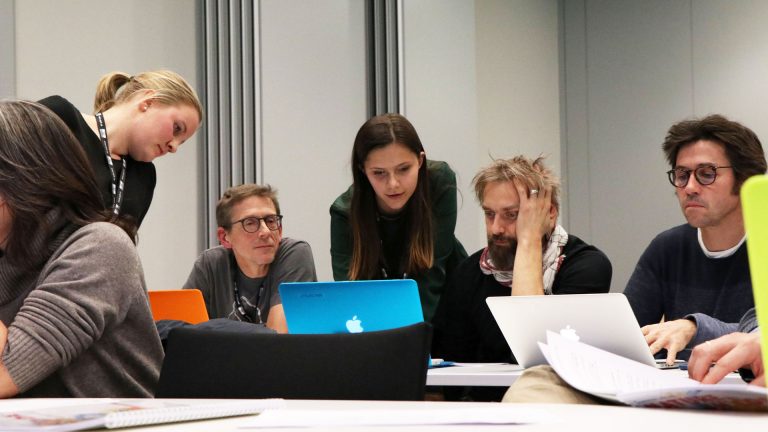
5–7 meetings
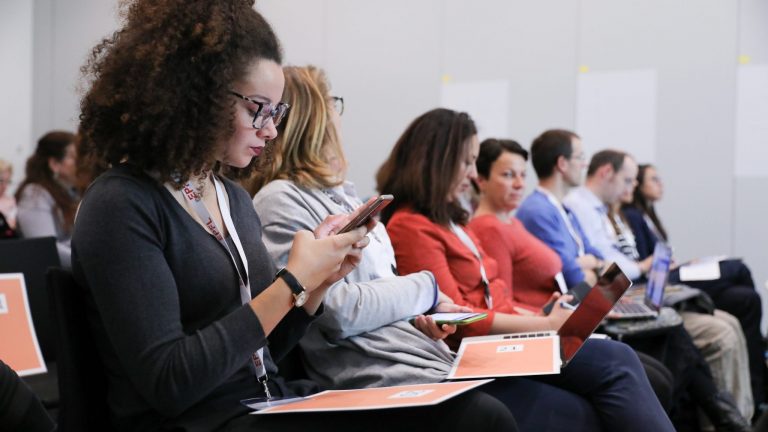
The 5–7 meetings (thematic and subject-specific) provide a privileged opportunity for exchange between secondary school teachers and EPFL teaching staff. They make it possible to discuss initiatives and projects related to the transition and to strengthen collaboration with upper secondary schools.
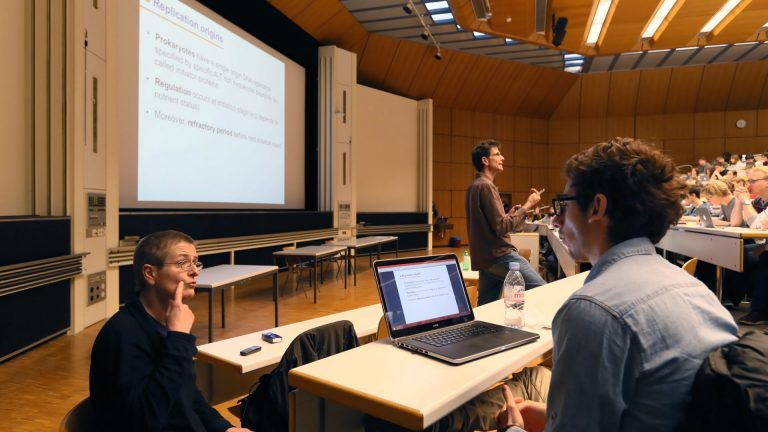
Internships for teachers
Scientific internships offer the opportunity to take part, alongside an EPFL teacher, in activities related to lectures, exercises, or laboratory work in the first year of study. This immersion allows for a detailed analysis of the challenges of the transition. It results in analytical reports and innovative teaching tools, all of which provide valuable insights for adapting teaching and pedagogical approaches on both sides.
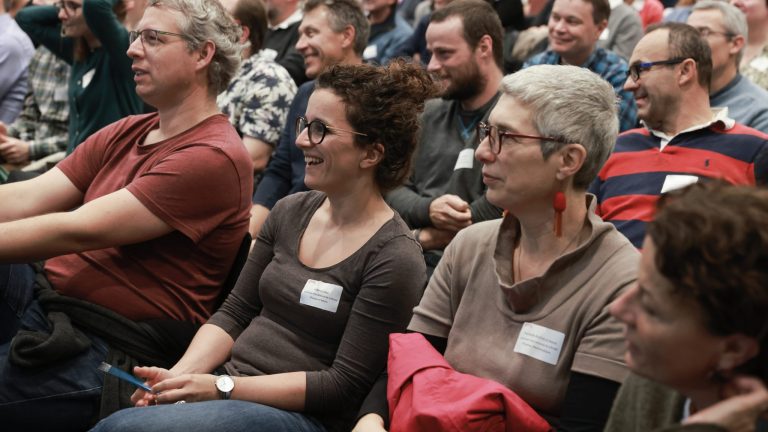
Continuing education
Upon request, the SPE can coordinate the organisation of ad hoc training courses tailored to the needs of upper secondary education. Whether on a theoretical topic or laboratory training, the SPE coordinates the development of the course with EPFL experts and interested teachers.
Class visits at EPFL
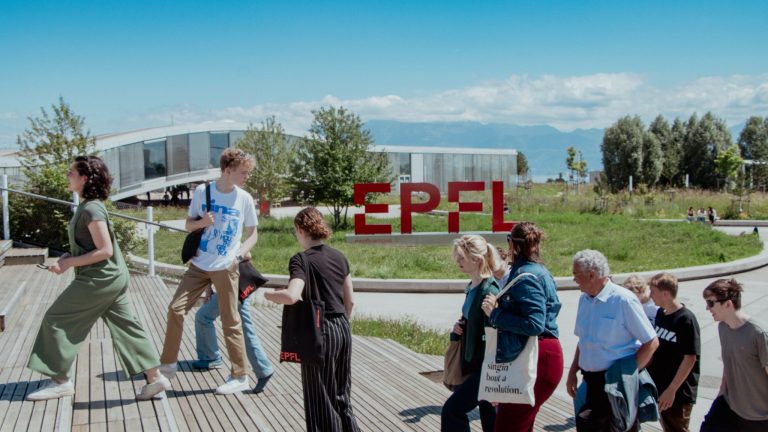
Where possible, the SPE responds to requests from teachers interested in a visit related to scientific topics covered in class. Requests must be submitted to the SPE at least two months before the planned date; the programme is then developed in collaboration with the teacher.
Overview of courses and teaching materials
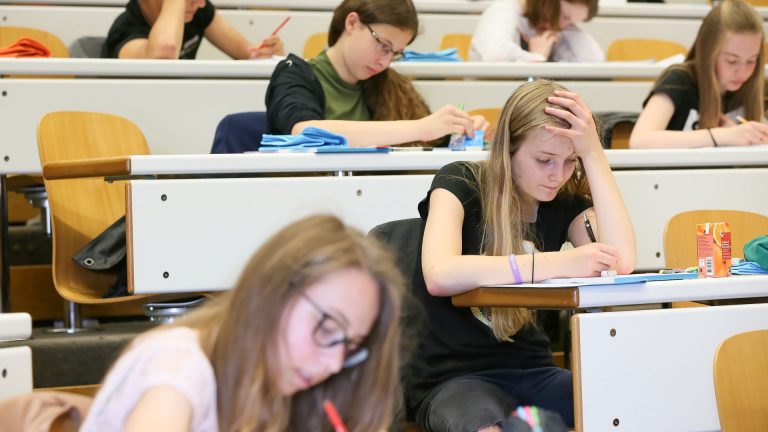
In order to provide better visibility of the content and requirements of first-year EPFL courses, teaching resources are made available and can be adapted for upper secondary education.
Thematic days
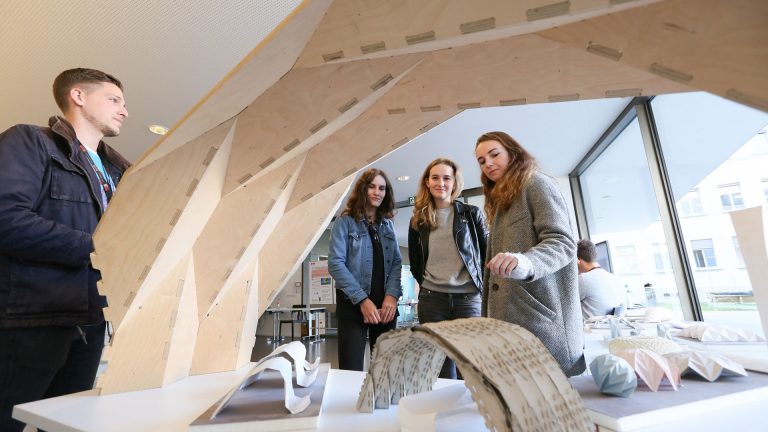
Upper secondary schools may host scientific days dedicated to one or more topics of their choice. These days include demonstrations, workshops, and lectures and aim to provide insight into EPFL research and innovative approaches at the forefront of current knowledge.
For students

Pre-university weeks
Designed for upper secondary school students from all over Switzerland, the pre-university weeks offer campus immersion experiences and cover themes structured around three axes: raising awareness of science and engineering, immersion in the world of engineering, and in-depth exploration of scientific topics.

Turing Course
The Turing Course is a unique opportunity to immerse oneself in the fascinating world of computer science. Designed for upper secondary school students, it allows them to deepen their knowledge in a stimulating environment through weekly lectures, while also developing new skills through practical work and projects. A rich and inspiring course to explore computer science from a different perspective.
Maturity projects
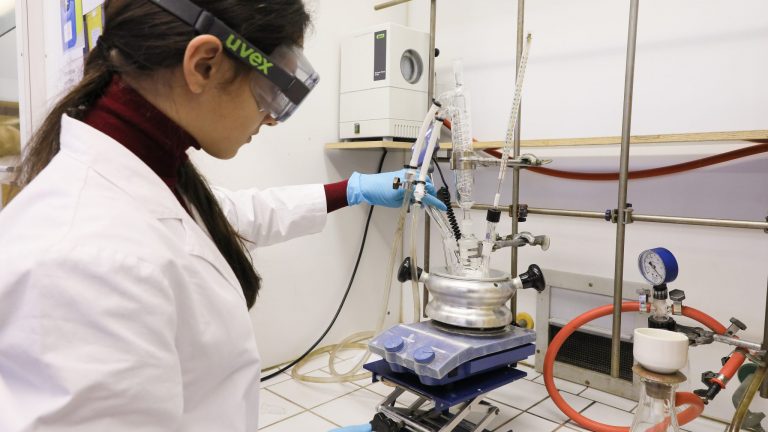
The SPE can also act as a liaison to connect teachers supervising Maturity projects with scientists who offer their expertise in specific fields, once the topic and requirements have been clearly defined.

Guidance tools
In addition to various information and awareness-raising events allowing students to meet the EPFL community, tools are made available to help them develop their decision-making process according to their interests and ambitions.

Orientation forums
EPFL regularly participates in orientation events. Whether as students, alumni, or representatives of various services and departments of the School, members of the EPFL community answer all your questions and guide you towards the most suitable information resources.
Stay informed
Newsletter
The SPE’s biannual newsletter highlights in each issue a specific topic related to education, approached from different perspectives and supported by case studies and expert insights to illustrate new approaches.

LinkedIn community
The “EPFL Education Outreach Department” (SPE) LinkedIn page is another way to discover ongoing initiatives and commitments. It also features relevant articles in the context of the secondary school–EPFL transition.
Instagram profile: @epfl_studies
Follow us on Instagram (@epfl_studies) for even more dynamic content, photos and videos, and timely updates.
Contact
For any questions or suggestions, please feel free to contact us:
EPFL AVP-E SPE
Centre Midi – CM2 348
Station 10
CH – 1015 Lausanne