
Vice Presidency for Education (VPE)
About
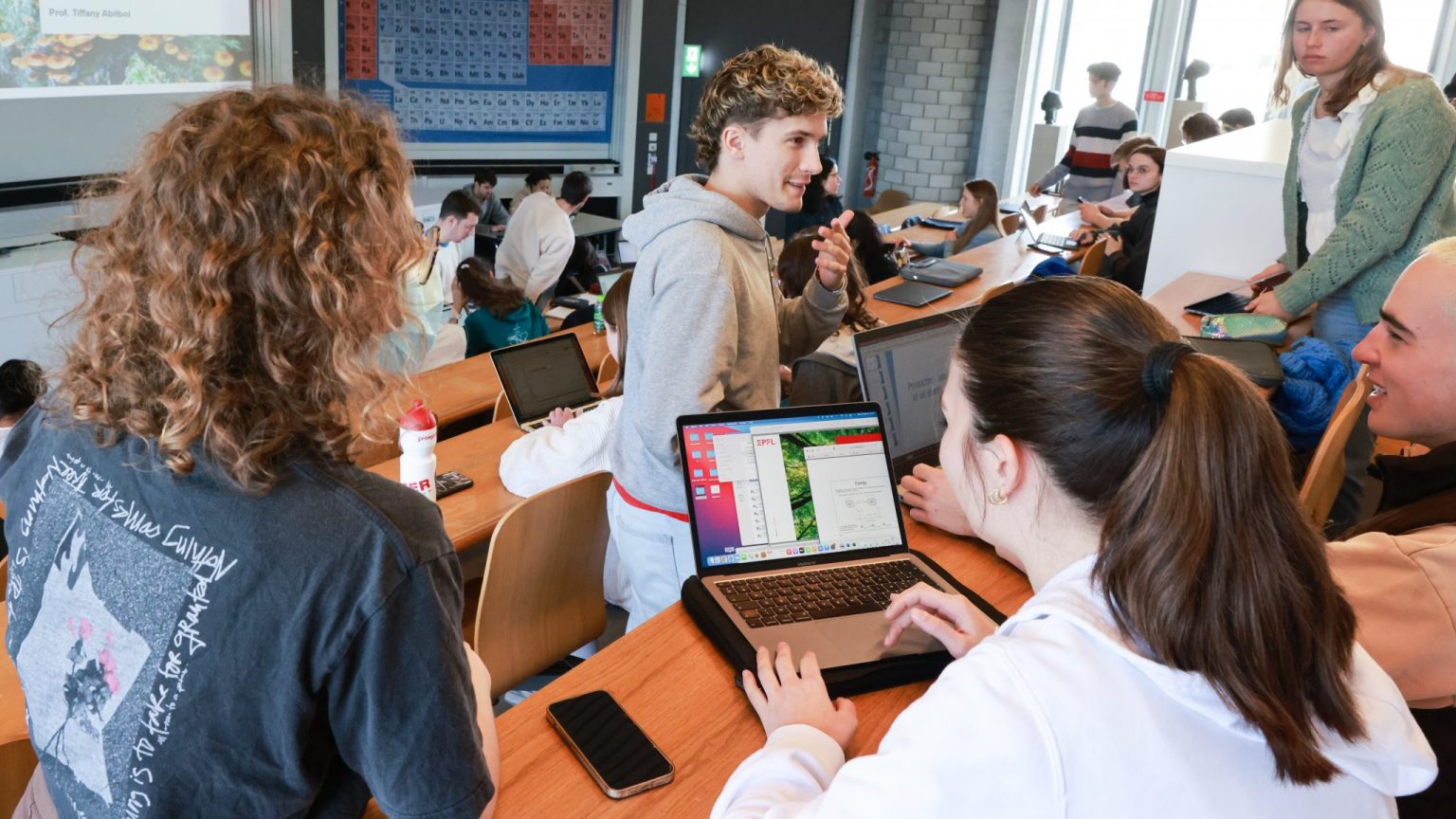
The Vice Presidency for Education oversees all of EPFL’s study programmes, from Bachelor’s and Master’s degrees to doctoral studies and continuing education. Working closely with the sections, AGEPoly and the EPFL Teachers Council (CCE), it is responsible for the smooth running of the education system and for the quality of teaching. The VPE also supports teaching through a range of pedagogical initiatives and assists teaching staff in their day-to-day work, notably by developing suitable infrastructure.
The VPE aims to equip students and doctoral candidates with solid skills that enable them to adapt to a changing society. It strives to ensure that everyone can reach their full potential, and works to ease the transition from secondary school to EPFL, and from graduation to professional life.
The Vice Presidency for Education is headed by Professor Nicolas Grandjean and includes the Associate Vice Presidency for Doctoral and Lifelong Education, headed by Professor Anne-Marie Kermarrec.
The role of the VPE
Services, Centers and Units
Resources and links
The Euler Course is a math program for high-potential primary and secondary school students in French-speaking Switzerland. The program runs alongside the conventional primary/secondary-school curriculum.
The Preparatory Year equips prospective EPFL students for a Bachelor’s program with a solid grounding in mathematics (analysis, linear algebra and analytic geometry), physics, computer science and chemistry. The CMS is intended for students who don’t meet the requirements to be admitted directly into the first year of an EPFL Bachelor’s program or who hold a Swiss high-school diploma (maturité gymnasiale) and would like to strengthen their skills in the basic sciences before starting at EPFL.
The Social Science and Humanities Program integrates disciplines dealing with people and society into the EPFL student curriculum. It is common to all of the school’s study plans. Through introductory and advanced courses, it helps students think critically about the world around them and develop the cross-disciplinary skills tomorrow’s engineers and scientists need to make a positive, lasting impact.
The Review Course is mandatory for first-year EPFL students who end the fall semester with a GPA of less than 3.50, in order to reinforce their skills. This course is given in the spring semester, and students must pass to be able to retake the first year of their Bachelor’s programs.
The Registrar’s Office manages student and class records, matriculation, exchange programs, study plans and official course-related documents.
The Education Outreach Department works with local governments as well as schools and teachers both in Switzerland and abroad to carry out EPFL’s core missions, helps prospective Bachelor’s, Master’s and PhD students decide what subjects to study and outline their goals, and boosts the visibility of EPFL study programs among industries and in academic spheres.
The Teaching Support Center offers a wide range of services for everyone involved in teaching at EPFL: teachers, teaching assistants (PhD students), postdocs, section staff and students. The Center also provides teaching support and resources, runs workshops and training sessions and fosters innovation.
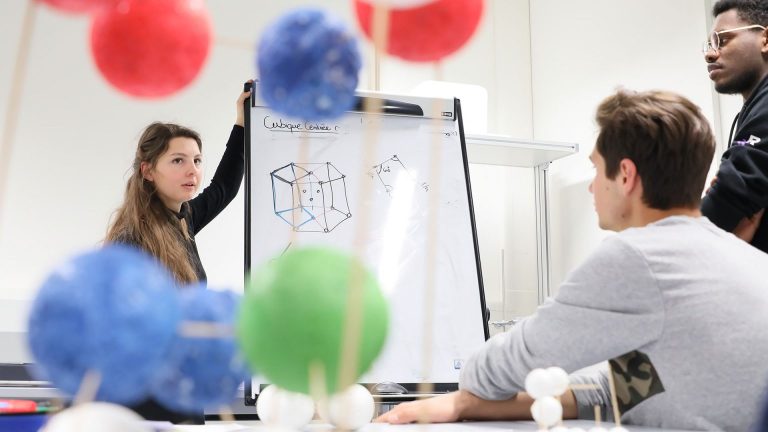
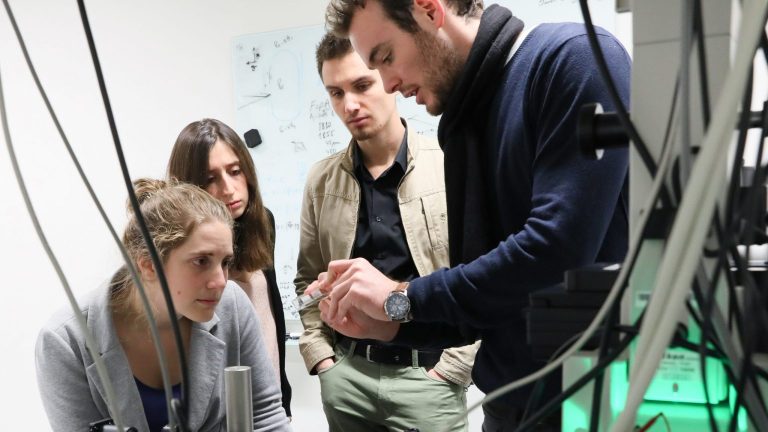
The Discovery Learning Program is behind EPFL’s MAKE projects, where students supplement their classroom instruction with cross-disciplinary teamwork, project-based learning, experiments and prototype building. This program also runs the Discovery Learning Labs (DLLs), which provide students and teachers with state-of-the-art equipment for conducting hands-on exercises and carrying out projects with direct applications in R&D or the business world.
The Center for Digital Education runs a variety of programs designed to incorporate digital technology into our teaching approaches. The Center manages our School’s MOOCs and Campus Analytics initiative, and helps develop new tools and methods for teaching and learning.
The Center for Learning Sciences pools the efforts of everyone at EPFL involved in educational research and in developing new teaching tools and methods in an evidence-based manner. It addresses all levels of the Swiss educational system, from primary school onwards, performing translational research in education. More specifically, LEARN works with teachers and educational stakeholders on the ground to carry out pioneering projects, demonstrate the benefits with empirical results, and turn discoveries into practical, innovative and lasting teaching practices.
The Propaedeutic Center was created specifically to address issues related to the first year of Bachelor’s programs. It ensures that first-year curricula are updated regularly, effective and interactive, and foster a respectful environment. The Center also helps promote innovative teaching methods.
The Section Directors’ Conference coordinates teaching efforts and standardizes them across our School. The Conference develops and shares best practices and serves as a forum for discussion about teaching-related issues. It also advises the heads of the AVP-E.
The Interface with high schools is part of EPFL’s Interface with schools and institutions which updates these schools on the skills students need to study science and engineering under the best possible conditions, and aims to encourage students to pursue careers in science and engineering.
Contact
VPE Secretary
Vanessa Medana
[email protected]
Tél: +41 21 693 79 74
EPFL
CE 1 627
CH-1015 Lausanne
Deputies to the Vice President for Education
Isabelle Cahour
[email protected]
Pierre-André Besse
[email protected]
[email protected]
Daniel Chuard
[email protected]