

Bionanophotonic Systems laboratory
Prof. Hatice ALTUG
At the BIOnanophotonic Systems Laboratory, we develop ultra‑sensitive spectroscopy and sensing platforms for real‑time, label‑free, high‑throughput detection of trace biomolecules. Our work uses nanoplasmonics, metamaterials, and micro‑/nanofluidics to enable precise analyte trapping and manipulation. We also introduce new fabrication methods for low‑cost, large‑area, high‑throughput device production. In addition to biochemical sensing and spectroscopy, we investigate nanophotonic approaches for on‑chip optical communications.
Antanasijevic Lab – Virology and Structural Immunology
Prof. Aleksandar ANTANASIJEVIC
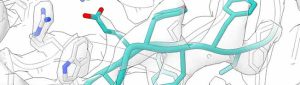
Our lab uses state-of-the-art electron microscopy to study antibody-antigen interactions in many different contexts, with the ultimate goal to define the molecular rules that govern them.

Metabolic Imaging – CIBM | Center for Biomedical Imaging
Dr. Cristina CUDALBU
We are focusing on advancing magnetic resonance (MR) and Positron Emission Tomography (PET) technologies and their applications in biomedical research. The CIBM Metabolic Imaging multidisciplinary team thrives to improve our understanding, interalia, of the steady-state and dynamic metabolism in-vivo (metabolite concentrations, kinetic fluxes), structure and microstructure, and cognitive function in healthy and diseased subjects, at preclinical level, as well as bringing technological and methodological innovations to the community.

Lipid Cell Biology Laboratory
Prof. Giovanni D’ANGELO
The functional properties of cell membranes strongly depend on their lipid composition and different membranes both within the cell and among different cells have different lipid composition. At the Lipid Cell Biology Lab, we aim at understanding the meaning of compositional variability in cell membranes by studying the mechanisms by which the lipid composition is determined.
Laboratory of Systems Biology and Genetics
Prof. Bart DEPLANCKE
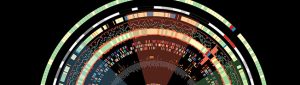
The Laboratory of Systems Biology and Genetics (LSBG) studies genome organization, regulation, and variation through three pillars: “Adipo” explores mesenchymal stromal cell function in adipose biology, “Geno” examines how regulatory variation shapes diversity, and “Techo” develops advanced microfluidic, sequencing, and computational tools to drive discoveries in both areas.

Laboratory for Bio- and Nano- Instrumentation
Prof. Georg FANTNER
We develop new measurement tools and instruments to characterize and manipulate biological samples (molecules, cells, tissue) at the nanoscale. Our focus is to enable new biological research through advancing scanning probe techniques such as atomic force microscopy, scanning ion conductance microscopy, single molecule measurements and 3D nanoscale tomography.

Laboratory of Quantum and Nano-Optics
Prof. Christophe GALLAND
The laboratory of quantum and nano-optics develops optical biosensing approaches based on plasmon-enhanced light-matter interaction. We also use optically adressable coherent spin defects in diamond for quantum sensing.
Magnetic Resonance Imaging Systems and Methods
Prof. Dimitrios KARAMPINOS
The laboratory of Magnetic Resonance Imaging Systems and Method (MRISM) develops novel MRI instrumentation, data acquisition, image reconstruction and signal modeling techniques in order to increase the effectiveness of MRI in modern diagnostic imaging and to generate new imaging biomarkers.

Laboratory for Soft Bioelectronic Interfaces
Prof. Stéphanie LACOUR
The Laboratory for Soft Bioelectronic Interfaces (LSBI) conducts research at the intersection of microfabrication, neurotechnology, and bioelectronics to develop next-generation neural implants and soft materials for seamless in vitro and in vivo interfaces. Our work spans fundamental science to translational research, bridging engineering and medicine to advance neurotechnology for clinical applications.
Laboratory of Biological Network Characterization
Prof. Sebastian MAERKL
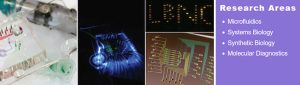
The Maerkl lab (LBNC) conducts research at the intersection of engineering and biology, focusing on cell-free synthetic biology. By integrating microfluidic technologies, quantitative analysis, and biophysical modeling, the lab aims to both forward- and reverse-engineer complex biological systems.

Laboratory of Experimental Biophysics
Prof. Suliana MANLEY
We develop smart and super-resolution fluorescence microscopy methods. Our goals are to enable gentler live cell imaging, while adapting the measurement to the sample dynamics, and to correlate structure, dynamics, and function. We use these methods to study organelle dynamics, focusing on the mitochondrial life cycle.

Laboratory of Biomedical Microfluidics
Prof. Christoph MERTEN
The Laboratory for Biomedical Microfluidics (LBMM) develops new technologies for antibody discovery, immune repertoire analysis and personalized cancer therapy. Making use of assay miniaturization, a big focus is on processing limited patient material and performing single-cell analysis.
Laboratory of Nanoscale Biology
Prof. Aleksandra RADENOVIC
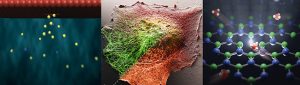
LBEN pioneers single-molecule biophysics, nanoscale imaging, sensing, and neuromorphic computing with ions, developing advanced optical, nanopore-based, and ionotronic techniques to study biological and molecular processes with unprecedented precision. By integrating super-resolution microscopy, nanofluidics, and development of ionic memristors, the lab pushes the limits of imaging, sensing, tracking, and computing at the nanoscale.

Neuroengineering Laboratory
Prof. Pavan RAMDYA
Ramdya Laboratory of Neuroengineering reverse-engineers cognitive and motor behaviors in the fly, Drosophila melanogaster, to better understand the mind and to design more intelligent robots. Flies are an ideal model – they generate complex behaviors, their nervous systems are small, and they are genetically malleable –and our lab develops and leverages advanced microscopy, machine learning, genetics, and computational modeling approaches to address systems-level questions.

Living Patterns Laboratory
Prof. Guillermina RAMIREZ-SAN-JUAN
We are interested in understanding how biological patterning and function emerge from microscopic molecular interactions. Our primary focus is on the problems of flow generation by arrays of active filaments (cilia) and extreme cellular mechanics.

Molecular Spatial Omics Laboratory
Prof. Florian SCHUEDER
Our lab investigates how the spatial arrangement of biomolecules, from the molecular scale up to the mesoscale, drives biological function.By inventing and applying cutting-edge imaging hardware, DNA nanotechnology, and computational tools, we aim to reveal the principles that link molecular architecture to cellular and tissue-level behavior, enabling new insights across microbiology, systems biology, and beyond.

The Medical Image Processing Lab
Prof. Dimitri VAN DE VILLE
By leveraging network science and graph signal processing, we pursue developing and applying innovative tools at various stages of the neuroimaging data acquisition, analysis, and interpretation pipeline (fMRI, M/EEG, and so on). We aim to obtain new insights into brain function & dysfunction by approaches that are based on modeling the brain and the spinal cord as a network and as a dynamic system.

Laboratory of Computational Neuro-Oncology
Prof. Sebastian WASZAK
Prof. Sebastian Waszak leads the Laboratory of Computational Neuro‑Oncology at EPFL. His team uses genomics and computational approaches to understand pediatric brain tumors, focusing on their evolution, classification, and clinical impact. By integrating molecular data with clinical studies, the lab aims to improve diagnosis, prognosis, and treatment for childhood cancers.