
Abdurahman Alsulaiman
Pathways to a hydrogen economy for the transport and buildings sectors in the EU and Switzerland under a net-zero case by 2050
The project is set to identify the key actions, mechanisms and policies to enable pathways conducive to a hydrogen economy in the EU and in Switzerland by 2050. There will be a focus on the transport and building sectors, as they make up around 60% of the GHG emissions of Europe and show significant potential for integrating low-carbon hydrogen technologies. The project is set to identify the barriers that need to be addressed and the measures necessary to create a growing market environment that boosts hydrogen production and supports scaling up its utilisation in the transport and building sectors.
Project dates: Jun 2022 – Mar 2027
Keywords: Hydrogen – Renewable and low-carbon energy – Future fuels
Partner: The Oxford Institute for Energy Studies
Laboratory: ENAC-IA-LEURE
Thesis director: Philippe Thalmann
EDOC program: EDCE


Zahra Ayar Dulabi
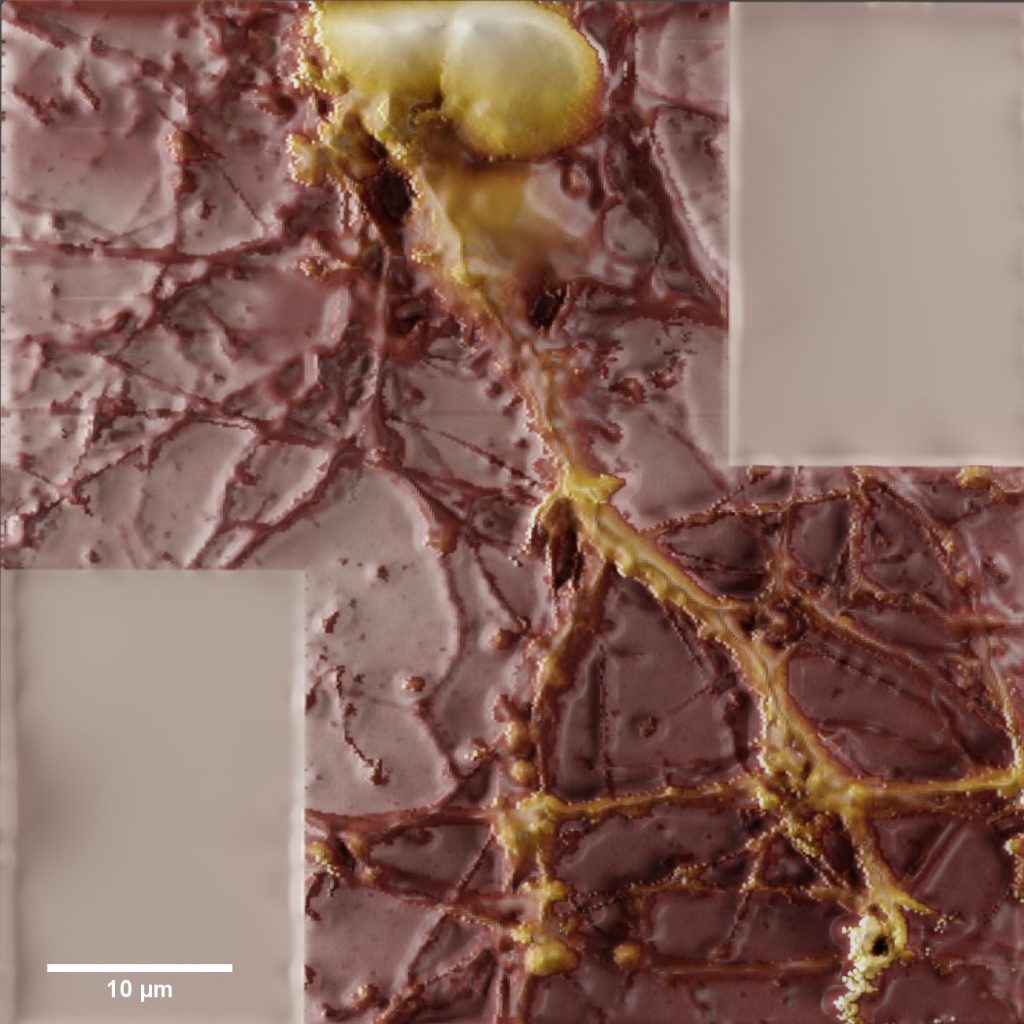
High-speed Scanning ion conductance microscopy on neurons as a new in vitro platform for studying neuroregeneration
In most mammals, such as rodents, neurons in the central nervous system, are post-mitotic cells meaning they are no longer able to divide or regenerate after birth. While some species such as opossums can regenerate their spinal cord until 17 days after birth. Understanding the dynamics of regeneration in different species and visualization of the phenomena after injury and during regeneration is vital to understand the differences in the mechanisms of regeneration and growth cone formation. However, neurons are among the most challenging biological samples for live cell imaging because they are extremely susceptible to any disturbance such as phototoxicity or mechanical stimulation. We propose a technology-based platform using scanning ion conductance microscopy (SICM) for in-vitro study of neuro-regeneration. With this label-free technique, we can image live neurons with high lateral, axial and temporal resolution after injury and during regeneration in their physiological condition and without any light exposure, external force or other disturbance.
Project dates: Nov 2021 – July 2026
Keywords: High-resolution Scanning Probe Microscopy – Neuro-regeneration – SICM
Partner: NanoSurf
Laboratory: SV-STI-IBI-LBNI
Thesis director: Georg Fantner
EDOC program: EDBB




Naveen Bhati
High-throughput experimentation and optimisation of perovskite solar cells
With the current focus on shifting towards non-fossil based energy resources, solar PV has gained significant interest over the last decade. However, within PV technologies space many new emerging technologies have been developed lately which might be better than existing PV technologies. One such candidate is perovksite solar cells which has shown huge improvements in its efficiency in just over a decade with efficiencies reaching the level of established silicon cells. Moreover, this technology is based low energy intensive processes and can also be used with flexible substrate and has many other advantages. However, taking this technology to market is still hindered because of issues related to scaling-up and stability. Therefore, my project aims to design and develop a high-throughput experimentation framework and integrate it with computer-aided methods based on machine learning and artificial intelligence to expedite the process of screening and optimisation of these cells with respect to different key performance indicators.
Project dates: Feb 2022 – Jul 2026
Keywords: Perovskite solar cells – High-throughput experimentation – Optimisation
Partner: CSEM
Laboratory: SCI-STI-FM
Thesis director: François Maréchal
EDOC program: EDEY

Roberto Boghetti
Towards quasi real-time simulations of district heating networks for an optimal sustainable design and control
This thesis addresses the simulation and optimization of District Heating Networks (DHNs) across their entire lifecycle, arguing that no single modeling paradigm can simultaneously satisfy the competing demands of speed, accuracy, and flexibility. For detailed design, it introduces PyDHN, a validated open-source Python framework for high-fidelity, component-based physical simulation of meshed networks, verified against benchmarks and real monitoring data from the Verbier (Switzerland) DHN. For the operational phase, a hybrid differentiable framework replaces the hydraulic solver with a network-specific Graph Neural Network (GNN) surrogate while reformulating the existing Lagrangian thermal model into a linear, differentiable, GPU-optimized implementation. The proposed GNN relies on a novel cycle-based graph representation that captures global pressure–flow dependencies in meshed networks, achieving nearly two-order-of-magnitude speedup while maintaining close agreement with the physics-based reference solver. The differentiable thermal formulation further enables gradient-based optimization of control strategies, outperforming gradient-free alternatives. For the pre-design phase, an extension of the proposed GNN generalizes across unseen topologies, including zero-shot transfer to the Verbier DHN, providing sufficient accuracy for rapid layout exploration at minimal computational cost. Overall, the thesis demonstrates that data-driven surrogates complement rather than replace physical models, providing computationally efficient yet physically grounded simulation and optimization workflows.
Project dates: Feb 2022 – Jan 2026
Keywords: District Heating Networks – Optimization – Machine Learning
Partner: Satom SA
Laboratory: STI-IEL-LIDIAP
Thesis director: Jean-Marc Odobez – Jérôme Kämpf
EDOC program: EDEE
Beatriz Bueno Mouriño
Computational discovery and understanding of metal and covalent organic frameworks as photocatalysts for alternative energy applications
Photocatalysis offers a pathway to sustainable processes, such as sunlight-driven water splitting for hydrogen production. By converting solar energy into chemical energy, these systems can generate renewable fuels and chemicals without relying on fossil resources, addressing both energy and environmental challenges. Realizing this potential at an industrial scale depends critically on the choice of photocatalyst. Metal-organic frameworks (MOFs) and covalent organic frameworks (COFs) have emerged as promising candidates due to their porosity, large surface area, and tunability with different functional groups.
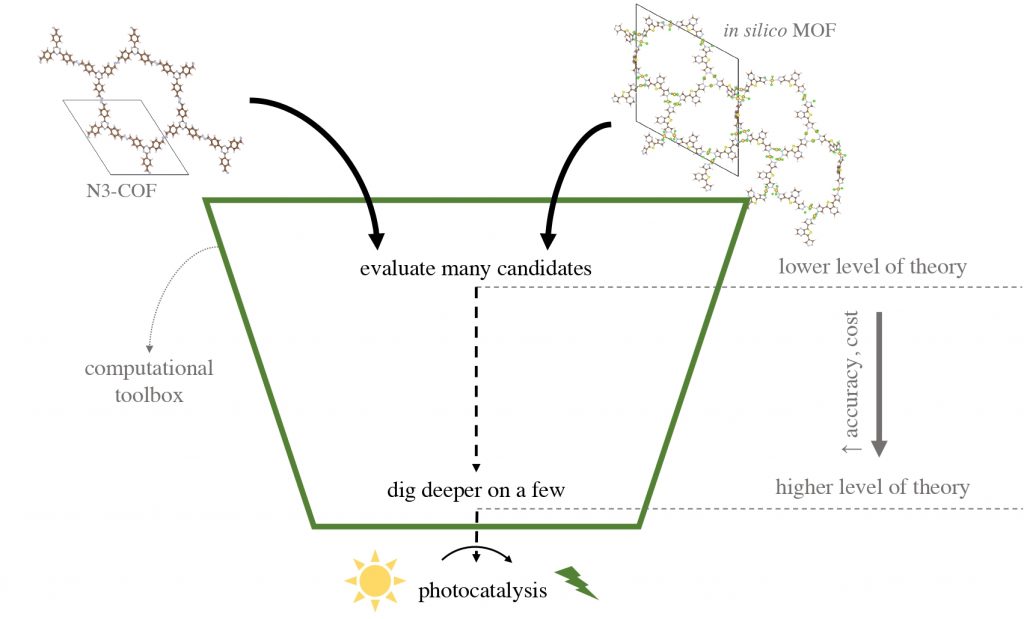
This project aimed at computationally exploring MOFs and COFs photocatalysts both in large and in depth, to propel discovery of prospective candidates and gain fundamental understanding of their photocatalytic properties. Firstly, we explored the chemical design space of MOFs and COFs for photocatalysis using a dedicated computational workflow. This approach allowed us to stablish design criteria, gain chemical insights, and select promising candidates.
Going further, we investigated a few promising photocatalysts in depth, focusing on their optical properties and the underlying physics of light absorption in these materials. Specifically, we focused on the impact of lattice vibration and excited state phenomena on the photocatalytic properties of MOFs.
Lastly, we designed a promising stable MOF to generate H2 from seawater. This MOF performs better in seawater, which is unusual for photocatalysts, yet highly desirable given seawater’s abundance. Combining theory and experiments, we find that the seawater ions play an important role in activating the MOF photocatalyst, i.e. by facilitating the in situ formation of co-catalysts.
Project dates: Mar 2022 – Feb 2026
Keywords: Photocatalysis – Green Hydrogen – Computational Chemistry
Partner: Lawrence Berkeley National Laboratory
Laboratory:SB-ISIC-LSMO
Thesis director: Berend Smit
EDOC program: EDCH

Vasileios Chanis
In the Quest for -Lost- Meaning: The Vernacular Architecture Discourse in the Age of Environmental Awakening, 1939–1972
The thesis examines a central topic in architectural theory: the evolving relationship between “contemporary” and “traditional” architecture in the aftermath of World War II. While the immediate postwar period was dominated by the International Style as the prevailing architectural paradigm, it also witnessed a surge of scholarly interest in traditional buildings and settlements. This intellectual shift led to the emergence of a substantial body of architectural literature that placed vernacular architecture at the forefront of professional and academic discourse. Though vernacular influences existed in pre-war architecture, they were often framed within an abstract myth of origins. In contrast, postwar interpretations of the vernacular became closely linked to the emerging notion of “environment”—long before its present-day associations with sustainability. This discourse, forming part of what can be called “environmental awakening,” sought to address growing concerns over pollution, rapid urban development, the disappearance of historic cities, and uncontrolled urban sprawl.
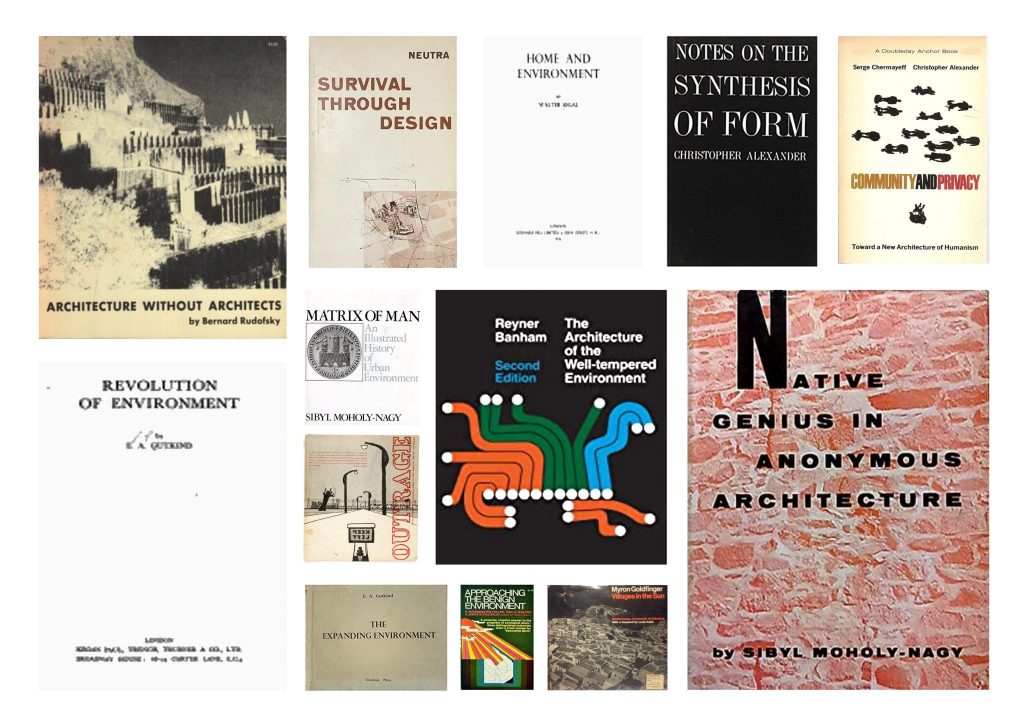
The study investigates this critical transformation through an analysis of architectural books published between 1939 and the early 1970s. By revisiting the broader architectural discourse of this period, the research defines what is termed the “vernacular architecture discourse.” The method involves examining the representation of vernacular architecture in interpretive books, focusing not only on textual analysis but also on drawings and photographs. These books are studied both as carriers of architectural knowledge and as designed objects that influence discourse. The research is based on over 100 titles retrieved from archives, all in English, given the dominant influence of the Anglo-Saxon cultural sphere in Western architectural thought during this period.
Finally, this research has two primary objectives. First, it seeks to critically reconstruct the architectural discourse of the time by incorporating contemporary scholarly perspectives. This is achieved through an interdisciplinary methodology that integrates architectural history, digital humanities, phenomenological philosophy, and the architectural analysis of specific case studies of projects by architects actively engaged in this discourse. Second, the study aims to produce an operational appendix for scholarly use, summarizing the archival findings, tracing the evolution of architectural publications, and mapping the shifting interpretations of the vernacular.
Project dates: Dec 2021 – Feb 2026
Keywords: Vernacular Architecture – Environmental Design – History and Theory of Architecture
Partner: Fondation Braillard Architectes
Laboratory: ENAC-IA-LAPIS
Thesis director: Nicola Braghieri
EDOC program: EDAR
Raziyeh Dadashi Motlagh
Compact and Energy-Efficient Dielectric Laser accelerator for Dark Matter Studies
The compact size and potential for high energy output of Dielectric Laser Acceleration (DLA) could have significant implications for particle physics, materials science, and medical research. DLA uses laser electric fields to accelerate electrons and has the potential to be more efficient and compact than conventional particle accelerators in certain applications.
My thesis focuses on the development of a Dielectric Laser Accelerator for the study of dark matter, a crucial yet elusive component of the universe. In my research, I will conceptually design a laser-driven electron acceleration system, analyse the electron beam properties and conduct experiments to study the properties of the accelerating structures. The goal is to design a compact and energy-efficient single electron accelerator with high energy output suited for dark sector researches.
Project dates: Apr 2022 – Sept 2026
Keywords: Dielectric Laser Acceleration – Dark Matter Studies – High Energy Physics
Partner: CERN
Laboratory: SB-IPHYS-LPAP
Thesis director: Mike Seidel – Rasmus Ischebeck
EDOC program: EDPY


Tom Enbar
Development of IL-4-secreting CAR-T cells to investigate the role of type 2 immunity in cancer immunotherapy
Type 2 immunity has long been known to be involved in atopic diseases, such as allergy and asthma,
however, reports on its involvement in tumoral immunity have been paradoxical 1. [LT1] Recent studies have suggested that cancer patients who receive chimeric antigen receptor (CAR)-T cells with increased T helper type 2 (Th2) function display long-term complete remission 2. Nevertheless, the role of type 2 immunity and its coordination with type 1 immunity remains unclear in the treatment of cancer. Experiments in our lab have demonstrated that the administration of half-life extended interleukin-4 (IL-4) fusion protein (Fc-IL-4), the prototypical Th2 cytokine, has been linked to increased longevity of intratumoral exhausted CD8+ T cells, leading to enhanced therapeutic efficacy in multiple mouse tumor models. In my PhD thesis, I aim to investigate the role of type 2 immunity and its antitumor properties. Specifically, I will study the effects that IL-4 has on the tumor and the associated immune responses by designing IL-4-secreting CAR-T cells and study the possible synergistic effects of type 1 and type 2 immunity in the context of cancer immunotherapy. Additionally, I will address the potential risk of adverse effects that can arise from CAR-T cell therapy by utilizing an inducible CAR design, which upon caffeine administration will allow CAR signaling in response to antigen recognition.
Project dates: Oct 2021 – July 2026
Keywords: T cell therapy – Cancer immunity – Cytokines
Partner: TBC
Laboratory: STI-LBI
Thesis director: Li Tang
EDOC program: EDBB

Giulia Frigo
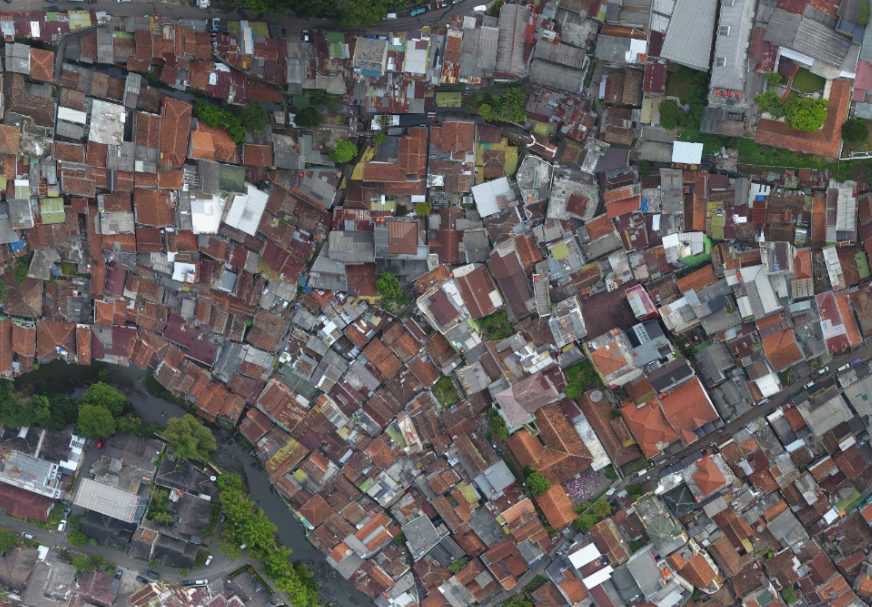
Analysing plastic waste flow across different urban landscapes
Plastic waste management is a complex and systemic challenge. The generation and handling of waste are embedded in local governance arrangements, everyday practices, and urban spatial conditions. Although recent advances in Urban Metabolism (UM) and Material Flow Analysis (MFA) research highlight the need for more integrative perspectives on material flows, much of the literature still isolates waste generation and disposal practices from their urban and social contexts, overlooking intra-urban differences.
Goal. The goal of the thesis is to develop a systemic and spatially grounded understanding of plastic waste flows by examining how social structures, urban landscapes, and individual agency interact to shape these flows. The thesis has three interrelated objectives. First, to understand how plastic waste flows vary across different urban areas and assess whether these variations are statistically and spatially significant. Second, to explore the interplay of individual motivations, social dynamics, and neighbourhood urban conditions shaping household plastic waste sorting practices. Third, to analyse the built environment and psychological factors associated with the presence of illegal dumpsites and litter.
Method. Five administrative wards (kelurahan), comprising 54 neighbourhoods (Rukun Warga) in Bandung, Indonesia, were selected as a case study. Data were collected through mobile-based georeferenced household surveys (n =1539) and geotagged photo mapping of litter, illegal dumpsites, and disposal facilities. First, plastic waste flows were quantified across each kelurahan using a georeferenced, bottom-up MFA. Second, spatial clustering and regression analyses were used to examine the drivers and barriers of household plastic waste sorting. Third, correlation analyses and regression models were used to identify built environment and psychological factors associated with proximity to litter and dumpsites.
Results. The analysis reveals significant disparities in plastic waste consumption and disposal practices across kelurahan, with substantial variation across all examined flows. Spatial analysis reveals a clear pattern: waste sorting clusters in areas with neighbourhood-based initiatives. Regression models indicate that accessibility, local leadership, and effective collection systems support waste sorting. Conversely, visible pollution, infrastructural constraints, high population density, and mistrust in government effectiveness reduce the likelihood of waste sorting. Lastly, household proximity to dumpsites and litter is associated with the absence of collection services, inadequate roads and wastewater infrastructure, and high population density. It also correlates with lower perceived environmental self-efficacy and education among residents.
Conclusion. This interdisciplinary work moves beyond fragmented, sector-specific analyses by integrating social, spatial, and behavioural dimensions into the study of plastic waste flows. The spatial organisation of the city – where people live, the accessibility of services, and the characteristics of their neighbourhoods – strongly shape residents’ capacity and motivation to engage in environmentally responsible behaviour. By considering the interconnected material, spatial, and social dimensions of waste management, cities can reduce mismanaged waste, support residents’ capacity to engage in pro-environmental behaviour, and build more equitable waste systems.
Project dates: Jan 2022 – Feb 2026
Keywords: Waste management – Developing countries – Material flow
Partner: UNEP-GRID
Laboratory: HERUS
Thesis director: Claudia Binder – Christian Zurbrugg
EDOC program: EDAR



Ilia Igashov
Surface fingerprint approaches for mining of new targets and development of novel molecular degraders
Early-stage drug discovery has long relied on screening-based methods, which are inherently limited by the available libraries of chemical compounds. Even the largest available virtual screening libraries are far from the estimated 1060 drug-like molecules in chemical space. In my thesis, I explore an alternative computational drug discovery strategy: generative structure-based drug design. Instead of searching for the best small molecule candidate among the available ones, we propose to use generative models, deep neural networks that learn the underlying distribution of the chemical data and can produce thousands of chemically novel, custom compounds for a specific protein in a matter of seconds.
Project dates: Dec 2021 – Nov 2025
Keywords: Drug Discovery – Machine Learning – Targeted Protein Degradation
Partner: Monte Rosa Therapeutics
Laboratory: STI-IBI-LPDI
Thesis director: Bruno Correia – Michael Bronstein
EDOC program: EDCB

Belén Yu Irureta-Goyena Chang
Identifying Moving Objects in Astronomical Surveys Using Artificial Intelligence
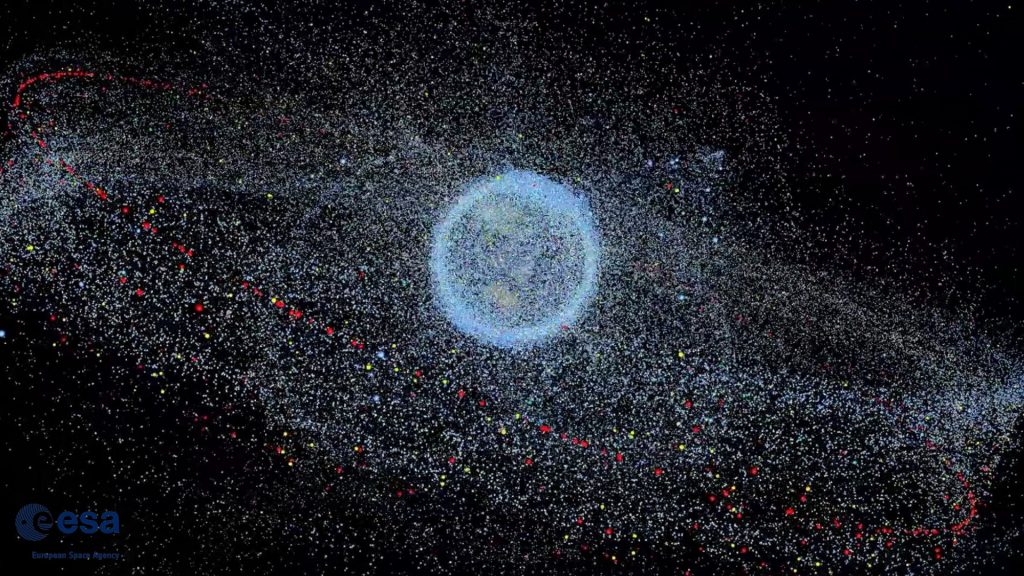
Two space dangers threaten the Earth. The first one is space debris, leftovers of old satellites that were left in orbit and over which we have no control. Because of debris, some orbits will soon become so congested that we will no longer be able to use them. The second risk is near-Earth asteroids, which pass close to the Earth’s orbit and threaten with impacting it.
My project tackles these two space threats by applying cutting-edge machine-learning techniques to astronomical images. Both space debris and near-Earth asteroids are moving fast, thus leaving tracks of light in long-exposure images of the night sky. I find these objects and extract useful information about them, such as their speed or rotation. The aim is to improve not only the invaluable ecosystem of the Earth’s orbit but also our ability to forecast the fall of near-Earth asteroids onto Earth, mitigating possible damage.
Project dates: Jan 2022 – Jun 2026
Keywords: Near-Earth Objects – Space debris – Machine Learning
Partner: European Space Agency
Laboratory: SB-IPHYS-LASTRO
Thesis director: Jean-Paul Kneib
EDOC program: EDPY

Jan Pisl
Understanding Tropical Deforestation with Machine Learning
Tropical forests play a crucial role in mitigating global climate change as carbon sinks and are also major biodiversity hotspots. Despite this, they suffer from high rates of deforestation. Remote sensing is being used to monitor tropical forests and to detect and report deforestation. Although valuable, such methods only react to deforestation that has already happened. In this project, we aim to use explainable machine learning to extract insights from satellite imagery about drivers of tropical deforestation and patterns of landscape changes over time and on a global scale. Using this information, we then aim to predict future occurrences of deforestation before any trees are cut.
Project dates: Feb 2022 – May 2026
Keywords: Remote sensing – Machine learning – Climate change
Partner: Picterra
Laboratory: ENAC-IIE-ECEO
Thesis director: Devis Tuia
EDOC program: EDCE

Anja Tiede
Sustainable photovoltaic schemes with compound semiconductors using correlated-disordered patterns
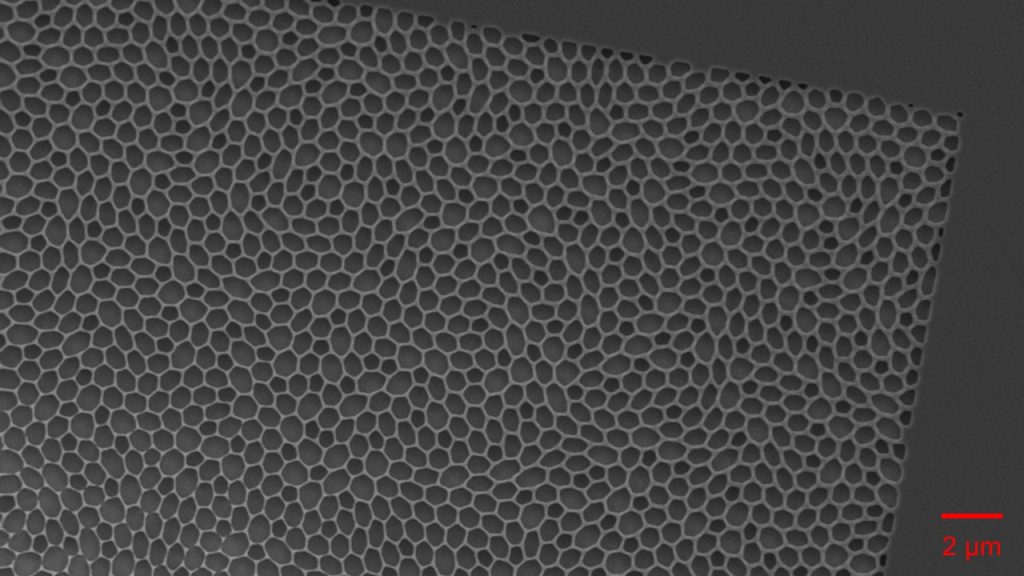
To achieve net-zero carbon emissions, exploiting solar energy is crucial. Currently, the photovoltaic market is dominated by silicon solar cells. However, silicon has unfavorable physical properties for absorption, is very energy-intensive in production and in high demand in other industries like construction. Direct bandgap compound semiconductors like zinc phosphide, an emerging photovoltaic material, have more favorable physical properties and provide an alternative to silicon photovoltaics. To reduce material consumption and production costs, minimizing the absorber thickness is equally essential. Less absorber thickness, however, reduces absorption and thus the solar cell efficiency. Correlated-disordered surface structures can significantly increase absorption in slabs thinner than absorption depth, by coupling incident light to guided modes in the slab. This project aims to showcase pathways for thin film photovoltaics based on compound semiconductors using correlated-disordered light trapping strategies.
Project dates: Feb 2022 – Oct 2026
Keywords: Photovoltaics – Nanophotonics – Hyperuniform correlated disorder
Partner: AMOLF
Laboratory: STI-IMX-LMSC
Thesis director: Anna Fontcuberta i Morral – Esther Alarcón-Lladó
EDOC program: EDMX