

The research laboratories of the Institute of Architecture and the City (IA) are the main research units at EPFL Architecture. Comprising some twenty structures headed by professors, they cover the key disciplines in which the institute conducts its scientific activities. Research is organised around five thematic areas: Theory and History, Transformation and Sustainable Development, Data and Digital Technology, Territory and Society, Project and Design. These laboratories form a stimulating interdisciplinary environment that fosters creativity, innovation and the production of knowledge in response to contemporary challenges in architecture and urban planning.
Architectural design and heritage
Prof. Claudia Devaux

Heritage as potential. Existing buildings are a resource for architecture. Our work aims to reveal the potential of what is already there. Through mastery and research into methods and tools for analysis and design, the capacity of heritage to transform itself can be brought to light. Between restoration and creation, via transformation, the time has come to seek new modes of intervention that are sober, hybrid, multidisciplinary and contextualised.
Modernity in heritage. Today, the heritage that has come down to us in greater numbers is the result of modernity. Demolition is no longer an option. We must work with this corpus of buildings, mostly made of concrete and glass, sometimes dilapidated, often poorly insulated and obsolete in terms of programming and functionality. This field of investigation ranges from the restoration of concrete to the adaptation of existing buildings to new uses, including a focus on the energy performance of these structures.
Atelier de la conception de l’espace
Prof. Dieter Dietz

ALICE is a network of diverse international individuals undertaking projects at the intersection of design, philosophy, technology, and society. A rich and constantly evolving ecology of architects, artists, engineers, landscape architects, social scientists, philosophers, thinkers and makers is held together by affinity and a shared concern for the challenges of our time, seeking to collectively and actively imagine (with) space. We see space as a lingua franca capable of bringing together different actors, voices and practices and, as such, connecting our efforts in teaching, design and research.
We aim to experiment with techniques and ways of doing inspired by spatial challenges and socio-ecological concerns through thinking, doing, drawing, building, researching, playing, or writing. In all these practices, we examine the processes and operations that aim to generate new forms of collaboration and cohabitation. As a result, we understand architecture as a transformed and rapidly changing discipline. We are diverse, and this plurality helps us to design in a truly collective dimension.
Lab for Creative Computation (CRCL)
Prof. Stefana Parascho

The Lab for Creative Computation (CRCL) operates at the interface of design, digital technologies and construction. We explore new modes of construction that combine robotics with human intervention and digital media, seeking creative solutions to contemporary challenges in design and construction. We develop new design and construction techniques involving humans and robots, as well as modes of collaboration between them, and critically examine the effects of digital construction on building and society at large. We are interested in modes of co-design involving humans and machines, and in the partially lost potentials that interaction, improvisation, and adaptation bring to design and construction.
Our research is experimental and places a strong emphasis on physical manifestation through prototypes and large-scale trials carried out in our robotics laboratory.
Domestic City laboratory
Prof. Sophie Delhay

THE HOUSING OF TOMORROW. Working on housing means finding ways to make tomorrow’s world more socially and spatially just, in terms of resource economics and the ecology of human relationships. Changing housing means changing both the city and housing, and the laboratory explores this process. SPACES AND USES. The laboratory sees housing as the intersection of social dimensions – related to lifestyles and uses – and dimensions specific to the discipline of architecture – related to plan composition and spatial, constructive and material qualities. INTIMATE TERRITORIES. The laboratory places housing within a broader spectrum than that of accommodation. Habitat is rather envisaged as a space and uses spanning the small and large scales: between furniture and territory, the domestic scale and the urban scale, the body and the city, the short time of daily gestures and the long time of the lives that follow one another there.
Habitat is also the place where ordinary and extraordinary moments, functional and poetic aspects, habits and surprises intertwine. It is at once rational and poetic, concrete and abstract, immanent and ontological, based on our ability to project ourselves – to dream of tomorrow – and grounded in our memory – our past history. In short, the home establishes relationships and connections above all else, putting opposites and seemingly contradictory or usually dissociated notions into perspective. The home is a place of connection.
Laboratory of Elementary Architecture and Studies of Types EAST
Prof. Anja Fröhlich, Prof Martin Fröhlich

Beyond the traditional notion of functionally determined typologies, the workshop takes a broader interest in the principles of architectural design typologies. Our interest in what makes architectural objects unique is grounded in knowledge of models and typological references. Critical examination of planned and built architecture enriches our specific knowledge and helps us develop a sense of meaning, purpose and quality in architecture. While functions change over time, architecture remains. Our teaching examines the aspects that determine the use, morphology and spatial articulation of buildings. The history and transformation of these aspects serve as an analytical basis for the design of new buildings as well as the reuse and conversion of existing buildings. Similarly, urban establishments serve as laboratories for architectural ideas, which we develop using the technical means and spatial concepts of our time.
Design work in the laboratory involves the detailed and concentrated study of spatial structures at all levels of design, from the integration of the building into an existing urban constellation to the development of specific ideas for the articulation of interiors. Joint work on projects in the studio is a fundamental element in fostering a culture of continuous and stimulating exchange. Intensive collaboration ensures ongoing discussion of different design approaches and helps students develop their ideas. In applied research, individual projects are not only a means of exercising creativity and developing spatial ideas, but also require the formulation of problems and the development of solutions based on real knowledge. Study trips provide an opportunity to experiment, analyse and discuss directly the relationship between idea, plan and reality.
Laboratory of Construction and Architecture
Prof. Paolo Tombesi

Understood both as an adjective (e.g. distant) and an acronym (Pour une Architecture du Réel, or For a Real Architecture), FAR defines the activities of a group of researchers interested in the quality of the built environment and the role of construction in creating that environment. Utopian in its aspirations and pragmatic in its operational tactics, FAR’s work seeks to define material solutions to the challenges of the built environment, rooted in their historical, social and economic realities. In this context, architecture and construction are inseparable: FAR is as interested in the construction of effective architecture, interpreted as a framework for social activities and a rival investment, as it is in the architecture of construction, i.e. the industrial system that allows spatial ideas to achieve solid built realisation. In the world of FAR, the act of design permeates the entire process of territorial transformation and delves into the social organisation of production.
Laboratory for the History andTheories of Architecture, Technology and Media
Prof. Alfredo Thiermann

The Laboratory for History and Theory of Architecture, Technology and Media (HITAM) was founded in 2022 at EPFL. It focuses on researching and analysing changes affecting the intertwined development of the built and natural environments. Using the past as a yardstick for change, the laboratory employs methods from architectural history, combined with media studies, science history, and other disciplines, to examine, with historical depth, pressing issues that transform and affect society. With a non-exclusive focus on the 19th and 20th centuries, the laboratory is particularly interested in understanding the political, social, cultural and environmental relevance of artefacts constructed within networks of information production, processing and transmission.
Rural Urbanity Laboratory
Prof. Alexandre Blanc
Coming soon.
Laboratory of Urbanism
Prof. Viganò Paola
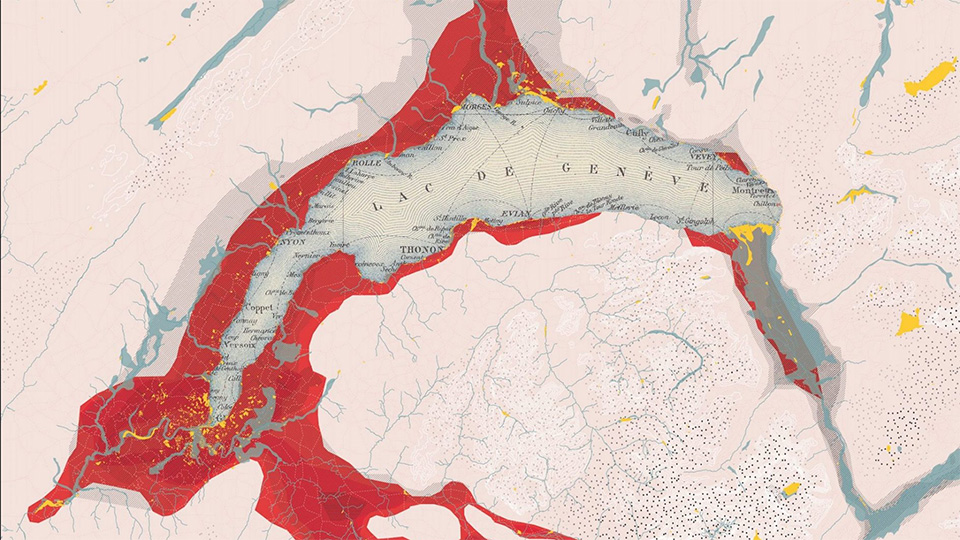
Lab-U explores the possibility of designing the city as a renewable resource, exploring the potential for a transformation that fully recycles what already exists. Its approach closely links design to theory, and it is convinced of the project’s strong capacity to produce knowledge. The city-territory, interpreted as a concrete potential for the construction of a sustainable and innovative urban dimension, is the unifying theme of LAB-U’s research and teaching, around which various teaching units, research proposals and initiatives are grouped.
Laboratory of Landscape Development
Prof. Beate Jessel

Landscape development involves coordinating and moderating the various demands placed on space in the interests of sustainable development. Our understanding of landscape is holistic: it is part of the territory as perceived by humans, whose character results from the interaction of natural and human factors. It is therefore important to study the natural, social, and societal conditions that influence the evolution of landscapes, to learn how to read landscapes, and to develop a solid basis for deciding what should be preserved and what should be changed, and for initiating and planning these changes. To this end, our work is characterised by inter- and transdisciplinary approaches and by working across different scales and planning levels.
Arts of Science Laboratory
Prof. Nicola Braghieri

The laboratory explores the processes of representing scientific thought using the tools of figuration employed by the artistic disciplines. Our research focuses on the development of new expressive methodologies combining advanced digital technologies and traditional figurative practices.
Laboratory of Architecture and Sustainable Technologies
Prof. Emmanuel Rey

The research conducted by the Laboratory of Architecture and Sustainable Technologies (LAST) aims to contribute to the exploration of interactions linking architectural projects and ecological transition issues, in particular urban regeneration, resource management, building decarbonisation, climate adaptation and proactive anticipation of certain societal changes. Specific emphasis is placed on translating sustainability principles to the various scales of architectural intervention – neighbourhoods in transition, bioclimatic buildings, innovative components – and on integrating evaluation criteria into the project process. Through its interdisciplinary approaches, based on the concept of ‘research by design’, the laboratory’s work also contributes to establishing dynamic links between architecture and other areas of the built environment.
Laboratory of Urban Sociology
Prof. Vincent Kaufmann

The Urban Sociology Laboratory (LaSUR) brings together some twenty researchers and doctoral students who share a collective ambition to understand urban phenomena from a social science perspective, grounded in the mobility and mobilisation capacities of its actors. With this in mind, its research themes are daily mobility, residential trajectories, the dynamics of peri-urbanisation and gentrification, housing, public space and network management.
Media and Design Laboratory
Prof. Jeffrey Huang

The Design and Media Laboratory (LDM) is an interdisciplinary laboratory that examines the effects of digitalisation on contemporary architecture and cities. Located at the intersection of EPFL’s School of Natural, Architectural and Built Environment (ENAC) and School of Computer and Communication Sciences (IC), LDM’s research explores the convergence of physical and digital architecture, artificial design, theories of design experience and circular cities. The goal is to create a future where artificial intelligence and architecture come together to address pressing environmental challenges and improve the human experience. The laboratory is leading the Blue City Innosuisse Flagship Project (2022-2026), which aims to understand the city as a complex network of flows and their interrelationships. LDM’s recent article, entitled ‘On GANs, NLPs and Architecture,’ was awarded the prestigious ACSA Best Article Award in 2023.
Laboratory for the History of Science and Technology
Prof. Jérôme Baudry
The Laboratory for the History of Science and Technology (LHST) at EPFL was founded in 2019. As a team, we seek to understand the transformations of science and technology within their historical, cultural, and social contexts. Although our research focuses primarily on the past—from the seventeenth century onward—we share a strong interest in contemporary developments in science and technology. We are keen to collaborate with scientists and engineers, as well as with sociologists and anthropologists, to better understand how science and technology shape, and are shaped by, the world today.
Our research interests include the role of diverse media—texts, images, models, and instruments—in the making of science and technology; the history of intellectual property; the history of the digital; and the relationships between technology and the environment. In both our research and our teaching, we actively experiment with new methods and tools drawn from the digital humanities and related fields. We also share a strong commitment to all forms of public history.
In addition, the Laboratory curates the scientific instrument collections of the University of Lausanne (UNIL) and EPFL. Comprising approximately 1,100 artifacts, these collections reflect more than two centuries of scientific research and teaching in the Lausanne region.
Laboratory of Environmental and Urban Economics
Prof. Philippe Thalmann

Economics of the natural environment (environmental protection, climate, sustainable development, energy) and economics of the built environment (property market, housing market and policy)
Laboratory of Imagination and Fabrication
Prof. Jo Taillieu

The starting point is observation. Observation and interpretation. A way of seeing as a starting point and perspective. Observation allows us to react to a situation in a certain way. Sometimes by affirming what is already there, sometimes by turning things upside down. But above all, by starting from what can already be found. Not just looking at things, but transforming them, is an important starting point when approaching a project. Or simply by turning things around. But sometimes also simply by focusing on one aspect to address the whole. Approaching the whole from a specific point of view. The jester in comedy. The celebration of everyday life and the acceptance of imperfection. Richness through temporality; humanity through imperfection. Understanding on the one hand. Imagination on the other. The Jo Taillieu Studio always deals with the idea of reference – what is your frame of reference – but also with the idea of practice – starting immediately from the detail -; the studio seeks not only a possible architecture for a simulated exercise, but rather a possible architect in a studio simulating practice. Observation—rather than analysis—and imagination—rather than concept—are part of this approach. A strong belief in the variety of media – from hand-drawn sketches and handcrafted models to digital drawings, not only as a result but rather as an ongoing method – are the tools on the table. A house is the simple subject of this studio. A subject of simple complexity. Learning about a house is learning about architecture. A studio where we take your enjoyment seriously.
Laboratory of Integrated Performance in Design
Prof. Marilyne Andersen

Research at LIPID is situated at the interface between science, engineering and architecture, with a specific focus on the impact of natural light on building occupants. With a focus on issues of comfort, perception and health and their energy implications, these research efforts aim to integrate lighting performance and indoor comfort more deeply into the design process, thanks to new synergies with other scientific fields, such as chronobiology and neuroscience, as well as psychophysics, computer science and digital imaging. This research extends to architectural practice through the LIPID spin-off OCULIGHT dynamics, which offers specialised services in natural lighting with a particular focus on the psycho-physiological effects of natural light on building occupants.
Research and Innovation On architecture, urban design and Territory
Prof. Charlotte Malterre-Barthes

RIOT (Research and Innovation On Territory) is a laboratory engaged in teaching and research at the Institute of Architecture (ENAC) of the Swiss Federal Institute of Technology in Lausanne. Convinced that the construction sector and design disciplines must undergo a transformation and fully commit to addressing current social and climate emergencies by reorienting themselves to meet challenges and repair damage, RIOT uses tactics and strategies to decarbonise, decolonise and depatriarchalise the production of space through design.
Laboratory of South-North Sustainable Construction and Conservation
Prof. Aziza Chaouni
Led by architect and civil engineer Assistant Professor Aziza Chaouni, the SoNo Lab (South–North Laboratory for Sustainable Construction and Conservation) is an architecture and construction research laboratory at EPFL dedicated to advancing sustainable building practices and heritage conservation through equitable, reciprocal collaboration between the Global South and the Global North.
The lab is housed at EPFL’s Smart Living Lab in Fribourg, a leading research environment for sustainable construction and the built environment. SoNo benefits in particular from access to the Hall Bleue, a large-scale experimental space dedicated to full-scale prototyping, testing, and assembly. The lab will also be integrated into the Smart Living Lab’s forthcoming state-of-the-art new building, which will further strengthen its capacity for interdisciplinary research, experimentation, and collaboration across architecture, engineering, and environmental sciences.
Structural Xploration Laboratory
Prof. Corentin Fivet

By combining architecture and structural design, we are paving the way for the recycling and reuse of load-bearing elements in buildings, thereby advancing the construction industry’s adoption of the circular economy. We are also developing new computational methods to improve collaboration between designers and machines during the early stages of architectural/structural design. Our research and teaching activities are guided by sustainability challenges, rooted in history, embracing complexity, and enhanced by digital technologies.
Studio of Architectural Theory and Experience
Prof. Eric Lapierre

In its search for an epistemology of architecture distinct from those of science, technology, and art, the TEXAS laboratory is developing several parallel research projects that together contribute to understanding the specificity of architectural rationality in its mission to define built forms. More recently, the laboratory has launched a series of projects focused on understanding the environment from the perspective of architecture. Through project workshops, doctoral research and ongoing editorial projects, TEXAS seeks to highlight the ways in which architecture contributes to a conceptual, energetic, material and technical economy of means without resorting to exogenous technical solutions, which tend to define the criteria for a fair form. Our approach thus aims to strengthen architecture’s role in the transdisciplinary effort to reduce the impact of the built environment on global resources, while demonstrating the historic opportunity for architecture to reinvent itself once again through its response to the current environmental and energy crisis.
Theory of Environment and Materials in Architecture
Prof. Sarah Nichols

THEMA functions both as an acronym (Theory of Environment and Materials in Architecture) that describes the breadth of our research and teaching ambitions, and as a name (theme) used to introduce specific topics under this broad umbrella.
Theory and Project of Domestic Space
Prof. Pier Vittorio Aureli

The laboratory is organised as a series of courses devoted to both the history and theories of domestic space (as well as related theoretical topics such as urban planning and architectural theories) and as a forum for research on specific themes such as the deep history of domestication, the political economy of housing, and the genealogies of specific domestic types or elements. Current research at TPOD includes the following topics: the relationship between poverty and architecture and the emergence of domestic well-being, domestic space in matrilineal societies, a critical genealogy of the bedroom, a historical account of the rise and decline of university colleges, a critical history of the suburban villa in post-war Italy, the architecture of monastic institutions, and a study of the political economy of public housing. In addition to research on domestic space, TPOD’s teaching activities include other topics related to architectural theory and history.
Laboratory of Urban and Environmental Systems
Prof. Gabriele Manoli

At the Urban and Environmental Systems Laboratory (URBES), we seek to describe and predict interactions between the earth and the atmosphere, as well as the coupled dynamics between humans and nature across a wide range of spatial and temporal scales. Our goal is to shed light on the complex interactions between urban and natural systems, quantify the local and non-local impacts of human activities, and guide the design of greener, healthier and more sustainable territories. Specific research areas include urban climate and hydrology, soil-plant processes in natural and urban environments, urban structure and dynamics, and sustainable urban design – with a particular focus on urban green spaces, climate and health. Given the complexity of these issues, our research spans several disciplines, from hydrology and ecology to epidemiology, mathematical modelling, and complex systems science.