
1. AgenticRAG: A LangGraph Framework for Tool-Using Research Agents in Diffusion MRI – NOT AVAILABLE ANYMORE
Context
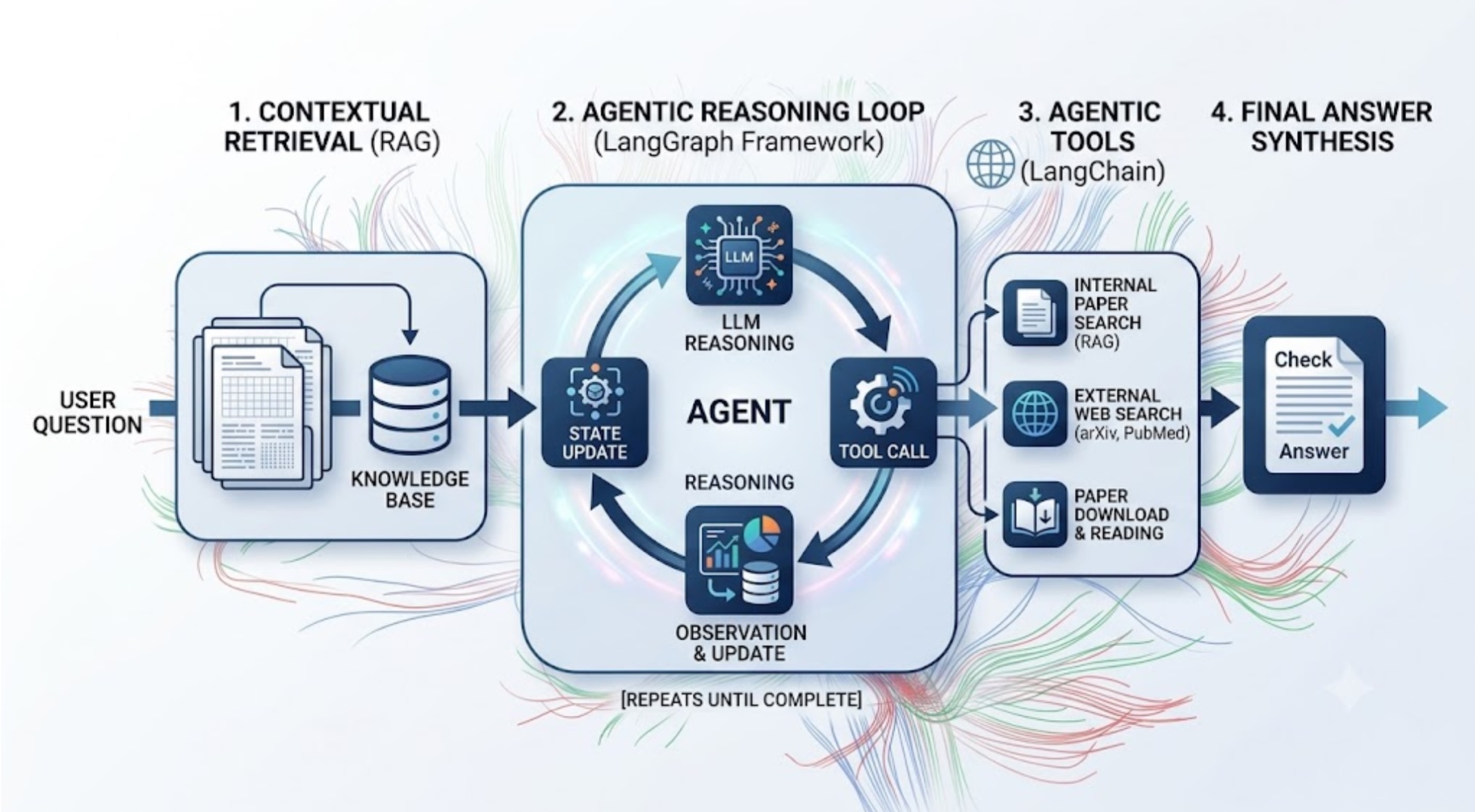
Retrieval-Augmented Generation (RAG) and AI agents give researchers new ways to work with scientific literature. A RAG system searches a collection of papers and writes answers using only what it finds, so the answers stay tied to real sources. An agent goes a step further: it can use tools, take several steps, and decide what to do next. Together, they can make reading and searching the literature faster and more thorough.
Project Overview
The goal is to build an agentic research assistant for diffusion MRI literature. Starting from an existing RAG system, the student will use LangChain and its graph library LangGraph to build agents that search, use tools, read the results, and repeat until they have gathered enough to give a good answer. We begin with the simplest agent design (a basic search-and-answer loop ) and build up to more capable ones, comparing them to see which choices actually help. The agent works entirely through tools it can call: searching our paper collection, searching the internet, and finding and reading new papers (for example, from arXiv or PubMed). A guiding question is when the simple system is already good enough, and when the extra effort of an agent is worth it.
Learning Outcomes
- Search systems (RAG): understand how a literature-search system works, from paper to answer.
- Agents with LangGraph: build agents as simple graphs that plan, use tools, and loop.
- Tools: set up and connect the tools an agent uses: paper search, internet search, paper download, and reading.
- Test evaluation: compare designs quantitatively: measure answer quality, profile wall time, understand computational complexity.
- Diffusion MRI: get familiar with the domain through AI-assisted reading.
This project is roughly 50% AI and agent coding and 50% research domain exploration.
Requirements
- Strong Python programming
- Basic understanding of scientific computing workflows
- Interest in natural language processing and information retrieval
- Curiosity about AI-assisted research methodologies
- Knowledge in DW-MRI/biomedical imaging (advantageous, not required)
Technical Outcomes
- A working research agent, from a simple version up to more capable designs, built with LangGraph.
- A set of tools the agent can use: paper search, internet search, paper download, and reading.
- A clear comparison of the designs using the evaluation we already have, showing which helps and for which kinds of questions.
- Short documentation so others in the group can run and reuse the system.
Project Milestones
- Phase 1 (Months 1–4): Review the literature on agentic AI and RAG frameworks. In parallel, set up the tools and build the first simple agent: -) Install our existing RAG pipeline -) Create and explore “search-and-answer loop” with LangChain. -) Integrate tools into the agent -) Fine-tune and get a working end-to-end version – ) Evaluate accuracy and compare it against vanilla-RAG and other simpler approaches.
- Phase 2 (Months 5–6): Build the more capable agent designs, compare them all, and write up which works best for which kinds of questions.
Supervisors
Dr Juan Luis Villarreal ([email protected]), Dr Jonathan Rafael Patiño ([email protected]), and Prof. Jean-Philippe Thiran.
2. Synthetic Stroke Lesion Simulation and Deep Learning Segmentation Using HCP Data
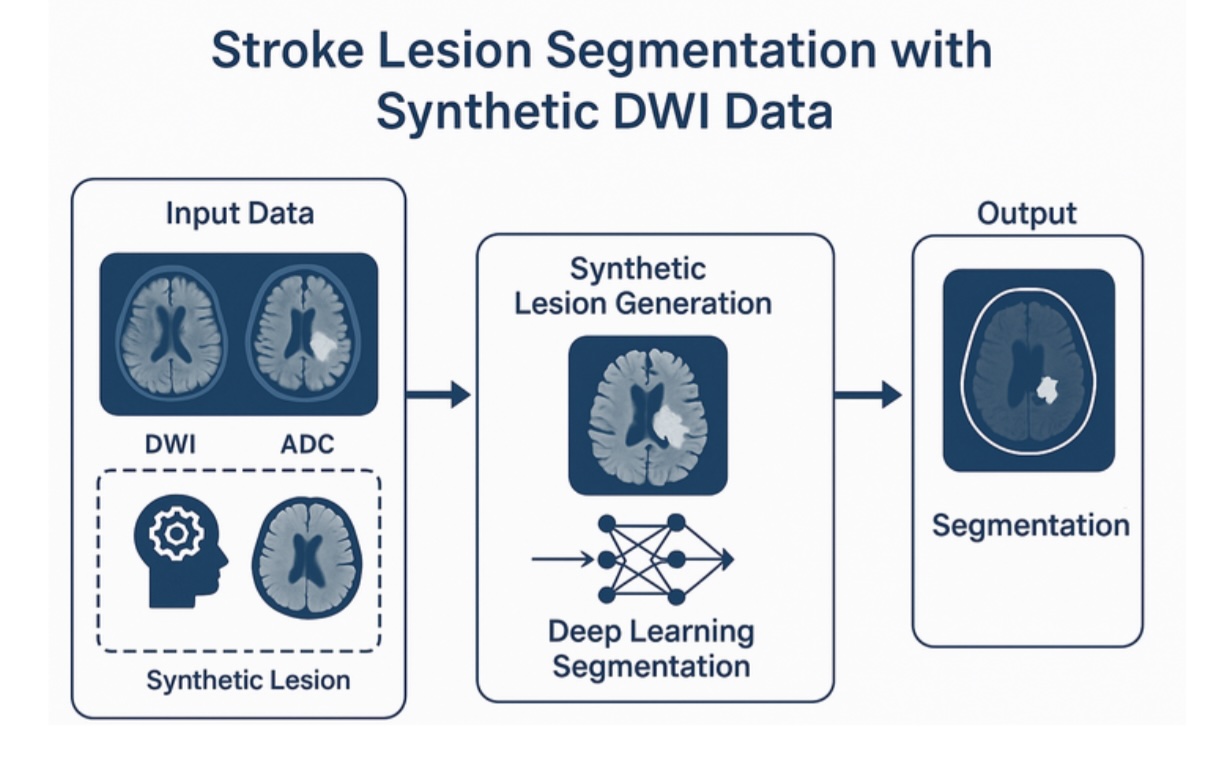
Automatic segmentation of ischemic stroke lesions in diffusion MRI is a critical task for clinical decision support. However, current supervised learning models require large and annotated datasets of stroke patients, which are difficult to obtain due to privacy concerns and annotation costs.
In this project, the student will develop a novel simulation-based framework to generate realistic synthetic acute stroke lesions using high-quality structural and diffusion MRI from the Human Connectome Project (HCP). From the high image quality of HCP subjects, synthetic lesions will be created by simulating changes in the MRI contrast inspired by known patterns of cytotoxic edema and white matter disruption. Additionally, tractography can be used to model anatomically consistent lesion propagation patterns in white matter. This dataset will be used to fully train a deep segmentation network from scratch.
The final part of the project will involve evaluating the trained model on real-world stroke imaging data from open clinical datasets, such as the ISLES challenge cohort, as well as other network prototypes developed and deployed at CHUV Lausanne University Hospital.
Requirements:
- Experience with Python and machine learning libraries (PyTorch, TensorFlow, or similar).
- Interest in diffusion MRI and image processing.
- Knowledge of neuroimaging tools (e.g., Dipy, MRtrix) is a plus.
Outcomes:
The expected outcome is a proof-of-concept segmentation pipeline trained purely on simulated data with strong performance on real-world stroke images. The student will be encouraged to co-author a scientific publication or extended abstract for submission to a machine learning or medical imaging conference (e.g., MICCAI, ISBI, MIDL).
Supervisors: Dr. Jonathan Rafael Patiño ([email protected]) and Prof. Jean-Philippe Thiran.
References:
[1] Radiopaedia. “Diffusion-weighted imaging.” Overview of DWI techniques and ADC mapping, foundational for understanding synthetic DWI/ADC in neuroimaging and lesion simulation. https://radiopaedia.org/articles/diffusion-weighted-imaging-2
[2] Sahoo P, et al. “Synthetic apparent diffusion coefficient for high b-value diffusion weighted MRI in Prostate.” This study demonstrates that ADC values for higher b-value DWI can be computed from lower b-values using a log-linear relationship, supporting the use of synthetic ADC for lesion simulation and optimized imaging contrast.
[3] “Robust Monte-Carlo Simulations in Diffusion-MRI: Effect of the Substrate Complexity and Parameter Choice on the Reproducibility of Results” (Rafael-Patino et al., 2020)
3. Deep Neural Network uncertainty quantification: beyond Deep Ensemble
Project goal
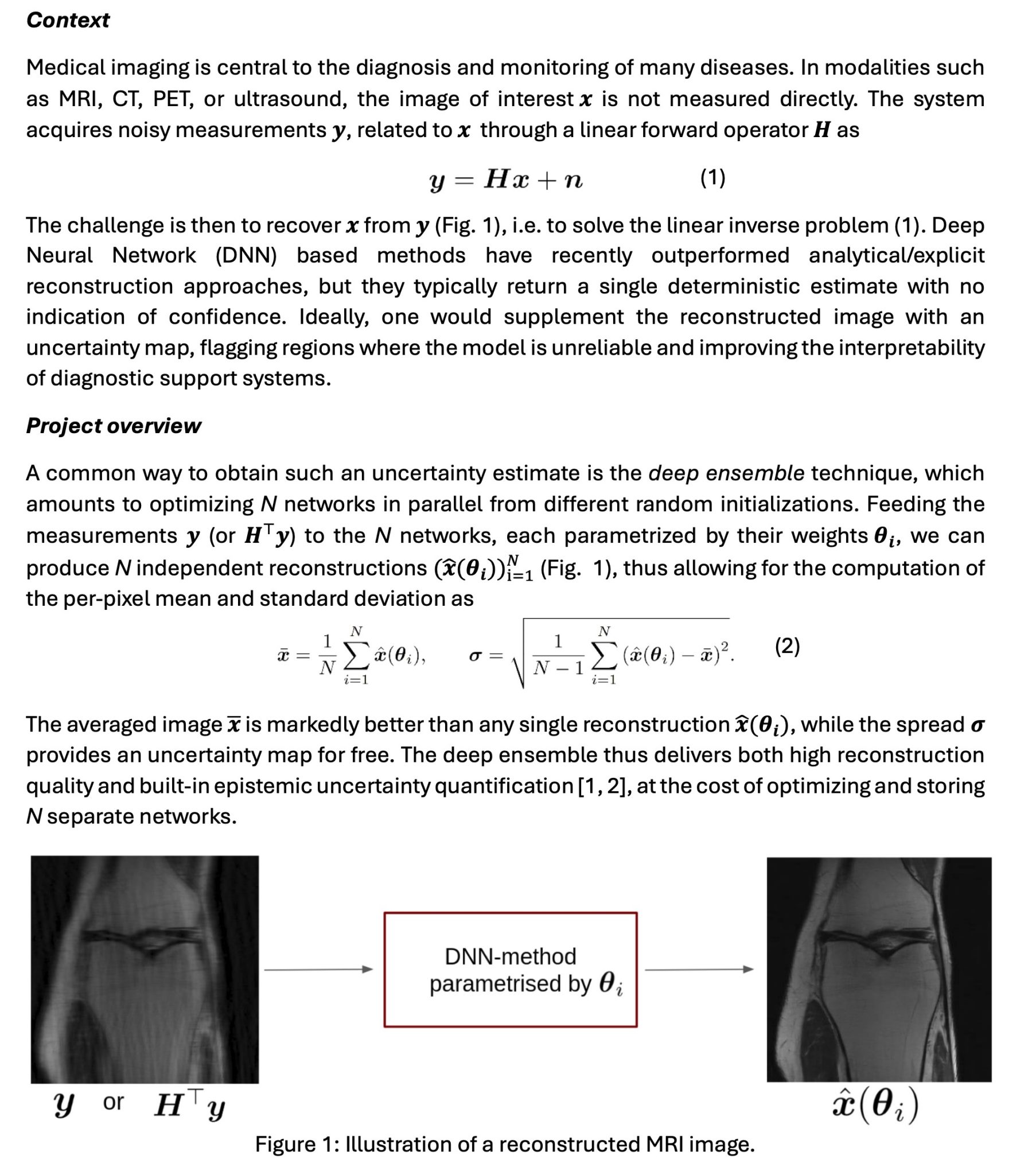
The goal of this project is to survey whether the reconstruction quality and uncertainty estimates of a full deep ensemble can be recovered at a fraction of the cost, using a single network or a single modified architecture. Three directions will be compared:
1. Input perturbation: Generate a set of reconstructions by perturbing the input/measurements, and then post-process it [3, 4].
2. Weights perturbation: Sample around the optimized weights, using for example a Laplace-style approximation [5].
3. Architectural change: Implement and test latest Bayesian-neural-network architectures [6, 7, 8].
Supervisors : Mr Mathieu Ruch ([email protected]), Dr. Jonathan Rafael Patiño ([email protected]) and Prof. Jean-Philippe Thiran.
References
[1] R. Farris, E. Telari, N. Artrith, K. Neyman, and A. Bruix, “Bayesian neural networks versus deep ensembles for uncertainty quantification in machine learning interatomic potentials,” 2025.
[2] G. Loaiza-Ganem, V. Villecroze, and Y. Wang, “Deep ensembles secretly perform empirical bayes,” 2025.
[3] J. Lehtinen, J. Munkberg, J. Hasselgren, S. Laine, T. Karras, M. Aittala, and T. Aila, “Noise2noise: Learning image restoration without clean data,” 2018.
[4] T. Pang, H. Zheng, Y. Quan, and H. Ji, “Recorrupted-to-recorrupted: Unsupervised deep learning for image denoising,” in Proceedings of the IEEE/CVF Conference on Computer Vision and Pattern Recognition (CVPR), pp. 2043–2052, June 2021.
[5] J. Antoran, R. Barbano, J. Leuschner, J. M. Hernández-Lobato, and B. Jin, “Uncertainty estimation for computed tomography with a linearised deep image prior,” Transactions on Machine Learning Research, 2023. [6] J. Arbel, K. Pitas, M. Vladimirova, and V. Fortuin, “A primer on bayesian neural networks: Review and debates,” 2023.
[7] M. Tölle, M.-H. Laves, and A. Schlaefer, “A mean-field variational inference approach to deep image prior for inverse problems in medical imaging,” in Proceedings of the Fourth Conference on Medical Imaging with Deep Learning (M. Heinrich, Q. Dou, M. de Bruijne, J. Lellmann, A. Schläfer, and F. Ernst, eds.), vol. 143 of Proceedings of Machine Learning Research, pp. 745–760, PMLR, 07–09 Jul 2021.
[8] M.-H. Laves, M. Tölle, and T. Ortmaier, “Uncertainty estimation in medical image denoising with bayesian deep image prior,” 2020.
4. Physics-Informed Learning for Sparse Measurement Selection in Diffusion MRI Protocol Design
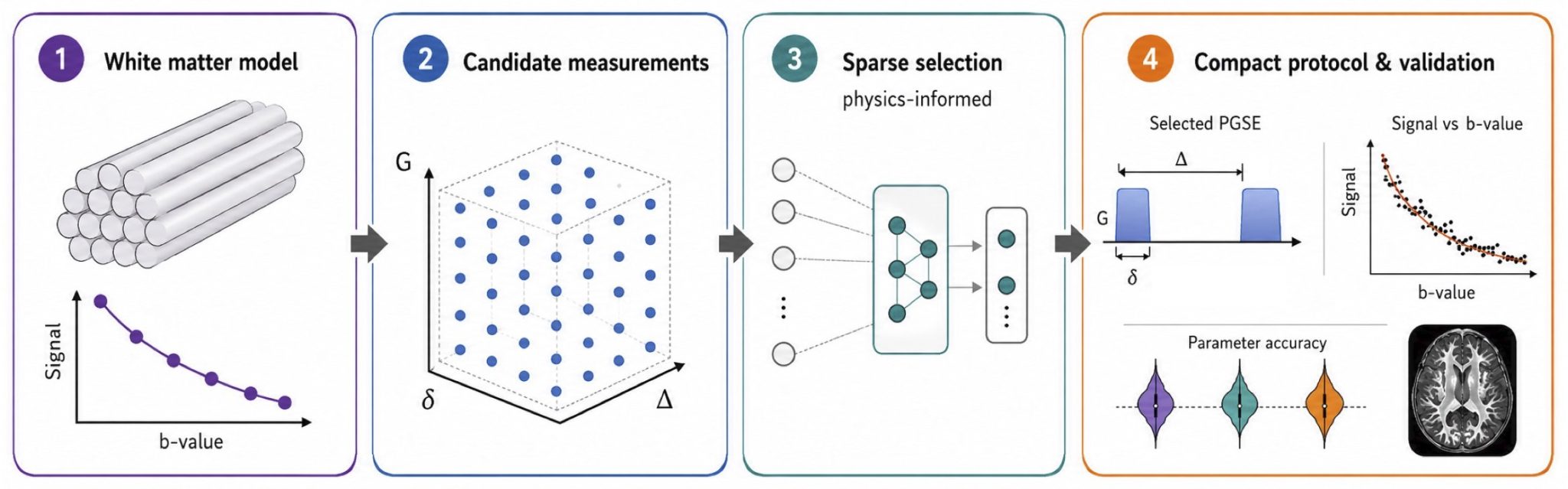
Diffusion MRI provides insights into white matter microstructure; however, accurate parameter estimation depends on acquisition measurements that are sufficiently informative about the underlying tissue properties. Data acquisition time is a key limitation in practice, making it necessary to identify a compact subset of measurements that retains the essential microstructural information.
In this project, the student will investigate machine-learning-based measurement selection for diffusion MRI protocol design. Starting from a larger set of feasible candidate measurements, the goal will be to learn a smaller subset that remains informative for estimating parameters of a white matter signal model. The selection will be guided by the signal model, using physics-informed criteria such as Fisher information or uncertainty-related objectives.
The project is well-suited for a master’s thesis and can be adapted to a semester project.
Objectives of the project:
- Generate synthetic signals using a white matter signal model.
- Implement a sparse, learning-based measurement selection strategy guided by physics-informed objectives.
- Evaluate the selected protocol using simulations and parameter estimation, and compare the learned compact protocol with baseline selection strategies.
Requirements:
- Strong programming skills in Python
- Experience with machine learning libraries (PyTorch, JAX, TensorFlow, or similar)
- Interest in signal processing and numerical optimization
Supervisors: Ekin Taskin ([email protected]), Dr. Jonathan Rafael Patiño ([email protected]) and Prof. Jean-Philippe Thiran
References:
[1] https://www.sciencedirect.com/science/article/pii/S1361841524000598
[2] https://onlinelibrary.wiley.com/doi/10.1002/mrm.21646
[3] https://www.frontiersin.org/journals/physics/articles/10.3389/fphy.2017.00061/full
5. Development of a pre-processing pipeline for diffusion-weighted MRI data followed by the implementation of a deep-learning-based automatic lymph-node segmentation tool
Context
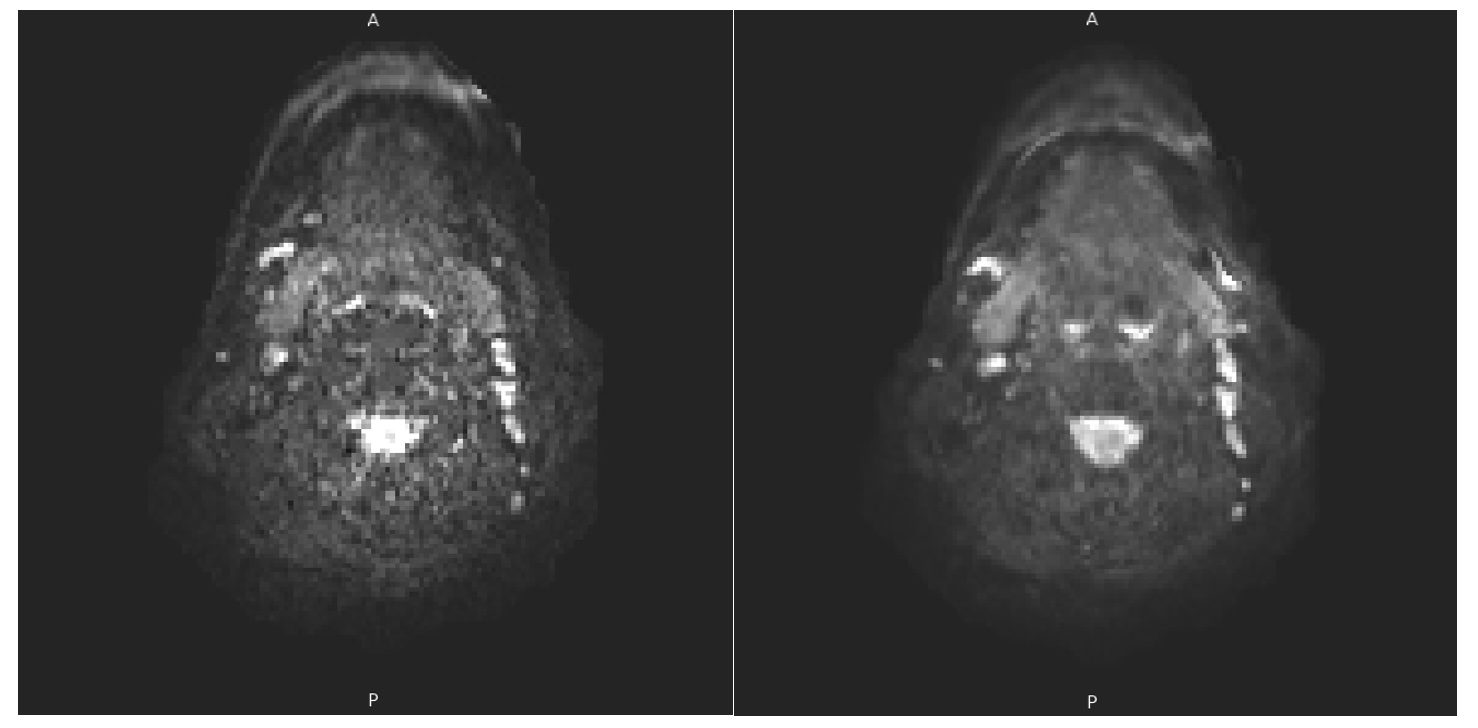
Diffusion-weighted MRI (DW-MRI) is a powerful, non-invasive tool for characterizing tissue microstructure. At LTS5, we study lymph nodes as they are relevant for oncological staging. Extracting reliable, reproducible measurements from body DW-MRI is difficult as raw data are corrupted by noise, Gibbs ringing, eddy-current and susceptibility distortions. Furthermore, they suffer from more physiological motion than brain acquisitions, resulting in non-rigid deformations between volumes. Standard motion correction only handles rigid motion, eddy-current, and susceptibility effects, so the b0 and diffusion-weighted images of a given lymph-node are often not perfectly superimposed. This misalignment corrupts voxelwise signal normalization and makes it hard to reuse a single mask across acquisition protocols. Finally, lymph nodes are small, numerous, and variable in shape and location, making manual segmentation slow and poorly reproducible. This is a major bottleneck for quantitative analysis.
This project builds on an existing DW-MRI body preprocessing pipeline developed in the lab and applied on multi-protocol acquisitions from a clinical scanner and extends it toward a fully automated lymph-node-analysis workflow.
Objectives
To develop and validate a complete image-analysis pipeline with three components:
- Preprocessing pipeline. Consolidate and extend the existing pipeline. Add rigorous quality control, per-shell noise bookkeeping, SNR estimation.
- Co-registration pipeline. Develop a robust non-rigid co-registration stage (e.g. ANTs SyN diffeomorphic registration, spherical-mean / rotation-invariant strategy) to bring volumes – across shells and across acquisition protocols – into a common anatomical space. The goal is voxelwise superimposability so that a mask can be shared across protocols, and signals can be normalized correctly.
- Automatic segmentation tool. Design, train, and evaluate a deep-learning model that automatically segments lymph nodes from the preprocessed, co-registered DW-MRI volumes, using manually delineated masks as ground truth. This includes building the training dataset, defining an appropriate loss for small/imbalanced targets, data augmentation, and quantitative evaluation. Ground-truth data are limited, so a central part of the work is defining a viable data strategy: manually annotating a set of nodes to build an in-house training/validation set, leveraging publicly available lymph-node imaging databases for pre-training or transfer learning, and/or exploring weakly-supervised, self-supervised, or unsupervised approaches when dense annotations are scarce. The choice and comparison of these strategies is an open, exploratory part of the thesis.
Expected outcomes
- A reproducible, documented end-to-end pipeline for body DW-MRI pre-processing, noise-characterization, quantitative diffusion maps creation.
- A validated non-rigid co-registration stage enabling shared masking and correct cross-protocol signal comparison.
- A trained lymph-node segmentation network with a quantitative evaluation, and an analysis of its behavior across protocols and diffusion-weighting.
- A comparative assessment of supervised vs. transfer-learning vs. self-/unsupervised strategies.
Requirements
- Good programming skills (Python); scientific computing; deep-learning.
- Background or strong interest in medical image analysis. Experience with medical-imaging tools is a plus.
- Basic knowledge of MRI physics / diffusion imaging is a plus.
- Autonomy, rigor, scientific-writing, database organization, code organization.
Supervision
Salomé Baup ([email protected]), Dr Jonathan Rafael Patiño ([email protected]), Prof. Jean-Philippe Thiran
References
1. Le Bihan D. et al. MR imaging of intravoxel incoherent motions: application to diffusion and perfusion in neurologic disorders. Radiology, 1986.
2. Veraart J. et al. Denoising of diffusion MRI using random matrix theory (MP-PCA). NeuroImage, 2016.
3. Kellner E. et al. Gibbs-ringing artifact removal based on local subvoxel-shifts. Magnetic Resonance in Medicine, 2016.
4. Andersson J.L.R., Sotiropoulos S.N. An integrated approach to correction for off-resonance effects and subject movement in diffusion MR imaging (topup/eddy). NeuroImage, 2016.
5. Avants B.B. et al. Symmetric diffeomorphic image registration with cross-correlation (SyN). Medical Image Analysis, 2008.
6. Wavefield Extrapolation in Polar Coordinates for Ultrasound Imaging in Heterogeneous Media
Project description
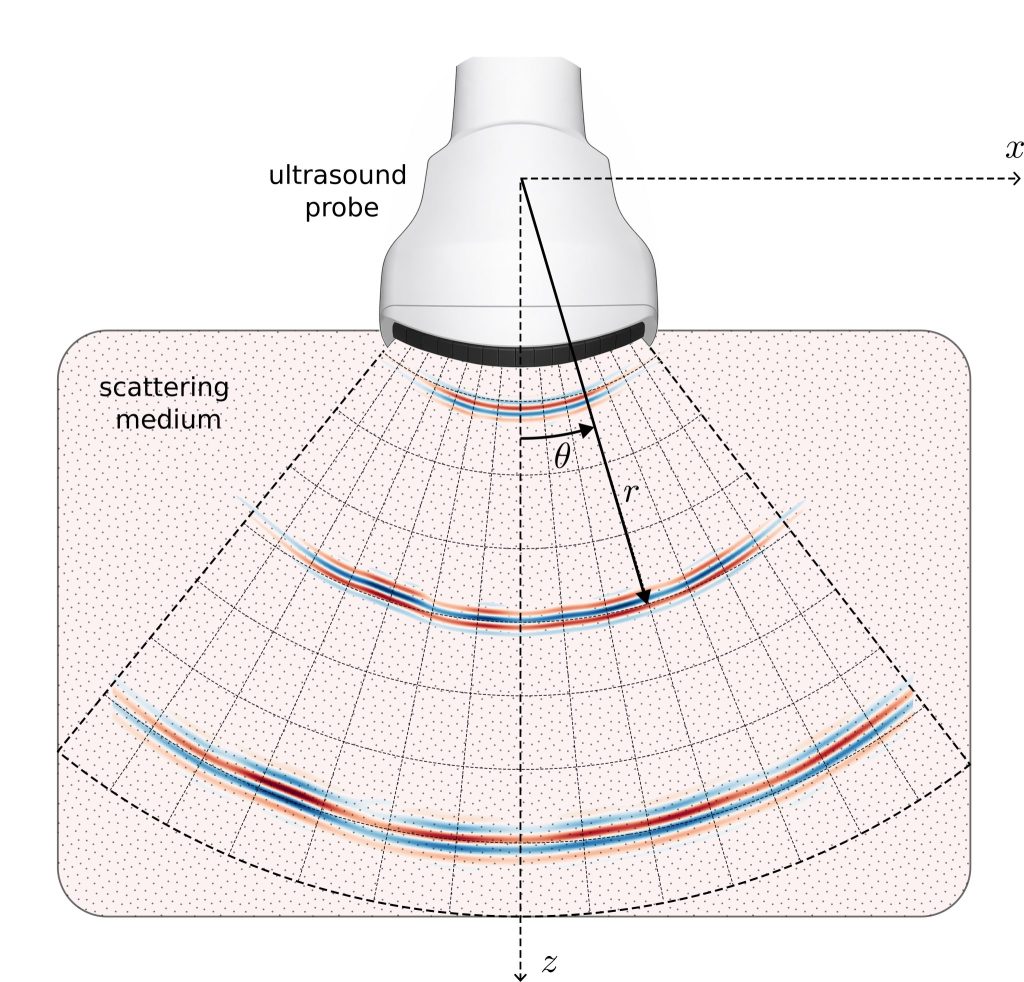
In medical ultrasound, tissues are probed by transmitting acoustic waves and recording their echoes with a linear or curved transducer array, depending on the target organ. Images are typically reconstructed assuming constant sound speed throughout the medium. In heterogeneous media, however, reconstruction algorithms must integrate wave-propagation models that explicitly account for sound-speed variations. To do this efficiently, we extrapolate the acoustic wavefield between planar surfaces by numerically solving a paraxial form of the wave equation in Cartesian coordinates [1]. For curved arrays, it is more natural to perform the extrapolation between surfaces of constant radius, but corresponding formulations in cylindrical coordinates remain largely unexplored.
In this project, the student will derive and implement a paraxial approximation of the two-dimensional Helmholtz equation in polar coordinates, building on an existing formulation for homogeneous media [2]. The goal is to develop a wavefield extrapolation algorithm for smoothly varying sound-speed distributions that is much faster than typical finite-difference methods. The resulting solver will be validated using simulated ultrasound data and benchmarked in terms of accuracy, numerical stability, and computational efficiency.
Requirements:
- Strong programming skills in Python
- Familiarity with C++ or CUDA is a plus; version control with Git is expected
- Solid foundation in wave physics
- Interest in computational modeling, inverse problems, or medical ultrasound
Outcomes:
The main deliverable is a validated, well-documented wave-propagation solver, to be released publicly under an open-source license through a Git repository. The student will be encouraged to present their work at an ultrasound conference (e.g., IEEE IUS) and contribute to a scientific publication.
Supervisors: Dr. Naiara Korta Martiartu ([email protected]) and Prof. Jean-Philippe Thiran.
References:
[1] P. L. Stoffa, J. T. Fokkema, R. M. de Luna Freire, W. P. Kessinger, “Split-step Fourier migration,” Geophysics, vol. 55, no. 4, pp. 410–421, 1990
[2] R. Ali and J. Dahl, “Angular spectrum method for curvilinear arrays: Theory and application to Fourier beamforming,” JASA Express Letters, vol. 2, no. 5, p. 052001, 2022.
7. Data-driven wave propagation modeling for ultrasound imaging
Project description:
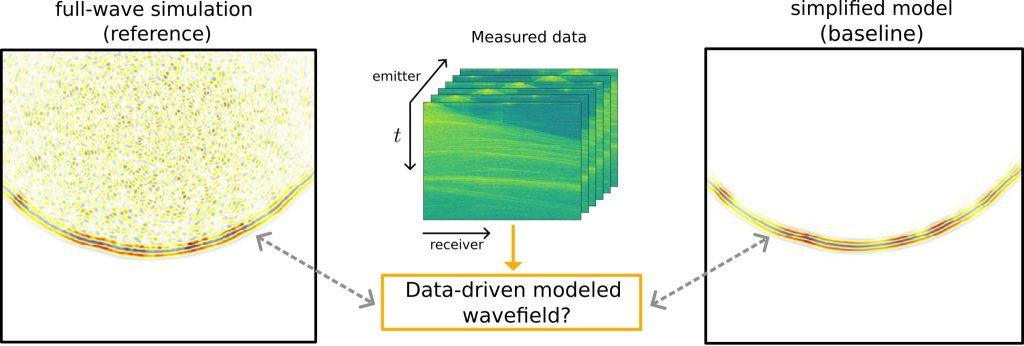
In medical ultrasound, biological tissues are probed from one side by emitting acoustic waves and recording their echoes with a transducer array. These measurements carry information about acoustic tissue properties such as sound speed and attenuation, which are promising biomarkers for diagnosing various diseases, including breast cancer. Reconstructing these properties requires repeated wave-propagation modeling, but accurately solving the wave equation becomes intractable at the frequencies used clinically. It is therefore common to rely on simplified propagation models that neglect complex wave phenomena such as multiple scattering and reflections. As a result, current reconstruction techniques tend to fail when the tissue is too complex.
In this project, we explore an alternative route based on the idea that the measured data themselves encode information about the underlying wave propagation dynamics. The student will investigate data-driven modeling strategies to construct a proxy for the wave propagation operator directly from the recorded signals. The goal is to bypass full-wave simulations and obtain instead a low-dimensional, computationally inexpensive model of wave propagation that captures physical effects beyond those accounted for by the simplified models.
Outcomes:
- A proof-of-concept implementation of data-driven wave propagation modeling from synthetic ultrasound data.
- A systematic comparison between model-based and data-driven wavefields across media of varying complexity.
- Insights into the potential and limitations for ultrasound imaging applications.
The student will be encouraged to present their work at an ultrasound conference (e.g., IEEE IUS) and contribute to a scientific publication.
Requirements:
- Strong programming skills in Python.
- Familiarity with C++ or CUDA is a plus; version control with Git is expected.
- Solid foundation in wave physics and linear algebra.
- Interest in computational modeling or medical ultrasound.
Supervisors: Dr. Naiara Korta Martiartu ([email protected]) and Prof. Jean-Philippe Thiran.
8. Project at CHUV – Mapping functional connectivity in callosal dysgenesis
Background & Research Question: The corpus callosum is the largest white matter structure in the human brain, containing over 190 million axons that connect the left and right hemispheres. This brain structure is critical for transfer and integration of information throughout the brain implicated in sensory, motor, visuo-motor integration, as well as higher cognitive functions Congenital anomalies of the corpus callosum, known as callosal dysgenesis, is one the most common congenital brain malformation (see Figure 1). Callosal dysgenesis is characterised by incomplete or abnormal formation of the corpus callosum and is associated with variable cognitive, behavioural, and neurological outcomes (e.g., Siffredi et al., 2021).
A recently developed neuroimaging method, named apparent diffusion coefficient functional MRI (ADC-fMRI), allows to detect neuronal and axonal morphological fluctuations during firing and actional potential transmission (de Riedmatten et al., 2025; Spencer et al., 2025). This approach provides a robust functional connectivity mapping across both grey and white matter. The application of ADC-fMRI to a clinical population with specific alteration of white-matter pathways, such as individuals with callosal dysgenesis, could bring significant insight into compensation mechanisms and plastic response occurring in such atypical brain, including how interhemispheric transfer is maintained in the absence of the major commissural pathway.

Aim of the project: To analyse ADC-fMRI data from a unique cohort of children with callosal dysgenesis (Schmidt et al., 2026) – from preprocessing of diffusion MRI timeseries to analyses of group differences in brain activity and functional connectivity. Extensive neurobehavioral and clinical assessments are also available, as well as other neuroimaging sequences (such as BOLD fMRI).
Who we are looking for:
- Strong programming skills (Python, bash)
- High motivation and interest in pediatric and functional neuroimaging
- Experience with neuroimaging software (FSL, ANTs, …) is a plus
Start date: Fall 2026
Why join us: The project bridges neuroscience, child development, signal processing and MRI physics. We are a highly interdisciplinary and collaborative environment within the Radiology Research Unit of the CHUV.
Interested? Contact [email protected] or [email protected]
References
de Riedmatten, …, Jelescu (2025). Apparent Diffusion Coefficient fMRI shines light on white matter resting-state connectivity compared to BOLD. Communications biology, 8(1), 447.
Schmidt, … Siffredi (2026). The “Swiss Pre- to Postnatal Neurodevelopmental Cohort”: A multimodal longitudinal resource bridging brain development, cognitive and socio-emotional outcomes, and genotype [Data set]. Zenodo. https://doi.org/10.5281/zenodo.19713520
Siffredi, … Van De Ville (2021). Large-scale functional network dynamics in human callosal agenesis: increased subcortical involvement and preserved laterality. NeuroImage, 243, 118471.
Spencer, … Jelescu (2025). Mapping grey and white matter activity in the human brain with isotropic ADC-fMRI. Nature communications, 16(1), 5036.