
Open Master’s projects at LMS
In order to submit the project or for any questions, please contact the supervisor(s) of the project or Prof. L. Laloui: [email protected]
Please note that any project can be adapted to fit a semester project. To arrange that, please contact the supervisor with Prof. Lyesse Laloui in copy.
Seismic Behavior
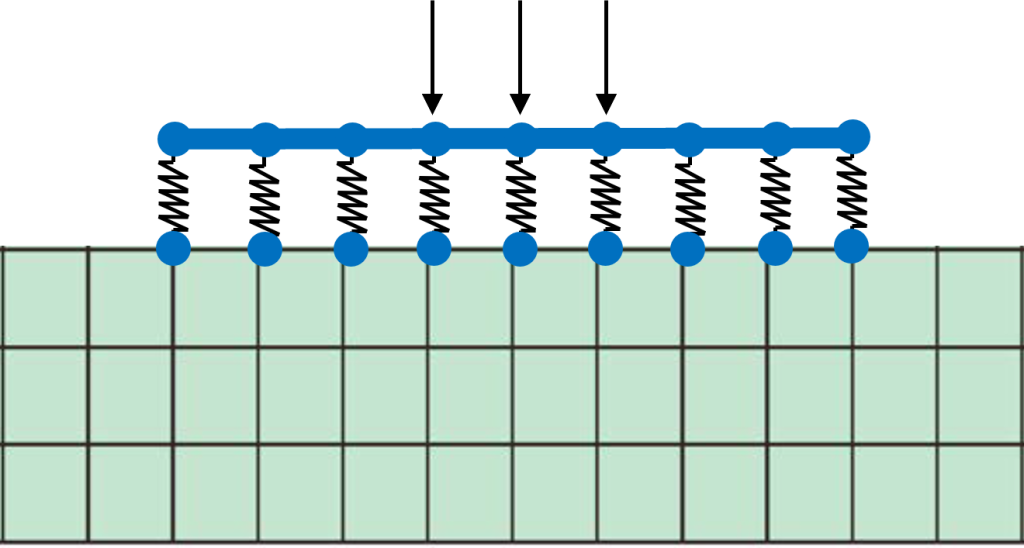
This Master’s project focuses on the advanced seismic analysis of existing buildings, with particular attention to the role of soil-structure interaction (SSI). Although often neglected in standard assessment procedures, SSI can have a decisive impact in specific applications—especially in soft soil conditions or for flexible structures. The project aims to identify these critical cases and develop more accurate modeling approaches that integrate SSI effects. Through a combination of literature review, numerical modeling, and a targeted case study, this work seeks to clarify when and how SSI should be accounted for to improve the reliability of seismic vulnerability assessments and inform appropriate retrofit strategies.
Contact: Dr. Aldo Madaschi ([email protected])

Energy Geostructures
The design of vertical borehole heat exchangers (BHEs) requires the use of appropriate numerical modelling procedures. Thermal interaction effects between BHEs critically affect the performance of such heat exchangers, with the potential to cause detrimental energy performance and efficiency drops during the lifetime of such energy systems. The use of numerical modelling software for multi-physics systems is therefore necessary to consider all the physical processes governing the operation of BHEs, to accurately reproduce the thermal interactions between such heat exchangers, and to analyse in detail their energy performance and efficiency with due consideration of the fluid dynamics taking place within the BHE tubes. The design and performance analysis of these systems is a complex and iterative process with simulations usually having to be done over periods of 50 years with long simulation times that in practice result in high costs. This project will investigate the use of machine learning techniques to optimize both the design and performance analysis during operation of these energy systems. The proposed approach would be used alongside numerical simulation to accelerate the optimisation process.
Contact: Dr. Elena Ravera ([email protected])
The long-term performance and sustainability of ground source heat pump (GSHP) systems depend on a precise understanding of the thermal interactions between borehole heat exchangers (BHEs) and the surrounding subsurface. Conventional numerical simulation models, although accurate, are computationally intensive, expensive to calibrate to real operational conditions, and impractical for real-time performance evaluation and decision-making. This thesis aims to develop a data-driven predictive modelling framework based on machine learning to estimate the thermal behaviour of geothermal borehole fields under real operating conditions. Using data collected from instrumented pilot installations the model will learn the relationships between key variables, forecast system performance over time, and detect trends associated with underuse or thermal depletion of the resource. Different machine learning architectures (e.g., ANN, LSTM etc..) will be tested and compared using metrics such as MAE and RMSE, in order to optimize predictive accuracy and robustness. The results will provide a scientific basis for integrating predictive models into decision-support tools enhancing operational efficiency of GSHP systems throughout their lifecycle.
Contact: Dr. Elena Ravera ([email protected])

Pore Pressure in Deep Underground Storage
Underground geo-energy and geo-environmental applications—such as H₂ storage, CO₂ storage, and nuclear waste disposal—critically depend on the ability to predict pore fluid pressure changes. Pressure build-up or depletion directly controls the effective stress state, influencing the risk of shear failure, caprock damage and induced seismicity. Building on previous work on gas–water coupling, this project will develop a framework to model pore pressure evolution under different operational and geological scenarios. Using these predictions, the student will analyse the resulting effective stress changes and derive corresponding stress paths.
The student will:
(i) review pore pressure generation mechanisms;
(ii) implement a poro-mechanical model (MATLAB or Python) to simulate pressure build-up and depletion;
(iii) translate predicted pore pressures into effective stress evolution;
(iv) compare representative scenarios such as H₂ storage, CO₂ storage, or gas generation in nuclear waste repositories.
This project offers hands-on exposure to real scenarios relevant for the energy transition and underground storage safety.
Analytical skills and basic programming experience (MATLAB or Python) are required for this project.
Lab / Supervisor
Laboratory of Soil Mechanics (LMS), Dr. Angelica Tuttolomondo, Prof. Lyesse Laloui
Area of research
Geomechanics / Energy Geotechnics
Type of work
Analytical / Computational
N spots offered
1–2
Contact: Dr. Angelica Tuttolomondo ([email protected])

Quality Indicators for Stress Magnitudes
In situ stress is essential for underground engineering applications such as CO₂ and H₂ storage or deep waste repositories. While several methods provide quality indicators for stress orientation, no standard criteria exist to evaluate the reliability of stress magnitudes. This gap limits the interpretation of stress data and affects decision-making in geo-engineering.
This project will develop a robust framework to quantify, classify and communicate uncertainties associated with stress magnitude estimates, independent of the measurement technique.
The student will:
(i) review existing stress measurement methods and quality indicators;
(ii) identify key uncertainty sources affecting stress magnitude assessments;
(iii) develop analytical (MATLAB/Python) or numerical (COMSOL) sensitivity models to quantify uncertainty propagation;
(iv) propose a Quality Indicator System for Stress Magnitudes (QISM) including uncertainty windows and robustness criteria;
(v) test the framework on synthetic or publicly available datasets.
This project tackles a recognised scientific gap in geomechanics and offers the student the opportunity to contribute to a topic of high relevance in underground engineering. Analytical skills and basic programming experience (MATLAB or Python) are required.
Lab / Supervisor
Laboratory of Soil Mechanics (LMS), Dr. Angelica Tuttolomondo, Prof. Lyesse Laloui
Area of research
Geomechanics / Energy Geotechnics
Type of work
Analytical / Computational
N spots offered
1–2
Contact: Dr. Angelica Tuttolomondo ([email protected])

In Situ Stress at Mont Terri
The IS-E experiment at the Mont Terri Rock Laboratory (300 m depth) will deliver a unique in situ stress dataset collected in several boreholes using an innovative stress-measurement approach recently developed at the Laboratory of Soil Mechanics (LMS). These data will become available in early 2026, offering a rare opportunity to analyse high-quality field measurements from a world-class underground research facility.
The objective of this project is to support the post-processing and scientific interpretation of these measurements and to contribute to the development of a robust and consistent data-analysis workflow.
The student will:
(i) review the fundamentals of in situ stress measurements;
(ii) organise and post-process the incoming field dataset;
(iii) develop MATLAB/Python routines;
(iv) compare results across depths and borehole orientations;
(v) assist in integrating the findings into the wider Mont Terri stress-assessment framework. Analytical skills and basic programming experience (MATLAB or Python) are required.
Lab / Supervisor
Laboratory of Soil Mechanics (LMS), Dr. Angelica Tuttolomondo, Prof. Lyesse Laloui
Area of research
Geomechanics / In Situ Testing / Data Analysis
Type of work
Analytical / Computational / Data Processing
N spots offered
1
Contact: Dr. Angelica Tuttolomondo ([email protected])
Geological CO₂ Storage
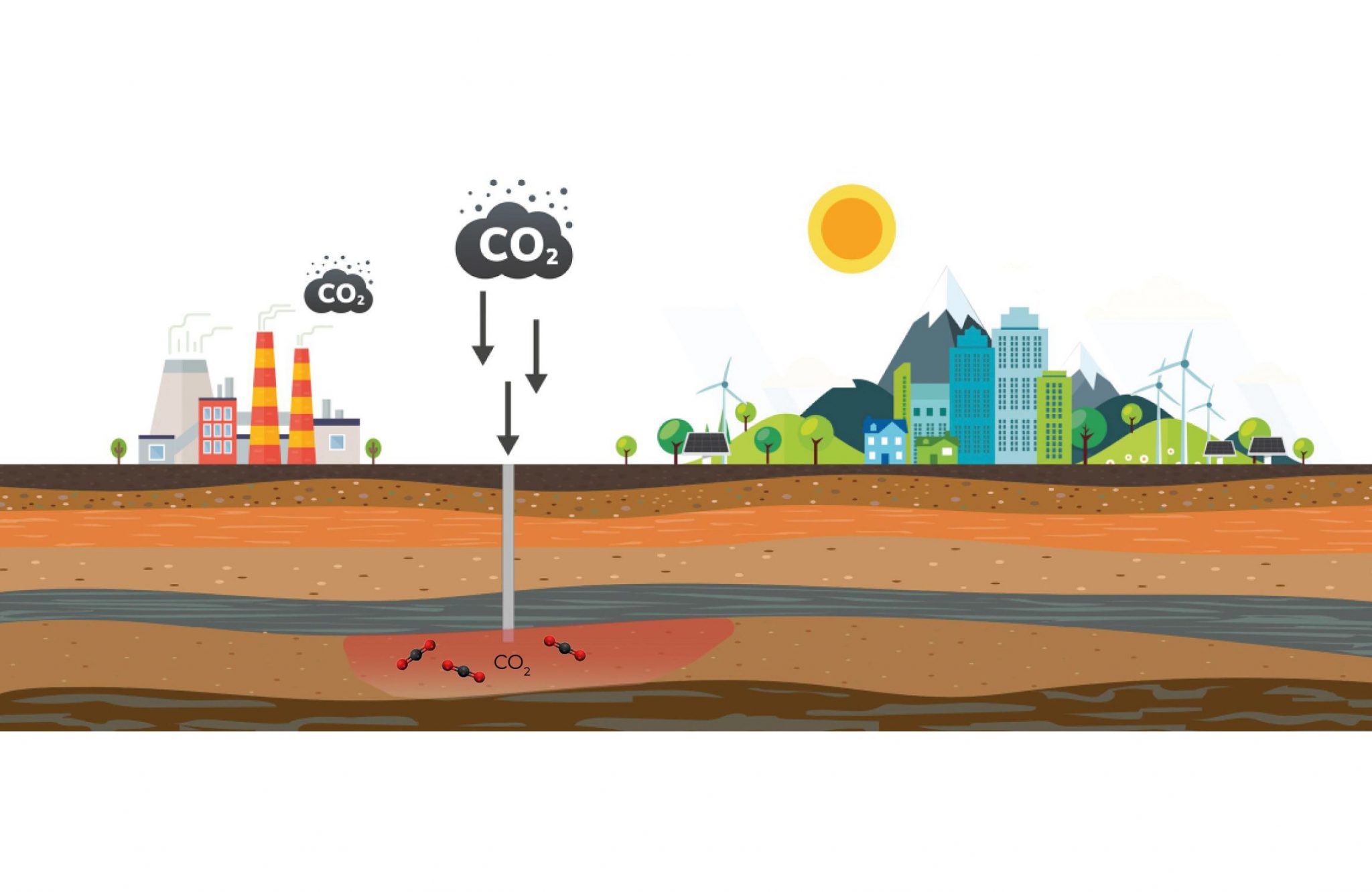
Accurate monitoring of CO₂ migration at the near-well scale remains one of the major limitations for safe underground CO₂ storage. While seismic techniques provide large-scale imaging, their spatial resolution is insufficient to detect early, localized changes occurring during CO₂ breakthrough. Fiber-Optic Distributed Strain Sensing (FODSS) has recently emerged as an ultra-high-resolution, low-cost strain monitoring technology, but its applicability to CO₂-induced hydromechanical processes remains largely unexplored.
High-resolution X-ray Computed Tomography (XRCT) offers unique 3D insight into the evolution of CO₂ plume propagation and local deformations during injection. Combining FODSS with XRCT under controlled laboratory injection conditions offers the first opportunity to directly quantify how CO₂ movement generates strain patterns that can be captured by distributed fiber sensors.
Supervisor: Prof. Lyesse Laloui
Assistants: Dario Sciandra, Eleni Stavropoulou
Further information:
Project proposal (PDF)
Contacts:
Dario Sciandra
[email protected]
GC D1397
+41 77 232 74 49
Lyesse Laloui
[email protected]
Tel.: [+41 2169] 32314
Monitoring technologies used in CO₂ storage (e.g., seismic surveys) struggle to detect near-well plume evolution at the meter scale. Distributed fiber-optic strain sensing (FODSS) offers a transformative opportunity for high-resolution, low-cost monitoring, but an inversion framework is required to translate measured strain curves into 3D CO₂ plume geometry.
Finite Element Method (FEM) simulations can reproduce the hydromechanical response of reservoir materials to CO₂ injection and generate large datasets of synthetic strain fields. These can be combined with machine learning (ML) to derive an inversion model that predicts plume location from FODSS signals, a crucial step toward developing a deployable monitoring tool.
Supervisor: Prof. Lyesse Laloui
Assistants: Dario Sciandra, Eleni Stavropoulou
Further information:
Project proposal (PDF)
Contacts:
Dario Sciandra
[email protected]
GC D1397
+41 77 232 74 49
Lyesse Laloui
[email protected]
Tel.: [+41 2169] 32314
Propose your own project
Students are also encouraged to propose their own projects in the context of the laboratory activities.
More information: https://www.epfl.ch/labs/lms/
Contact: Prof. Lyesse Laloui ([email protected])
Ongoing master projects:
- Sven Frederik Portner: Modelling the dynamic behavior of biocemented soils for liquefaction mitigation.
- Mateo Morales: Modelling the dynamic behavior of biocemented soils for liquefaction mitigation.
- Giovanettina Sebastiano: La reprise en sous-œuvre comme outil d’extension urbaine…
- Blazy Caroline Louise Marie: Développement et mise en marché d’un outil de monitoring…
- Luc Teuscher: Numerical modelling of expansive clays in nuclear waste repositories.