RESERVATION RULES AND BOOKING FEES POLICY:
- Booking: maximum 24 time slots (30 minutes) allowed at any time.
- Reservation names must correspond to operators.
- Billing : Wafer process flow start/stop
- In case of parallel process flow, all flows must be ended to log out from the equipment
- This equipment is subject to penalty fees in case of user’s no-show.
Contents:
I. Introduction
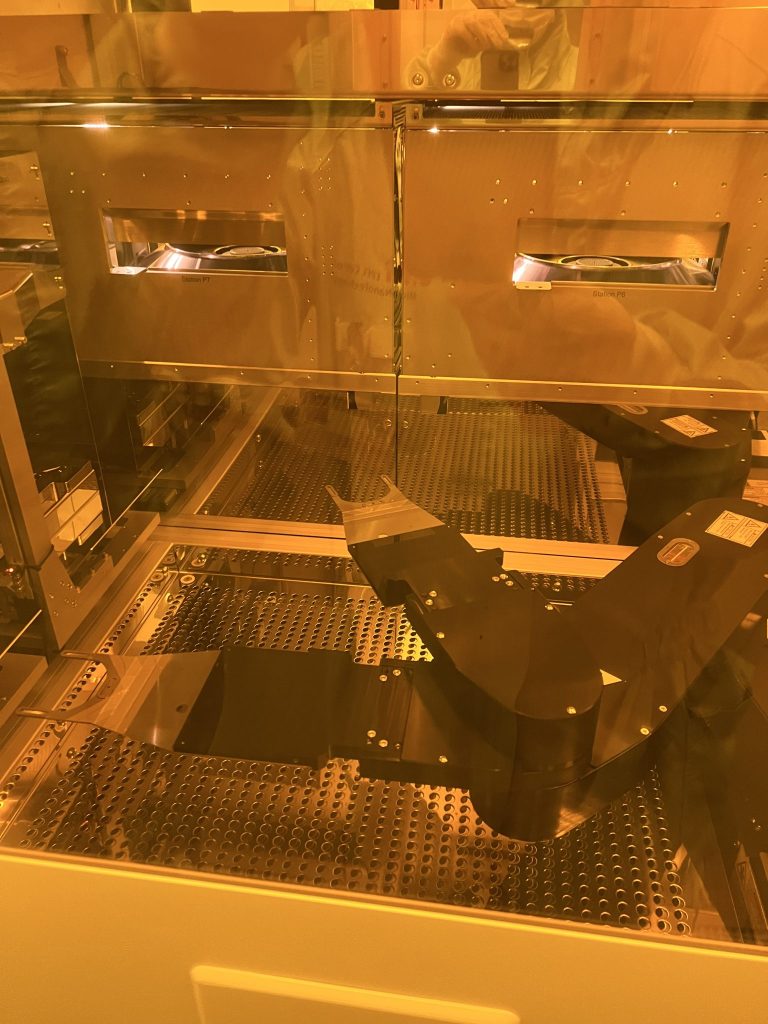
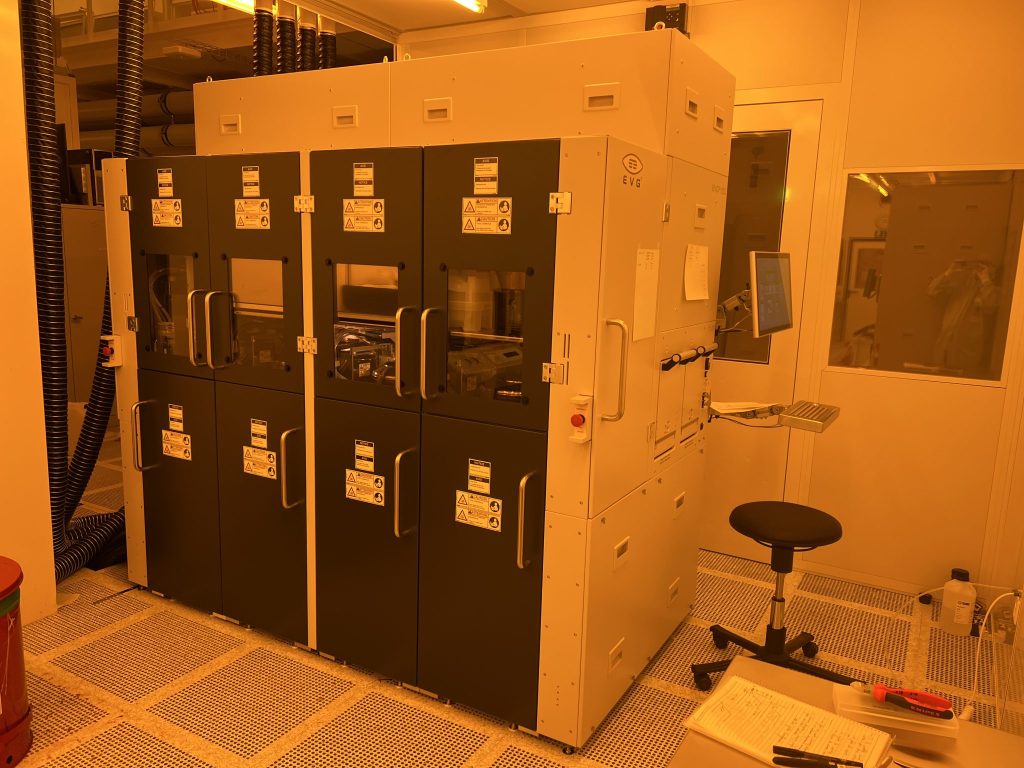
The EVG 150 is a modular cluster tool for coating & development of i-line photoresists. It is equipped with:
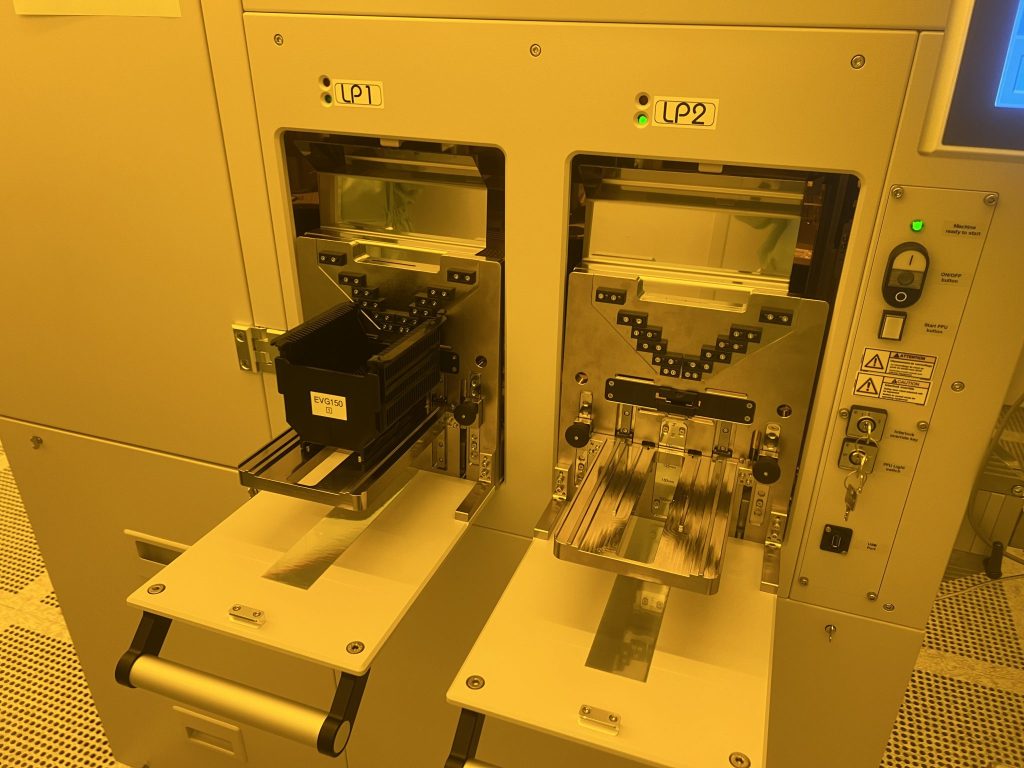
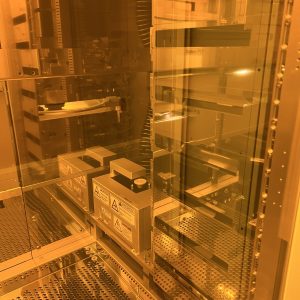
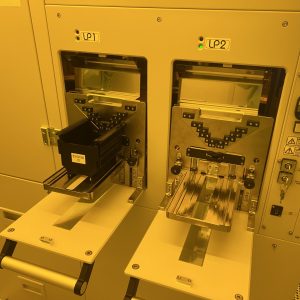
- Two loading/unloading ports (one cassette for coating, one cassette for development)
- An optical wafer centering station
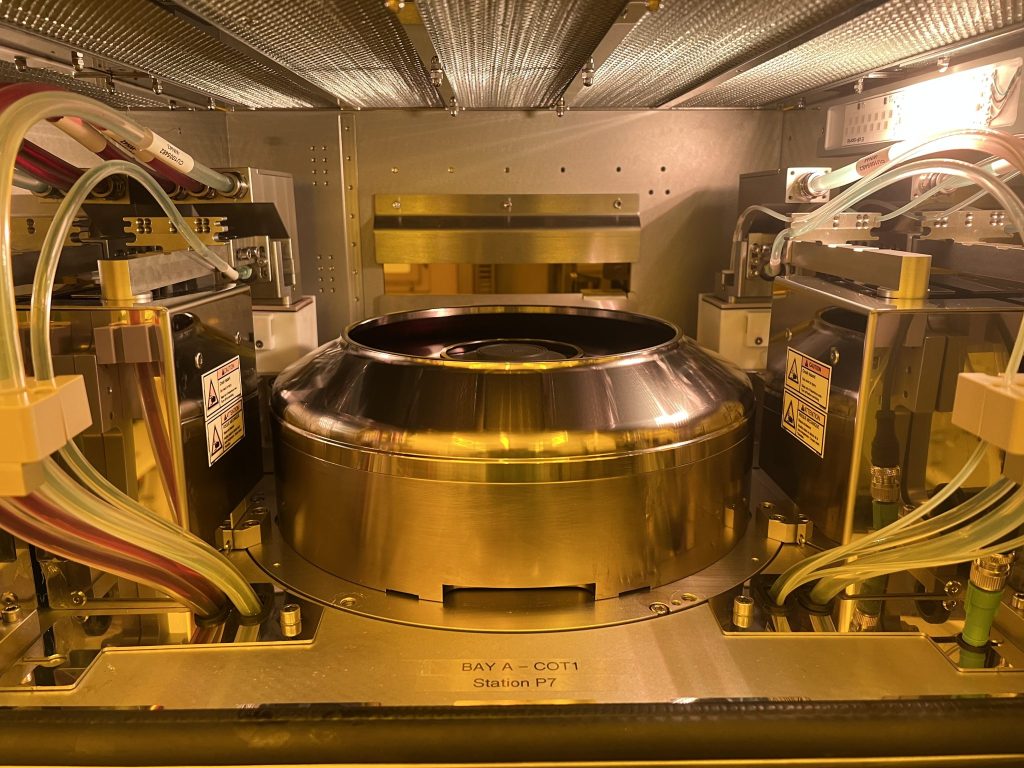
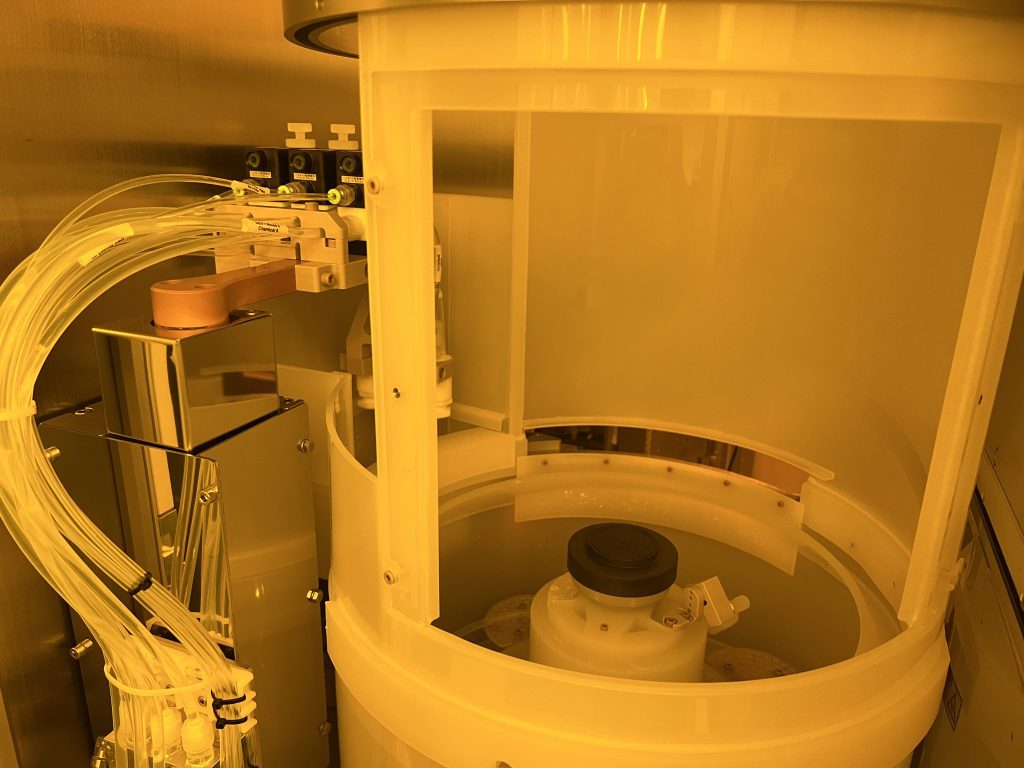
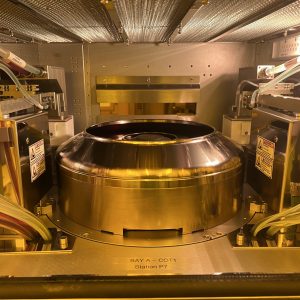
- Three spin-coating modules (coater A: low-viscosity PR, coater B: high-viscosity PR, coater C: bottom layers)
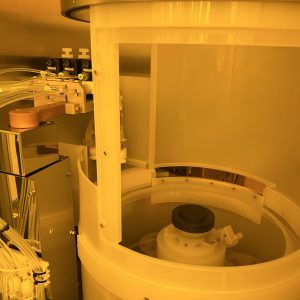
- One developement module, with both puddle and spray options
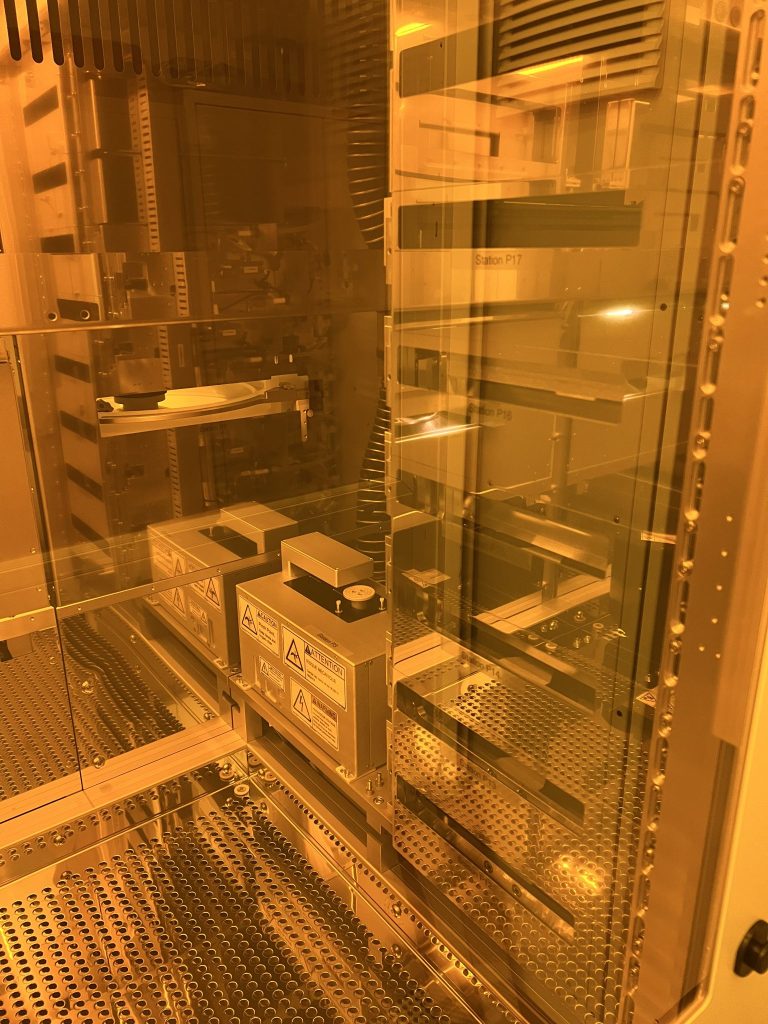
- Three stacks of hotplates (8 in total) & coolplates (3 in total), including an additional HMDS-priming module
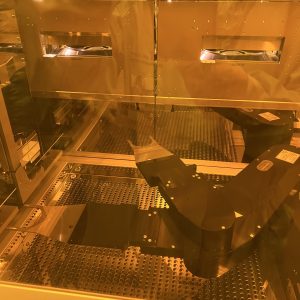
The individual processing modules are fed by a dual end effector robot.
The tool can handle standard SEMI-wafers of 100mm and 150mm diameter, both opaque (silicon, SOI, …) or transparent (glass, fused-silica, sapphire,…).
Process stability is enhanced by the addition of an airborne molecular contamination (AMC) filter on top of the tool, and active control of the chamber and resist/developer lines temperature.
Photoresists currently available on the EVG 150: AZ ECI 3007, AZ ECI 3027, AZ 1512 HS, AZ nLOF 2020, AZ nLOF 2070, AZ P4K AP.
Bottom layers currently available on the EVG 150: LOR 5A, LOR 15C, XHRiC-16
II. Process flow library
Sequences consist in specific flow of sub-recipes running in individual modules. Several sequences, started from a single or both cassettes, can be active in parallel. The flow is managed in real time by the software and optimized for maximum throughput or for prioritization of critical steps.
Depending on the process type (coating, development, cleaning, maintenance,…), sequences are organized in different subfolders. The main ones are:
- CMi.COATING.4in.A: Photoresist coating in the coater A: AZ 1512 HS, AZ ECI 3007, and AZ nLOF2020.
- CMi.COATING.4in.B: Photoresist coating in the coater B: AZ ECI 3027, AZ nLOF 2070, and AZ P4K AP.
- CMi.COATING.4in.C: Bottom layers coating in the coater C: LOR 5A, LOR 15C, and XHRiC-16.
- CMi.COATING.4in.C_A: Double layer processes for lift-off (LOR) or with BARC layer (XHRiC) combined with positive photoresists (AZ 1512, AZ ECI 3007, …)
- CMi.DEVELOPMENT.4in: Development sequences.
For coating, the options are:
- Surface preparation: HMDS, dehydrate or none
- Solvent clean: standard or edge bead removal (EBR)
For the development, three developer chemistries are available:
- Metal ion free (MIF), TMAH-based developer: AZ 726 MIF
- Metal ion containing (MIC), KOH-based: AZ 400K 1:3.5
- Aluminum-friendly, sodium metasilicate/phosphate-based solution: AZ developer
III. User manuals
IV. Links
V. Pictures gallery