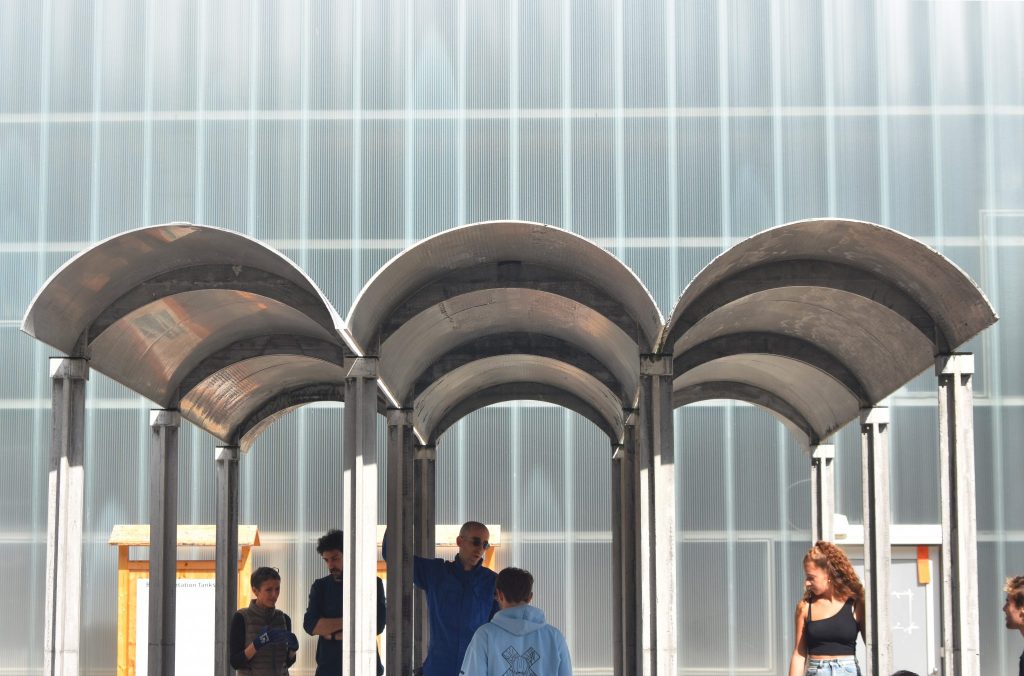
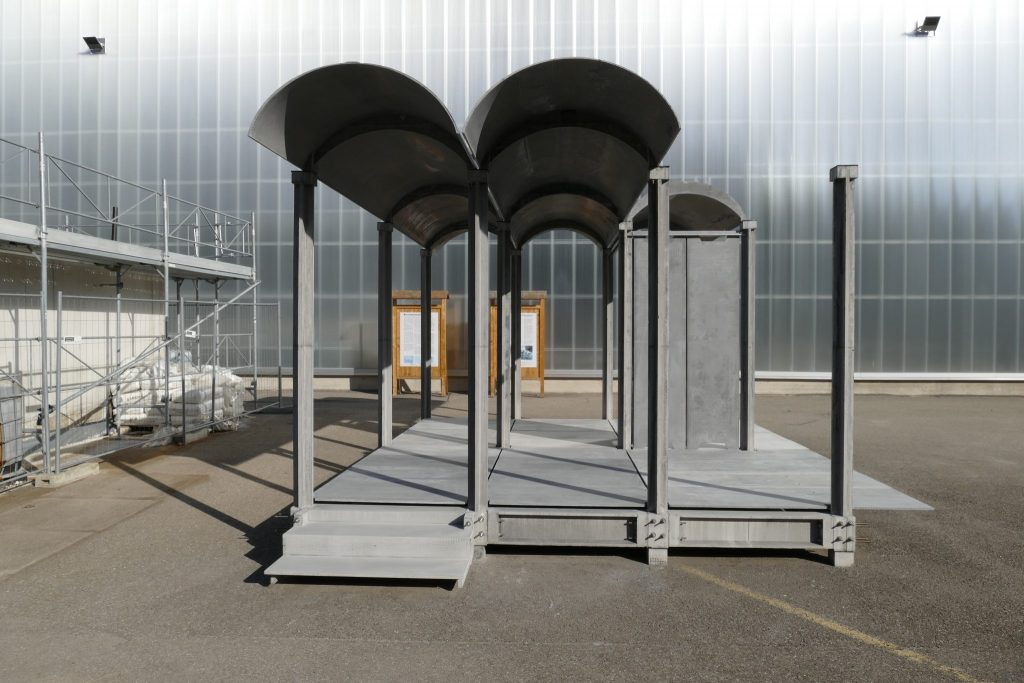
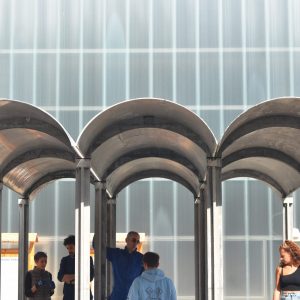
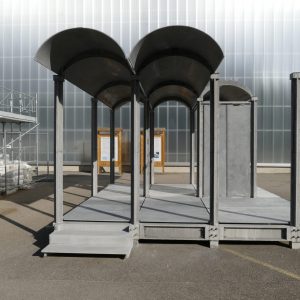
The Summer Workshop 2026 marks the beginning of a new phase in the ongoing exploration of Textile Reinforced Concrete (TRC). Building on several years of research and prototyping, this upcoming edition will focus on the development of a new pavilion in Kenya, conceived as an evolution of the TRC Prototype Pavilion initiated in 2019 at EPFL Fribourg. This next stage expands the scope of the project, both technically and geographically, by applying local knowledge, materials, and design strategies to the third case study.
The workshop will explore the structural, architectonic, environmental, and social dimensions of TRC and its application in the design of a new Multi-Purpose Space for the Department of Architecture & Interior Design (DAID) at Kenyatta University Campus in Nairobi, Kenya, developed in collaboration with Urko Sanchez Architects. This new pavilion is intended to support academic, social, and experimental activities while functioning as a living laboratory for sustainable and alternative construction methods. Beyond serving as a usable academic space, it will act as a pedagogical tool, demonstrating climate-responsive design, material innovation, and adaptability over time, reflecting DAID’s ethos of experimentation, sustainability, and contextual responsiveness.
This research-through-making project investigates innovative applications of Textile Reinforced Concrete, a high-performance material in which carbon textile reinforcement is embedded in a cementitious matrix cast with low-clinker-content binders such as LC3. By combining sustainable binders with highly efficient reinforcement, TRC drastically reduces material consumption and energy demand, enabling the fabrication of exceptionally thin, durable, and environmentally responsible structures.
The new phase of the project extends previous research on both the TRC Prototype Pavilion and Brazilian architect Lelé’s Argamassa Armada (ferrocement), while enabling the design of new TRC–LC3 elements for the pavilion’s expansion. In partnership with the LMC lab at EPFL, the workshop will continue to test LC3 cement for TRC applications. This collaboration also fosters knowledge exchange between ongoing experimental initiatives in Latin America and establishes a third case study in Africa, using insights from research in Nicaragua to inform and adapt solutions for local conditions in Kenya.
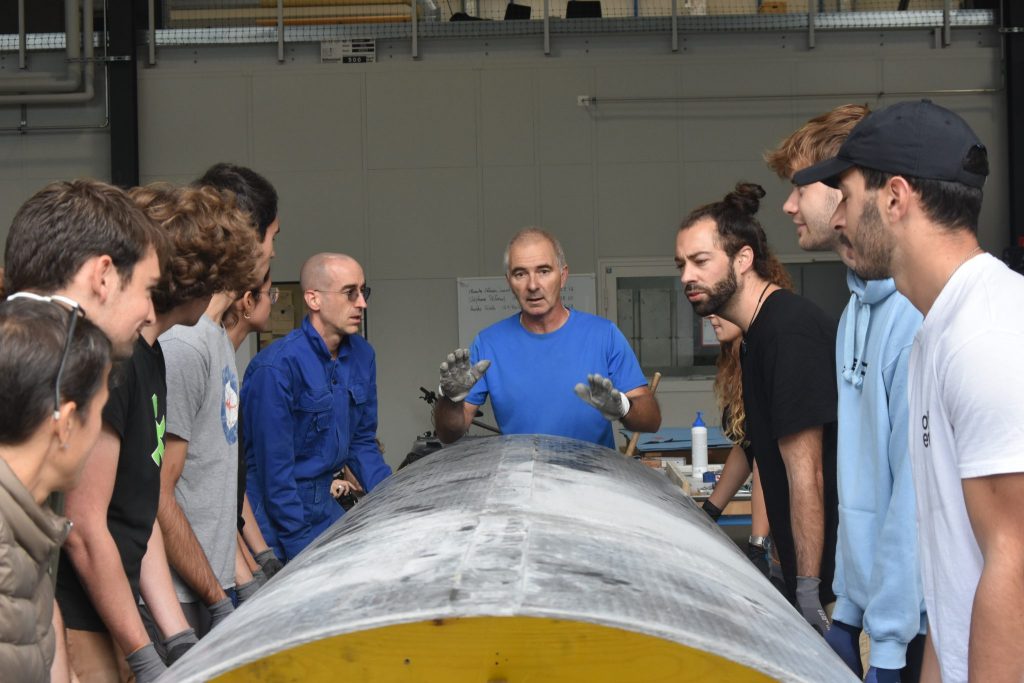
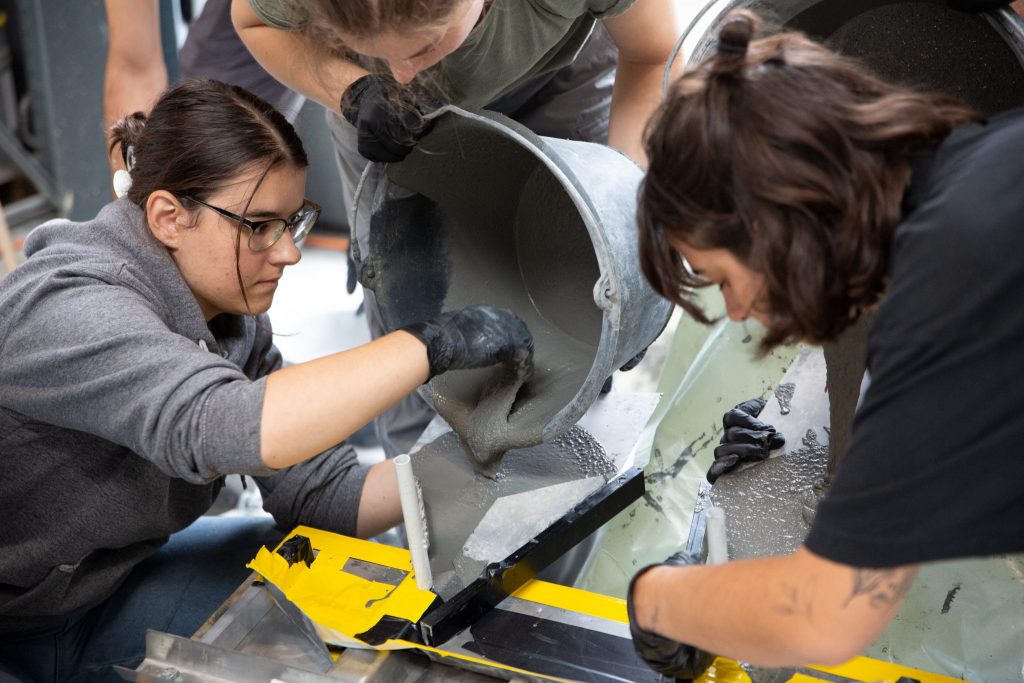
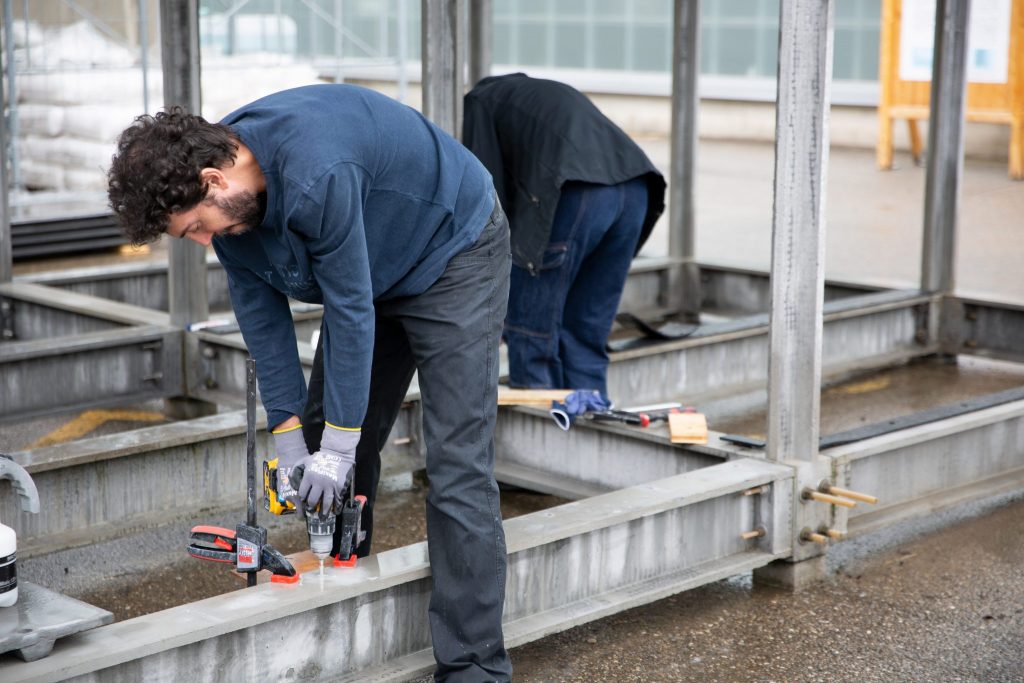
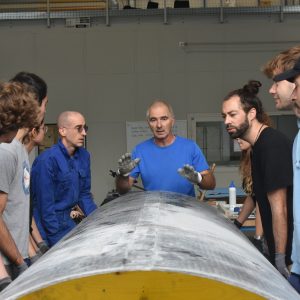
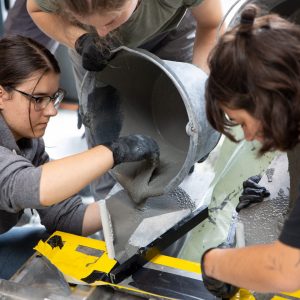
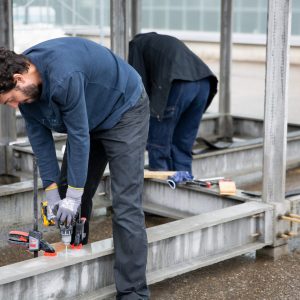
Our working method follows an iterative, hands-on process of testing and development at EPFL Fribourg. Architecture, environmental engineering, and civil engineering students will design and construct roof elements that provide sun protection; build structural components using textile reinforced concrete; fabricate folded-metal formwork; prepare textile reinforcement; mix and cast concrete; and analyze material properties, structural behavior, and the assembly of TRC elements.
Can be taken as part of the SC minor.
Teaching team:
Patricia Guaita, architect and lecturer, ENAC-IA-ALICE
Raffael Baur, architect, External expert ENAC EPFL
David Fernandez Ordonez, Lecturer, ENAC SGC
Enrique Corres, Construction Assistant, ENAC SGC
Invited experts:
Dr. Beatrice Malchiodi, Post Doc, LMC EPFL
Jaime Velasco, Architect, architect and Lecturer in Department of Architecture & Interior Design Kenyatta University Campus, Nairobi
In collaboration with Urko Sanchez Architects
Contact
For further information, please contact [email protected]
Links
Photos 2025
Photos: Raffael Baur, Nicolas Gemelli


Photos 2024
Photos: Léa Guillotin


Photos 2023


Photos 2022