Education
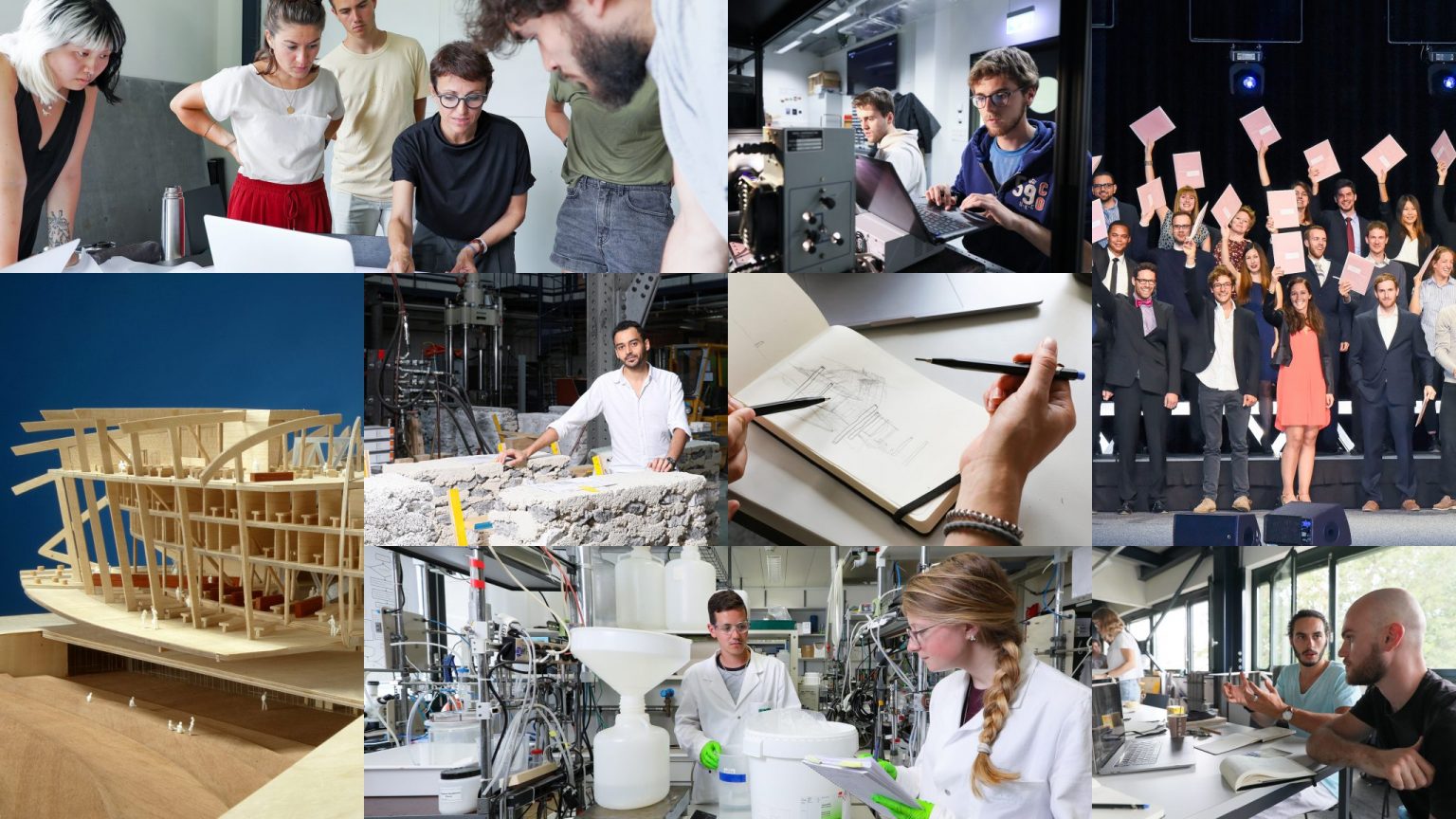
©EPFL-SAR/EPFL-SGC/EPFL-SSIE
Each of ENAC’s three sections delivers excellence in education, with world-class courses that enable students to become experts. During their Bachelor’s degree, they acquire the foundations on which their chosen Master’s specialization will be based.

Architecture (SAR)
The Architecture Section (SAR) engages the big-picture thinking inherent in the discipline of architecture to address the pressing challenges of the climate crisis and the threat of ecosystem collapse. It takes a transdisciplinary and transcalar approach to teaching, exploring new ways of critically engaging urban design and architecture – and their holistic processes, instruments and technologies – in the ecological transition.

Civil Engineering (SGC)
The Civil Engineering Section (SGC) places the challenge of sustainability with respect to natural resources, urbanization and risks at the center of its polytechnic training priorities. Its teaching program is geared toward research and development for more sustainable structures, new forms of energy, and optimized transportation and mobility systems.
Environmental Sciences and Engineering (SSIE)
The Environmental Sciences and Engineering Section (SSIE) trains engineers to develop solutions to the complex environmental problems our planet is facing, such as climate change, resource depletion, pollution and biodiversity loss. It equips students with solid scientific and technological foundations, while factoring human, economic and social dimensions into its teaching.
Interdisciplinarity education
Combining disciplinary depth and interdisciplinary breadth, ENAC trains architects and engineers to excel in their chosen disciplines and to work effectively with professionals from other fields. This capacity for inter- and transdisciplinary collaboration is essential to address global sustainability challenges and to ensure ongoing innovation.
“Projeter Ensemble” program
Students from the three sections work together in multidisciplinary teams to solve complex sustainability challenges.
Master in Urban Systems
A program to prepare graduates for key professional roles in sustainable transition
Interdisciplinary minors
ENAC hosts three interdisciplinary minors: Engineering for Sustainability; Integrated Design, Architecture and Sustainability (IDEAS); and Urban Planning and Territorial Development.
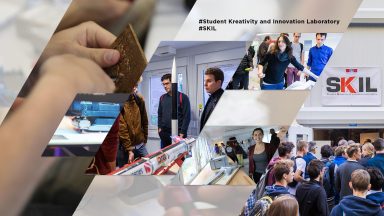
Student Kreativity and innovation Lab (SKIL)
This academic makerspace fosters hands-on learning and interdisciplinary collaboration between students, allowing them to transform their ideas into reality — whether physical or digital.
Continuing education
ENAC’s mission is not limited to the education of successful professionals. We also aim to update and develop the knowledge and skills of established experts. This is why the faculty offers a wide range of continuing education programs.