
“where diseases occur and why their geographic distribution varies across locations”
Spatial epidemiology is the branch of epidemiology that studies how health outcomes, diseases, and their risk factors are distributed across geographic space.
It uses location-based data and spatial analysis methods to identify patterns such as disease clusters, geographic disparities in health, environmental exposures, and the spread of infectious diseases. The goal is to understand how place and location influence health and to support disease prevention, surveillance, and public health decision-making.
Our related projects
URBASAN
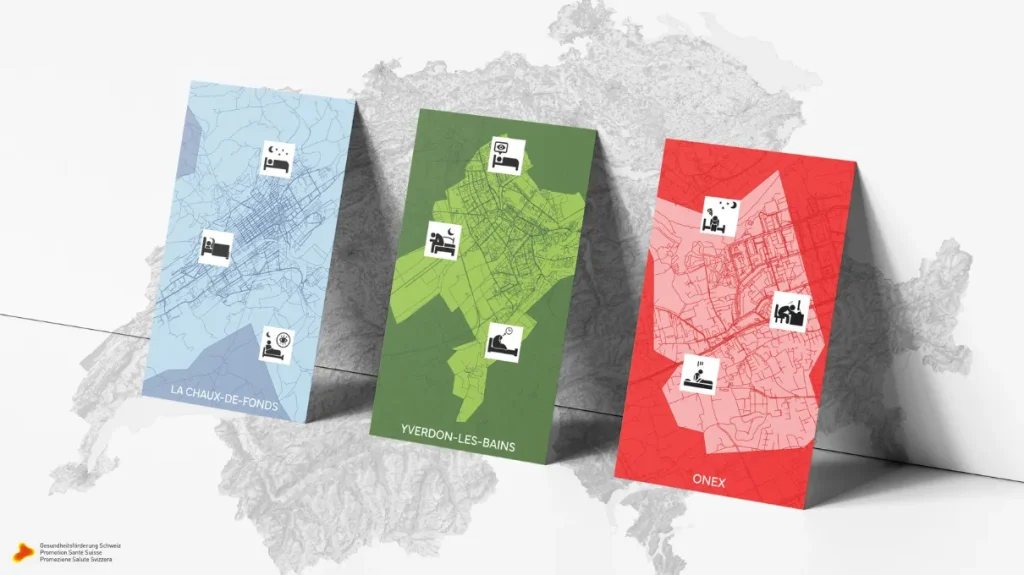
The URBASAN project, led by EPFL and the Geneva University Hospitals, is implementing an integrated model for the detection, prevention, and management of sleep disorders in three pilot municipalities: Onex (Geneva), Yverdon-les-Bains (Vaud), and La Chaux-de-Fonds (Neuchâtel). Using the URBASAN and SPECCHIO digital platforms, it enables the precise identification of local needs, the implementation of targeted awareness campaigns, and the provision of personalized care pathways developed in partnership with local stakeholders.
The tiered approach combines prevention, early detection, and tailored interventions. Participating municipalities have access to analytical tools that identify specific geographic “clusters”: for example, some neighborhoods report good subjective sleep quality but also show more frequent use of sleep medications and longer sleep latency. These discrepancies between perception and objective measurements pave the way for targeted interventions that are validated and tailored to local realities.
Preliminary trials in Geneva and Yverdon-les-Bains have shown positive and promising results, providing a solid foundation for expanding the program. The project also includes training for local authorities to strengthen their capacity to promote healthy sleep and implement sustainable initiatives.
URBASAN thus aims to reduce the prevalence of sleep disorders and mitigate their impact on public health, while evaluating the long-term effectiveness of the measures implemented. Through close collaboration with designated municipal officials and integration into existing structures, it aims to become a replicable and sustainable model that can be adapted to other contexts in Switzerland.
Click here for more detail.