
We develop metrics, datasets, and assessment methods to evaluate indoor environmental quality, health relevance, resilience, and low-carbon performance in real buildings.
Healthy buildings require evidence. HOBEL studies how indoor environmental quality varies across buildings, climates, technologies, and occupant behaviors, and how air quality, ventilation, energy use, carbon emissions, and health-relevant outcomes can be assessed together. This pillar connects field measurements, large datasets, performance metrics, and decision-support tools to help buildings become healthier and lower-carbon in practice.
Key questions
- How can indoor environmental quality be measured and benchmarked across buildings?
- Which metrics best represent healthy, resilient, and low-carbon indoor environments?
- How can IAQ, IEQ, health relevance, energy use, and carbon impacts be assessed together?
- How do building renovation, operation, ventilation, filtration, and occupant behavior affect IEQ performance?
- How do objective and perceived IAQ interact with other IEQ domains?
- How can field data support standards, guidelines, policies, and building-performance frameworks?
- How can performance assessment move from isolated measurements toward scalable, evidence-based decision support?
Example topics
- IAQ and IEQ benchmarking
- Global indoor air quality datasets
- IEQ metrics, indices, and performance indicators
- Health-oriented building performance assessment
- Field monitoring in homes, schools, offices, and public buildings
- Building renovation, ventilation, and filtration impacts
- Energy–IAQ–carbon trade-offs
- Low-carbon and resilient indoor environments
- Monetization and valuation of IAQ/IEQ benefits
- Evidence for standards, policies, and certification systems
Featured projects
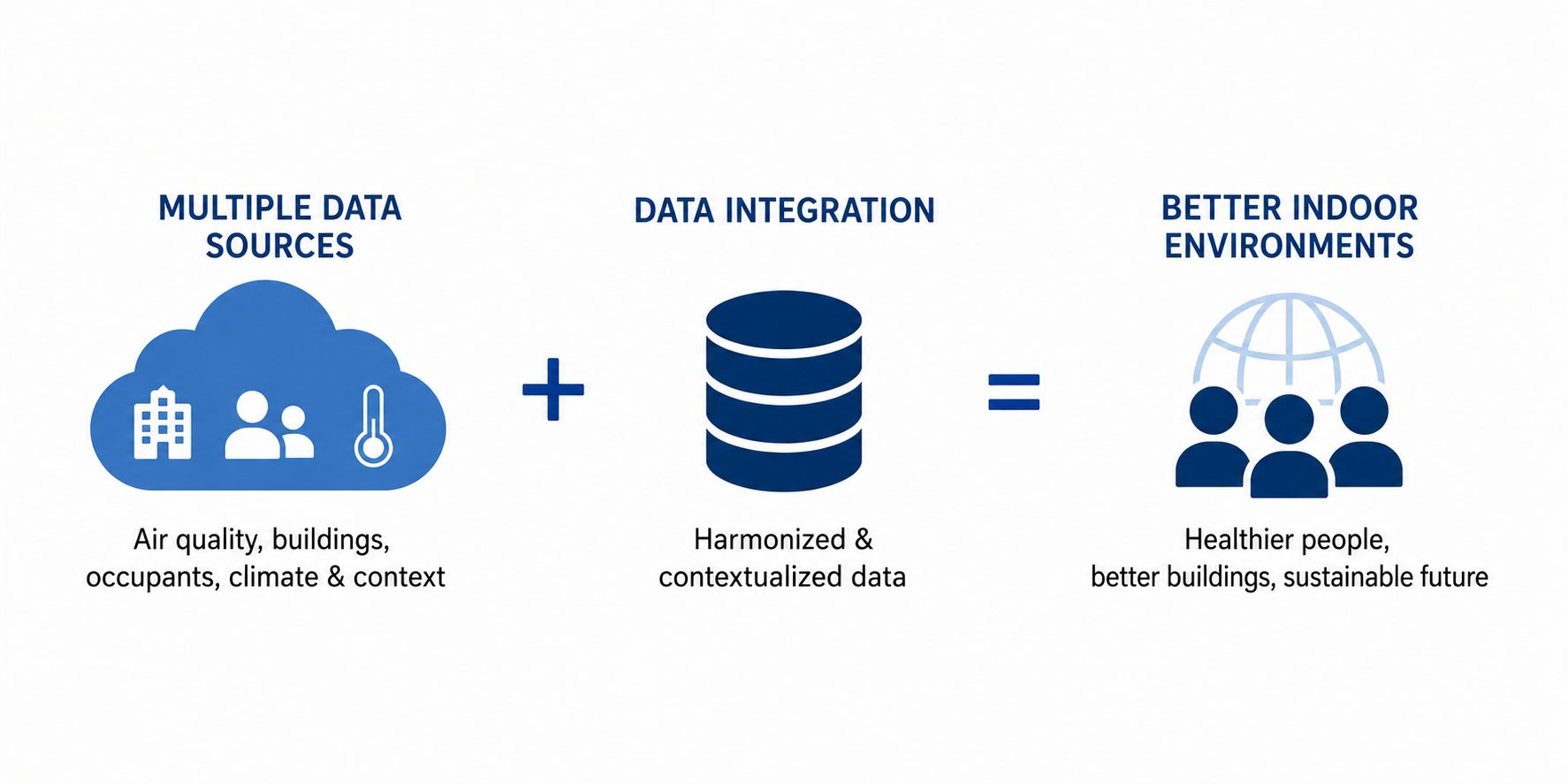
[Ongoing] Global Indoor Air Quality Database
The Global Indoor Air Quality Database compiles and harmonizes quality-assured field measurements from buildings around the world. The project aims to make high-quality IAQ data more accessible for researchers, policymakers, and practitioners, while supporting benchmarking, research synthesis, and future health-oriented building guidance.
By connecting air quality data with building, occupant, climate, and contextual information, the database helps transform fragmented field measurements into a shared global resource for healthier and more sustainable indoor environments.
People: Chenxi Liao, Joan Rey, Bowen Du, Dusan Licina
Partners: ISIAQ, ENAC-IT4R, and international research partners
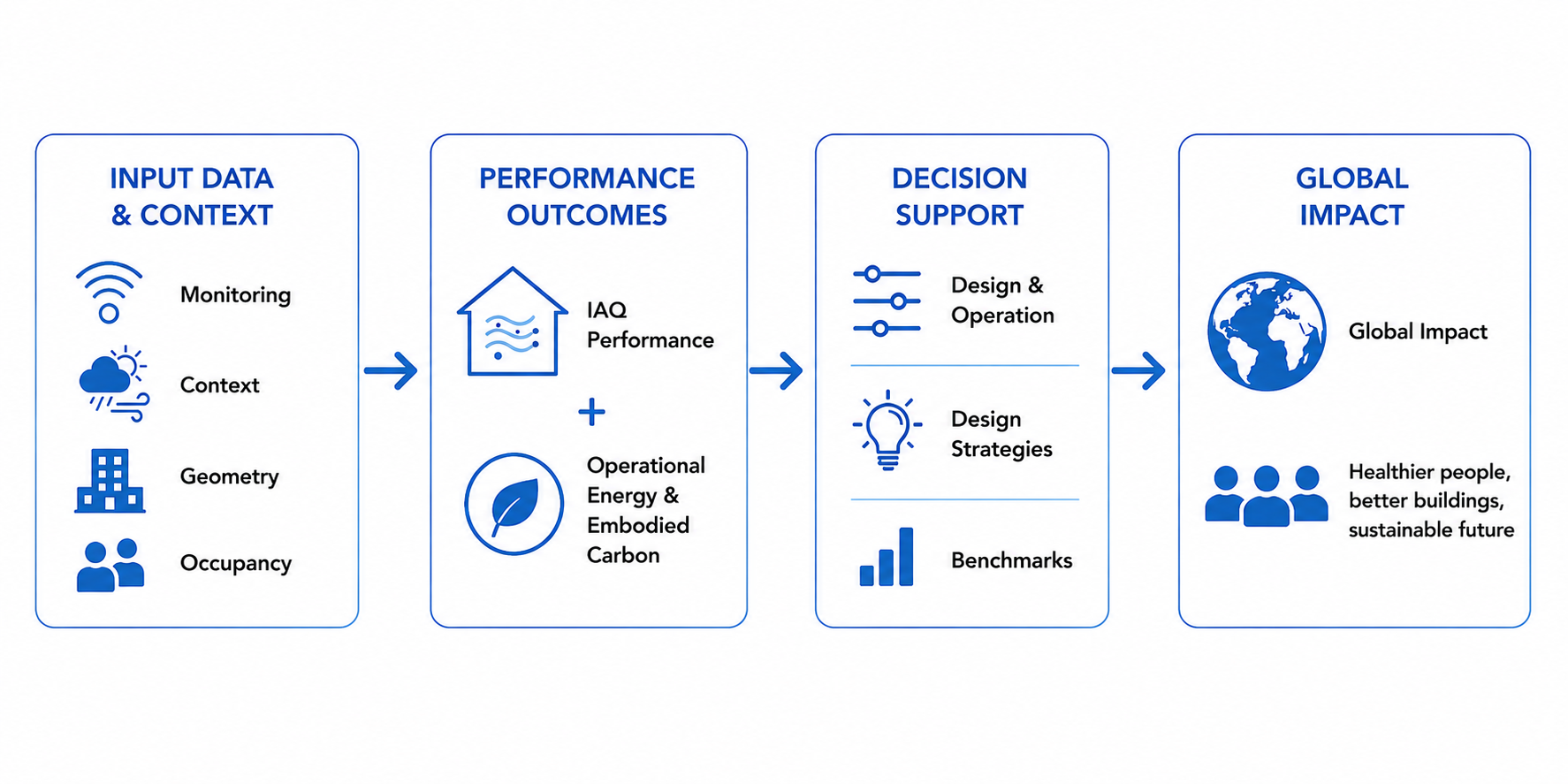
[Ongoing] INBLANC — IEQ benchmarking and building lifecycle data
INBLANC aims to industrialize building lifecycle data and transform it into actionable knowledge for the built environment. Within the project, HOBEL leads research that spans from defining standardized IAQ indicators, to developing predictive IAQ models integrated with life cycle assessment, creating a harmonized IAQ database and translating performance into decision-relevant and monetized value.
This work supports the integration of indoor environmental quality into lifecycle assessment, helping stakeholders compare design alternatives and make better renovation, sustainability, investment and policy decisions.
People: Chenxi Liao, Maria Loizou, Stefan Flagner, Dusan Licina
Partners: Horizon Europe consortium partners
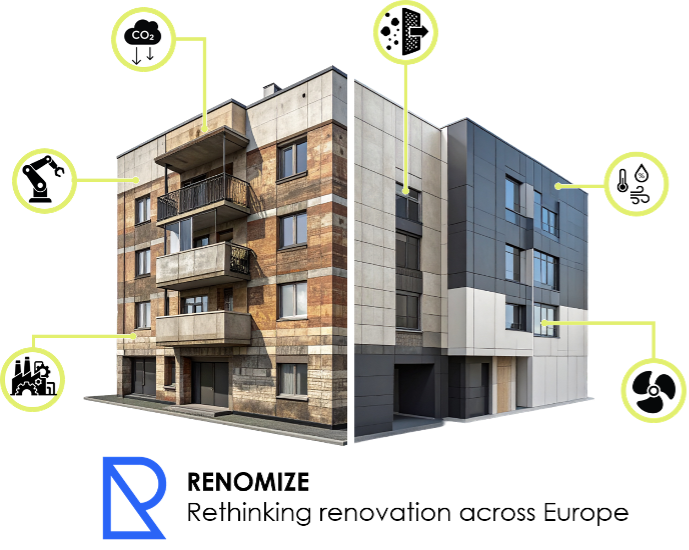
[Ongoing] RENOMIZE — Renovation, ventilation, filtration, and IEQ performance
RENOMIZE examines how renovation processes can be improved through automated on-site and off-site approaches. HOBEL contributes by developing ventilation and filtration solutions and IEQ performance assessment methods for renovated buildings.
The project addresses a central challenge of the low-carbon transition: ensuring that energy renovations and decarbonization strategies also deliver healthy indoor environments. HOBEL’s work connects building renovation, ventilation, filtration, monitoring, and performance assessment.
People: Matteo Favero, Cairan van Rooyen, Dusan Licina
Partners: Horizon Europe consortium partners
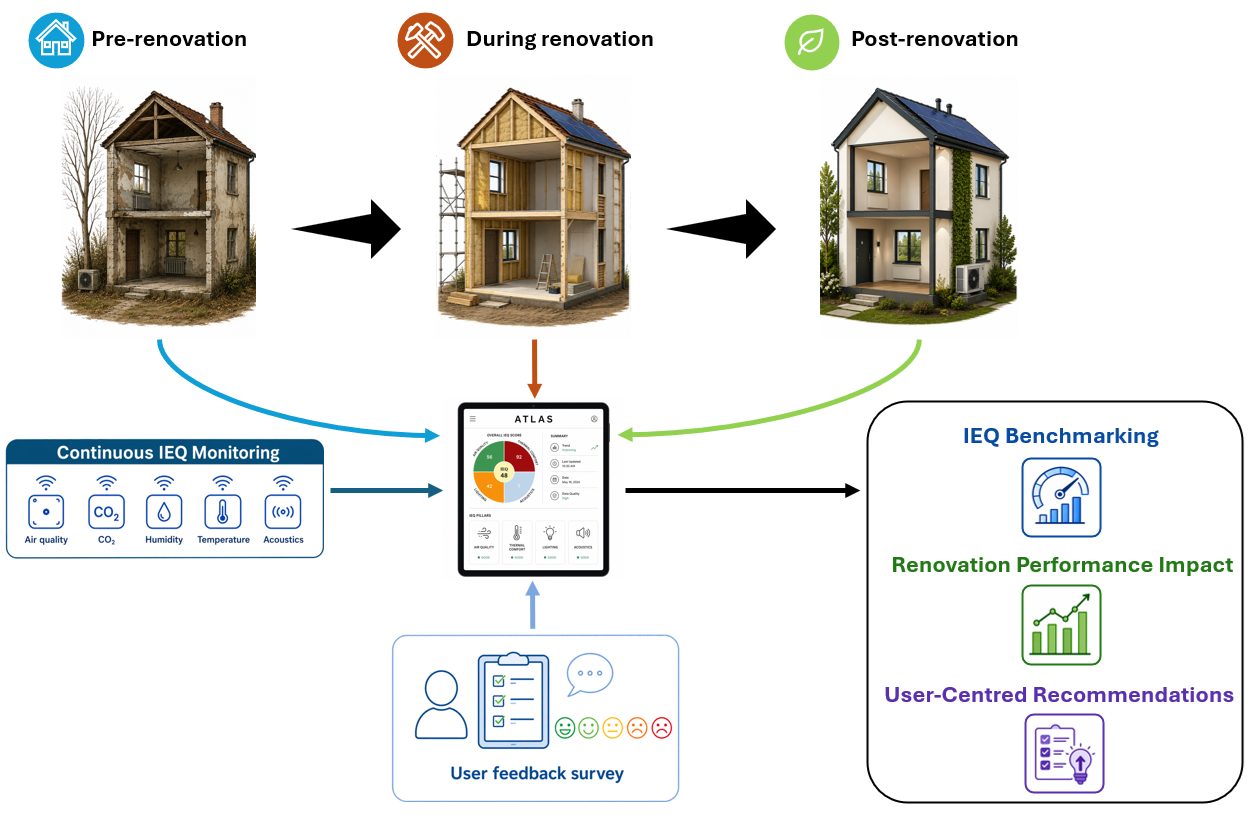
[Ongoing] INPERSO — Personalized renovation and occupant-centered IEQ
INPERSO advances industrialized and personalized renovation approaches for sustainable buildings. HOBEL contributes to IEQ assessment, low-cost monitoring, and personalized optimization of indoor environmental conditions throughout the renovation lifecycle.
This project supports a more occupant-centered view of building performance, where renovation is not only evaluated through energy savings, but also through its ability to improve indoor environmental quality, health relevance, and the lived experience of occupants. Here, HOBEL develops and deploys ATLAS — A performance-based index for integrated evaluation and benchmarking of indoor environmental quality.
People: Reza Daneshazarian, Bowen Du, Sarah Crosby, Dusan Licina
Partners: Horizon Europe consortium partners
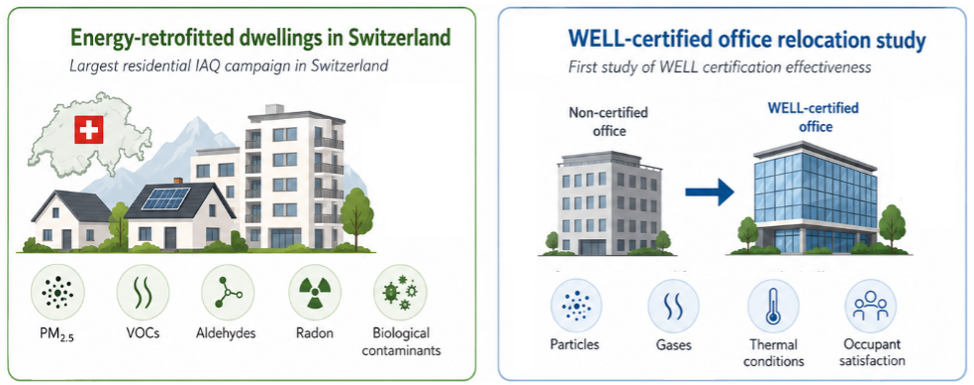
[Completed] Green-certified and energy-efficient buildings: IAQ and health performance
HOBEL has investigated indoor air quality and occupant-related outcomes in green-certified, renovated, and energy-efficient buildings. This work has included large residential IAQ campaigns and studies of certified commercial office buildings.
These projects examined whether buildings designed or certified for sustainability also deliver healthy indoor environmental conditions. The findings contribute to a broader understanding of how certification systems, energy renovation, ventilation, and building operation shape IAQ, occupant experience, and building performance.
People: Shen Yang, Sarah Yildirim, Dusan Licina
Partners: HEIA Fribourg