
The research groups at EPFL’s Institute of Architecture and the City (IA) are smaller and more flexible units than laboratories, focusing on specific themes. Led by researchers or professors, they explore emerging and experimental approaches in architecture, urban planning and construction. Complementing laboratories and research platforms, they enable targeted research, promoting innovation and interdisciplinary collaboration.
Buiding 2050 – The Building Innovation Research and Integration Support group
Sergi Aguacil Moreno
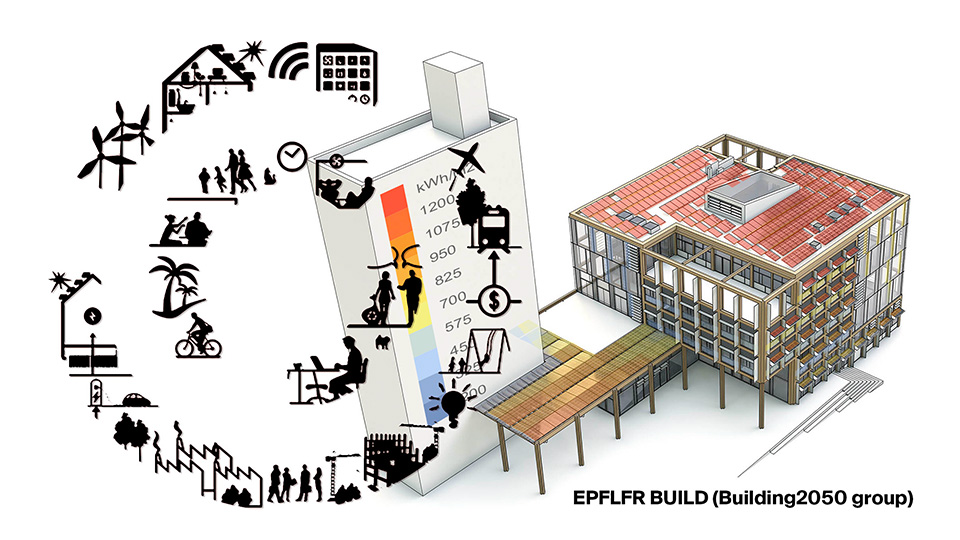
The Building2050 group is a dynamic research and practice-oriented team dedicated to integrating innovative solutions into the built environment and sustainable development. We specialise in translating research needs into practical and technical requirements within the future Smart Living Lab (SLL) building. Serving as a crucial bridge between researchers, architects, builders and facility managers, we ensure that cutting-edge research seamlessly influences the SLL building. Our main activities involve the development and operation of a digital research infrastructure, including detailed building information models (BIM) and digital twins of various living labs (i.e. the SLL building and the EPFL campuses in Lausanne and Fribourg). Working closely with other SLL research groups, we create digital models and simulation tools to enhance research and teaching. We provide technical and scientific support for data management, documentation, simulations and experiments in current and future SLL research infrastructures. In addition, we facilitate external partnerships, contribute to knowledge dissemination and strengthen links within the EPFL ecosystem.
The Heritage, Anthropology and Technologies Research Group
Prof. Florence Graezer Bideau

The “Heritage, Anthropology and Technologies” research group, formerly known as “Heritage, Culture and the City,” studies the role of social actors in heritage making. This exploration extends to cultural, territorial and urban policies, investigating the transmission of knowledge. Heritage, a global phenomenon, serves as reservoir of human memory and identity. Intertwined with space, everyday experience and politics, it references the past, informs the present and shapes the future.
Understanding heritage dynamics unveils its impact on cultural values and identity formation, crucial in a world undergoing significant transitions. The team’s research examines narrative, operational, and technological mechanisms, analyzing public policy impacts in culture, innovation, politics, economy, and the environment.
With an anthropological approach, HAT research draws on diverse fields such as critical heritage studies, history, sociology, political science, geography, architecture, and urban studies. It addresses governance, technology and environmental issues, reflecting the increasing importance of heritage in national and international cultural policies.
This mirrors a growing concern for relationships between individuals and their environments, as well as for human-machine interactions, in turn prompting the need to evaluate societal impacts in terms of perception and use, and to reinforce innovation at the intersection of engineering knowledge and technology.
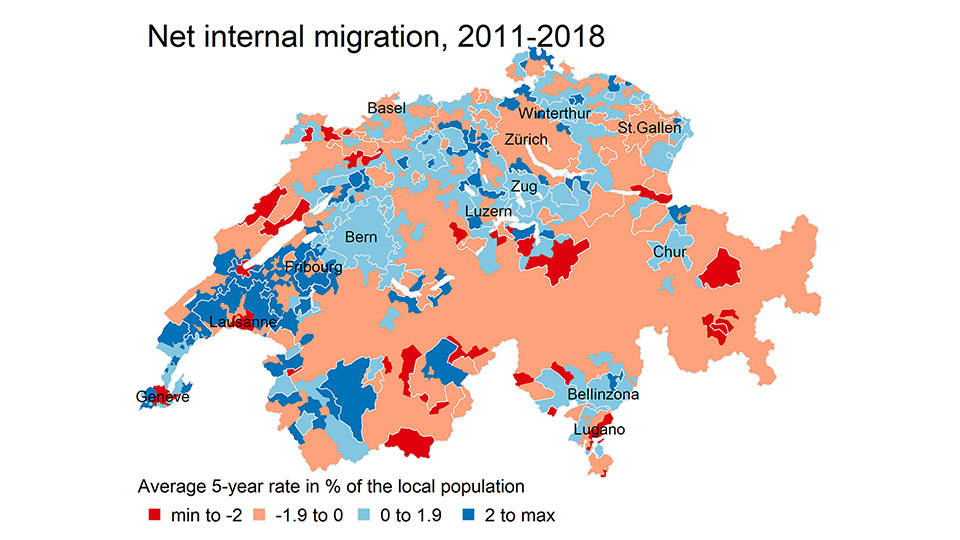
The Urban Demography Laboratory (URBDEMO) aims to better understand population dynamics in cities, both from a comparative perspective and at various spatial scales (intra-urban, national and international). The analyses conducted by the Urban Demography Laboratory focus on the natural components of city growth, such as births and deaths, as well as their migratory components, i.e. population movements within countries or between different countries. Our research also focuses on the interactions between these demographic dynamics on the one hand, and the characteristics of cities, the process of socio-economic development, environmental changes and urban planning on the other.