Testing Services and Access
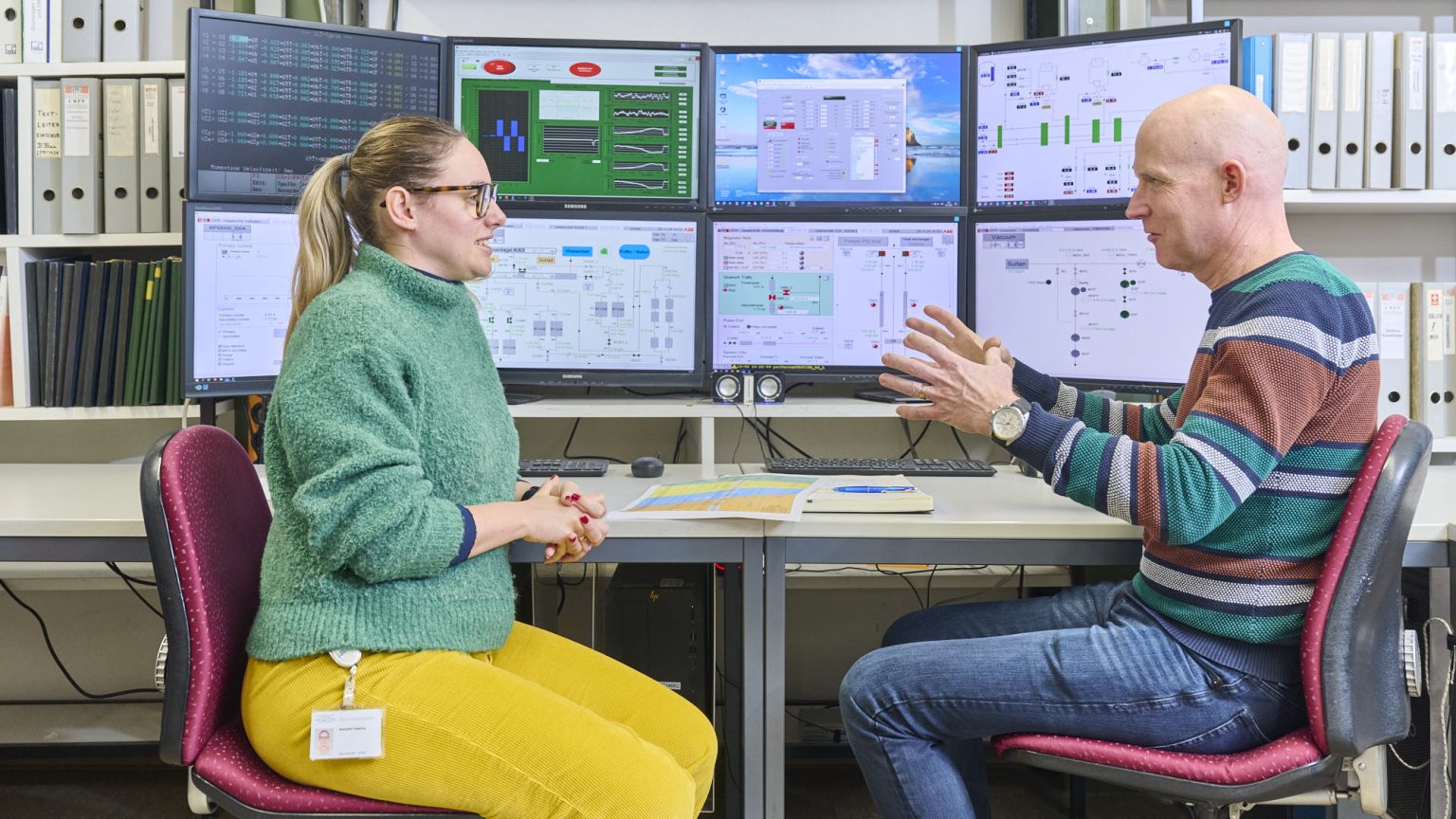
A discussion in the SULTAN control room. © EPFL / Željko Gatarić
SULTAN, EDIPO 2 and JORDI are used by laboratories and companies from all over the world. This page explains what a test campaign involves and how to start one.
What We Can Test
- Forced-flow conductor samples and joints up to 100 kA in a background field of 10.8 T, up to quench initiation (SULTAN).
- Quench experiments on sub-size forced-flow conductors, up to 15 kA in a background field of 10.8 T; here the current is provided by a power supply (SULTAN).
- Current leads up to 10 kA, with variable temperature and mass flow (JORDI).
- Medium-size coils, mainly HTS (JORDI), and small coils with low inductance (SULTAN).
- Small insert coils and materials in high-field laboratory magnets and in a variable-temperature insert (15 T magnet).
- Special samples in an anti-cryostat with He gas, currents up to 15 kA, T<10 K (SULTAN).
How a Test Campaign Works
- Enquiry — describe the sample, the field, the current and the temperature range you need.
- Feasibility and planning — we assess the request against the facility schedule and the required sample design, and propose a test slot and an estimate of the effort involved. A written contract is prepared and signed by both parties.
- Sample design — we design the sample or review your design.
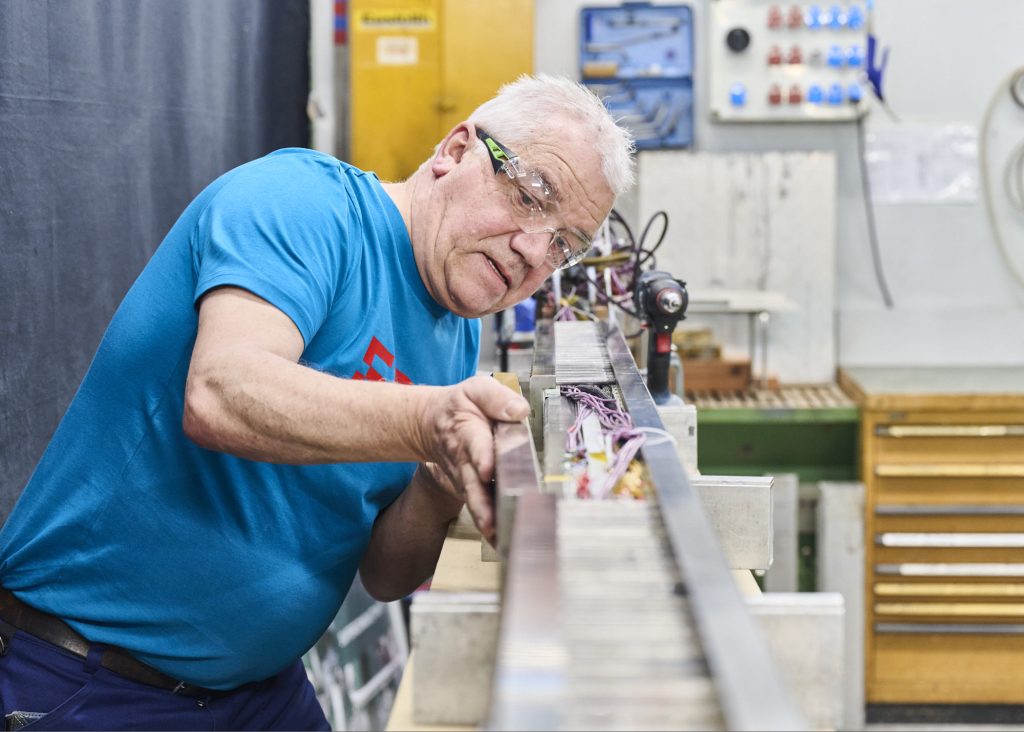
- Sample manufacture — either done by the customer (typically HTS samples) or by us (typically LTS samples, including heat treatment of Nb₃Sn cables up to 4 m in our furnaces). The work can also be shared between you and us.
- We instrument the sample with thermometers and voltage taps, attach fittings for the helium cooling pipes, and, for HTS samples, attach the HTS adapter to the upper part of the sample.
- The test program is prepared.
- Testing — the sample is installed in the test well or cryostat and characterised at the requested operating points, including DC and AC runs, electromagnetic and thermal cycles.
- Reporting — you receive the measured data, the analysis and a test report.
Collaboration and Confidentiality
Most of our campaigns are carried out inside international collaborations (ITER, EUROfusion, CERN, national programmes) or as bilateral contracts with industry. Confidentiality, intellectual-property and publication arrangements are agreed in writing before the test slot is allocated.