
Transport + Turbulence
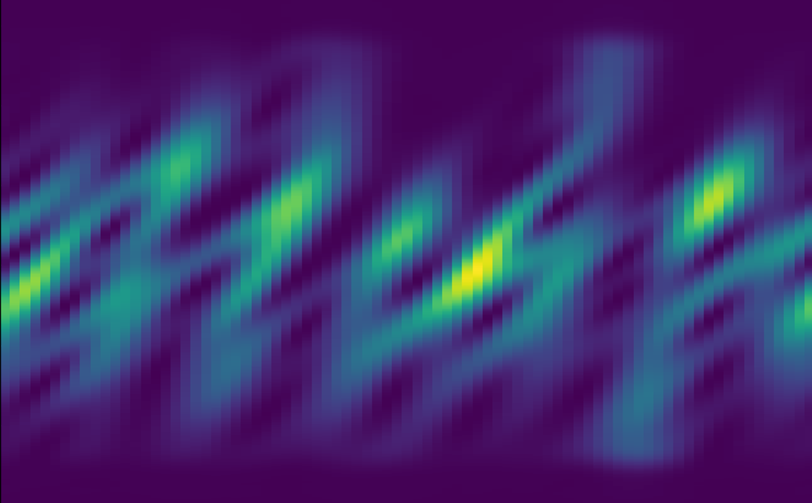
Simulation of turbulence in a plasma
One of the most important hurdles in the way towards achieving thermo-nuclear fusion is the high level of transport of particles escaping the magnetic confinement observed as the conditions for a reactor-relevant plasma are approached known as cross-field transport. Transport has a direct impact on the size, cost, and feasibility of fusion reactors; its importance cannot be understated. Classical theory of transport in toroidal confinement devices (neoclassical theory) predicts electron and ion confinement times up to 100 times longer than those measured experimentally.
|
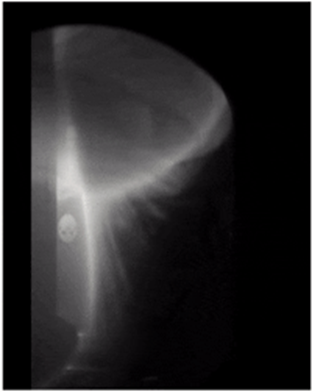
Transport in tokamak reactors refers to the movement of particles, energy, and impurities across magnetic field lines (flux surfaces), which degrades the efficiency of plasma confinement. Without transport, energy confinement times (τE) would be long enough that almost no external heating would be required to achieve fusion conditions. |
 |
Transport in tokamaks generally falls into three main categories, listed in order of increasing importance
- Classical Transport, based on binary Coulomb collisions between particles in the plasma. Classical predictions lead to low energy loss rates far below experimental observations.
- Neoclassical Transport, which includes effects from the toroidal reactor geometry, leads to increased particle and heat fluxes, particularly due to trapped particle orbits. Depending on the relative timescales on which particles complete orbits versus collision timescales , different regimes of neoclassical transport can be distinguished.
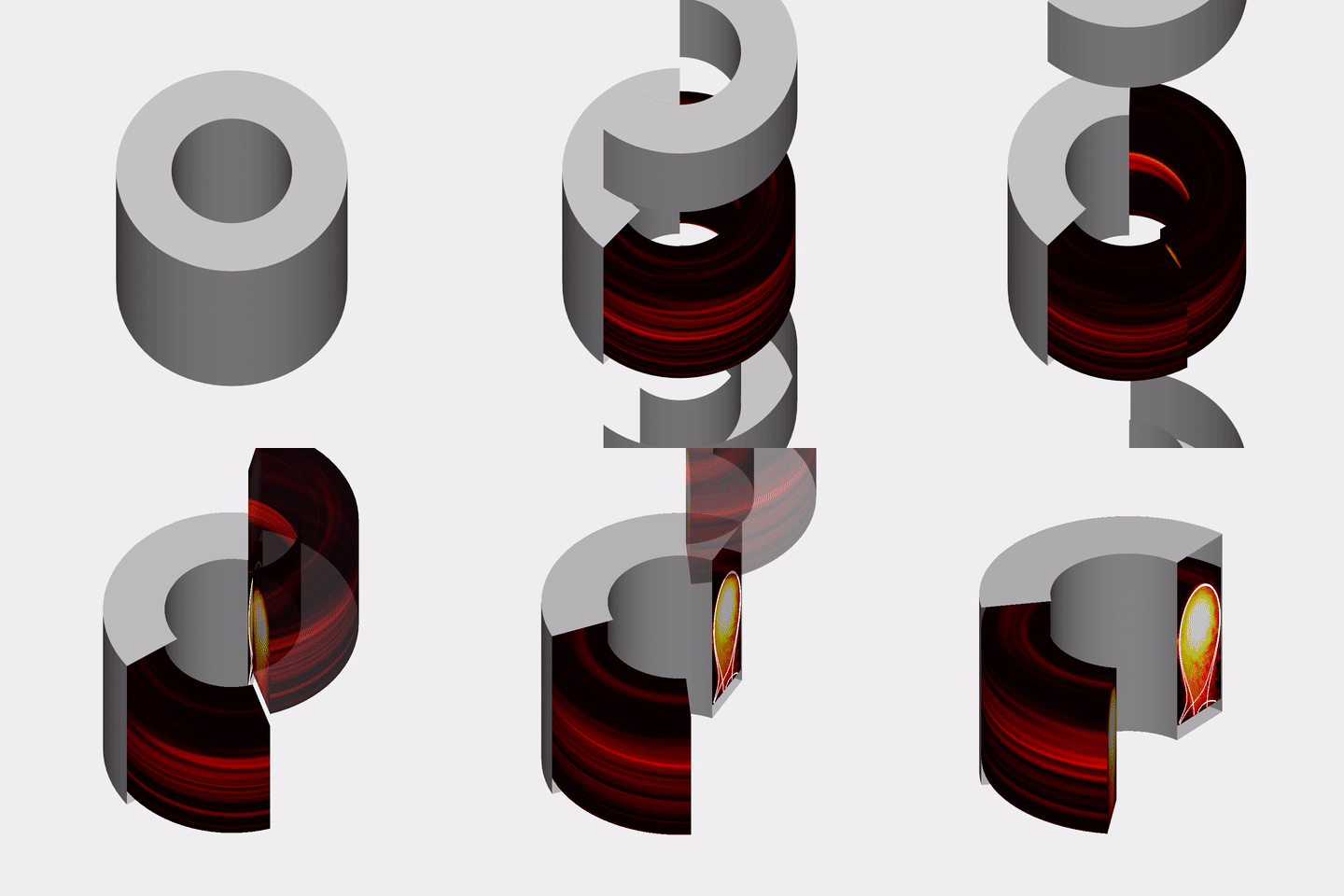
- Turbulent (or Anomalous) Transport, driven by small-scale plasma instabilities, is the dominant loss mechanism in most modern tokamaks, significantly reducing confinement times compared to neoclassical predictions. turbulence can often be described as a sea of eddies, such as can be observed in a turbulent body of water. These eddies act as channels for particles and energy to be transported efficiently, and as such, counteract the organized, well-confined structure that fusion scientists strive to engineer using magnetic fields. In short, turbulence is a nuisance that must be suppressed. Experiments on TCV have demonstrated that configurations with negative triangularity lead to a substantial reduction in turbulence amplitude, decorrelation time, and radial correlation length. This reduction correlates with improved energy confinement, suggesting that plasma shaping can be a viable strategy for turbulence suppression.
In the plasma core of TCV, with high plasma temperatures, the plasma is typically in the so-called “banana regime” of neoclassical transport. If only classical and neoclassical transport were important, only roughly 1 kW of electron heating (through ECRH, Ohmic heating, etc.) would be required to achieve the electron temperatures of Te=1 keV on TCV, close to the temperatures required for fusion. This is significantly lower than the experimental observations, where power on the order of MWs is required. The missing component has long been associated with turbulent transport.
|
A key feature of transport in tokamaks is the presence of magnetic islands, which arise due to resonant interactions between the plasma current and magnetic perturbations. |
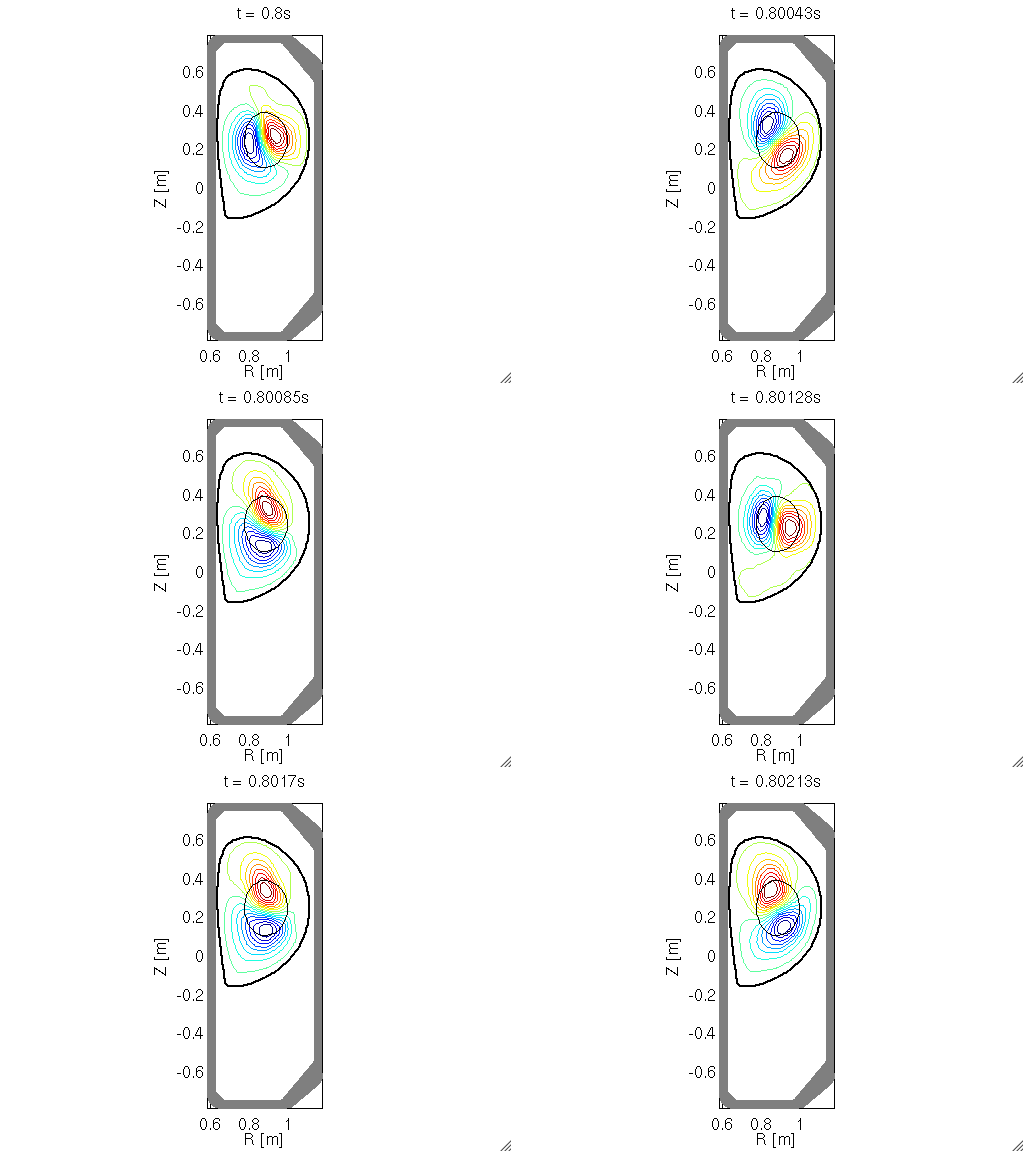 |
These islands can degrade confinement by allowing rapid cross-field transport, leading to localised cooling and even disruptions. In some cases, controlling or stabilizing islands through adjusting currents in external magnetic coils, imposing plasma flow shear or external current drive is crucial for maintaining high-performance operation.
Another major concern is impurity transport. Heavy impurities (such as Tungsten which is envisioned for the ITER plasma-facing components) can accumulate in the core and lead to excessive radiation losses, ultimately cooling the plasma and reducing fusion performance. Impurity transport is often governed by a combination of neoclassical effects, which tend to draw heavy impurities inward, and turbulent diffusion, which can impact their accumulation. The complex interplay between these mechanisms highlights the need for advanced transport models and experimental strategies to maintain impurity control.
Overall, improving transport control remains a key challenge in achieving sustained fusion conditions. Advances in turbulence suppression, impurity control, and island mitigation strategies will be vital for future fusion power plants. Through the integration of experimental observations with theoretical and numerical models, TCV continues to play a pivotal role in refining our understanding of core transport and turbulent processes, thereby informing the development of more efficient and stable fusion reactors.