
Open Resources
Molecular Reagents
MODULAR DROSOPHILA TRANSGENESIS VECTORS
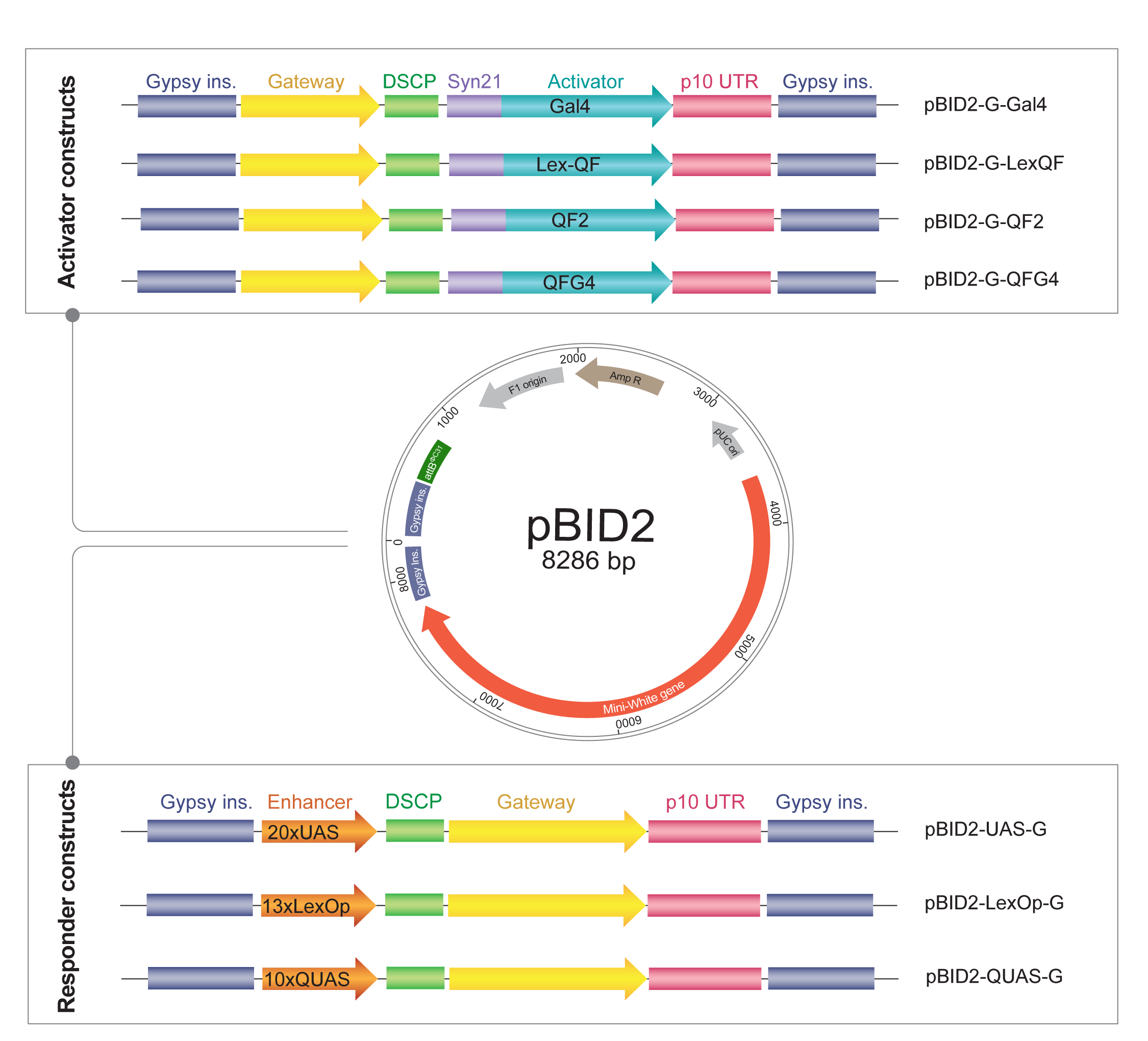
pBID2 vector series. The ability to reproducibly target expression of transgenes to defined subsets of cells is a critical experimental tool for investigating many biological processes. We have designed and developed a new modular Drosophila vector series, pBID2, to optimize and accelerate the production and analysis of Drosophila transgenes. All vectors enable 1. phiC31 targeted transgene integration, 2. incorporate insulator sequences and an artificial minimal promoter to ensure specific and uniform transgene expression, 3. allow easy mini-white selection and 4. utilize Gateway recombination cloning technology to enable high-throughput assembly (pBID2 vectors are also available in restriction cloning variants). These standardized compendium of vectors support parallel construction of enhancer-driven Gal4, LexA, or QF2 transcription factors, along with matched responder vectors under UAS, LexOp, or QUAS control. We also developed a new hybrid binary transcription factor, QFG4, derived from QF and Gal4. This new hybrid enables coordinated regulation of both UAS- and QUAS-controlled transgenes with Gal80, providing synchronized temporal control of independent transgene expression in distinct cells or tissues. A complete description of the pBID2 vector design and evaluation is available here. You can download maps and sequences of the entire pBID2 series in FASTA format here or Snapgene format here. All vectors are available from the nonprofit Addgene repository here or upon request if necessary.
pBID1 vector series. The antecedent pBID1 vector series, which also includes additional useful tools for cloning genomic fragments, is published here. You can download maps and sequences of the entire pBID1 series in FASTA format here or Snapgene format here. All pBID1 vectors are available from the nonprofit Addgene repository here.
pVID HDR template vector. pVID is an ‘All-in-One‘ (template plus gRNA sequences) vector backbone for use with CRISPR/Cas9 based genome editing employing Homology Directed Repair (HDR). pVID enables the cloning of the template sequences for HDR-based genome editing plus the cognate gRNA sequences in one single vector. Importantly this vector enables the selection against edits with undesired HDR template vector genome incorporation and mutagenesis in Drosophila – read about this very frequent problem here. You can download a map and sequence of pVID in FASTA and Snapgene formats here. pVID is available from the Addgene repository here or upon request if necessary.
OTHER CONSTRUCTS AND REAGENTS
All other constructs or other reagents generated in any of our publications are available freely upon request.

Drosophila Reagents
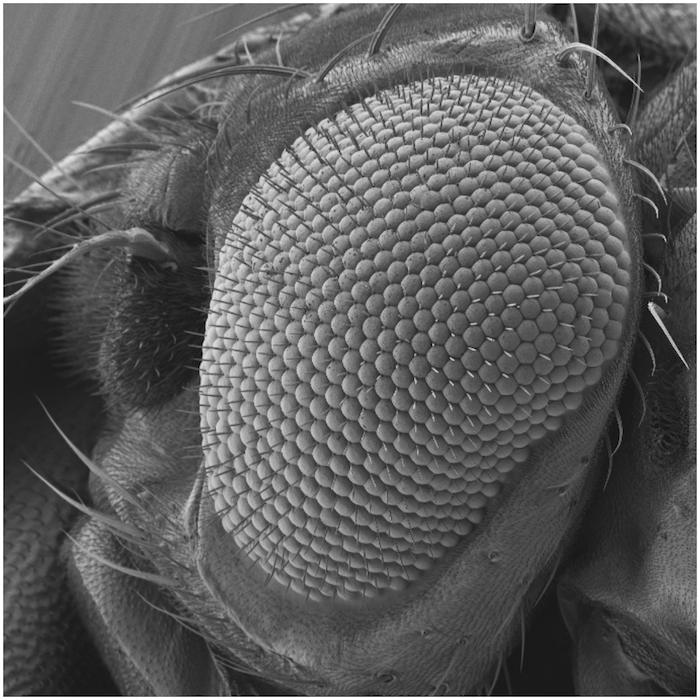
All Drosophila stocks generated in any of our publications are available freely and without obligation upon request. With your request, please include details and supporting documents to allow importation of Drosophila to your country (e.g. USA). Please include full details (account number, exact delivery address and telephone number) of the courier service you wish to use with your request.
Code
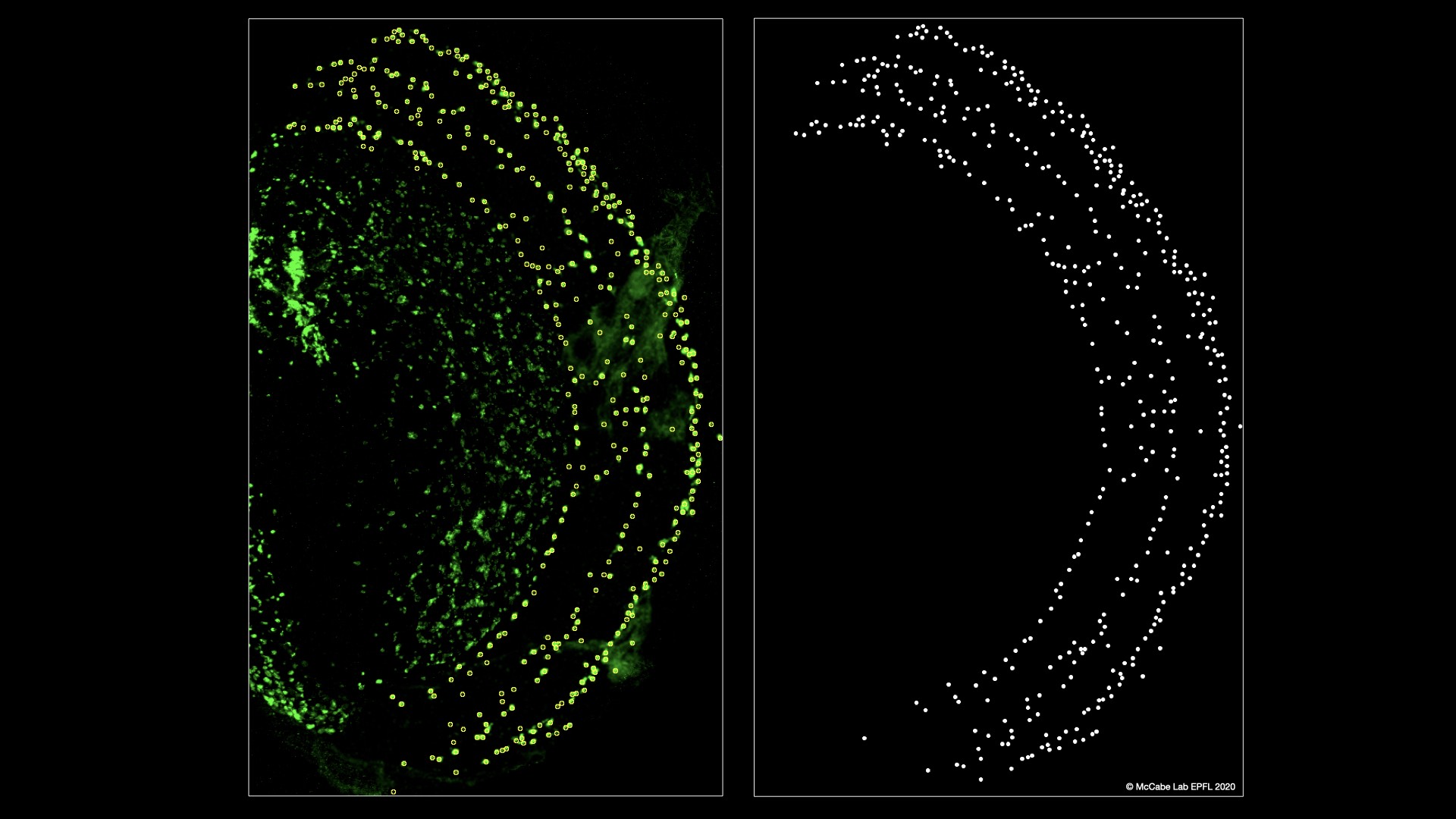
Custom code we have generated for our analysis of microscopy and behavioral data in any of our publications is freely available to download here
Datasets
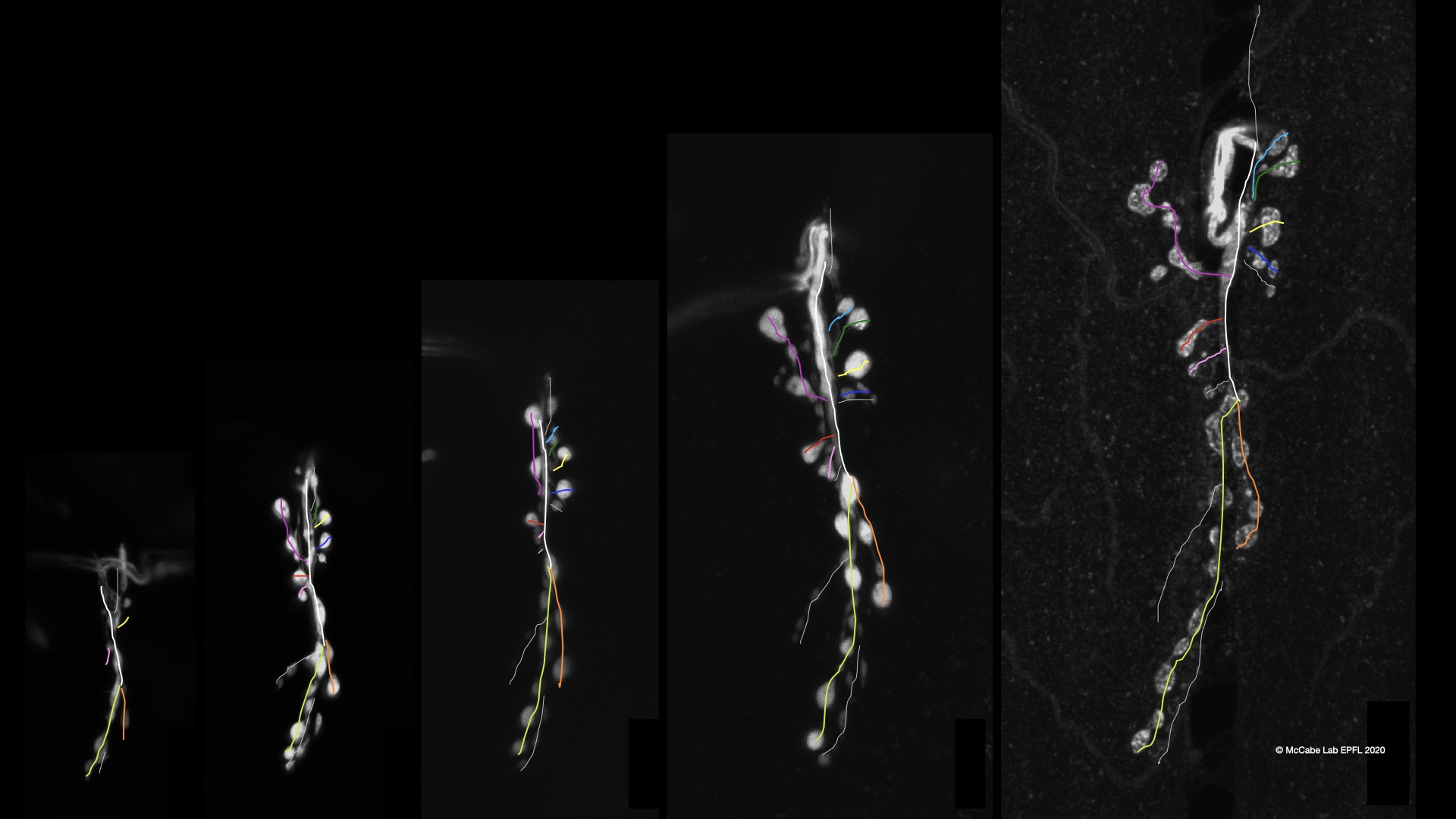
Microscopy, electrophysiology and other datasets we have generated for our publications can be accessed and downloaded here