
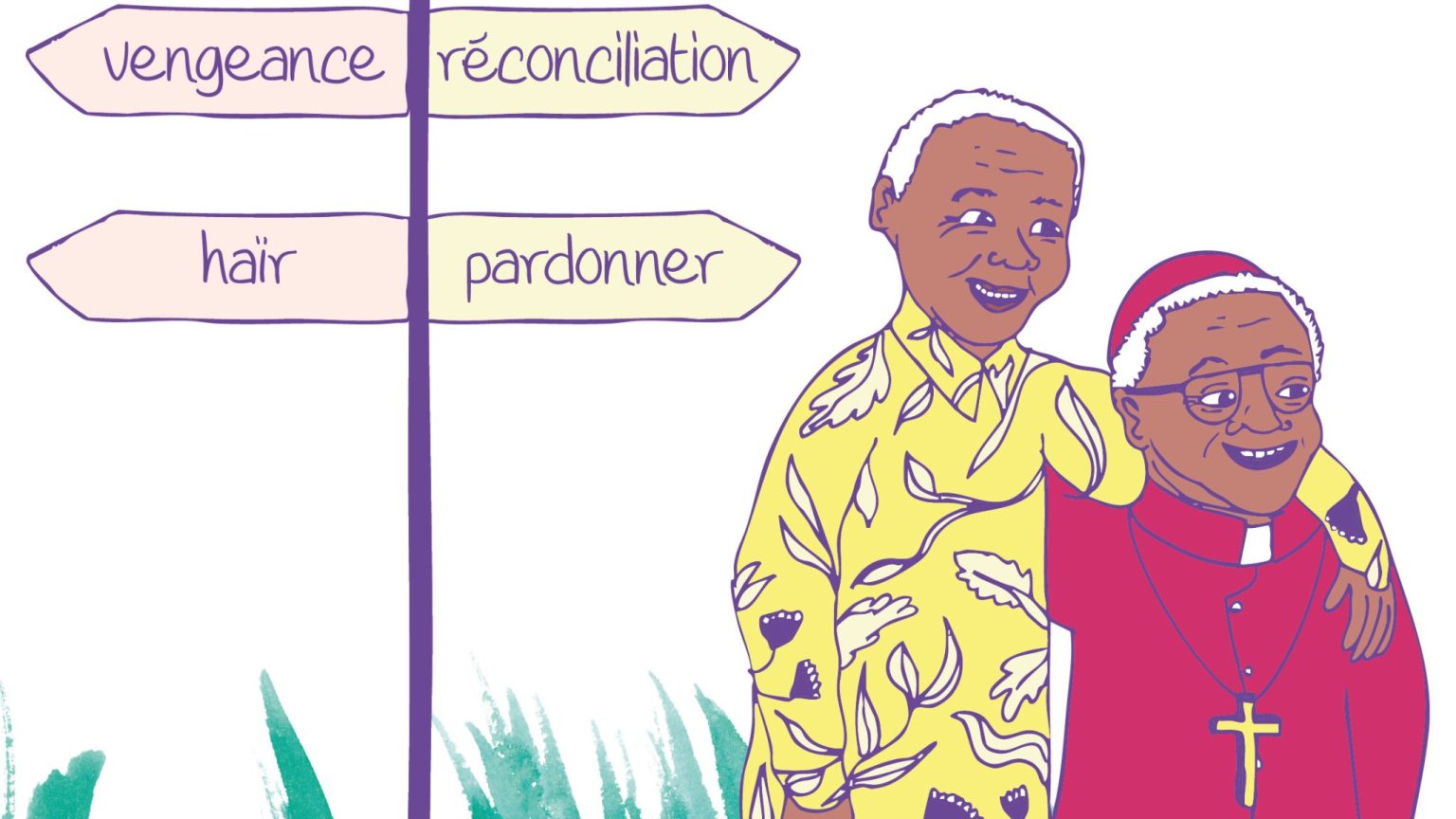
Forgiveness frees the soul; it dispels fear. That is why forgiveness is such a powerful weapon.
This now-iconic phrase sums up the mindset and actions of Nelson Mandela, South African president from 1994 to 1999 and Nobel Peace Prize laureate. Before becoming president, he spent 27 years in prison, imprisoned by the apartheid regime he fought against.
Upon his release, he forgave his oppressors and offered reconciliation to an entire nation. This ability made him the most popular leader of the 20th century, an ambassador for peace, and an icon of reconciliation.
The Archbishop of Cape Town, Desmond Tutu, a friend of Mandela’s, had the bold idea of establishing the Truth and Reconciliation Commission.
During this process, victims and perpetrators were able to testify about the horrors they had suffered or committed. These people, black and white alike, were offered a space to process their trauma, thereby moving beyond guilt and hatred. Desmond Tutu accompanied them on this incredible journey of forgiveness.
In his book There Is No Future Without Forgiveness, he recounts this arduous journey—a process of forgiveness unique in history—that prevented an entire people from seeking vengeance after 43 years of racial segregation, upon which the apartheid regime was built.
Our entire humanity depends on recognizing the humanity in others
Desmond Tutu