
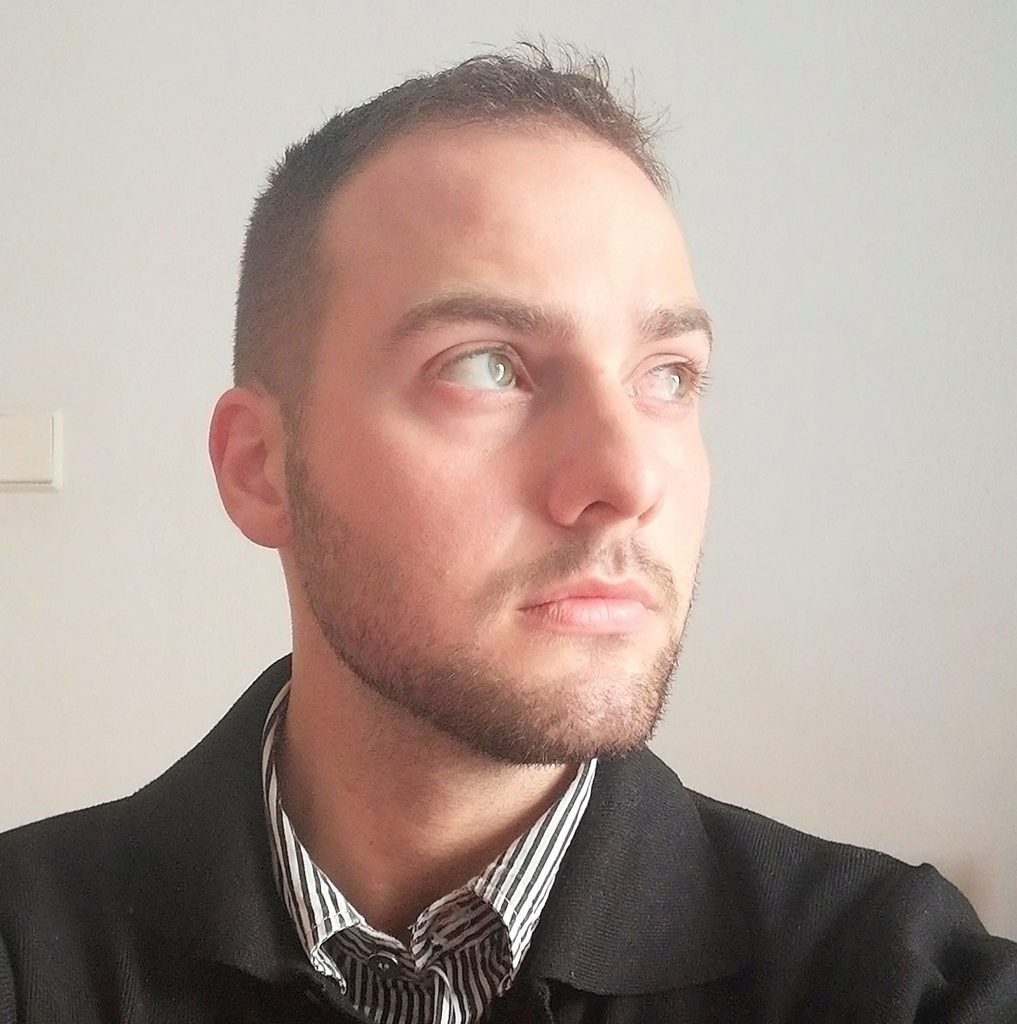
Can you say a few words about yourself?
My name is Nikitas Diamantopoulos. I am of Greek and Russian descent and grew up in Alexandroupolis, a small city in Northern Greece. I hold a degree in Journalism and Mass Media Communications from Aristotle University of Thessaloniki, as well as a Master’s in Digital Journalism and New Media. Over the years, I have worked as a reporter, film and literature critic, scriptwriter, translator, and video editor. Storytelling in all its forms has always been at the heart of my professional journey.
Did you choose your profession or did it choose you?
Ever since I could hold a pencil, I would scribble words on crumpled pieces of paper. Always driven to discover new words, new stories, and new worlds, pursuing a journalistic career became the natural way to explore my need for expression and intellectual curiosity. So, while I consciously chose this profession, in many ways, it also felt like the profession had already chosen me.
What attracted you to join LAPI?
What attracted me to LAPI was the people behind the science. The tired smiles after endless hours of operating instruments, the enthusiastic remarks following countless days of data analysis. Their camaraderie, solidarity, selflessness, and eagerness to help and explain. What truly inspired me was their drive and determination to reach new scientific heights, without ever sacrificing their human roots. My motivation to collaborate with LAPI stems from a deep desire to highlight their work, to capture their moments of triumph but also frustration, and through this, to help reach a wider audience for something that, unfortunately, is woefully underrepresented in today’s media agendas: our very future on this planet.
Can you speak about the projects you are currently working on and other ones in the past?
Having recently completed the documentary “What is CHOPIN?”, which served as the springboard for my collaboration with the inspiring team at LAPI, I am now involved in several media projects. These include conducting interviews, managing social media channels, and creating content that showcases the lab’s research and activities to a broader audience.
What have been some of your biggest challenges?
One of the greatest challenges in my field is maintaining a sense of optimism in a media landscape where negative news often overshadows positive stories. While it is essential to report on global crises and societal issues, I believe it is equally important to highlight stories of progress, innovation, and human resilience.
What have been some of your biggest successes?
Professionally, one of the highlights of my career has been writing scripts for the documentary series “Our People, Their Stories,” which focuses on Greek migrants in Australia. This project gave me the opportunity to shed light on their personal struggles, cultural identity, and the challenges they faced in building new lives far from home. Academically, I am particularly proud of my Master’s thesis at the Aristotle University of Thessaloniki, titled “Perceived Prejudice in Modern Multicultural Societies: The Muslim Minority of Thrace and Western Macedonia.” Through this research, I explored how media representations of racism, self-reported experiences of discrimination, and perceptions of prejudice shape the responses of minority groups, ranging from social avoidance to collective action.
What do you enjoy doing, outside of science and research?
I enjoy reading, writing, painting, sculpting, playing the flute, going on walks and swimming.
Where is the most interesting place you’ve been?
Budapest, Hungary, Cologne, Germany, and Nicosia, Cyprus.
A free thought for the end?
Don’t focus on the lifespan of your worth; focus on the worth of your lifespan.