
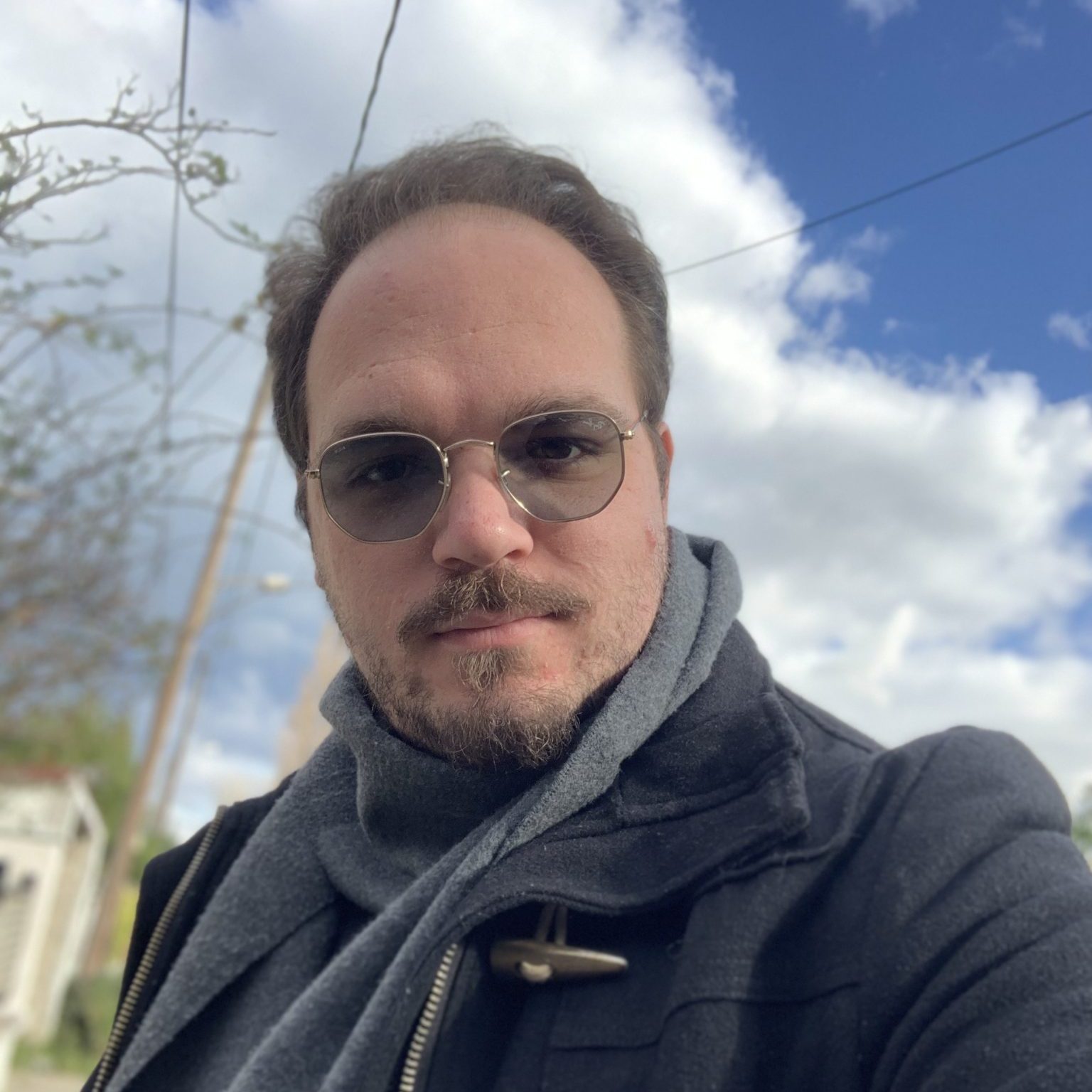
Can you say a few words about yourself?
I come from Greece and grew up in Patras. I earned my Bachelor’s degree in Mechanical Engineering at the University of Peloponnese, where I developed a deep interest in Artificial Intelligence and its applications in engineering. My thesis on Neural Networks for Data Analysis and image recognition sparked my passion for AI-driven solutions.
I then pursued an MSc in Mechanical Design using Digital Technologies, which I completed with excellence. This program allowed me to deepen my knowledge in computational methods, numerical simulations, and optimization techniques.
Now, as a Ph.D. candidate at the University of Peloponnese and a member of Foundation for Research and Technology, Hellas – Institute of Chemical Engineering Sciences (FORTH/ICE-HT), my research focuses on Multi-Scale Simulations of Transport Phenomena by Implementation of A.I. I aim to integrate AI methodologies with complex physical simulations to improve efficiency and predictive capabilities. My work sits at the intersection of machine learning, numerical methods, and engineering applications, bridging theoretical advancements with real-world problem-solving.
Did you choose your profession or did it choose you?
I’d say the profession chose me. Since I was a child, I’ve always been naturally curious about physics and natural phenomena. I enjoyed observing how things worked—whether it was fluid dynamics, energy transfer, or mechanical systems. In my free time, I found myself drawn to monitoring and analyzing different processes, trying to understand the principles behind them.
Despite this curiosity, I didn’t have a clear career path in mind for a long time. It was only during my academic journey—especially when I started working with modeling and simulations—that I truly found my passion. I also became fascinated by AI and its ability to enhance numerical simulations, improve predictive models, and provide new insights into complex physical systems. That discovery led me to pursue my MSc with a focus on computational methods, and ultimately, my Ph.D., where I now aim to integrate AI into multi-scale simulations of transport phenomena.
Looking back, my love for nature and understanding physical systems was always there—I just needed the right tools to explore it further, and AI turned out to be the perfect key.
What attracted you to join LAPI?
One of the key reasons I was drawn to LAPI was the opportunity to work with Prof. Athanasios Nenes, whose expertise and research vision were a deciding factor for me. His work in atmospheric sciences, transport phenomena, and numerical modeling deeply resonated with my own interests in multiscale simulations and complex physical systems.
Beyond the scientific aspect, LAPI provides a fantastic research environment, offering not only the tools and expertise necessary to study intricate transport processes but also a collaborative and inspiring atmosphere. It’s a place where I can engage with researchers from different backgrounds, exchange ideas, and build international friendships. The diverse and dynamic nature of the lab makes it an exciting place to grow both professionally and personally, and I’m excited to be part of such a stimulating research community!
Can you speak about the projects you are currently working on and other ones in the past?
I’ve had the opportunity to work on several exciting projects related to transport phenomena and environmental processes. In the past, I was awarded a fellowship by FORTH/ICE-HT to work on Gas Separation research as part of the INNOMEM Horizon Programme. This project focused on developing a sustainable Open Innovation Test Bed (OITB) to foster the deployment and scale-up of innovative nano-enabled membranes and their derived products. My work involved membrane technologies, separation processes, and numerical modeling of gas transport mechanisms, providing me with valuable experience in bridging fundamental research with industrial applications.
Currently, I am working on indoor aerosol dynamics as part of the SynaIR-G project. This research aims to improve our understanding of indoor air quality, aerosol behavior, and pollutant dispersion in different environments. The project is particularly exciting as it contributes to the development of strategies for improving indoor air quality and reducing human exposure to harmful aerosols.
Both of these projects have strengthened my expertise in multi-scale simulations and transport phenomena, allowing me to apply advanced modeling techniques to real-world environmental and engineering challenges.
What have been some of your biggest challenges?
Getting started was definitely a challenge. Coming into the field without an initial strong background in modeling and simulations, I had to put in a lot of effort to catch up and build the necessary skills. Learning new computational methods and transitioning from theory to hands-on applications required patience and persistence.
Another challenge was working in interdisciplinary teams, where I had to communicate effectively with experts from different fields. Adapting to new perspectives and research approaches wasn’t always easy, but it helped me grow both as a researcher and a problem-solver.
What have been some of your biggest successes?
Beyond personal achievements, one of the things I value most is making those around me—especially my family—proud. Seeing their support and knowing that my hard work has brought them joy makes everything even more meaningful, I count that as big success. Other than that, success is not just overcoming challenges, but continuously learning, growing, and reaching a point where I can contribute meaningfully, whether in research, professional projects, or personal development.
You split your time between teaching and research. How do you view these two roles?
I see teaching and research as two sides of the same coin—each one complements and enhances the other. Research keeps me engaged with cutting-edge developments, allowing me to explore new ideas and solve complex problems. At the same time, teaching not only helps me share knowledge and inspire others but also deepens my own understanding of what I already know. Explaining concepts in a structured way forces me to think critically and approach topics from different perspectives.
One of the most rewarding aspects of teaching is seeing students develop curiosity and critical thinking skills, just as I did when I first started. On the other hand, research pushes me to continuously learn and adapt, which in turn makes me a better teacher. Balancing both roles is challenging, but it’s also what makes my work so exciting and fulfilling.
What do you enjoy to do, outside of science and research?
Outside of science and research, what I enjoy most is taking long walks along the beach—preferably at sunset, where I can relax and clear my mind. I also love going for coffees, whether to catch up with friends or just enjoy the moment. Another passion of mine is reading philosophy, as it gives me new perspectives and challenges my way of thinking. And of course, old school rock music is always a must—it’s something that energizes me and has been a constant source of inspiration and a really good friend during hard times.
Where is the most interesting place you’ve been?
One of my favorite place I’ve visited so far is Prague capital of Czech Republic. The city’s history, architecture, and unique atmosphere made a strong impression on me. Walking through its streets, interacting with locals, seeing the Charles Bridge, the Astronomical Clock, and the old town, felt like stepping into a different era. It was a great experience, and it left me wanting to explore even more places in the future.
…Next place on the list..Japan!
A free thought for the end?
Richard Feynman once said, “Nobody ever figures out what life is all about, and it doesn’t matter. Explore the world. Nearly everything is really interesting if you go into it deeply enough.” I couldn’t agree more.
You don’t need to have everything figured out—what matters is staying curious and open to exploration. Life isn’t about having all the answers; it’s about enjoying the process of discovery.