
Year: 2020
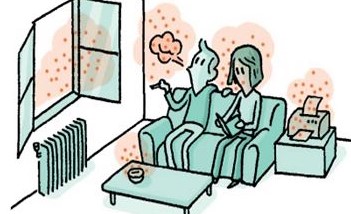
Impact of Indoor Climate on Human Health
Introduction Have you ever thought about how many hours we spend indoors? Many studies have shown that 90% of our time is spent in closed environments and more than half of the air we breathe is from our private dwelling. With this comes the importance to have a decent indoor climate. The relationship between bad (…)

Do Green Buildings Have Better Indoor Climate ?
The building sector has the greatest potential for greenhouse gas emission reductions compared to other major emitting sectors [1]. It could achieve energy savings of 50% by 2050, in order to limit the global temperature increase to 2°C [2]. This is why many green buildings are being developed today. We chose this subject because environmental (…)
Role of Indoor Climate in Virus Transmission Mitigation
Indoor environment has become the predominant habitat for urban individuals. Indoor air quality is therefore crucial for public health. Indeed, this confined air can expose us to chemical agents, pollutants and infectious agents. The properties of each building such as location, occupancy or ventilation and indoor environmental factors including temperature, humidity, and airflow rates shape (…)
Human productivity and energy use – are these in conflict?
With the evolution of technology, humans are nowadays able to control many factors that influence indoor environmental quality (IEQ) such as temperature, air quality, and air velocity. Thus, we can create a comfortable environment in buildings but on the other hand, this progress also leads to a higher energy consumption. Obviously, we aim to consume (…)
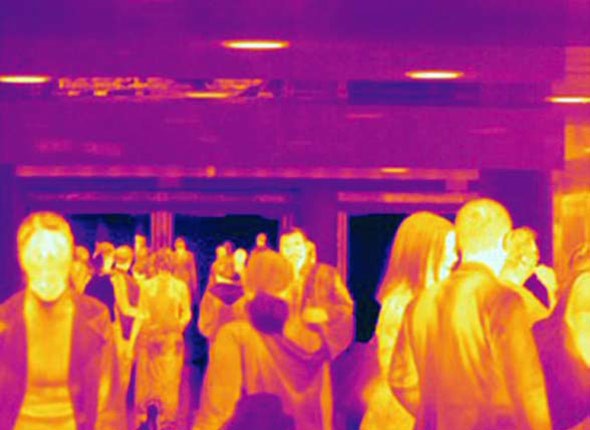
Methods To Assess Indoor Climate: Pros and Cons
In the following text we will introduce different parameters and methods on how to assess indoor climate. Additionally, we put together pros and cons of these specific methods. We mainly focused on the indoor air temperature, relative humidity, the impact of particulate matter and indoor airflow. Temperature Indoor temperature is an important factor in (…)
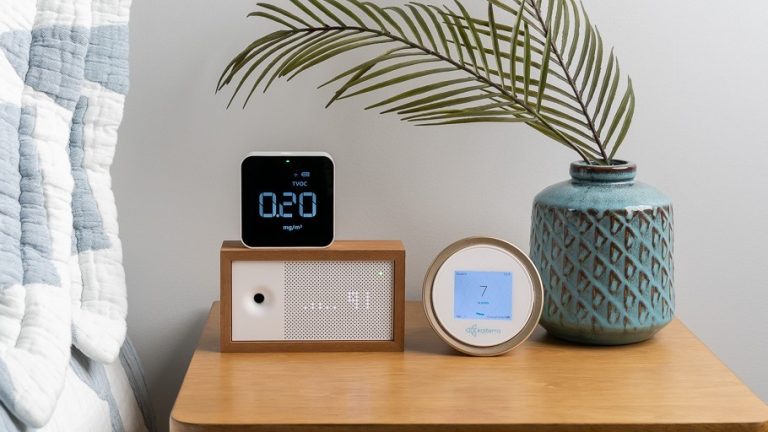
IoT Sensing of Indoor Air Quality – Is This a Future?
What is IoT sensing technology and how can it be applied to monitoring indoor air quality? Why is it important to monitor indoor air quality? What are the benefits of IoT sensing technology? What are the other related topics of IoT sensing? Are there some available commercial products in the market? How much is it? (…)
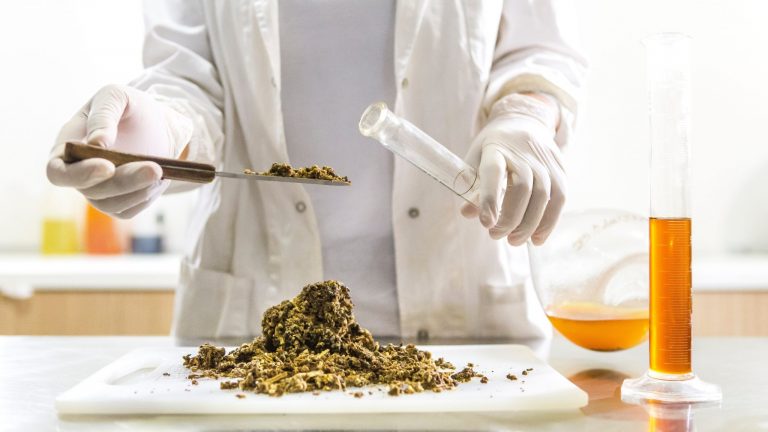
Microbiology of the Built Environment
“Every breath you take, every move you make, every bond you break, every step you take, microorganisms will be watching you.” As you already probably know, microorganisms are literally everywhere – in the air, water and soil, and also in our built environment, which comprises houses, offices and vehicles, among others. But what are microorganisms (…)

Air Humidity and Indoor Air Quality
As an introduction let’s take a look at a commonly used design tool: the Psychometric chart I know it looks really complicated and we are not gonna explain everything about this graph. I’m using it to show two main points: You can clearly see that there is a given comfort zone in bright green And (…)

Are candles Toxic to Indoor Air Quality?
More information is known about pollutants in outdoor air than in indoor air, although we spend about 90% of our time in public or private indoor environments. There are various sources of indoor air pollution, to name a few, such as emissions from building materials and furniture, electric equipment, heating or cooling systems, combustion sources (…)

Indoor Air Quality in Spacecraft Cabins
1. INTRODUCTION It is well known that the indoor air quality of buildings is extremely important as about 90% of our daily time is spent indoors [1]. It is also well known that indoor air can be 2 to 5 times more polluted than outdoor air, thus leading to compromise the health of the occupants. (…)