
Civil and Environmental Engineering
About the program
The program spans a remarkably broad research spectrum bridging the gap between Civil and Environmental Engineering offering great potential for creativity and innovation. To address the societal changes through creative interactions between science and engineering.
EPFL, one of the top ranked engineering universities in the world, provides a unique opportunity to pursue this complex goal while offering outstanding facilities and a stimulating work environment. At EDCE we aim to foster a lively and active community of highly skilled researchers, students and professors, where fruitful exchanges transcend traditional boundaries between disciplines. The scientific challenges of our era urge to develop an open-minded generation of new technological solutions, and society itself needs professionals with the attitude and skills to realize and facilitate these solutions.
EDCE students are exposed to this multidisciplinary atmosphere through a cutting-edge curriculum composed of a lively combination of coursework, laboratory research and seminars.
Applying to EDCE
Applications can be submitted several times a year.
Deadlines: Submission prior to January 15, April 30 or September 15.
Your application is only complete once references from all three referees have been received. Please ensure you submit your application early enough to allow your referees time to provide their references before the deadline.
- Check out the guidelines on: eligibility criteria and application process
- The application process is fully online
- Visit the webpage to get an idea of ongoing research in Civil end Environmental Engineering at EPFL and see the PhD advisors linked to the doctoral program
Further information on the EDOC admission criteria and application procedures visit the webpage.

This is perhaps one of the most interesting aspects of EPFL – the student does not have to look very far outside the traditional disciplinary boundaries before it becomes clear just how well cross-disciplinary ideas and projects flourish on our campus.
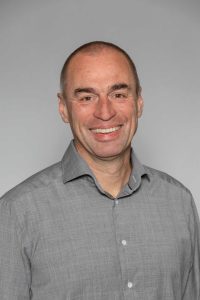
In my experience, doing a PhD within ENAC – and at EPFL in general – is clearly demanding and challenging, but also very rewarding because of the immensely stimulating environment.
Each laboratory is endowed with its own strengths and networks of collaboration, and then also connected to the larger EPFL scientific ecosystem, which is of course strongly rooted in the European (and beyond) scientific landscape. This creates a seemingly unlimited space in which a PhD can unfold. Depending on the discipline, this finds its expression for example in strength of our analytical platforms, which provide access to cutting-edge technologies and instrumentation. But – and this is perhaps one of the most interesting aspects of EPFL – the student does not have to look very far outside the traditional disciplinary boundaries before it becomes clear just how well cross-disciplinary ideas and projects flourish on our campus. Even if a given student does not draw directly on these academic resources during their PhD, it is impossible not to get motivated, see one’s own project in different light and continuously find new inspiration in incredibly rich environment that is EPFL. This is personally what fascinates me most about our institution and why I have to say that I am slightly jealous of the young people who have this opportunity.
So, make no mistake about it: Learning to become a good scientist is a long and sometimes difficult road; as a professor, I am still on it… But it is also absolutely fascinating, and it is hard to think of a better place to do it than EPFL.
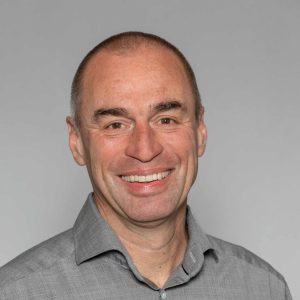
Prof. Anders Meibom
Research projects
The research area of Civil Engineering is aimed at students of any engineering domain (materials, wind energy, bridge, tunnels, etc.) with a strong interest in pursuing research and advancing the principles of the EDCE program towards research and development of more sustainable structures, new forms of energy and optimized transportation and mobility systems.
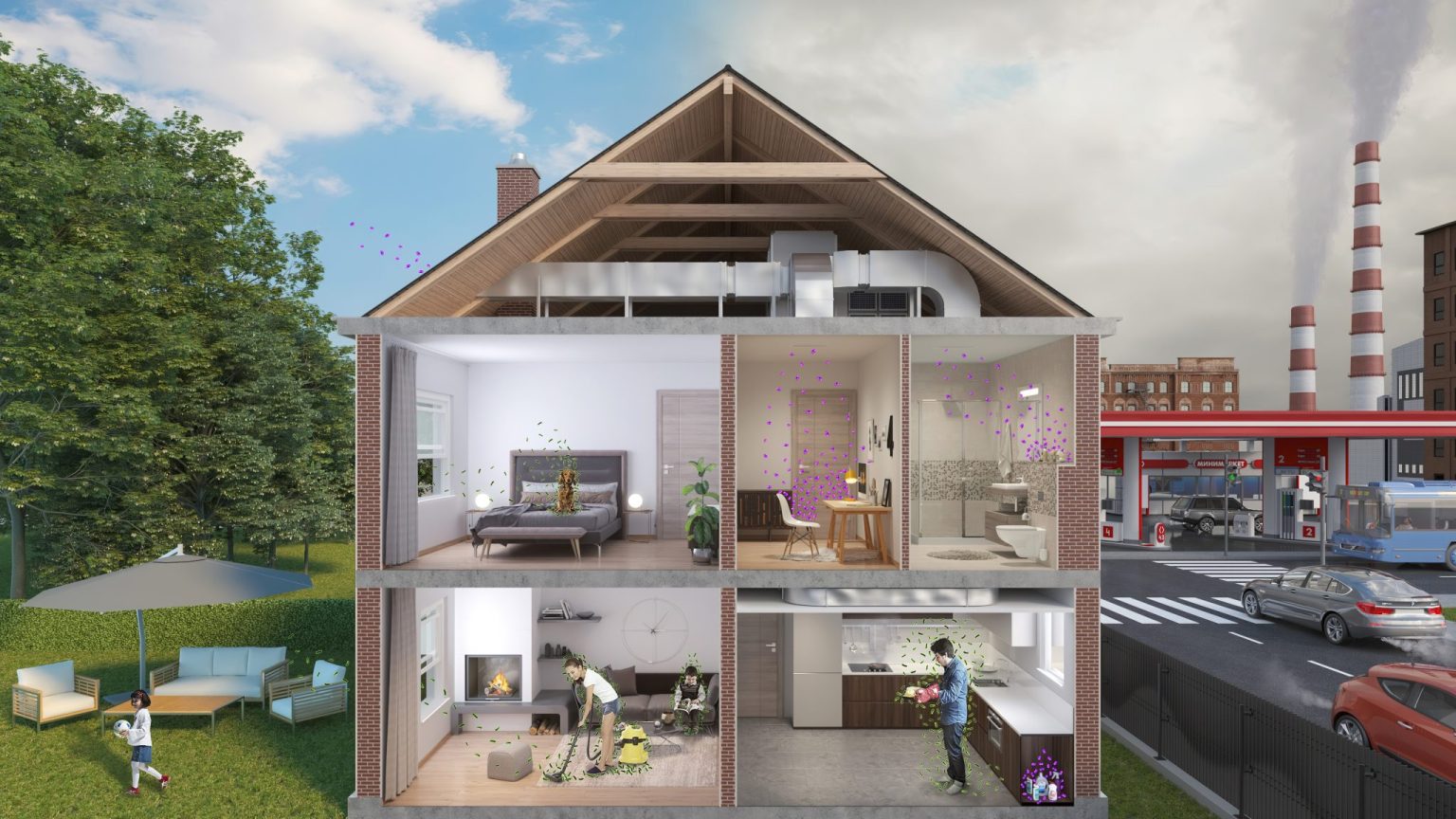
The research area of Environmental Engineering is open to any student interested in addressing environmental challenges such as climate change, depletion of resources, increasing pollution, human population growth and the loss of biodiversity.
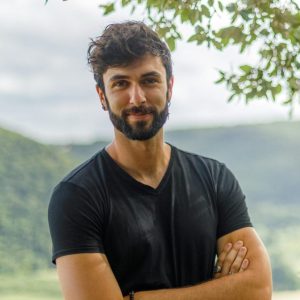
It’s a unique chance to grow, as a researcher and as a person, getting to know yourself and learning to keep going no matter what challenges are thrown at you.

Doing a PhD gave me something I didn’t quite expect: the freedom to obsess over one single problem until I either cracked it… or got humbled enough to try differently! After some time in a lively start-up, I wanted to dive deeper into a topic of my choice, to explore it from every angle and to develop new skills along the way. A PhD at Earth Sensing and Observation laboratory was the obvious choice for that, since I had already discovered its collaborative and friendly spirit during my Master’s.
My PhD is all about lidar technology, which generates large-scale 3D maps of the environment. These maps have countless applications, from monitoring to navigation of autonomous systems. The tricky part is that data collection often goes wrong (more often than we would imagine), so my research focuses on finding ways to ‘fix’ the final maps and make them more robust and reliable in challenging conditions.
This journey has taught me what it means to take on an unsolved problem and try to solve it. Most importantly, it’s a unique chance to grow, as a researcher and as a person, getting to know yourself and learning to keep going no matter what challenges are thrown at you.

For applicants
Further information: how to apply, program details, testimonials
For PhD candidates
Practical information: what you need to know as an EDCE PhD student
People
Who is who: all you need to know about the EDCE community

Upcoming public defense
News highlights
Contact
Program Director
Prof. Anastasios Vassilopoulos
Administration
Emma Sorrentino – Gundersen
[email protected]