
EDPY News and events

© 2026 EPFL

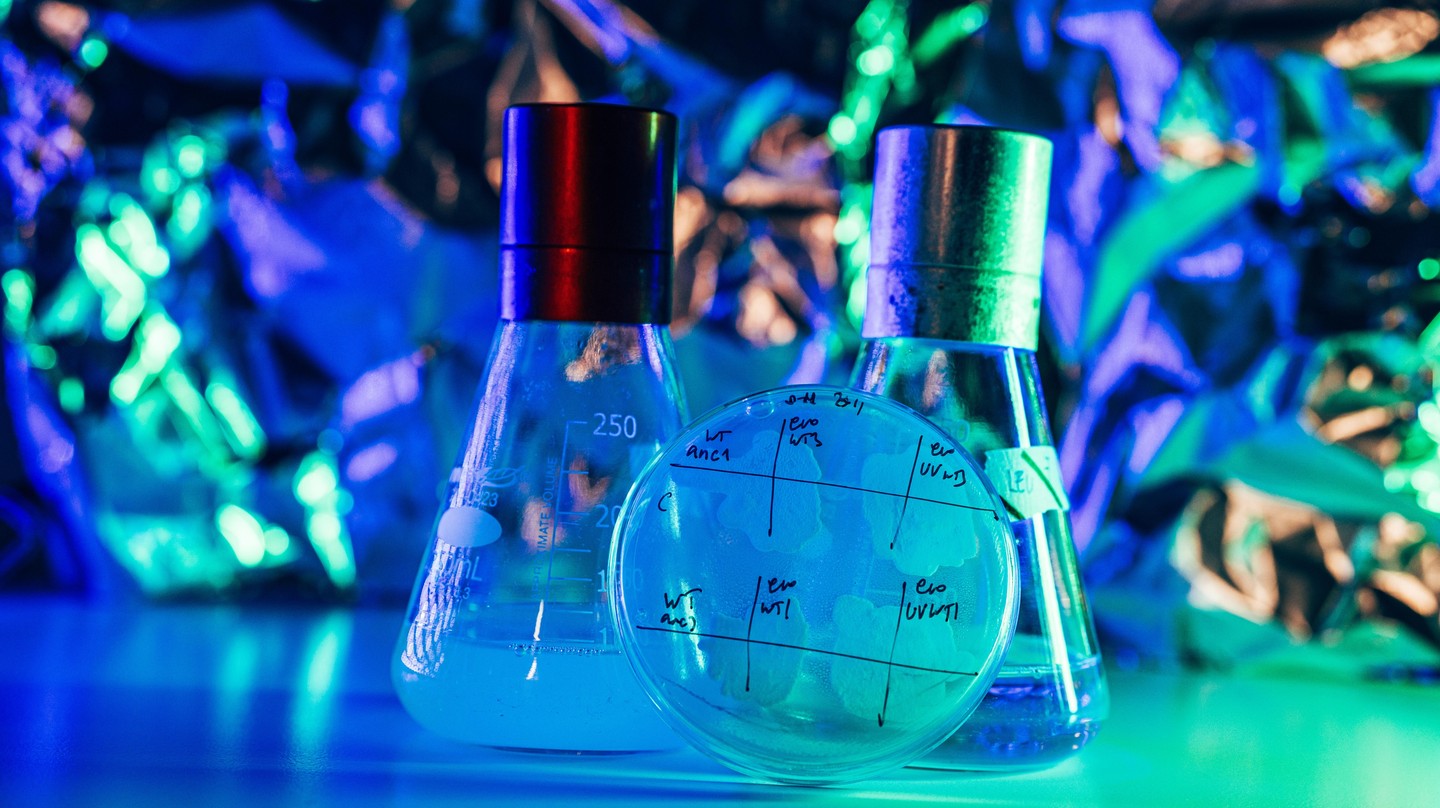
When light boosts protein evolution

— EPFL researchers have developed a light-based method that can produce proteins that switch states, respond to signals, and even compute, using light and the cell cycle.

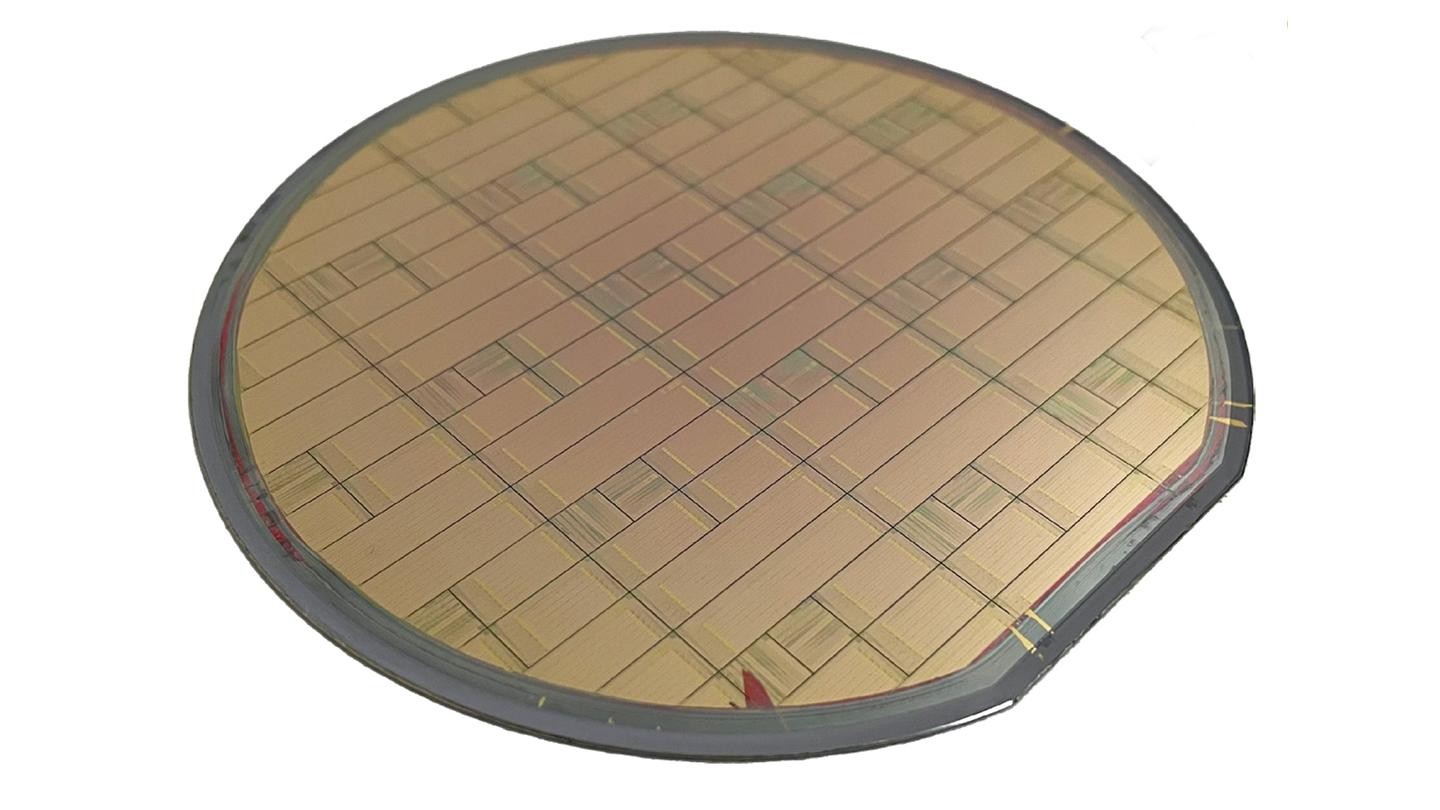
Photograph of a manufactured 100-mm wafer hosting hundreds of copper Damascene lithium tantalate modulators. Credit: Lin et al 2026.

Copper damascene process brings electronics and photonics together

— EPFL researchers have, for the first time, applied the semiconductor industry’s standard copper wiring process to ferroelectric thin film photonics. By building lithium tantalate modulators with copper instead of gold, they remove a major barrier to 3D integration with advanced CMOS electronics and move optical interconnects closer to large scale deployment in data centers and AI clusters.

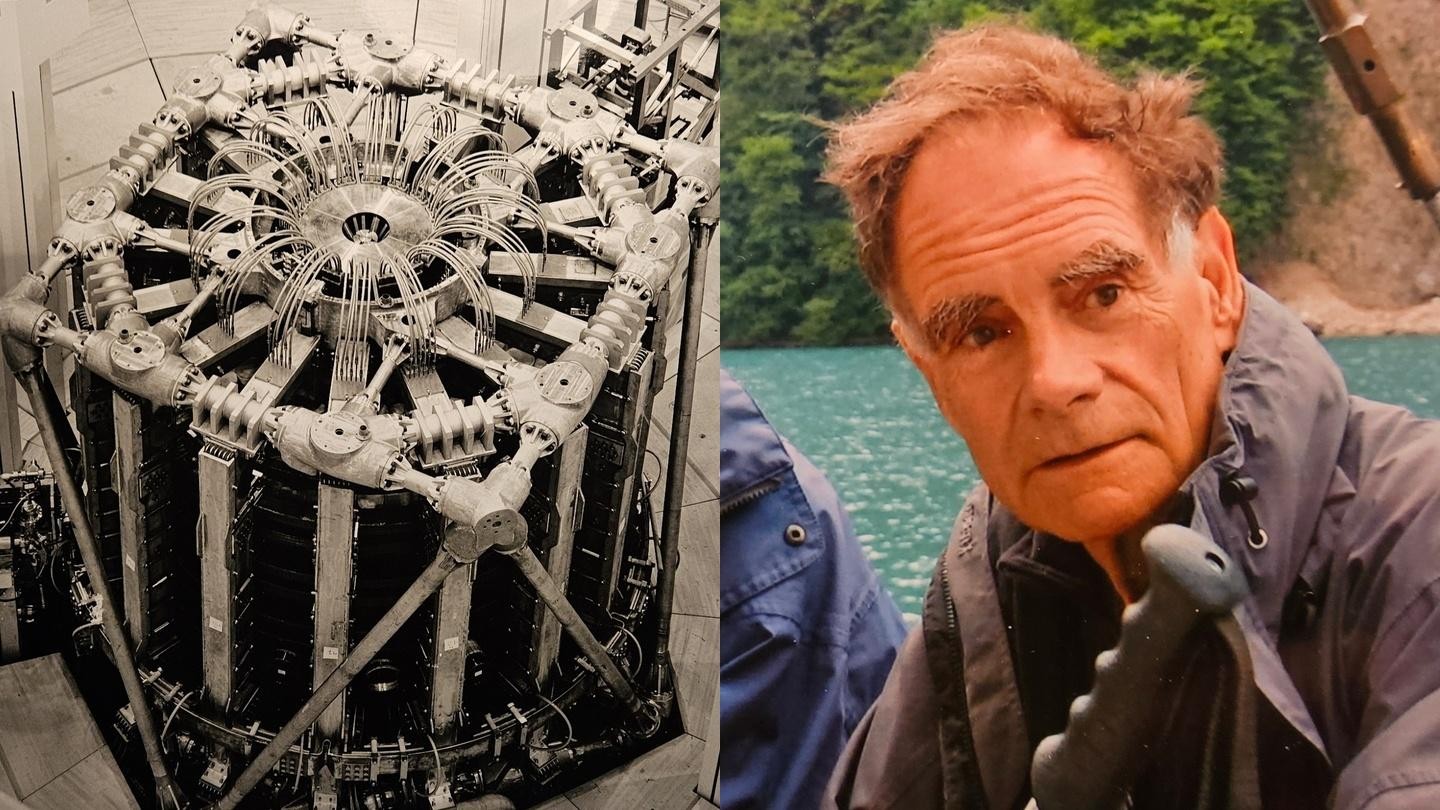
On the left, a photo of TCV, and on the right, Ferdinand Hofmann© 2026 EPFL

Ferdinand Hofmann, builder of tokamaks

— An exceptional physicist and engineer, and progenitor of EPFL’s flagship fusion facility – the Tokamak à Configuration Variable (TCV) – Ferdinand Hofmann passed away in December 2025 at the age of 88. A reserved man, he devoted his career to fusion physics research. For nearly 35 years, until retiring in 2002, he left a lasting legacy on the Centre de Recherches en Physique des Plasmas (CRPP), the former name of the Swiss Plasma Center. He was a transitional figure – bridging an era when cutting-edge experimental science still had a distinctly hands-on character to one that has become highly specialised and internationally distributed.

© EPFL 2026/iStock (bymuratdeniz)

Measuring time at the quantum level

— EPFL physicists have found a way to measure the time involved in quantum events and found it depends on the symmetry of the material.

© 2025 ADN

2025 Physics Doctoral Thesis Award & Distinction 8%

— Established in 2014, the Physics Doctoral Thesis Award (EDPY Prize) is presented each year to PhD students whose research stands out for its exceptional scientific merit. The prize recognizes theses that have significantly advanced our understanding of physics, whether through groundbreaking theoretical insights, innovative experimental techniques, or impactful interdisciplinary contributions. It highlights not only the quality of the scientific results, but also the originality, rigor, and overall influence of the work within the broader physics community.


Past & present at one table…
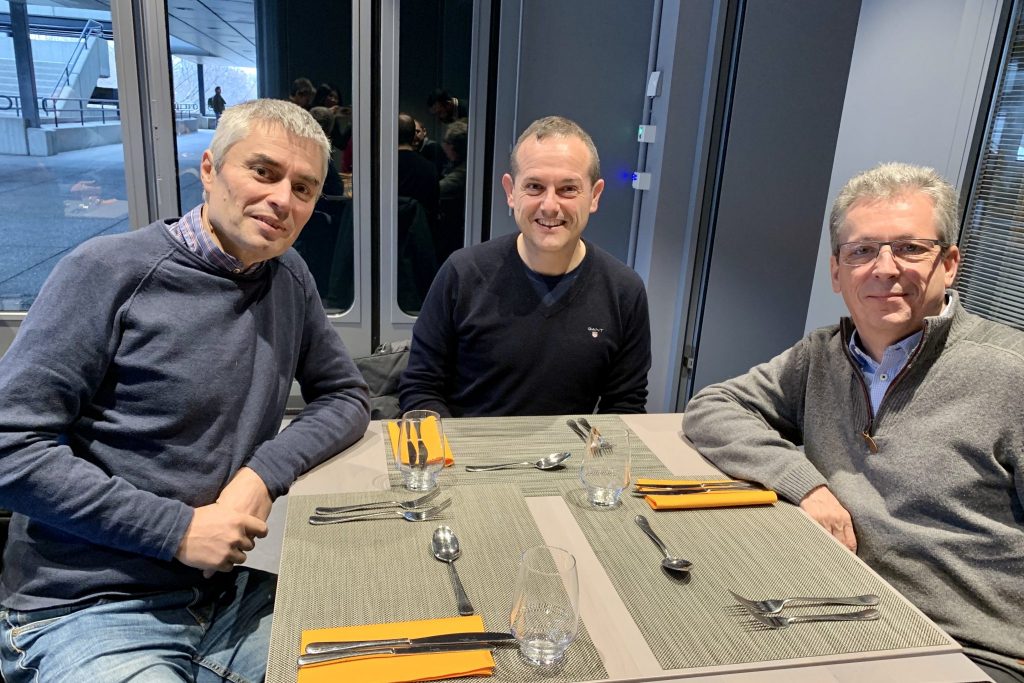
EDPY Program directors (left to right): Prof. O. Schneider (2009 – 2014), Prof. V. Savona (2015 – 2018), Prof. F. Mila (2018 – present)

Klaus Kern celebrates the 100th thesis of his laboratory!

For the past 28 years, Klaus Kern has directed his doctoral students, young researchers in the training phase, leaving them all the freedom required to be successful in developing their ideas.

This important milestone, a first at EPFL, highlights not only the huge research activity led in his laboratory, but also his qualities in attracting talented scientists to our school.

Indeed, one of the important roles of laboratories hosted by academic institutions such as EPFL is to train the next generation of scientists and leaders be it in the fields of academic research, entrepreneurship, or the society at large.

In the frame of the Doctoral Program in Physics, we wish him a successful continuation to this 100th and we congratulate him and all the people in his department for this exceptional achievement.
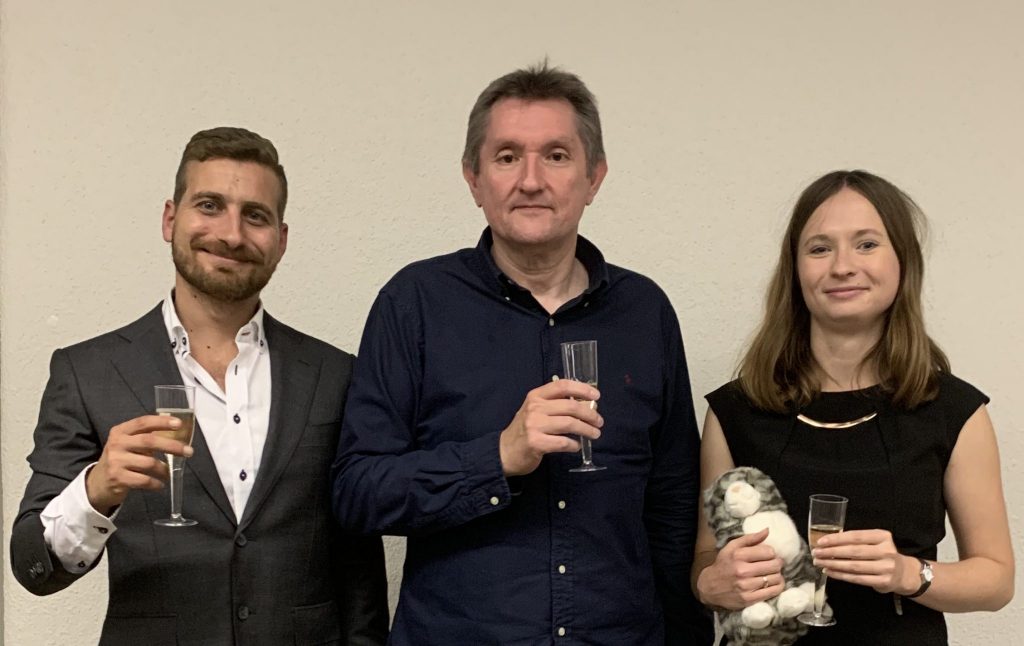
 
Photo: Shai Mangel (EDMX – 100th), Klaus Kern, Anna M. Roslawska (EDPY – 99th)