
Biomass deconstruction and chemical functionalization
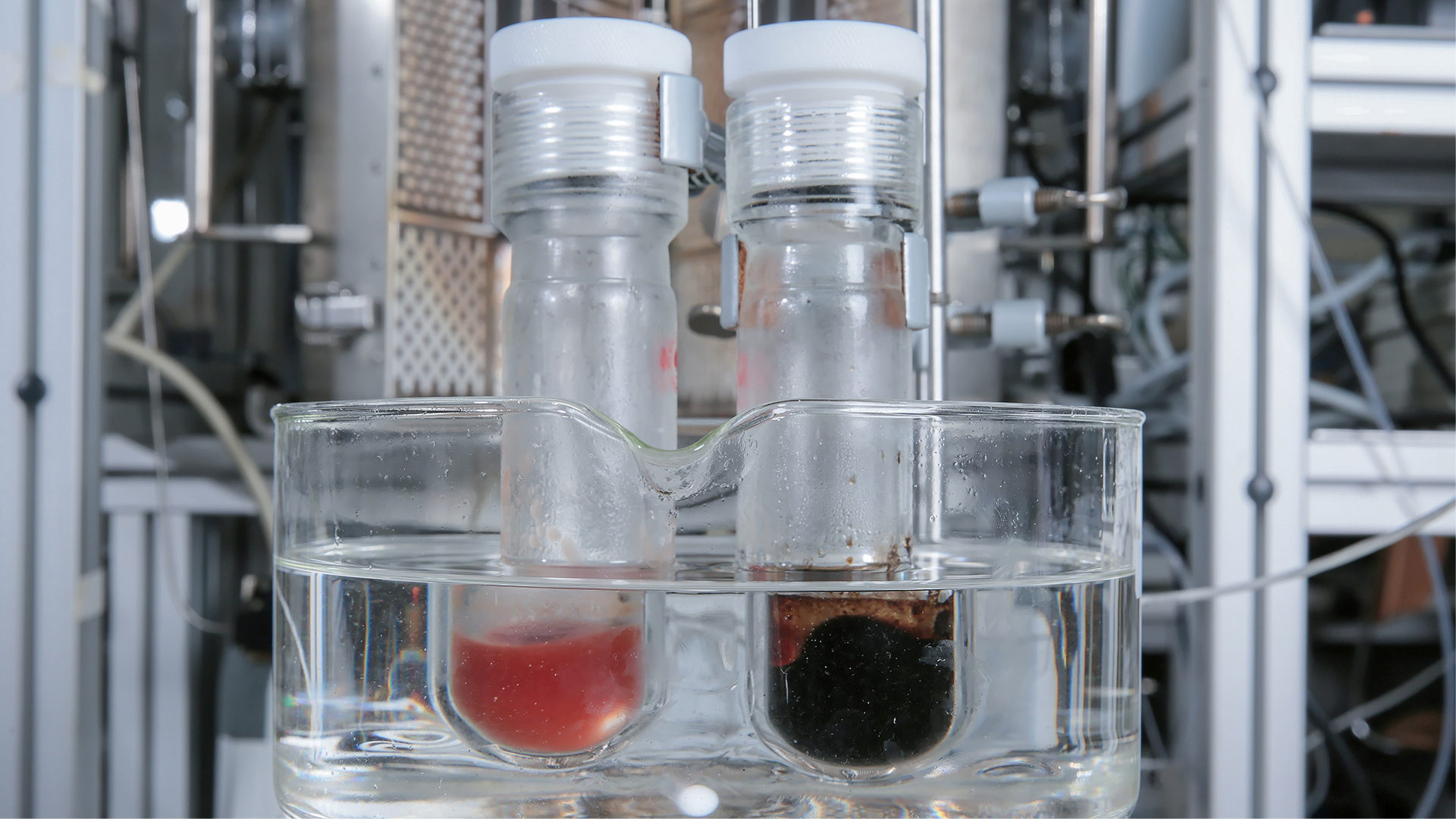
Biomass deconstruction aims to depolymerize the major plant biopolymers such as cellulose, hemicellulose (i.e. polysaccharides) and lignin (a heteropolymer of phenylpropanoid subunits). Lignin is especially easily destroyed during pulp and paper processing and most biorefinery processes. Our group is developing chemical functionalization techniques to avoid lignin destruction during extraction and to produce unique functionlized platform from both lignin and carbohydrates. Through functionalization, we notably aim to directly produce useful products during deconstruction. We also use fractionation to answer fundamental questions about lignin structure and chemistry.
Researchers involved in this work: Nakul Bapat and Manon Rolland
Recent work:
J. Behaghel de Bueren, W. Lan, A. Colantuoni, R. Fontaine, T. Nelis, I. M. Salazar and J. S. Luterbacher. “Selective Production of Syringaldehyde and Vanillin from Acetal-Stabilized Lignin”. ACS Sustainable Chemistry & Engineering, 13, pp. 14437–14445, 2025. doi: 10.1021/acssuschemeng.5c04387
C. L. Bourmaud, S. Sun, A. Bornet and J. S. Luterbacher. “Operando Monitoring of Delignification Processes Using 2D 1H-13C HSQC NMR”. ACS Sustainable Chemistry & Engineering, 13, pp. 13897–13907, 2025. doi: 10.1021/acssuschemeng.5c04611
M. Talebi Amiri, G. R. Dick, Y. M. Questell-Santiago, and J. S. Luterbacher*. “Fractionation of lignocellulosic biomass to produce uncondensed aldehyde-stabilized lignin”. Nat. Protoc., 14: pp. 921-954, 2019. doi: 10.1038/s41596-018-0121-7
L. Shuai, M. T. Amiri, Y. M. Questell-Santiago, F. Héroguel, Y. Li, H. Kim, R. Meilan, C. Chapple, J. Ralph, and J. S. Luterbacher*. “Formaldehyde stabilization facilitates lignin monomer production during biomass depolymerization”. Science, 354 (6310): pp. 329-333, 2016. doi: 10.1126/science.aaf7810
Catalyst synthesis for renewable molecule production
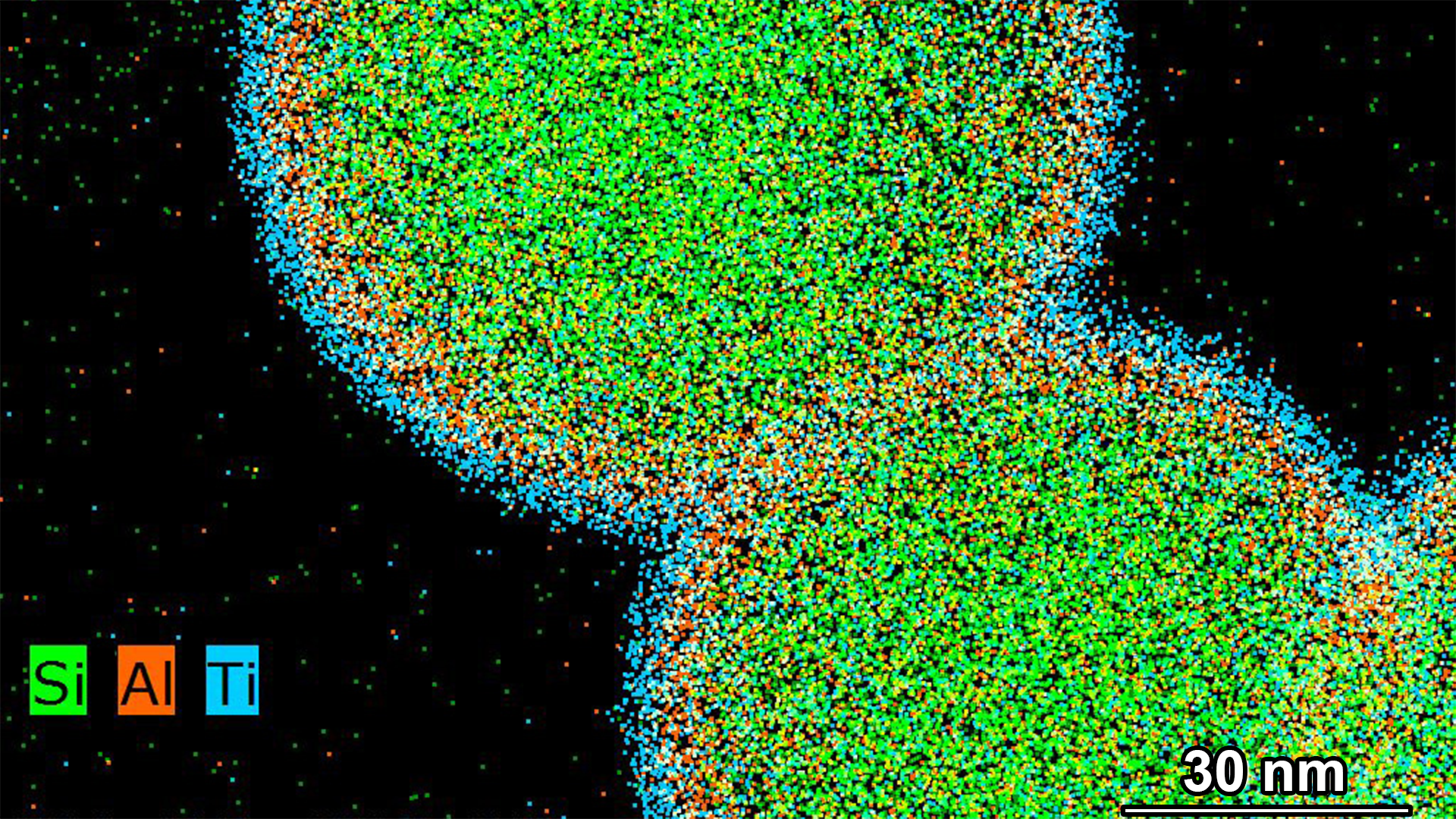
Renewable biomass-derived molecules, unlike those produced from petroleum are highly oxygenated, and often produced in dilute-aqueous streams. Heterogeneous catalysts – the workhorses of the petrochemical industry – are sensitive to water and contain many metals that easily sinter and leach in liquid-phase conditions. The production of renewable chemicals from biomass, especially valuable aromatics, often requires expensive platinum group metals and suffers from low selectivity. New synthetic methods based on atomically precise metal oxide deposition could lead to solutions to these issues. At LPDC, we are working on synthesis methods to precisely control surface functionalities of heterogeneous catalysts through the atomically-precise deposition of highly tailored metal oxides. Initial work show that metal oxide coatings can eliminate irreversible deactivation of catalysts used in liquid phase conditions. In parallel, we can create multi-metal oxide clusters with near-atomic precision that can greatly increase activity and selectivity compared to conventional catalysts.
Researchers involved in this work: Elisabetta Bonaglia, Antoine Brunel and Tom Nelis
Recent work:
S. Jin, Y. Lin, B. Karakurt, T. Nelis, M. Tanchev, L. Piveteau, M. D. Mensi, A. Bugaev, O. Safonova, and J. S. Luterbacher. “Controlling Acid Sites in Atomically Precise Cu/Al2O3 Clusters for Selective Methanol Production from CO2 Hydrogenation”. ACS Catalysis, 15, 16026–16038, 2025. doi: 10.1021/acscatal.5c04952
S. Jin, C. Kwon, A. Bugaev, B. Karakurt, Y. Lin, L. Savereide, L. Zhong, V. Boureau, O. Safonova, S. Kim and J. S. Luterbacher. “Atom-by-atom design of Cu/ZrOx clusters on MgO for CO2 hydrogenation using liquid-phase atomic layer deposition”. Nature Catalysis, 7, 1199–1212, 2024. doi: 10.1038/s41929-024-01236-y
Biobased product design
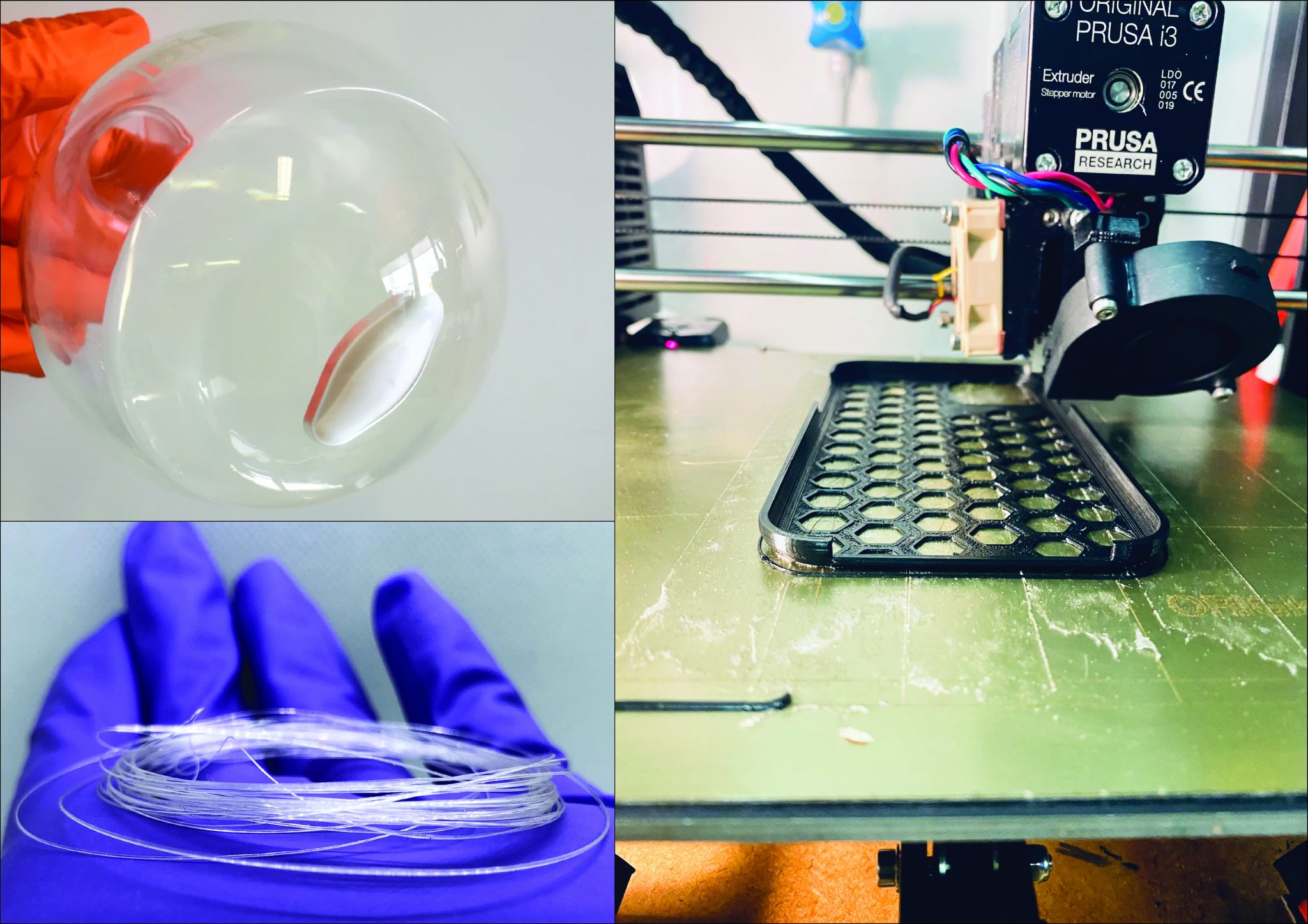
As we search for alternatives to fossil resources, biomass is an attractive sustainable feedstock especially for chemicals, which often need to be produced from complex carbon structures. However, producing direct drop-in replacements for petroleum from plants often involves too many transformations to be economical or sustainable. We use functionalization chemistry to create new products that are built around unmodified plant structures so as to be drastically easier to produce from biomass. This area spans all the way from new molecule synthesis and polymerization chemistry to material processing and characterization.
Researchers involved in this work: Antoine Brunel, Tom Nelis, Atabay Allamyradov, Sylvie Wigmans, Shangsong Li and Ujas Acharya
Recent work:
L. P. Manker, M. A. Hedou, C. Broggi, M. J. Jones, K. Kortsen, K. Puvanenthiran, Y. Kupper, H. Frauenrath, F. Marechal, V. Michaud, R. Marti, M. P. Shaver and J. S. Luterbacher. “Performance polyamides built on a sustainable carbohydrate core” Nature Sustainability, 7, 640–651, 2024. doi: 10.1038/s41893-024-01298-7
L. P. Manker, G. R. Dick, A. Demongeot, M. A. Hédou, C. Rayroud, T. Rambert, M. J. Jones, I. Sulaeva, M. Vieli, Y. Leterrier, A. Potthast, F. Maréchal, V. Michaud, H.-A. Klok, J. S. Luterbacher. “Sustainable polyesters via direct functionalization of lignocellulosic sugars” Nat. Chemistry, 14, 976–984, 2022. doi: 10.1038/s41557-022-00974-5