
We investigate the optical properties of III-nitride surface quantum wells (QWs) and the effects of advanced surface treatments, such as 2D material coatings. Our recent study [1] demonstrated a remarkable enhancement in surface QW light emission with monolayer MoS₂ coating (Fig. 1), yielding a luminescence intensity comparable to QWs with conventional epitaxial caps (Fig. 2). This improvement underscores the effectiveness of van der Waals (vdW) coatings in passivating III-nitride surfaces by suppressing spatially localized surface states. These findings highlight the potential of 2D materials as innovative solutions for III-nitride surface treatment and optimizing the optical properties of hybrid vdW heterostructures.
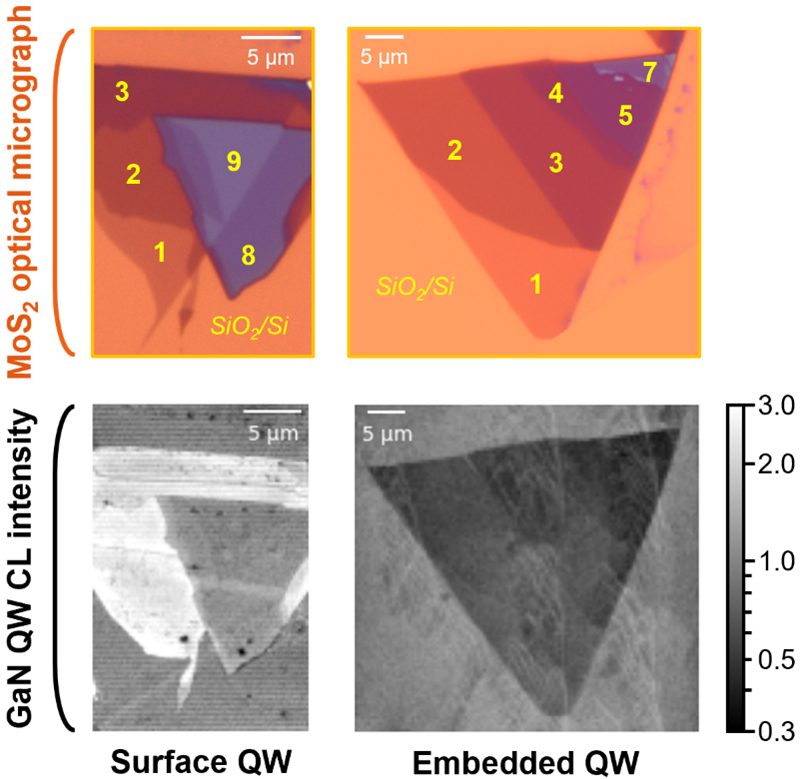
Fig. 1: Top row: Optical micrographs of MoS₂ blakes on a Si0₂/Si substrate. The numbers in yellow indicate the number of MoS₂ monolayers in the corresponding region. Bottom row: Cathodoluminescence (CL) intensity maps of a surface GaN/AlGaN QW and a conventional buried QW, showing opposite intensity contrasts due to the presence of an MoS₂ layer with thickness variations, as highlighted in the optical micrograph.
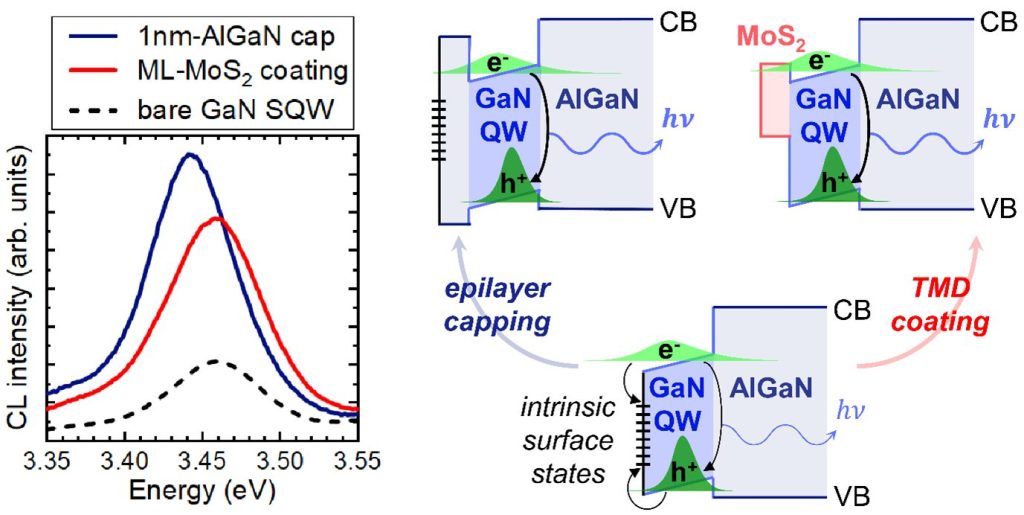
Fig. 2: General principles of surface passivation via 2D material coating or epitaxial layer deposition.