
Semester/master projects
SEMESTER/MASTER PROJECT: Two-photon endoscopic imaging using a multi-mode fiber
Two-photon fluorescence1 is a popular choice for tissue imaging, owing to its intrinsic optical-sectioning capability when the excitation beam is focused on the sample. The resulting image is that of a well-defined plane inside the sample, which enables the reconstruction of three-dimensional objects with good resolution along the axial (z) direction. It is necessary to use an ultrashort pulsed laser source to achieve high enough photon density for two-photon absorption. However, pulse broadening effects due to group velocity dispersion (GVD) in the multi-mode fiber must be addressed to enable nonlinear imaging2–6. More…

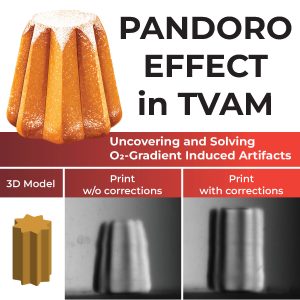
SEMESTER PROJECT: Uncovering and Solving O2-Gradient Induced Artifacts in TVAM
You will conduct systematic tests of the achievable resolution of TVAM prints. Using a diffusion-aware optimization model, you will evaluate and judge the resolution of prints produced under various conditions (e.g., different resins, vial geometries, and illumination configurations). The work will leverage the open-source Dr.TVAM framework for differentiable, physically based projection optimization [4], and will combine simulation-based analysis with experimental validation to map out the resolution limits of TVAM under realistic optical and chemical conditions. More…
SEMESTER/MASTER PROJECT: Design and Application of Organ-on-chip Platforms via Tomographic Printing
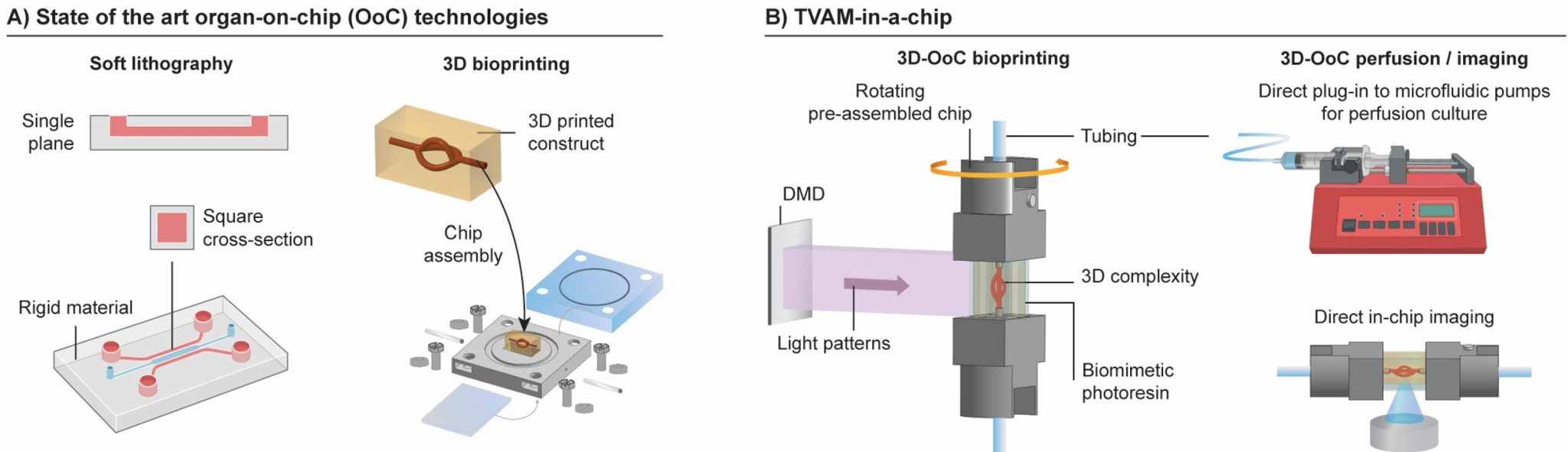
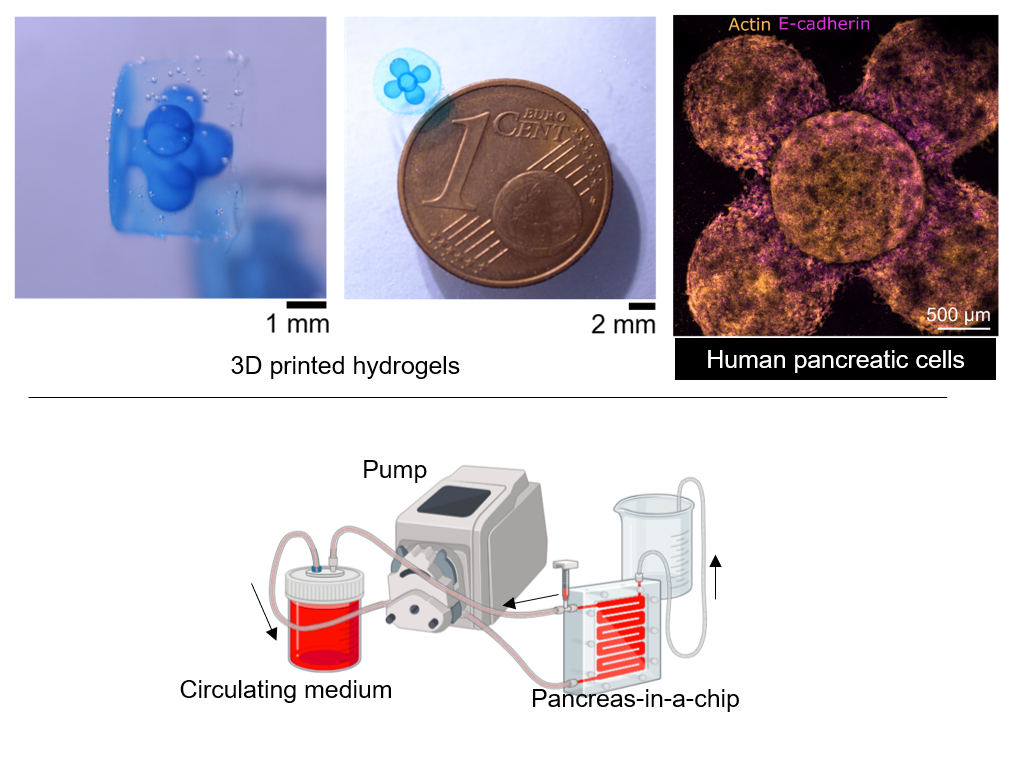
Human organ-on-chip (OoC) platforms are emerging tools for drug discovery and safety testing that replicate essential aspects of organ physiology and reduce reliance on animal models. Most OoCs rely on soft-lithography microfluidics or traditional 3D bioprinting. These are either limited in their complexity and biomimicry (soft lithography, see Figure A) or are slow and require multiple post-processing and assembly steps (bioprinting, see Figure A).
Tomographic volumetric additive manufacturing (TVAM) enables rapid fabrication of complex 3D structures but still depends on manual construct transfer and chip assembly. Thanks to recent developments in our lab,1 TVAM can now be used to directly 3D print high-complexity, high-cell-density perfusable models within preassembled, leak-proof TVAM compatible chips featuring integrated fluidics (TVAM-in-a-chip, see Figure B).2 More…
SEMESTER/MASTER PROJECT: Control Plane Design for Optical Switch
Keywords Software Defined Networking (SDN), Distributed Systems, API Design, Python/C++, Network Orchestration
Background To deploy optical switching in modern datacenters, the hardware must be programmable and visible to the network orchestrator. This project focuses entirely on the management software layer, bridging the gap between the optical device and the datacenter’s Software Defined Networking (SDN) controller.
Project Description The student will develop the control plane software that manages the state of the optical switch. This involves creating the software logic to translate high-level network requests (e.g., “route traffic from Node A to Node B”) into specific commands for the optical engine, as well as reporting telemetry back to the central network controller.
Key Responsibilities
- Switch Management Agent: Develop a software agent (daemon) that runs on the switch controller to manage device state, configuration, and health monitoring.
- Resource Abstraction: Create a software model that abstracts the physical optical components (mirrors, lasers) into logical network resources usable by the datacenter scheduler.
To apply, please send an email with your CV to [email protected]
SEMESTER/MASTER PROJECT: Blue light-sheet-assisted two-photon polymerization [CLOSED]
Photopolymerization is a light-based additive manufacturing (AM) technique that facilitates the fabrication of complex three-dimensional (3D) structures quickly and cost-effectively. One-photon polymerization allows printing with high speed despite its limited resolution. In contrast, two-photon polymerization (2PP) offers sub-micrometer precision at the cost of slower throughput.
We propose a method combining 2PP and one-photon absorption (1PA) to get the advantages of the dual capabilities, allowing for faster printing while preserving high resolution and enhancing depth sectioning. More…

SEMESTER/MASTER PROJECT: Optimization of Fiber Probes and Imaging Conditions for Biological Samples
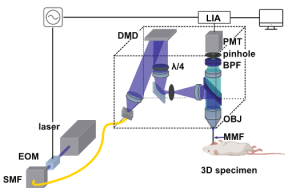
FLIMME is the first fluorescence lifetime endomicroscope combining wavefront shaping through a single multimode fiber (MMF) with frequency-domain fluorescence lifetime imaging (FD-FLIM) capable of imaging various samples with sub-micrometer spatial resolution and temporal precision of approximately 30 ps [1]. The system exploits the transmission matrix of the multimode fiber to generate diffraction-limited excitation at the distal tip while preserving the minimally invasive footprint of a needle-like fiber probe. The objective of this project is to optimize the FLIMME platform for imaging a range of biological samples, including organoids, transwell cultures, and excised tissue specimens. More…
SEMESTER/MASTER PROJECT: Printing in situ using an ultra-thin MMF probe
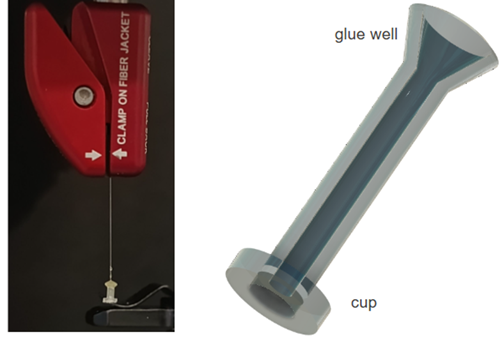
An interesting approach to miniaturizing light-based fabrication is to use a multimode optical fiber (MMF) to deliver and focus the light. Morales-Delgado et al. demonstrated three-dimensional microfabrication through a multimode optical fiber by using wavefront shaping to generate and scan a focused spot at the distal end of the fiber [1]. More recently, transmission-matrix-based wavefront shaping has been used to improve the control and efficiency of microfabrication through optical fibers, including optimization of the focal spot and printing strategy [2]. These approaches open the possibility of performing microfabrication remotely through a very small optical probe, which could be particularly interesting for in-situ fabrication in confined or otherwise inaccessible environments. More…
SEMESTER/MASTER PROJECT: Engineering strategies to perfuse bioprinted 3D models of pancreatic cancer
Pancreatic ductal adenocarcinoma is a devastating type of cancer with poor prognosis and low survival rates. In it, the typically soft (stroma) surrounding the tumor site stiffens into a dense, fibrous tumor microenvironment. This stiffening, which seems to block the uptake and effectiveness of anticancer drugs, is caused by the crosstalk between pancreatic cancer cells and the surrounding stromal cells. To better understand this inflammatory process, we aim to bioprint 3D models of pancreatic tissue and follow the molecular interaction across cells within them.
More….
SEMESTER/MASTER PROJECT: Opto-Mechanical Design of Optical Switches for AI
Keywords: Opto-mechanics, Thermal Analysis, Precision Engineering, CAD, Prototyping
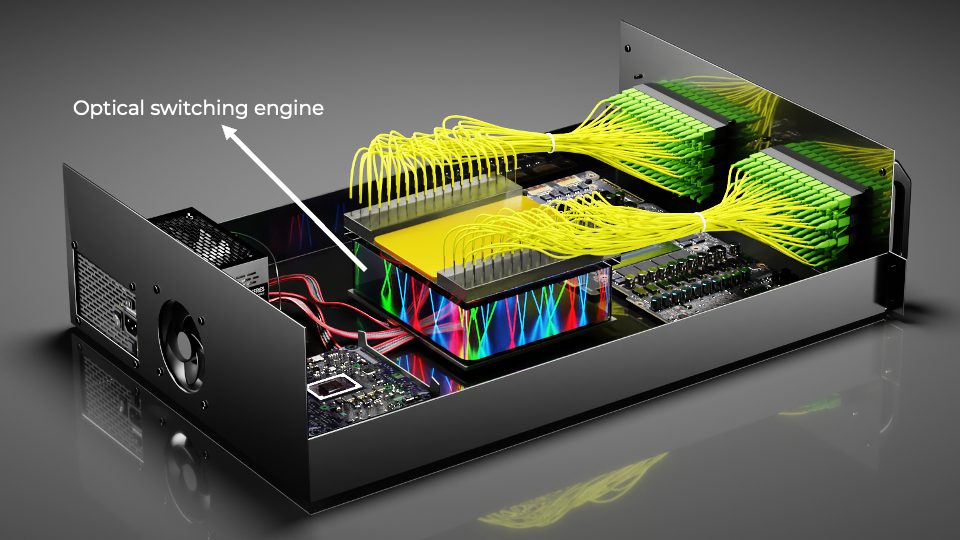
Background AI compute clusters are currently limited by the energy and latency costs of electrical interconnects. Our lab is building a scalable optical network system to replace these bottlenecks. This project focuses on the physical realization of a compact optical switching unit that integrates sensitive optical components with electronics.
Project Description The student will design the mechanical architecture for a multi-layer optical processor. The device must house optical engines, mirror, glass slab, Spatial Light Modulators (SLMs), and I/O fibers while maintaining micron-level alignment stability under thermal load.
Key Responsibilities
- 3D CAD Modeling: Design a compact chassis integrating optical, mechanical, and electronic sub-components using SolidWorks/CATIA.
- Thermal Management: Perform thermal simulations (ANSYS/COMSOL) and design heat dissipation solutions to keep active components within operational limits.
- Vibration Isolation: Design structural features to minimize vibrational impact on optical alignment.
- Prototyping: Oversee the fabrication (3D printing/machining) and assembly of the unit for lab testing
To apply, please send an email with your CV to [email protected]