
Academic competences




Register to a session
If the training you wish to register for is full (🚫), or if no date is yet scheduled, you can make an appointment with a librarian on the Book a Librarian platform. You can attend this training alone or with others, on-site or online.
Our training programs
For any of the programs listed below, you can either register for the next available session, or make an appointment with a librarian on the Book a Librarian platform.
Should a training program useful to your studies or research be added to our training offer? Do not hesitate to contact us: [email protected].
Information retrieval
Are you unsure about how to find the best scientific information? This workshop will equip you with the necessary skills to effectively search for the most relevant information and stay updated on your favorite subjects.
After this workshop you will be able to:
- Build an effective search strategy for your topic.
- Get to know specialized sources.
- Automate your research to get fresh news as it is published.
Frequency: 3x year
Duration: 1h30
Audience: PhD Students, Researchers, BA, MA
Language: English
In the last few years, AI-powered tools have promised to fundamentally change the way we look for information. During this workshop, we will explore some of these tools, focusing on so-called AI research assistants in order to understand how they work and how we can use them to improve our research.
After this workshop you will be able to:
- Identify the main challenges brought by AI to the information retrieval.
- Compare 4 AI-powered research assistants.
- Recognize the main difference with the traditional information retrieval strategy.
Frequency: 4x year
Duration: 2h
Audience: PhD Students, Researchers, BA, MA
Language: English
Do you have any specific questions about information retrieval or how to best use AI to get information? Book a tailor-made 1-to-1 meeting with a librarian!
Examples:
- Discover the best sources tailored to your specific needs.
- Learn how to formulate an effective search equation.
- Refine and optimize your search strategy.
- Keep abreast of the latest developments in your favorite topics.
Citation and plagiarism
The aim of this workshop is to understand the main principles of plagiarism in order to avoid it. The first part of the workshop will help you build good citation habits through a series of case studies, while the second part will focus on the iThenticate similarity detection tool.
After this workshop you will be able to:
- Understand the stakes of citation.
- Cite and reuse properly different types of content.
- Understand what incorrect referencing is and what that can mean to you.
- Use iThenticate to check your text and understand how to read the similarity report.
Frequency: 2x year
Duration: 2h
Audience: BA, MA, PhD Students, Researchers
Language: English
Zotero (www.zotero.org) is an open-source reference manager that simplifies the process of collecting, organizing, using, and sharing bibliographic references, saving users hours of work in creating bibliographies. In this workshop, you’ll discover how to effectively utilize Zotero, transforming your referencing habits forever.
Why does the EPFL Library recommend Zotero as a reference manager? See here, under Recommended tools.
After this workshop you will be able to:
- Seamlessly collect bibliographic references from different sources.
- Organize your references in a neat manner.
- Get to know what a reference style is and how to switch it easily.
- Create a bibliography with a few clicks.
Frequency: 6x year
Duration: 1h30
Audience: BA, MA, PhD Students, Researchers
Language: English
Do you have any specific questions about citation and plagiarism? Book a tailor made 1-to-1 meeting with a librarian!
Examples:
- Understand basic copyright rules.
- Cite various types of documents.
- Manage references (with or without Zotero).
- Create a complex bibliography.
Research Data Management
Effective Research Data Management (RDM) is essential for ensuring the quality, durability, and reproducibility of your scientific work over time. EPFL adheres to the F.A.I.R. data principles, advocating for the proper management of data and code. In this introductory course, you will gain a foundational understanding of RDM, and explore the EPFL services that can better meet your needs. Interactive Q&A and peer exchanges will help you gain insights into the application of these principles in your research endeavors.
At the end of this workshop, you will be able to:
- Identify F.A.I.R. data practices;
- Recognize the right EPFL services that meet your RDM needs.
This training requires no prior specific knowledge. For more in-depth workshops on specific data management aspects, register for Data Management Planning & Funding, Data Organization & Storage Solutions, Ethics in Data Management: Anonymization and Best Practices or Data/Code Publication.
Frequency: 2x year
Duration: 1h30
Audience: PhD Students, Researchers, Professors, PIs
Language: English
This training will help you kickstart or improve your Data Management Planning (DMP), assess the compliance with research funders’ requirements (ex. SNSF, ERC or EPFL), and address your queries on eligible costs, Open Data requirements, and more. Additionally, you’ll learn about Research Data Management (RDM) Strategy, essential for planning across multiple research projects, whether in a consortium or an NCCR setting. Through hands-on examples, customizable templates, interactive Q&A sessions, and peer exchanges, you will gain practical insights into transforming DMPs into efficient tools beyond bureaucratic necessities and understanding the added value that a well-crafted DMP brings to your research endeavors.
After this workshop, you will be able to:
- Implement your own DMP;
- Assess the compliance of your DMP.
While not mandatory, basic knowledge of Research Data Management is recommended: for an introductory training, please register for the workshop ABC of Research Data Management. For other in-depth, related workshops, register also for Data Organization & Storage Solutions, Ethics in Data Management: Anonymization and Best Practices or Data/Code Publication.
Frequency: 2x year
Duration: 1h30
Audience: PhD Students, Researchers, Professors, PIs
Language: English
This training enhances your file and folder naming strategies, introduces the use of metadata, and guides you in documenting research data to bolster reproducibility within your research group and in preparation for publication. We will explore the critical differences between data storage, backup, and archiving, and showcase the EPFL’s solutions. Through examples and best practices, you will learn to prevent data loss and enable efficient data sharing and its long-term preservation.
At the end of this workshop, you will be able to:
- Distinguish between storage, back-up and archiving solutions;
- Test your file naming convention against good practices.
While not mandatory, basic knowledge of Research Data Management is recommended: for an introductory training, please register for the workshop ABC of Research Data Management. For other in-depth, related workshops, register also for Data Management Planning & Funding, Ethics in Data Management: Anonymization and Best Practices or Data/Code Publication.
Frequency: 2x year
Duration: 1h30
Audience: PhD Students, Researchers, Professors, PIs
Language: English
Ethical-driven practices in data management are crucial for maintaining research integrity, protecting privacy, and collaborate with research partners, and fostering trust in research outputs. This short training focuses on the practices of ethical data management and the adoption of anonymization techniques for compliance with data protection laws.
Through interactive discussions and case studies, participants will learn to:
- Address ethical challenges in data collection and management in compliance with Swiss and European laws
- Understand how security and anonymization techniques can protect subjects privacy
- Strengthen research integrity by applying best practices in everyday data management workflows.
With a dedicated Q&A session, you will also have the occasion to discuss the ethical and related technical dimensions of managing your research data.
While not mandatory, basic knowledge of Research Data Management is recommended: for an introductory training, please register for the workshop ABC of Research Data Management. For other in-depth, related workshops, register also for Data Management Planning & Funding, Data Organization and Storage Solution and Data/Code Publication.
Frequency: 2x year
Duration: 1h30
Audience: PhD Students, Researchers, Professors, PIs
Language: English
While research funders and publishers mandate the dissemination of data and code underlying the published results, little guidance is provided on how to do it. This workshop addresses the selection of suitable data repositories, explores the role of data journals, and examines data publishing beyond the basic requirements of funders. The session includes a hands-on demonstration of Zenodo, the preferred data repository among EPFL researchers. We will also explore how Zenodo integrates with GitHub repositories, ensuring all necessary publishing metadata is available to disseminate your academic work. Additionally, we will cover the appropriate licensing for your datasets and address data anonymization concerns.
At the end of this workshop you will be able to:
- Choose the right repository for your code/data;
- Publish your code/data in the EPFL Zenodo community.
While not mandatory, basic knowledge of Research Data Management is recommended: for an introductory training, please register for the workshop ABC of Research Data Management. For other in-depth, related workshops, register also for Data Management Planning & Funding, Data Organization & Storage Solutions or Ethics in Data Management: Anonymization and Best Practices.
Frequency: 2x year
Duration: 1h30
Audience: PhD Students, Researchers, Professors, PIs
Language: English
Prefer learning at your own pace or need training material to reuse in your courses or group meetings? The Data Management Campus offers a suite of short online modules on Research Data Management and Open Research Data, accessible via the ETH Domain ORD Portal.
In particular, you can access all e-Learning modules on OpenLearnity. Each module can be completed independently in about 30 minutes, and focuses on a specific topic:
- Data and Code Licenses
- Data Documentation and Metadata
- Data Organization and Management
- Data Publishing and Long-Term Preservation
- Data Storage, Backup and Versioning
- Open Formats and Code
- Open Research Data, Research Data Management, and FAIR
- Reproducibility and Code Management
- Sensitive Data
- Writing Data Management Plans
All modules and their accompanying material (videos, exercises, examples, etc.) are published as Open Educational Resources (OER) on the ETH OER Zenodo Community, allowing you to download, adapt, and reuse them in your own teaching or research support activities.
Availability: Open for everyone (Switch edu-ID to access exercises)
Duration: 30 min / e-Learning module
Audience: PhD Students, Researchers
Language: English
Scientific publishing
Publishing your research to make it accessible to the scientific community is rewarding, yet it can be a complex process. Are you seeking a clear understanding of the publishing landscape? This workshop is designed for you!
After this workshop you will be able to:
- Become familiar with the context of scholarly communication and its latest developments
- Understand the important steps leading to publication, including peer-review
- Ensure your compliance towards EPFL and funders’ Open Access policy
- Know and protect your rights as an author according to EPFL’s policy
- Get to understand what a publishing contract entails.
Frequency: 2x year
Duration: 2h
Audience: PhD Students, Researchers
Language: English
In this workshop, we will address visibility in the academic context. How can you enhance and manage your visibility as a researcher? What steps can you take to ensure your research has a significant impact? Join us to explore various tools at your disposal.
As a bonus, we will help those interested in setting up their ORCID account after the training.
After this workshop you will be able to:
- Know different ways to be visible as a researcher.
- Grasp the limits and the benefits of visibility.
- Learn about the steps to take and the people to contact as an EPFL researcher.
Frequency: 3x year
Duration: 1h30
Audience: PhD Students, Researchers
Language: English
Do you have any specific questions about scientific publication? Book a tailor-made 1-to-1 meeting with a librarian!
Examples:
- Discover your options when publishing in Open Access.
- Learn how to apply Creative Commons licenses.
- Discuss about authorship.
Tools, digital competences and AI
In the last few years, AI-powered tools have promised to fundamentally change the way we look for information. During this workshop, we will explore some of these tools, focusing on so-called AI research assistants in order to understand how they work and how we can use them to improve our research.
After this workshop you will be able to:
- Identify the main challenges brought by AI to the information retrieval.
- Compare 4 AI-powered research assistants.
- Recognize the main difference with the traditional information retrieval strategy.
Frequency: 4x year
Duration: 2h
Audience: PhD Students, Researchers, BA, MA
Language: English
Zotero (www.zotero.org) is an open-source reference manager that simplifies the process of collecting, organizing, using, and sharing bibliographic references, saving users hours of work in creating bibliographies. In this workshop, you’ll discover how to effectively utilize Zotero, transforming your referencing habits forever.
Why does the EPFL Library recommend Zotero as a reference manager? See here, under Recommended tools.
After this workshop you will be able to:
- Seamlessly collect bibliographic references from different sources.
- Organize your references in a neat manner.
- Get to know what a reference style is and how to switch it easily.
- Create a bibliography with a few clicks.
Frequency: 6x year
Duration: 1h30
Audience: BA, MA, PhD Students, Researchers
Language: English
Do you have any specific questions about digital competencies? Book a tailor made 1-to-1 meeting with a librarian!
Examples:
- Technical issues with Zotero;
- Migration to Zotero;
- Git basics;
- Help with GenAI tools;
- Citation styles.
Doctoral Courses
PhD students in Chemistry will learn hands-on Research Data Management (RDM) skills transferable to their research practices. They will contextualize their research into RDM best practices (day 1), discover appropriate tools (day 2) and work on a project (day 3) for the course accreditation.
For more information, see: https://edu.epfl.ch/studyplan/en/doctoral_school/chemistry-and-chemical-engineering/coursebook/hands-on-with-research-data-management-in-chemistry-CHE-601
After this doctoral course you will be able to:
- Define Data Life-Cycle of your research
- Identify Specific softwares
- Apply RDM good practices
Frequency: 1x year
Credit(s): 1
12h Courses, 3h Exercises, 9h TP
Audience: EDCH PhD Students
Language: English
Concepts and tools to understand and use the modem chemical information environment. Learn how to explore the scientific literature, how to use the information found in agreement with intellectual property laws, and learn about the current trends impacting chemists as creators of knowledge.
For more information, see: https://edu.epfl.ch/coursebook/en/information-literacy-for-chemists-ENG-619
After this doctoral course you will be able to:
- Formulate a search strategy for your own PhD project (search query design, literature monitoring, tools);
- Work out / Determine the consequences of intellectual property laws for the re-use of scientific information and scientific content;
- Get the basics about the current landscape of scientific publishing.
Frequency: 1x year
Credit(s): 1
11h Courses, 4h Exercises, 5h TP
Audience: EDCH PhD Students
Language: English
Introduction to Research Data Management in Life Sciences, covering data organization, documentation, workflows, publication, FAIR principles, tools, and best practices. Includes hands-on activities to improve and optimize participants’ own data management workflows.
For more information, see: https://edu.epfl.ch/coursebook/en/research-data-management-in-life-sciences-BIO-649
After this doctoral course you will be able to:
- Define the data life cycle of their research;
- Apply good research data management (RDM) practices
- Understand and identify the services available for data management.
- Use efficiently research data management tools available to them during their research
Frequency: 1x year
Credit(s): 2
15h Courses, 10h Exercises, 4h TP, 10h Project
Audience: EDBB, EDCB, EDMS, EDNE PhD Students
Language: English
This course is designed to explore the landscape of modern research tools and practices. You will gain insights into principles of open science, smart information retrieval, ethical publishing, coding best practices, and comprehensive research data management.
For more information, see: https://edu.epfl.ch/coursebook/en/research-skills-in-the-open-science-era-CIVIL-608
After this doctoral course you will be able to:
- Develop the appropriate skills to support Open Science compliant dissemination and re-use of scientific output;
- Formulate a search strategy for your own PhD output (tool selection, search query design, literature monitoring);
- Determine the consequences of intellectual property laws in the re-use of scientific information and content;
- Design Open-Source compliant software to be used in research;
- Identify and apply RDM good practices and FAIR principles.
Frequency: 1x year
Credit(s): 2
26h Courses, 14h Project, 16h TP
Audience: EDCE PhD Students
Language: English
For high-school students
Students and teachers of high schools are welcome at the EPFL Library. Registration is free of charge and possible for anyone. Registered readers (free registration) benefit from access to swisscovery, a network that brings together the collections of more than 475 scientific libraries in Switzerland.
The EPFL Library also offers, on appointment, individual support for dissertation in the context of searching for information. Accompanied by a librarian, the various printed and electronic resources available at EPFL are reviewed: BEAST catalog discovery tool, eBooks, databases, encyclopaedias, etc. We address search methods on the web that help the students find relevant information, and options for refining and filtering the search. Training is tailored to the dissertation subject, for individual students or in small groups.
The EPFL Library inducts high-school students as well as their teachers who are responsible for the Travaux de Maturité (TM) in scientific and technical fields. Organised activities allow pupils to familiarise themselves with scientific and technical sources of information. This induction is in line with the promotion of EPFL Bachelor courses which lead to different engineering disciplines. This measure is offered in the same spirit as the Information Days for high-school students, or sponsorship of TM by some EPFL laboratories, and allows the pupil to put himself in the shoes of a researcher who needs to harness information in order to progress in his project.
After induction of his class at the EPFL Library, a pupil
• is able to optimise searching on Google;
• is aware of the limited validity of information found on the internet;
• can cite three scientific and technical web search engines other than Google.
Induction of classes is possible only during the periods between semesters. We would ask you to contact the Library at least two weeks in advance in order to set a date during these periods.
Also kindly let us know what subject area the teacher is responsible for and /or some TM subjects of the class so that we can offer targeted activities.
We will offer a workshop on searching for information relevant to the TM, followed by a brief tour of the Library (with registration at the Library for those pupils who wish).
Duration: 1h30 approximately
Infosphère
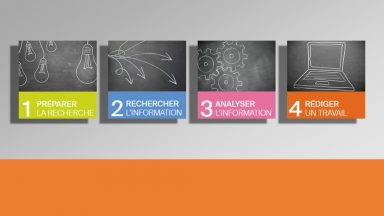
Pour votre travail de maturité, n’hésitez pas à consulter Infosphère, la boîte à outils pour les compétences informationnelles.
For teachers
As a teacher at EPFL, you can request a training session in research techniques, information management and citation for your students. The interventions are targeted and delivered within the framework of your courses.
The selected training modules will be inserted and delivered in your course at the time of the start of a semester project or Bachelor/Master’s dissertation, so that your students can put their new knowledge into practice. The teacher chooses the modules to be integrated into his or her course (at least two) and proposes a research topic, which will serve as an example during the training. The proposed modules are evolving and adaptable: we are open to any proposal that could make our training courses aligned to your needs. The dates are chosen in agreement with the teacher.
The Library team collaborates with the Centre d’Appui à l’Enseignement (CAPE) to offer interactive and dynamic training sessions.
Description: Discussion with the students around the channels of scientific and technical information, based on a research topic that is aligned to the students’ pieces of work: keywords, documentary equation, internet and selected sources, topical news and established knowledge, references or full texts, free or paid information, physical or electronic library, validity of information, peer review.
Objectives: At the end of the module the student is aware of the world of scientific information. He has the tools for starting an efficient search for information, varying his sources and verifying them.
Estimated duration: 45 minutes
Description: Presentation of scientific and technical information resources in connection with the students’ research topics.
Objectives: The student knows the main information resources in his field, as well as the main multidisciplinary resources.
Estimated duration: 45 minutes
Description: One or more librarians and the lecturer help the students start their semester project or Bachelor/Master’s dissertation.
Objective: The student starts his research on a good foundation. He works in a professional manner, varying his sources, using a bibliography/reference manager, and citing his sources in an appropriate manner.
Duration: to be agreed with the lecturer
Description: The trainer proposes a quiz on citation, to which students respond with ResponseCards (clickers). The different opinions are then discussed. Can texts, photos, diagrams, tables, graphs be copied and pasted for documents intended for teaching or for a disseminated publication? The basic rules of citation, copyright and Creative Commons licenses are addressed, and the consequences of plagiarising at EPFL are referred to.
Objectives: The student knows how to utilise scientific and technical information in all its forms in accordance with professional ethics.
Duration: to be agreed with the lecturer (at least, 45 minutes)
Description: Demonstration of how to use Zotero reference management software, installation of the software, and basic practical exercises.
eObjectives: The student has a Zotero account. He knows how to import references, manage them and cite them while working on writing. He also knows how to share his references within a group.
Estimated duration: 45 minutes