Eyes + Ears: TCV’s Diagnostics

Optical fibers of the Thomson Scattering diagnostic
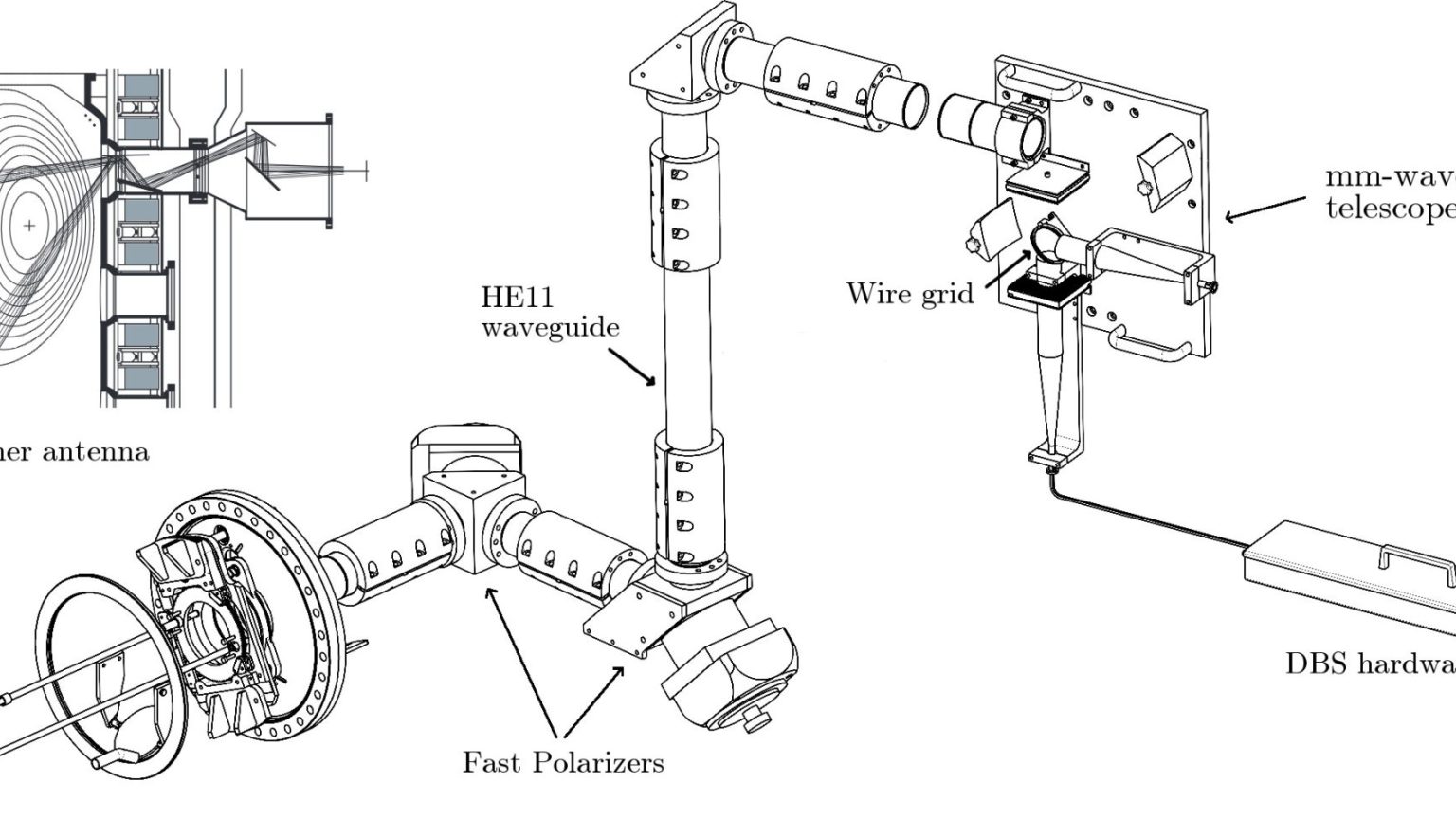
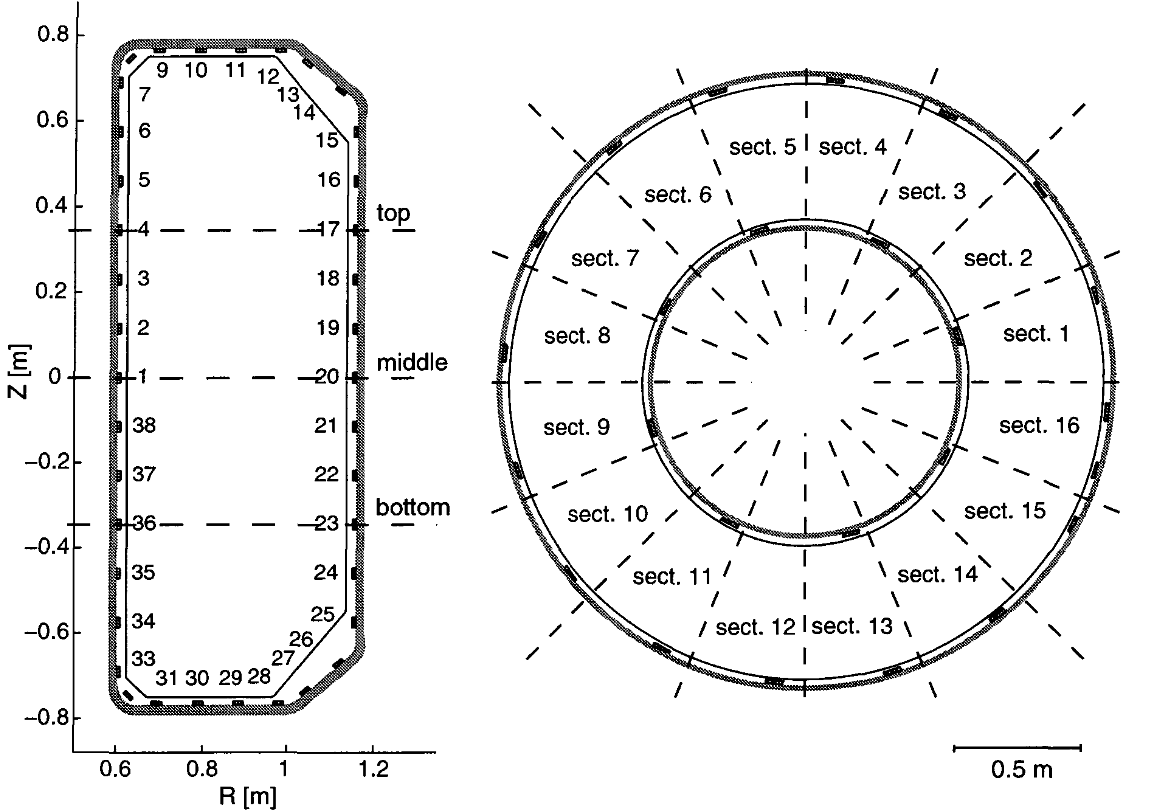
Just as our eyes and ears help us perceive and understand the world, diagnostics are vital senses for studying tokamak devices — revealing the hidden physics of plasmas. Without them, fusion research would be like navigating without sight or sound. TCV’s 40+ advanced diagnostic systems serve as high-tech eyes and ears, enabling scientists to reconstruct time and space resolved images of the plasma’s properties such as temperature, density or content. Some of these tools can also decode the plasma’s behavior in real time, turning our observations of the plasma into actionable knowledge — critical for controlling and optimizing fusion reactions.
Decoding Plasma Physics:
How Diagnostics Reveal Hidden Behavior
Thanks to TCV’s fast maintenance cycles and flexible operation, researchers worldwide use it to test and refine new diagnostic tools before they’re deployed on larger machines. This collaborative approach accelerates progress, ensuring next-generation diagnostics are ready for the challenges of commercial fusion energy.
What sets TCV apart is how tightly its diagnostics work with the real-time control system. Many instruments don’t just collect data—they provide instant feedback to adjust the plasma on the fly. This allows for smarter experiments, like preventing disruptions or optimizing divertor conditions to protect the machine. For example, systems like RADCAM and MANTIS track plasma radiation levels, informing us on plasma stability and divertor performance whilst MPX, ECE, FIR and Thomson are increasingly used by real-time predictive simulators such as RAPDENS and RAPTOR. Together, they help fine-tune heating and fueling for peak performance.
TCV’s diagnostics are more than just sensors— they solve mysteries at the heart of fusion science and they’re essential tools for solving fusion’s biggest puzzles. By pushing the boundaries of measurement technology and integrating it with real-time control, TCV is advancing plasma physics and helping design the robust systems future reactors will need. With its world-class diagnostics suite and global partnerships, TCV ensures that when fusion power becomes a reality, we’ll have the tools to see, hear, and command the plasma.
Detailed diagnostic descriptions
Generally speaking, diagnostic types can be divided in two main families depending on the origin of the signal of interest used. These are passive and active diagnostics.