News

Quantum computing could help solve global problems such as hunger. © iStock

Humanitarian goals go quantum

— Quantum computing could be one of the big technological revolutions of the coming decades. EPFL is working on making it accessible and useful for addressing pressing global issues. 

© 2026 EPFL/QSE Center - CC-BY-SA 4.0

EPFL welcomes teachers to learn about quantum science and technology

— On February 12, the QSE Center hosted a group of high school teachers from Yverdon-les-Bains for continuing education and exploration of quantum research.

Volume-manufactured, erbium-doped, high-power tunable waveguide lasers. Credit: Yang Liu, Tobias Kippenberg © 2026 EPFL

Wafer-scale lasers bring fiber performance to photonic chips

— Researchers at EPFL have developed the first wafer-scale, foundry-compatible erbium-doped integrated lasers, combining industrial manufacturability with performance approaching that of state-of-the-art erbium‑doped fiber lasers.

© 2026 EPFL/Alain Herzog - CC-BY-SA 4.0

“EPFL is a fantastic place to set up a company”

— At EPFL, the journey from groundbreaking scientific discovery to entrepreneurial success has a name: Sciencepreneur. This status recognizes and supports researchers actively incubating startup projects within EPFL labs.

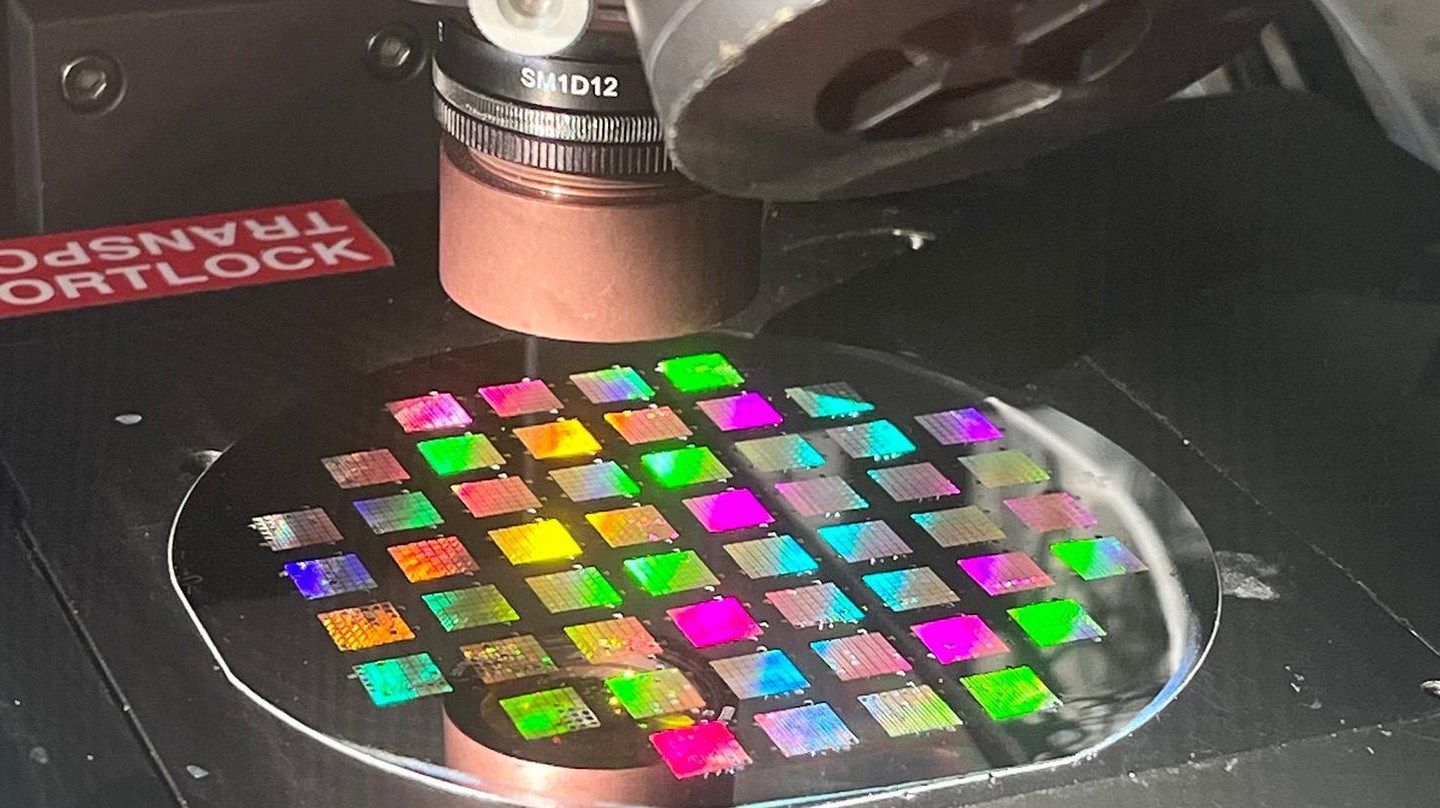
Photograph of a manufactured 100-mm wafer hosting hundreds of copper Damascene lithium tantalate modulators. Credit: Lin et al 2026.

Copper damascene process brings electronics and photonics together

— EPFL researchers have, for the first time, applied the semiconductor industry’s standard copper wiring process to ferroelectric thin film photonics. By building lithium tantalate modulators with copper instead of gold, they remove a major barrier to 3D integration with advanced CMOS electronics and move optical interconnects closer to large scale deployment in data centers and AI clusters.

Yihui Quek © 2026 EPFL/Alain Herzog - CC-BY-SA 4.0

“I thrive in environments where the rules aren't fixed”

— Quantum computing is often sold as a magic bullet that will quickly solve today’s intractable problems. Yihui Quek prefers to balance this optimism with scientific rigor, and instead ask the question: what do we want a quantum computer to be good for?

All news