Current Projects
How did lay citizens become involved in the production of scientific knowledge? Where does this movement fit in the broader history of public participation in science? How did the rise of the “amateur” redefine expertise in a democratic society? And who are these “citizen scientists” today? These are some of the questions that this project on the transformations of public participation in science addresses, in collaboration with the research team led by Prof. Bruno J. Strasser at the University of Geneva.

Completed Projects
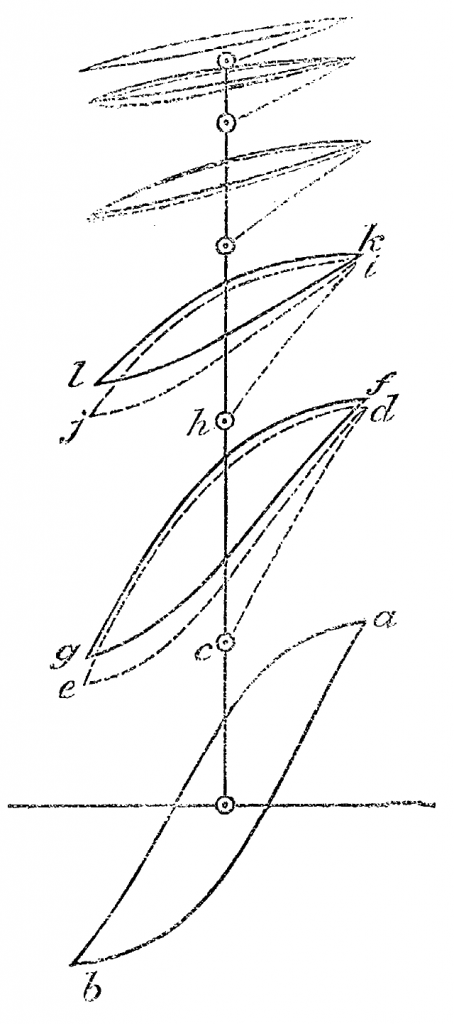
How and when did the “kink” in the curve of a thermodynamics experiment become meaningful to a system biologist or investor trader?
This project explores how certain graphical features (such as the modulations, inflexions, kinks or loops of an empirical curve) came to be seen as phenomena that could only be explained by those mathematical or physical models that could generate the same patterns. The emergence of graphical features as epistemic objects created the conditions of possibility for explanatory models that could be extended, through visual analogies, from thermodynamics and magnetism, to biology and economics. The project traces how this development led to a cross-pollination between modelling practices and simulation techniques such as recursive programming, complex dynamics, electrodeposition, or Hele-Shaw flows, etc.
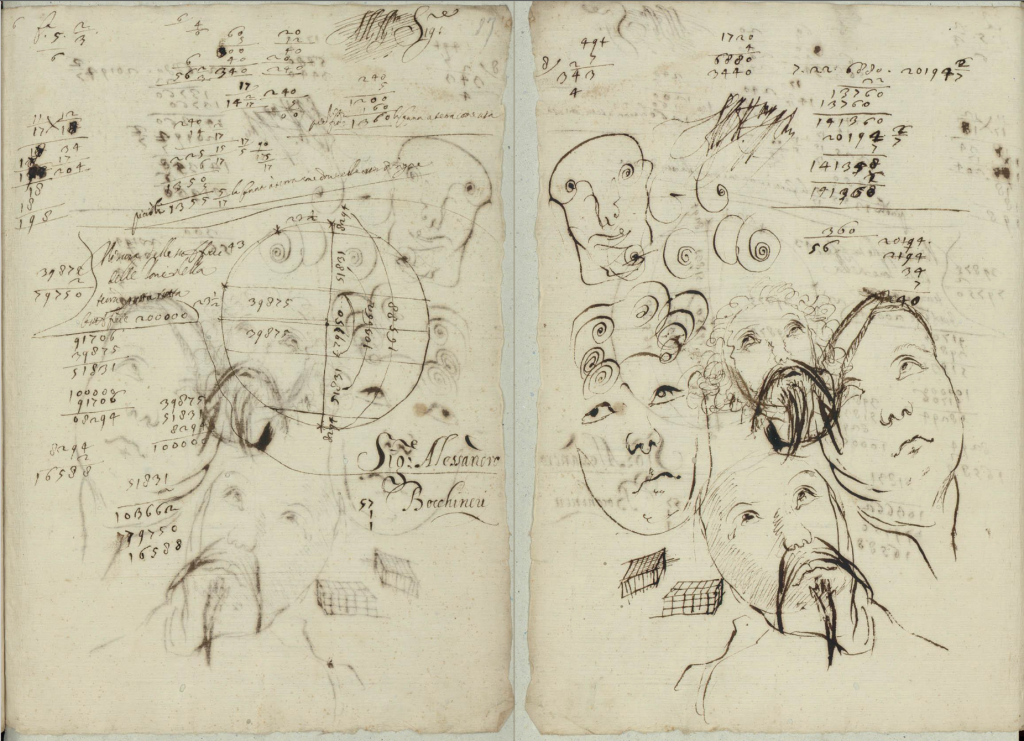
In November 1689, a brief Tuscan encounter between Leibniz and Galileo’s last disciple Vincenzio Viviani set the stage for the epistemological confrontation between a symbolic ‘blind thought’ and the Florentine visual culture. Arguing about many problems of mechanics, hydraulics, and geometry stemming from Galileo’s intellectual as well as material heritage, the two scholars embraced very different perspectives on the intricacies of the nascent physico-mathematics, at the crossroad of natural philosophy, mixed mathematics, and the mechanical arts.
In order to better understand the cultural peculiarities at the root of this conflict, this project digs into the many networks of writings—scripts and drafts, scribbles and working papers, correspondences, and reading notes—underlying the published printed works of both savants. Delving into their personal archives and focusing on the materiality of working notes conceived of as paper tools, the project sheds light on the making of theory by tracing the multifarious material practices underpinning any intellectual operations.
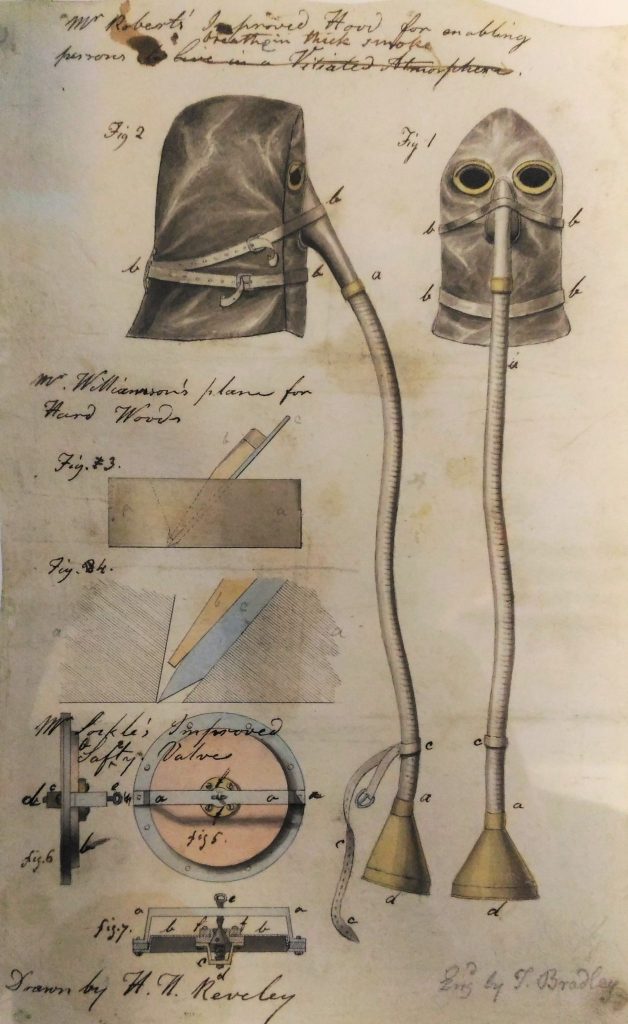
This project is about the study of the evolution of technical drawing in England between 1750 and 1850. These drawings were material parts of specific technical languages which became more complex through practice and theory, especially in the eighteenth and nineteenth centuries. In this project, I will focus on two types of technical drawings, those from institutions that encouraged or protected inventions (e.g. the Royal Society of Arts) and those from the commercial world (e.g. advertising).
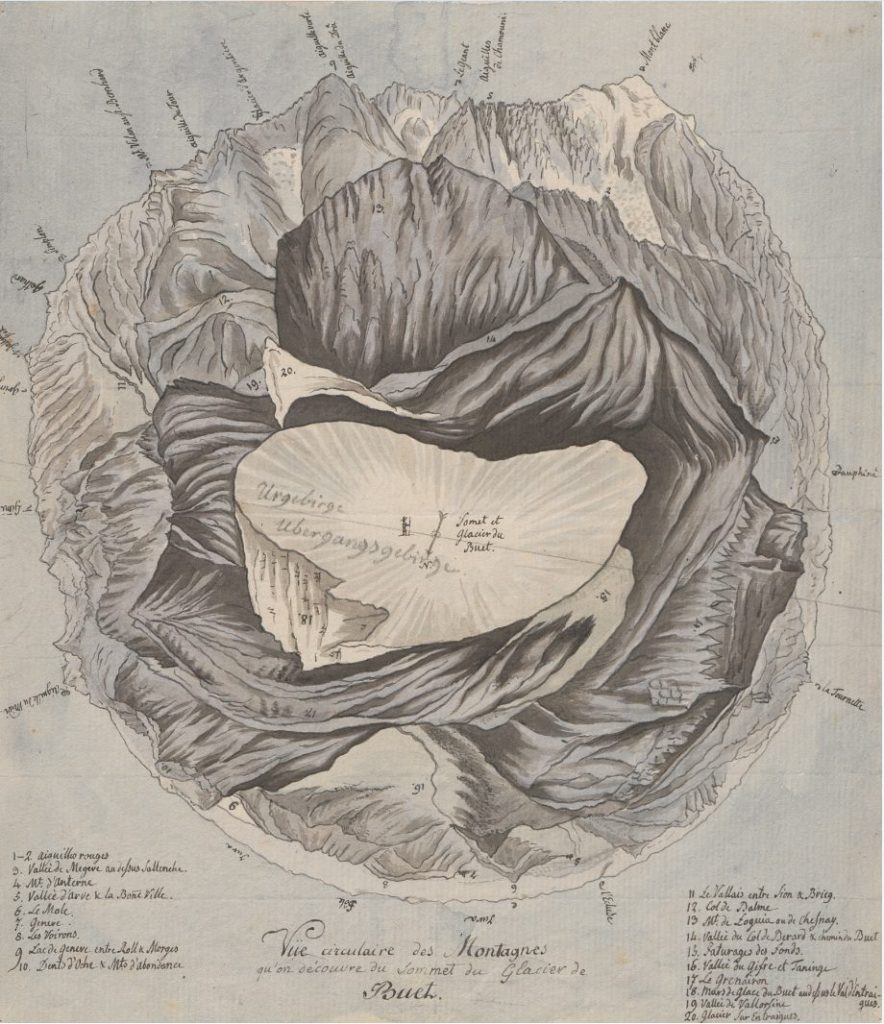
On 20 September 1770, two scientists from Geneva, the brothers Jean-André and Guillaume-Antoine Deluc, climbed Mont Buet (3096 m) for the first time in archival memory. Their expedition in the Savoyard state aimed to document the history of the Earth’s origin and carry out several physics experiments at the summit: to measure the temperature of boiling water and determine the height of the mountain by measuring the atmospheric pressure. The picturesque account of their ascent and experiences aroused the interest of other personalities. In 1775, Marc-Théodore Bourrit, an artist and writer from Geneva, discovered a new route and made the mountains and glaciers of the region famous throughout Europe. The Genevan scientists Horace Bénédict de Saussure and Marc-Auguste Pictet followed Bourrit’s footsteps to the summit of Mont Buet, where they repeated Deluc’s experiments and made their own observations. These 18th-century expeditions helped transform the mountain into a laboratory of nature. The summit became a privileged scientific site and a point of intersection between different social worlds, those of the patrician Saussure, the citizen Deluc, the “native” Bourrit, and the local chamois and crystal hunters who served as their guides.
By focusing on the agentivity of an entire mountain range, our research sheds light on the instruments, material practices, and media that allowed for the representation of Mont Buet as a lived and living milieu while paradoxically being gradually domesticated as a mere point on a map. Calling on methods of experimental history, we reenacted two of the historical expeditions, using a replica of an ancient barometer made by Genevan craftsmen and the curators of the Museum of the History of Science in Geneva, to reproduce the physics experiments carried out at the time. At the crossroads of the history of science and technology, environmental history, and the history of tourism, this project addresses the state and study of glaciers in the Little Ice Age, the effects of scientific communication on the broader audience, or the continuation of social struggles in a Nature set up as a laboratory.
Furthermore, through a series of public conferences, a traveling exhibition, and a collaborative website, this project engages in a specific mode of scientific mediation informed by the history of science and technology.
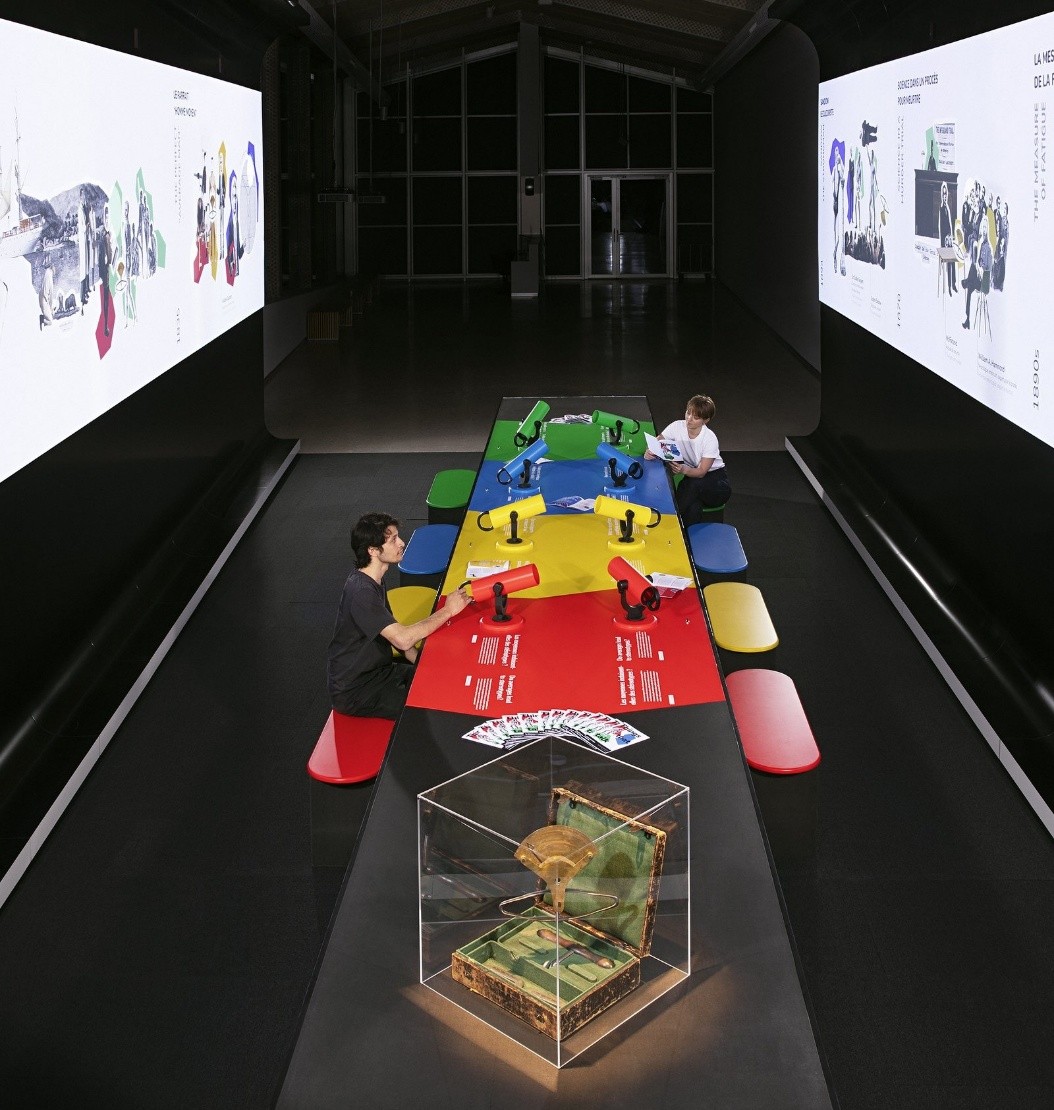
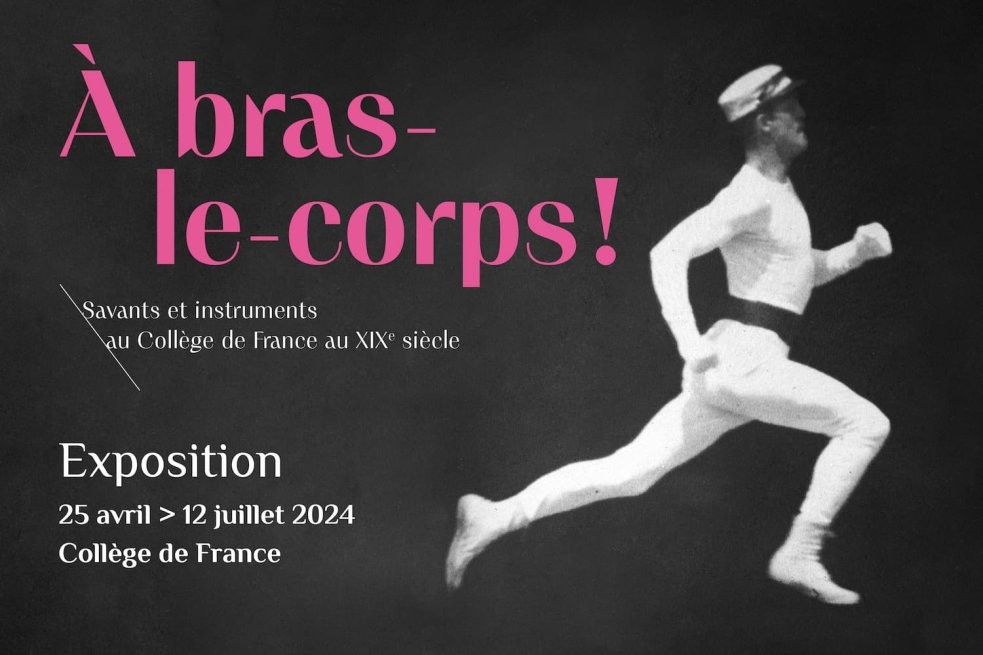
This exhibition, presented between April and July 2024, highlighted the research conducted at the Collège de France during the long nineteenth century to measure, understand, and heal the human and animal body. Drawing primarily on the institution’s collection of scientific instruments and its archives, it offered an original perspective on the history of experimental science at the intersection of physics, physiology, and psychology. The exhibition was co-curated by Jean Dalibard, physicist and professor at the Collège de France, and Jérôme Baudry, with Ion Mihailescu making a substantial contribution to the scientific content. A more detailed description is available on the Collège de France website, along with a virtual tour of part of the exhibition.
Scientific instruments are commonly assumed to be invented in response to a specific technical problem. Historical research, however, often reveals a different picture: such instruments frequently follow more complex and winding trajectories, sometimes giving rise to unforeseen social change. Over time, their uses shift to meet new needs, and their meanings evolve in response to social and cultural contexts. While many studies have examined inventions and innovations from the perspective of their original intent, this project instead investigated their unexpected social and cultural ramifications and seeks to share these insights with a broad public audience.
The project brought together the expertise of LHST (Laboratory for the History of Science and Technology) and EPFL+ECAL Lab, EPFL’s design research center. It culminated in an exhibition held in April and May 2022 at EPFL Pavilions. Departing from the model of traditional cabinets of curiosities, which usually present a profusion of rare specimens, the exhibition focused on a single scientific object at a time. Through innovative and playful forms of interaction, it invited visitors to explore the full historical depth of each object. The exhibition successively featured a Régnier dynamometer, a globe of Mars, and a Crookes tube, all drawn from the UNIL–EPFL Collection of Scientific Instruments.