Current Projects
When and why did copyright and patents emerge? How did artistic creations and technological inventions become objects of property? What kind of new social contracts did different countries and cultures build to accommodate the rise of intellectual property? Beyond legislation and jurisprudence, what kind of discursive, material and mediatic practices have shaped the evolution of intellectual property? How have copyright and especially patents shaped what it means to do science and engineering? These questions are at the core of an investigation that looks at the longue durée history of intellectual property, from the eighteenth century to today.
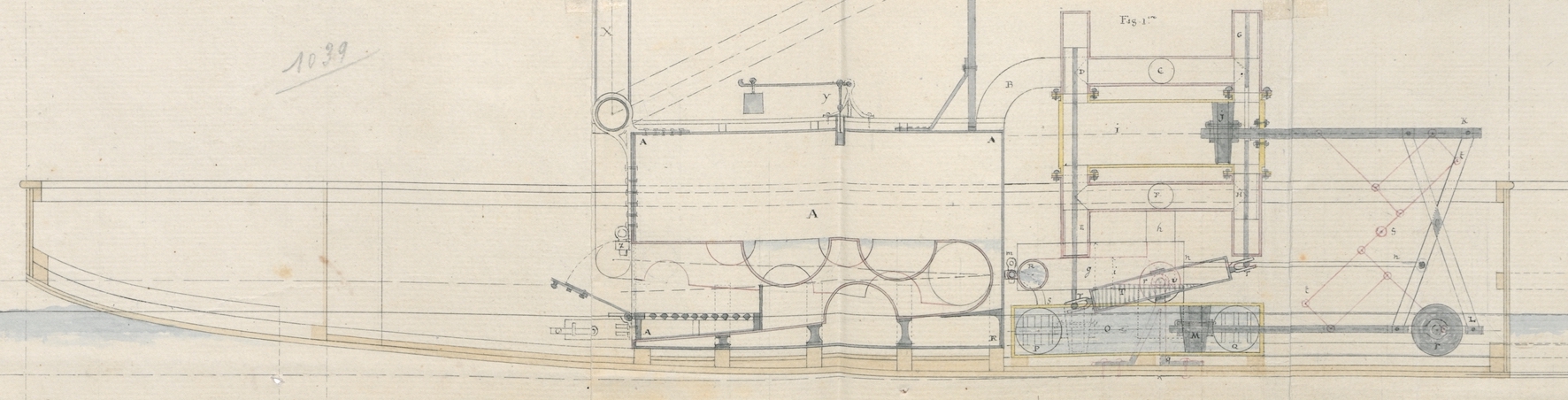
Although it was common for inventors and manufacturers to take out patents in many foreign countries already in the early nineteenth century, industrial property only started to be internationally institutionalized with the Union of Paris in 1883, which sought to harmonize very diverse patent legislations. Before this process (provisionally) culminated with the advent of modern intellectual property management under the World Intellectual Property Organization, which was founded in 1973, various interest and power claims clashed and competed, in a period that witnessed extensive technical evolution, tremendous changes in the international economic and politic order, and two world wars. This project aims at understanding the history of the internationalization of industrial property by looking at the intense debates and rule-making that took place between ca. 1883 and 1970 in the specific arena gathering public and private international organizations, industry lobbyists and prominent nation-states such as France, Germany, Great Britain, and the USA.
This project is funded by the Swiss National Science Foundation (grant 207571).

In the last decades, the relevance of intellectual property rights on a global scale has become unmistakable. For instance, the price of, and access to, patented drugs and vaccines has repeatedly been the subject of intense debates: the discussion of the 1990s and 2000s on HIV treatments have found an echo in the controversies surrounding COVID-19 vaccines in 2021. Yet these rights were not born global: in the 19th century, they usually were local instruments of innovation protection. This research project investigates how patents have become, albeit incompletely, globally relevant rights. This history has remained largely untold, and when it is discussed, it is often seen as the consequence of agreements between macro-actors such as states. The project argues that the internationalization of patent systems stemmed equally, if not more, from the networks of actors, economic strategies, texts and images involved in patent practices.
To place itself as much as possible at the level of the actors of invention and of the patent itself, considered as a document, the project brings into dialogue digital analysis with established historical methods of archival research and document interpretation. Applied on a large corpus (over 4 million documents) of digitized patent documents from the 19th to the mid-20th century, text mining and computer vision techniques allow our research to trace border-crossing patenting practice, including that of inventors that have left few other historical traces. Combining these insights with the interpretation of sources such as the bulletins of the societies of patent professionals, the project aims at building a history of the internationalization of patent systems “from below”.

This project explores how medicines became objects of international governance in the 20th century, focusing on international organisations as key epistemic sites where knowledge about medicines was produced, contested, and translated into regulatory norms.
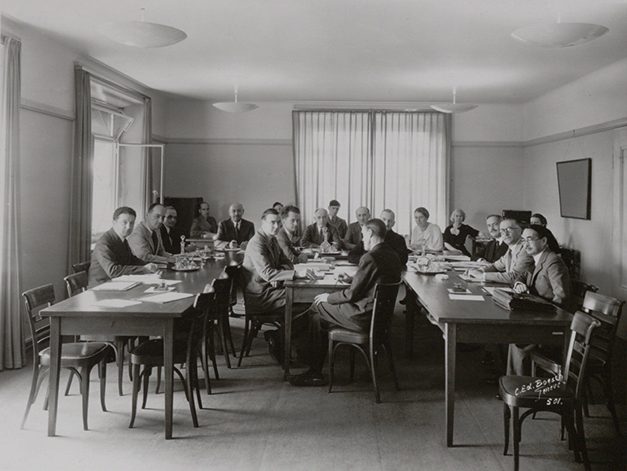
Long before pharmaceutical patents dominated global regulation, organisations like the League of Nations Health Organization, the International Labour Organization, and the World Health Organization established shared norms around quality, legitimacy, ethics, cost, and use of medicines. Through documents, expert committees, standards, and lists, these institutions made medicines comparable, credible, and governable.
From the interwar period onwards, scientists, physicians, pharmacists, civil servants, and later pharmaceutical firms debated and shaped standards for quality, safety, access, and cost. Practices such as biological standardisation, pharmacopoeial unification, healthcare organisation and cost assessment as well as regulation of harmful substances transformed medicines into standardised, economically legible objects bound by market rules.
While the rise of pharmaceutical firms and patents from the 1960s onward shaped the modern market, this project shows these developments built on earlier moral and commercial practices in a pre-existing regulatory and epistemic landscape.
By tracing these long-term documentary and institutional practices, the project highlights how shared pharmaceutical norms were stabilised well before pharmaceutical firms’ power and intellectual property became central, offering a historical perspective on the knowledge infrastructures that underpin contemporary pharmaceutical governance.
Completed Projects
In discussions around current crises, such as climate change and the ongoing pandemic, technology features predominantly, as a possible solution, but also as cause or part of the problems. Policymakers and scholars alike have thus proposed to make innovation responsible, for instance by bringing more anticipation, reflexivity, engagement and responsiveness to the process. Yet in practice the challenge often seems impossible to meet.
In fact, features such as anticipation were already present around the emergence of earlier technologies. Historians of science and technology have shown how Western societies from the eighteenth century onward did not create and adopt risky technologies because they were blind to their potentially adverse consequences. To the contrary, they did so in spite of debates over their desirability, the forms of society they might encourage or the risks they posed to life and health.
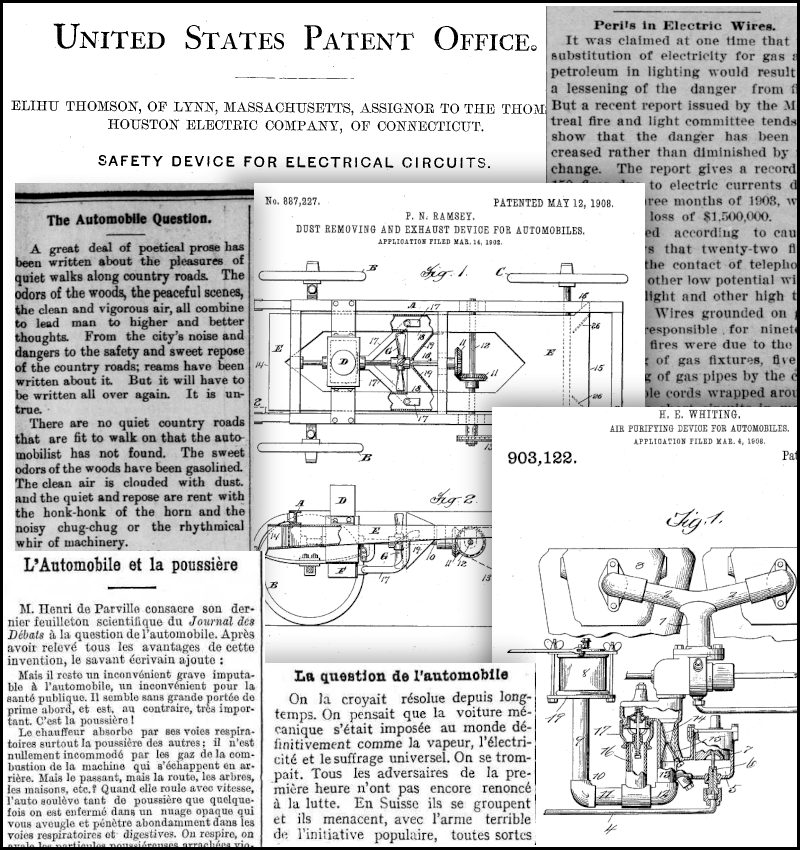
Given these historical roots of current challenges, we propose to examine the way past innovators displayed concern or indifference for the consequences of their activity − in other words, how the risks of innovation were dealt with in the past. To do so, we combine the digital analysis of a massive corpus of digitized American and Swiss patents and the historical investigation, through printed and archival sources, of debates over specific technologies. This interdisciplinary endeavour focuses on the period between 1870 and 1918 − a time highly relevant for many of the defining technologies of the twentieth century. This makes it possible to conduct a comparative analysis to highlight the extent to which different social, political and economic structures incite responses to concerns expressed around new technologies, or rather promote reckless innovation.
This project is funded by the Collaborative Research on Science and Society (CROSS) Program of the University of Lausanne and EPFL. Our research partner at the University of Lausanne is Dr. Cédric Humair.