
Seminars, symposiums, calls for papers, hackathons… find all past events organised by the Urban Sociology Laboratory.


2024-2025: Seminar Rythmologies
This interdisciplinary, multi-annual seminar is coordinated by Luc Gwiazdzinski (ENSA, LRA) and Christian Graff (UGA, LPNC). It is organized by MSH-Alpes as part of its Rythmologies research axis, in partnership with Laboratoire de Recherche en Architecture (LRA – ENSA Toulouse), Laboratoire de sociologie urbaine (LASUR – EPFL) and Laboratoire de Psychologie et NeuroCognition (LPNC – CNRS, UGA, USMB).

2024: International Conference Nuits des Suds
The interdisciplinary conference “Nuits des Suds” was an opportunity for researchers from different disciplines (planning, anthropology, art, architecture, law, geography, economics, history, engineering sciences, media studies, political sciences, sociology, urban planning, etc.), as well as for artists, association leaders, practitioners, and elected officials from many countries, to take stock of this work, both in and from the South. The aim was to better understand the developments in urban and rural nights, the ways of living and experiencing the night on different scales according to cultures, countries, territories, and cities; to identify transformations, tensions, and inequalities of access; but also to examine the strategies for development or protection of nights carried out by different actors, and to analyze the forms of governance that had been favored.

2021-2024: Nouvelles Proximités Seminar
Each month, we invite an expert to spark a dialogue between researchers and the public around the evolving meaning of proximity in our lives and societies. Together, we question, debate, and imagine how new forms of closeness – spatial, social, cultural, and economic – are reshaping the way we live, work, and connect.

2023 : Hackathon Rythmes, sécurité et vie urbaine
A hackathon-style event to kickstart the project. Launch of a CAS (Certificate of Advanced Studies) in “Urban Rhythms and Safety.”
2022 : IRS SOCIOLOGICAL RESEARCH FORUM “The City of Differences”
The Institute of Sociological Research (IRS) organized a forum in 2022 dedicated to urban diversity and its implications for governance and planning. Faced with the growing complexity of cities, the event aimed to move beyond a reductive approach based on a single characteristic (such as income) and instead consider differences through an intersectional lens – including age, gender, language, disability, religion, and more. This perspective seeks to go beyond representations of homogeneous groups and to fully integrate the plurality of identities into both the theory and practice of urban planning. The forum, hosted by Sandro Cattacin and Fiorenza Gamba (University of Geneva), took place on March 2, 2022, at Uni Mail.
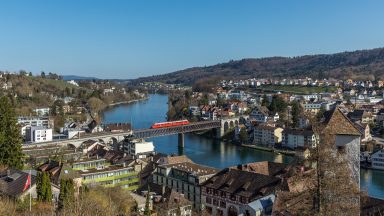
Call for contributions: urban Switzerland beyond the metropolitan areas
What: a short statement of intent for a book chapter. When: before June 30, 2021.

2021: Views on habitat and housing
On September 6 and 7, 2021, the Urban Sociology Laboratory at EPFL organized two study days bringing together sociologists, geographers, political scientists, anthropologists, and architects to discuss the theme of housing and living environments.
2020: Designing the Transition III
For the third consecutive year, the Braillard Architects Foundation, Metrolab Brussels (KUL/ULB), and the Urban Sociology Laboratory at EPFL (LaSUR) organized the international scientific seminar Designing the Transition III. The event focused on the ecological transition of cities through architectural, urban, and landscape projects, combined with a body of knowledge and operational concepts.
Rhythms in Social Sciences Symposium
The conference explored the notion of rhythm as a tool for analyzing contemporary societies marked by acceleration, time pressure, and changing lifestyles. It broadened the understanding of rhythm beyond mere regularity to include its irregular and spontaneous forms. Participants discussed its political and social implications, movements toward slowing down, and new avenues for time policies and urban planning. The rhythmic approach was presented as a way to better understand the relationships between individuals, spaces, and societies.