
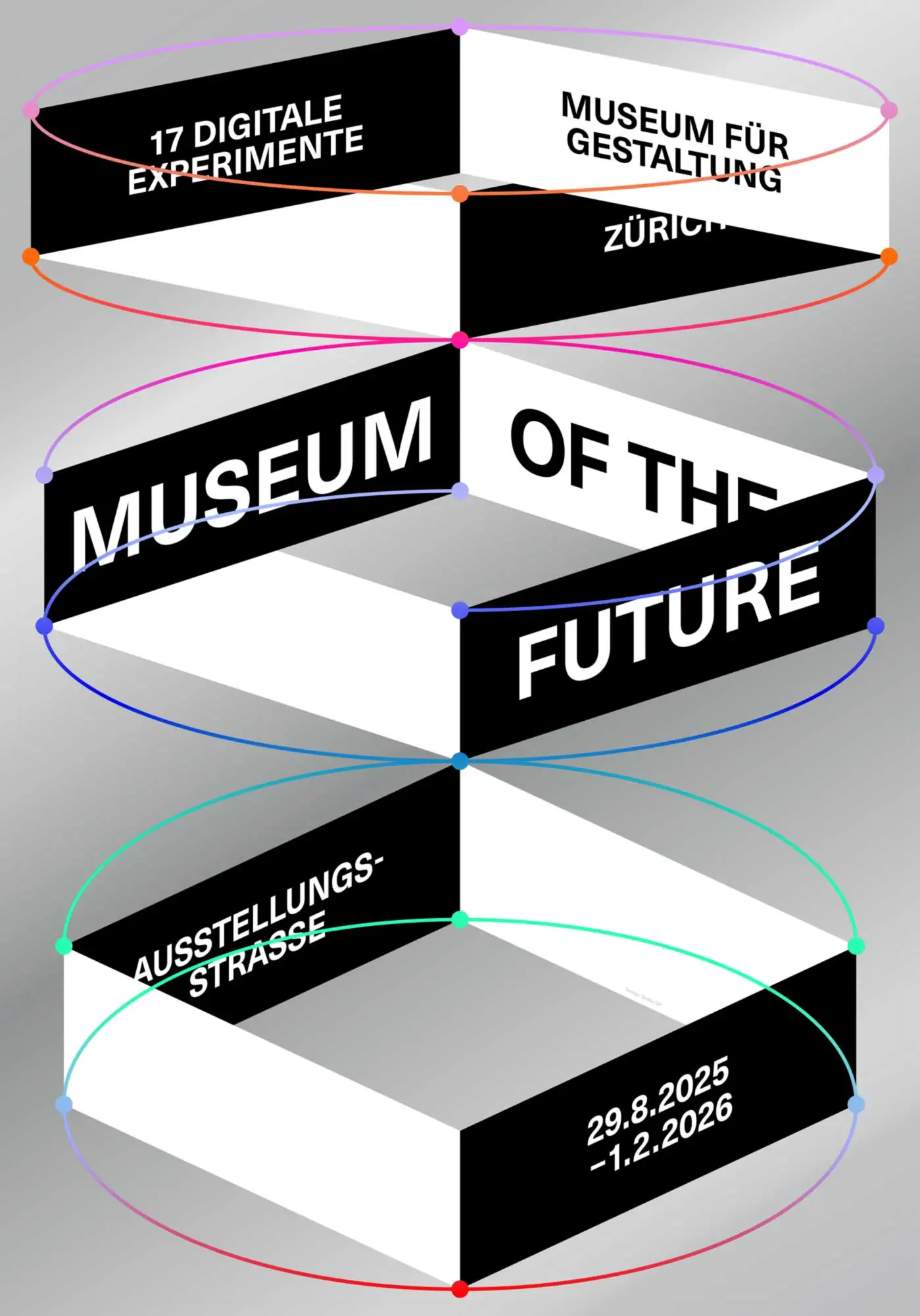
The Laboratory for Experimental Museology (eM+) presents five works in the group exhibition Museum of the Future — 17 Digital Experiments curated by Prof. Sarah Kenderdine, eM+ lead, and Christian Brändle, director of the Museum für Gestaltung Zürich. On view from 29 August 2025 to February 2, 2026 at the Museum für Gestaltung Zürich, Ausstellungsstrasse 60.
Opening reception: Thursday, August 28th, 7 p.m.
What will the museum of the future look like? How can digitization be helpful in exhibiting and educating the public about objects that could not previously be shown? The exhibition ventures a look ahead to find answers to these questions. Seventeen interactive experiments transform the exhibition space into a future lab – and demonstrate how digitalization and artificial intelligence are rethinking and expanding the museum to offer visitors a whole new experience.
The five works introduced by our laboratory actively shape and advance the ongoing conversation.
I. The Terapixel Panorama
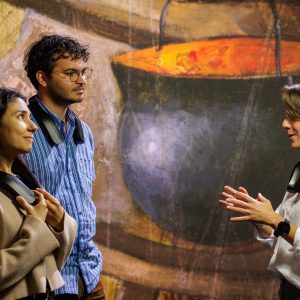
The Terapixel Panorama presents a critical analysis of this 19th-century image while developing innovative approaches to its cultural interpretation. The painting, a national treasure spanning 1,000m², has been digitally captured with unprecedented precision, producing a 1,600-gigapixel digital twin (1.6 terapixels)— the largest digital image of a single object ever created. The interactive image allows audiences to explore the panorama beyond its traditional viewing format, revealing previously unseen details, hidden narratives, and artistic intricacies. Restaged in an immersive environment, augmented with volumetric videos, 3D objects, motion capture, dynamic soundscape, and synthetic smells to create a multisensory experience.

II. Double Truth II
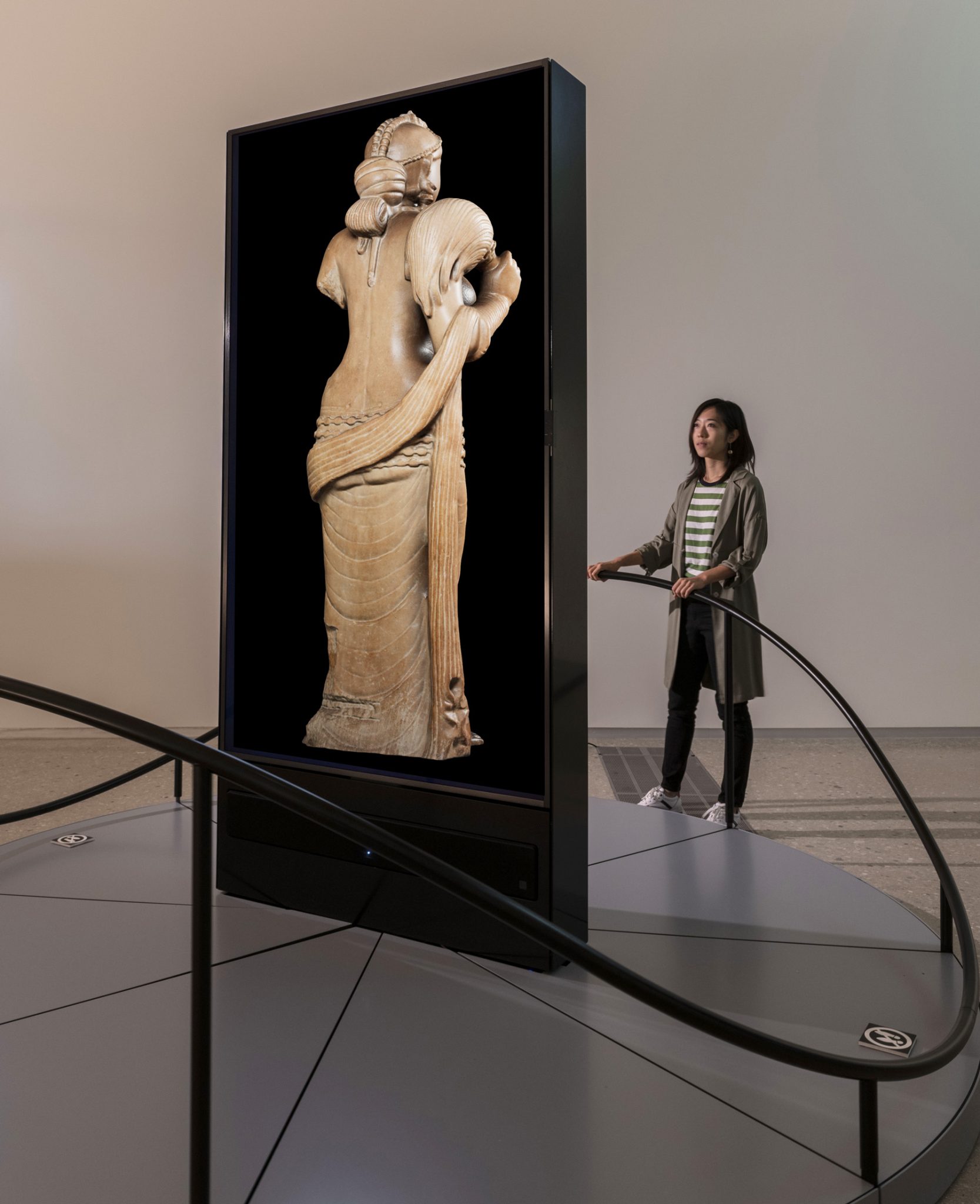
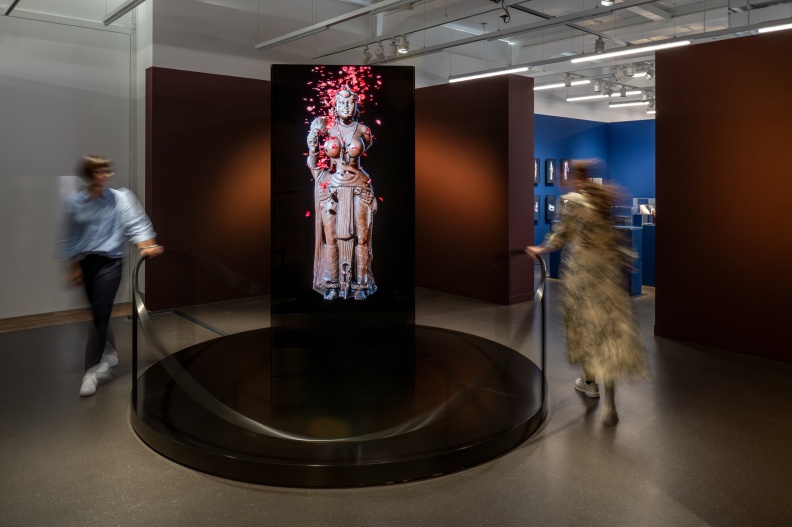
Double Truth II is an interactive installation that explores how today’s technologies unite to replicate cultural artefacts with remarkable fidelity. Showcasing a series of sacred objects from the Bihar Museum collections—spanning Jain, Hindu, and Buddhist traditions—the installation focuses on affirming and activating visitors’ sensory experiences. A human-scale viewing platform serves as a conduit for experiencing both form and formlessness: rotating the platform clockwise renders the objects as solid, photoreal facsimiles, while rotating it in the opposite direction transform the material world of the object. The 3D models in Double Truth II are technologically empowered to offer forensic insights into invisible dimensions, generating unforeseen hypotheses, connections, and materialities.
III. Animating the Avant-Garde
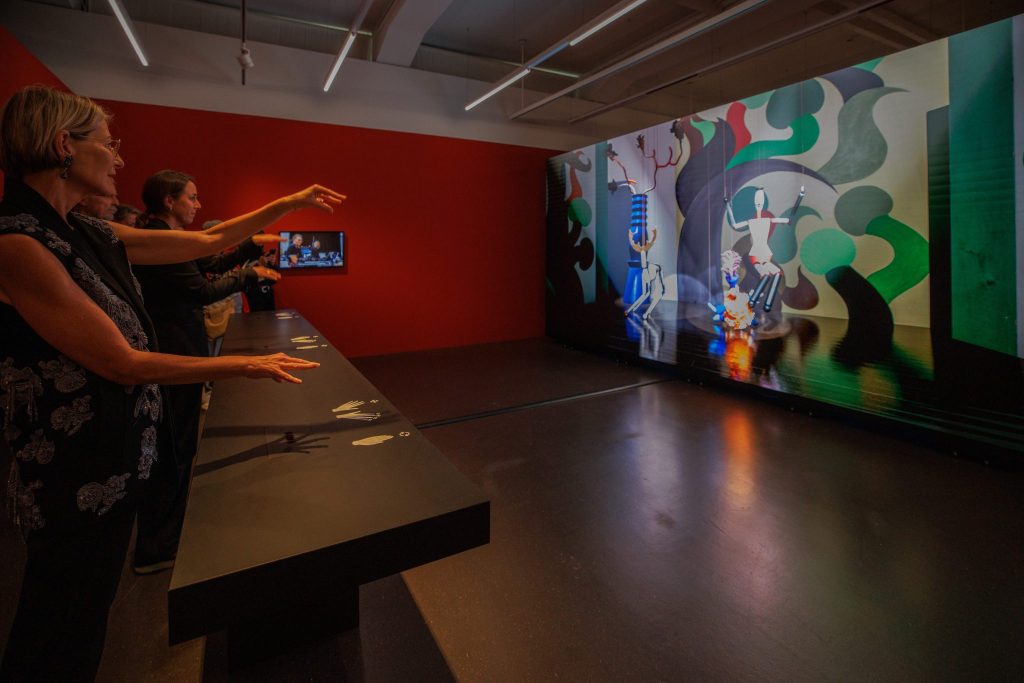
Animating the Avant-Garde invites visitors to enter the theatrical and experimental world of Sophie Taeuber-Arp, one of the 20th century’s most pioneering artists. Using iconic and original marionettes sourced from the collections of the Museum für Gestaltung, this installation invites visitors to discover the power of movement, abstraction, and performance. A hand-gesture–based interface transforms every movement of the participants in this installation into the surreal language of Taeuber-Arp’s puppets. Each user becomes an unseen puppeteer, orchestrating choreographies of geometry and color. Through selecting a marionette from a cast of characters, the inter-actor’s gestures breathe new life into angular limbs, each movement a undertone of the avant-garde.
IV. Sophisticated Geometries: Insects on a Grand Scale
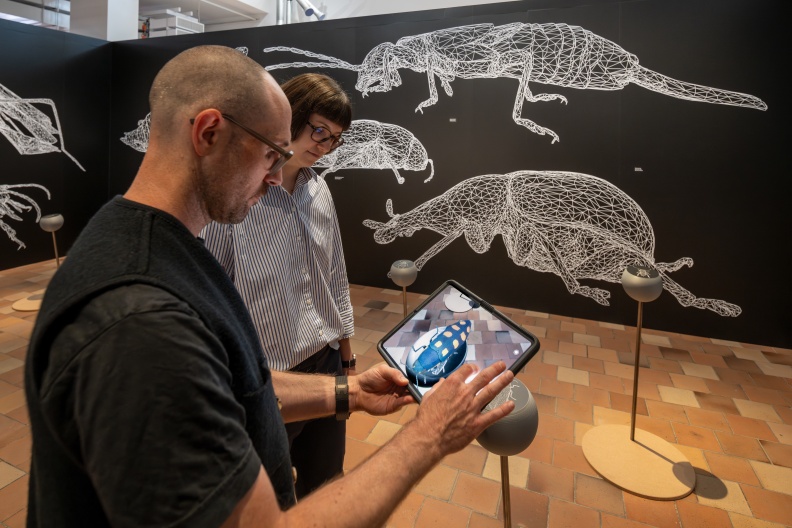
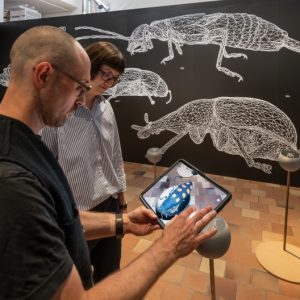
Sophisticated Geometries is a vivid confrontation with the striking creativity of nature’s architecture. Insects are among nature’s most delicate, colorful and intricate creations, but their tiny size means their splendour goes unnoticed by most of us. We invite you to explore them in a new way. As you enter, look at the tiny specimens of 12 Swiss insects on the other side of this wall, some of them well-known, others endangered or rarely observed. Take an iPad and explore the mesmerizing complexity of their digital avatars in an augmented reality realm in astonishing detail. They are derived from 3D digital scans of the real specimens, merging the organic with the digital.

V. Triadic Triptych
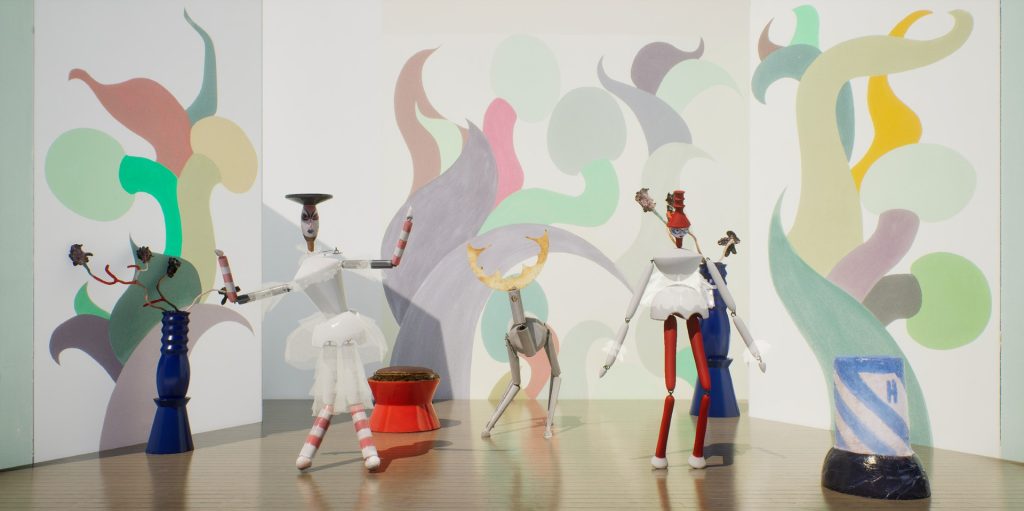
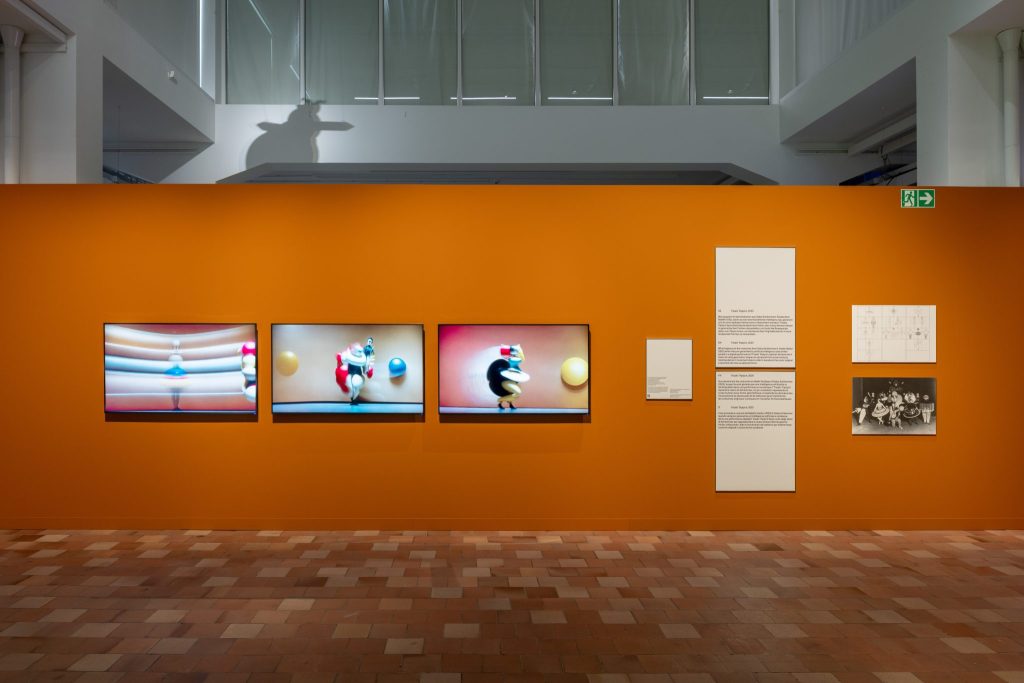
Triadic Triptych is a generative AI animation that reinterprets the abstract costumes of Oskar Schlemmer’s ‘The Triadic Ballet’ as a contemporary digital performance. Premiered in 1922 at the State Theatre of Württemberg, Stuttgart, the ballet was a symphonic dance of “threeness,” divided into three sections, performed by three dancers in twelve distinct dances, progressing from the playful to the solemn. In Schlemmer’s work, costumes dictated movement, transforming dancers into sculptural, ambulant architectures. Trained on the ballet’s historical costume designs, Triadic Triptych reimagines its iconic geometric and brightly colored forms, generating ever-evolving digital sculptures that shift and reshape while retaining the distinct aesthetic of the original.

Visual media from the exhibition



The exhibition Museum of the Future — 17 Digital Experiments is the result of a multi-year research project sponsored by the Digitalization Initiative of the Zurich Higher Education Institutions DIZH and involving the project partners Museum für Gestaltung Zürich; the Laboratory for Experimental Museology, eM+ at EPFL Lausanne; the Zurich University of the Arts (ZHdK); the Natural History Museum of the University of Zurich; and ETH Zurich. The installations will be evaluated by Citizen Science Zurich, an organization of the University and ETH Zurich, in order to derive findings for the museology of tomorrow.