
EDMI – Microsystems and Microelectronics
About the program
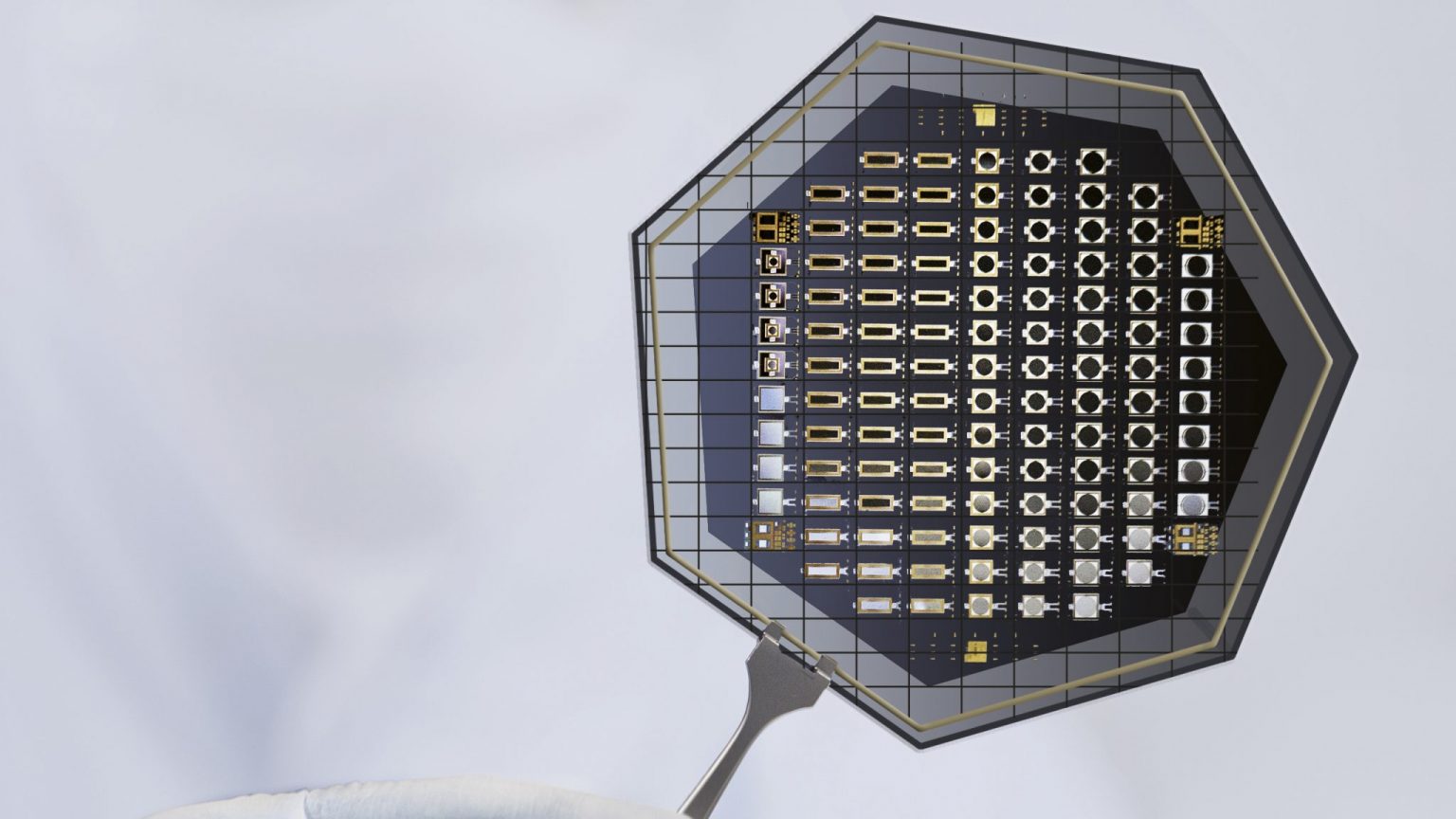
The EDMI doctoral program lies at the intersection of micro/nano electronics, micro/nano systems, and bioengineering. It covers the knowledge chain from novel materials and processes to new devices, sensors, and microsystems up to their use in innovative applications.
Products and applications based on microelectronic and microsystem technologies are a driving force in the global economy affecting nearly every aspect of life: education, entertainment, transportation, personal communications and the basic infrastructure of our economy, medicine, engineering, space exploration and science.
Our students join EDMI after completing their master (or, in exceptional cases, after their bachelor) in fields such as Electrical Engineering, Microengineering, Mechanical Engineering, Biomedical Engineering, Physics, and Chemistry. EDMI doctoral students engage in modeling, design, fabrication, characterization, and application of micro/nano devices and systems. They have access to external integrated circuits foundries and to the EPFL’s world-class cleanroom, the Center of MicroNanoTechnology (CMI).
More than 40 EPFL laboratories and research groups are affiliated with the EDMI, all having strong interactions with the Swiss and European industry, in fields as diverse as biomedical sensors and optical devices. EDMI students often bridge the gap between fundamental research and industrial applications.
Applying to EDMI
Applications may be submitted throughout the year. However, they are reviewed three times annually, shortly after the following deadlines:
Deadlines: April 15, September 15 and December 15.
Applicants will typically be notified of the evaluation results by email within five weeks of the deadline.
- Applicants to EDMI have completed, or are close to completing, their master’s studies, typically in fields such as Electrical Engineering, Microengineering, Mechanical Engineering, Biomedical Engineering, Physics, or Chemistry. In exceptional cases, candidates who have completed only a bachelor’s degree of 4 years may also be considered.
- Be aware that only complete applications are reviewed.
- For specific information on the EDMI doctoral program visit the How to apply to EDMI webpage.
- For further general information on the doctoral programs at EPFL visit the admission criteria and application procedures webpage.


EDMI students often bridge the gap between fundamental research and industrial applications, engaging in modeling, design, fabrication, characterization, and application of micro/nano devices and systems. They have access to external integrated circuits foundries and to EPFL’s world-class cleanroom, the CMi. We have a long history of collaboration with industry, in fields as diverse as biomedical sensors and optical devices.


Soft bioelectronics focuses on physically interfacing man-made electronic devices with biological systems.
The focus is on designing and manufacturing electronic devices with mechanical properties close to that of the host biological tissues so that minimal perturbation is induced in vivo and/or truly wearable systems become possible. Envisioned applications include assistive technologies for patients with impaired nerves or spinal cord injuries in the form of soft implantable electrodes, and wearable interfaces in skin-like formats for prosthetic sensory skins. We use fabrication methods borrowed from the microelectronics and MEMS industry and adapt them to soft substrates like elastomers. We develop novel characterization tools adapted to mechanically compliant bioelectronic circuits. Moving soft bioelectronics forward requires innovation in the fields of materials science, fabrication, engineering, and biocompatibility, and a multidisciplinary mindset.
Student testimonials

As I did my master’s at EPFL in Microtechnology, I was attached to the interdisciplinary aspect of this field. I decided to stay at EPFL as I knew the quality of its clean room facility and wanted to continue working there. More than that, EPFL’s environment is also one I am very attached to, due to the strong technical competencies gathered here, the never-ending possibilities of events (the countless guest lectures and parties), and the lake in which to jump when summer gets near. I had no reason to leave. It only felt natural to me to apply to EDMI, where the different skills I wanted to strengthen were being taught, while also offering freedom in the choice of laboratory and classes I would teach. Many people from the EDMI staff and students helped guide me on my way, always taking the time to answer all my questions.
I now work in a Physics laboratory, HQC, as a microengineering PhD student, and explore the whole development process of electronic devices, from design and simulation, to measurements, going through the fabrication myself. My goal is to broaden the possibilities behind Traveling Wave Parametric Amplifiers, especially for quantum computer read-out.
You can find me here, running between my blue suit at CMi and my desk covered in papers in the physics building. Don’t hesitate to stop me and say hi if you make the great decision of joining EDMI at EPFL!

The first time I came to EPFL was for my Master’s thesis in Implantable Devices for neural sensing and recording, with applications in Parkinson and epilepsy. As a student, pushing the boundaries of technology thanks to innovative microsystems, was life-changing. Being able to work hands-on in this field immediately fascinated me, and ultimately motivated me to continue in the EDMI program for a PhD. As a doctoral student in the Bio/CMOS Interfaces Lab, my research focuses on Reconfigurable FETs for multi-marker cancer detection. This work has led to the rapid acquisition of advanced interdisciplinary expertise. Despite only completing my first year, I have already gained a broad interdisciplinary skill set, from clean-room fabrication of nanometer-scale devices to the use of advanced optical tools such as SEM, as well as microfluidic platform development and aptamer-based biosensing. None of my progress would have been possible without constant exchanges with the other Lab members, EDMI colleagues, clean-room staff, and professors. What I’m most grateful for in my journey is discovering that real innovation happens at the edge of failure. This year has taught me to embrace every setback as a stepping stone. And that when those stones feel impossibly heavy, there will always be a colleague waiting at the coffee machine, ready to share the burden. In the end, when the complex jigsaw finally falls into place, the sense of reward is overwhelming, and it makes every challenge along the way feel worthwhile.

Having done my Master’s in life sciences at EPFL, I have always been interested in the design and development of medical devices. I had the chance to work on microcatheters during my master thesis which I found absolutely fascinating. However, as much as I loved this experience, I felt like I was still lacking knowledge on how to fabricate and assemble such small devices. This is why joining the EDMI program felt like a natural step.
I am currently doing a PhD in the MicroBioRobotic Systems Laboratory (MICROBS) where I am continuing my master thesis work on designing and developing magnetically actuated flowdriven microcatheters. Working in such an interdisciplinary field is truly motivating as the opportunities to learn are always there. Having access to world class facilities on campus such as CMi and having a broad range of courses available really makes this a special place to grow as a researcher and a person in general.


For applicants
Further information: how to apply, program details, testimonials

For PhD candidates
Practical information: what you need to know as an EDMI PhD student

People
Who is who: all you need to know about the EDMI community


Upcoming public defense
News highlights
Contact
Program Director
Prof. Giovanni Boero
Administration
Lucie Auberson
EPFL EDMI program
ELB 112
CH-1015 Lausanne
+41 21 693 6923