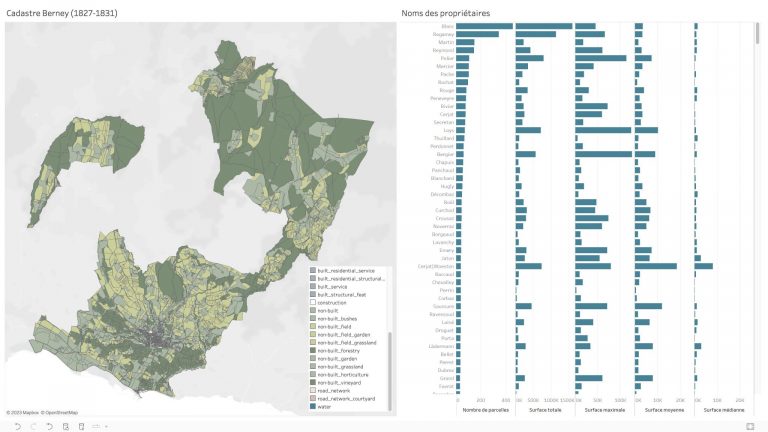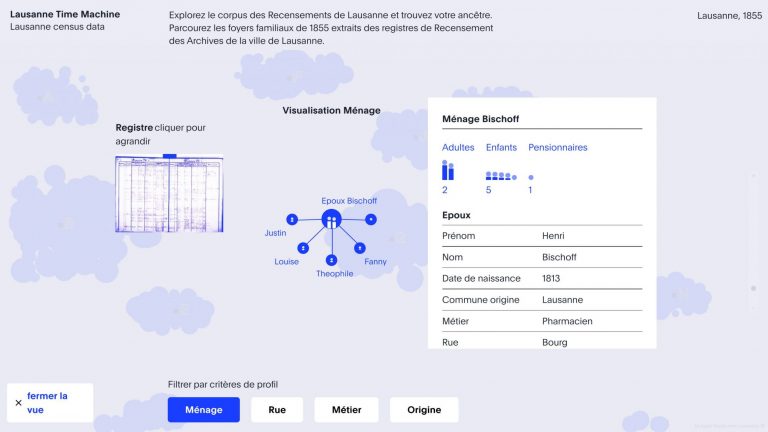

Try navigating an interactive historical-geographical platform designed to integrate spatial and temporal dimensions within a unified interface that includes not only information about the present, but also multiple layers representing the past and possible futures of every place in the world.
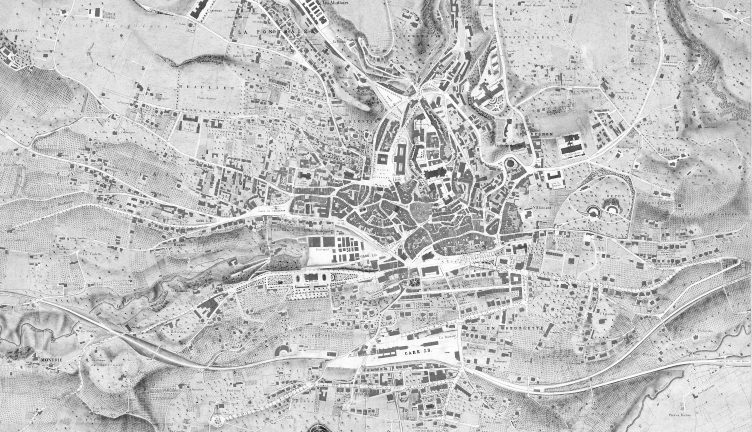
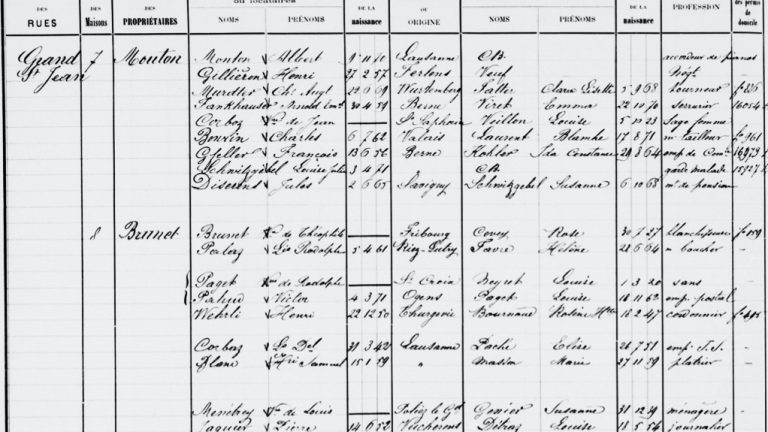
Each point or line displayed in the Time Atlas corresponds to information extracted from historical sources such as land registry records, maps, photographs, paintings, films, and other documents; historical reconstructions created by scholars, such as 3D models of buildings or entire cities in specific eras; or future projects related to a site, such as architectural models of planned constructions.
The idea is to collect all this information in one place, realigning the myriad of data available on the past and future of the world in space and time, and to build shared methods for visualizing historical and heritage data produced in diverse and heterogeneous local contexts, making them searchable and citable.

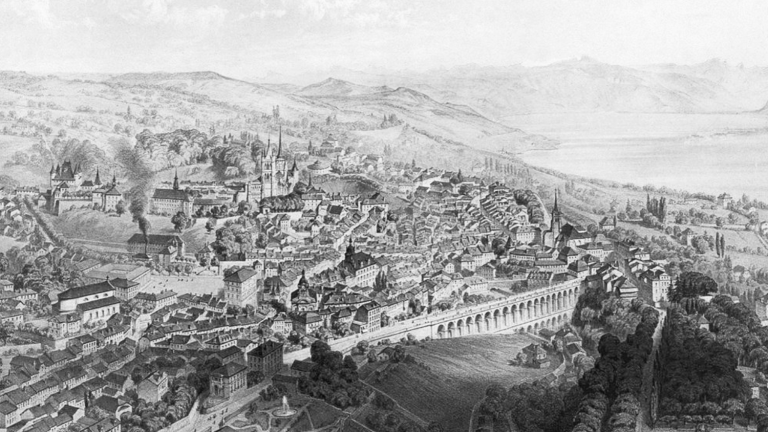
Lausanne 1831- 2024 Simulated comparison between cadastral building elevation values in 1831 and values in 2024. An arbitrary average of two storeys for suburban residences and three storeys for urban residences has been calculated for 1831. Monuments still in situ retain the same elevation
Time Machine Unit Mission
The Time Machine Unit’s mission is to integrate artificial intelligence and cultural heritage through synergy between scientific research and heritage institutions. The unit is dedicated to developing interdisciplinary projects using artificial intelligence methodologies to unlock the potential of historical documents, offering new perspectives and insights into our shared past and memory.
Understanding the past, densifying the present, planning the future: The aim is to create methodologies and approaches for densifying the present with information from the past, to better understand possible futures.
Educational innovation: Time Machine Unit offers educational programs, courses, hands-on workshops and seminars, equipping academic, professional and citizen communities with the skills needed for computational extraction and analysis of historical data.
Collaborative programs: Time Machine Unit actively promotes collaborative programs, facilitating study and exchange opportunities for students and researchers. This collaborative effort aims to envision and realize a landscape in which digital technology enhances the accessibility, understanding and preservation of cultural artifacts for future generations.
Pillars:
-
develop interdisciplinary projects in artificial intelligence applied to cultural heritage, with a focus on the relationship between academic research and heritage institutions;
-
create and promote a new form of education for academic and professional communities, based on the understanding of historical documents and their computational extraction and analysis;
-
promote study and exchange programs for students and researchers, in collaboration with heritage institutions interested in exploring what kinds of digital futures are possible for cultural heritage.
News

Venice Data Week – Workshop – Lausanne 25-27 June 2025
The Digital Humanities Laboratory and the Time Machine Unit at EPFL are pleased to announce a three-day workshop dedicated to exploring, interpreting, and enriching historical datasets on the city of Venice.