
Join us!
We are always looking for motivated Bachelor, Master students and see some opportunities below to join our group.
PhD and Postdoctoral fellows, if you have ideas you would like to pursue that fit the lab theme, see details below and contact us!
You will work on characterizing model plants systems of the lab to study the abiotic stress adaptation of plants to different environmental stresses. This will include building plant phenotyping set-ups for micro and macro imaging, molecular cloning, PCR and qPCR, fluorescence imaging, plant growth and stress phenotyping. These small projects are worth 6 credits.
Intership projects will be part of the main research areas of the lab and will be discussed and agreed on an individual basis.
Please fill this form if interested: Bachelor projects and internships.
International students, please also check here for more information.
These projects are full-time and will be your thesis work in order to obtain a M.Sc. degree.
Highly motivated students with excitement for plant developmental biology, physiology, imaging as well as bioinformatics, are very welcome to apply. Our current topics include stress adaptation of plants, imaging stress responses at different scales: nano to macro and understanding the role of physiology in stress adaptation.
Please fill this form if interested: Master projects.
International students, please also check here for more information.
Currently available Masters projects are listed below.
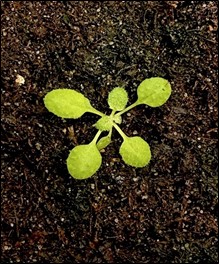
Background:
Estuaries and river deltas are dynamic environments where salt levels, flooding, and oxygen availability change constantly – both across space and through time. These shifts affect the chemistry of iron in soils, switching it between different chemical forms that vary in how bioavailable they are to plants. As plants can only absorb iron in certain forms, these chemical switches can make iron either accessible or locked away, even in iron-rich soils. Understanding how salinity influences these switches, and what that means for plant nutrition, might help us farm in saline soils or breed crops that thrive in salty, waterlogged conditions.
Objectives:
1. Develop an artificial saline soil system composed of sand and iron-containing minerals (clay minerals and/or synthetic Fe oxides).
2. Assess the influence of different salinity and moisture levels on the geochemistry of iron across different minerals.
3. Develop an imaging system for monitoring plant growth in the artificial soil system.
4. Determine how differences in salinity, moisture, and iron mineralogy affects plant growth and physiology and model the differences.
Knowledge and skills recommended
- Interest in plants and environmental processes
- Some prior experience working with plants or in a wet laboratory (not mandatory)
- Proficiency in English
| Field | Plant Environmental Sciences / Soil Biogeochemistry |
| Duration | 30 ECTS for a full semester, or 10 ECTS for a 4-month project. |
| Interested? Contact us! |
Priya Ramakrishna ([email protected]) Meret Aeppli ([email protected]) |
| Workplace | EPFL-Lausanne (primarily) and some analysis at ALPOLE-Sion |
For PhD students, direct enquiries are appreciated. Please get in touch at priya.ramakrishna (at) epfl.ch.
If you are excited about exploring novel ideas and approaches to understand plant adaptation to environmental stresses, the physiology of plants, systems-level mechanisms of tolerance to salinity and nutritional stress, please get in touch by sending your CV, a brief motivation letter, and a research statement.
I am also happy to support strong candidates interested in applying for competitive postdoctoral fellowships to join our group. Some opportunities include: