
This page gives the current projects that we are offering for EPFL students. Most projects can be tailored as bachelor project (quite short), semester project or master project. If you are interested, please check the full description and contact the corresponding collaborator.
Bien que nous donnions cette liste en anglais, le Laboratoire de Nanophotonique & Métrologie (NAM) parle évidemment aussi le français et nous sommes heureux d’accueillir des étudiants francophones!
Quantum Emitters Coupled to Subwavelength Hyperbolic Phonon Polaritons
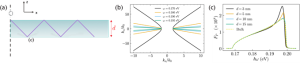
This project investigates the interaction between quantum emitters and hyperbolic phonon polaritons supported by anisotropic nanophotonic structures. The project will combine classical
electromagnetic simulations with quantum-optical modelling. The first objective is to simulate the propagation and spatial confinement of HPhPs in selected material platforms, such as thin crystalline slabs or patterned structures. The student will study quantities including the electromagnetic field distribution, polariton wavelength, propagation direction, and material losses. The simulated electromagnetic response will then be used to calculate how the nanophotonic environment modifies the properties of a nearby quantum emitter. In particular, the student will firstly investigate the Purcell effect, which describes the enhancement or suppression of spontaneous emission caused by the surrounding electromagnetic structure. At a later stage, the project will examine parameter regimes in which the interaction between emitters and a confined polariton mode becomes sufficiently strong to produce coherent energy exchange. The analysis may be extended to multiple emitters in order to investigate
HPhP-mediated interactions and the emergence of collective superradiant and subradiant states.
Contacts: Stavros Athanasiou Full description of the project (PDF)
Self-Consistent Modeling of Coupled Maxwell Bloch Equations with the Finite Difference Time Domain Method
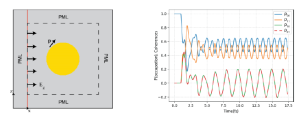
This project focuses on a self consistent modeling f ramework for the coupled Maxwell Bloch equations using the open source finite difference time domain (software MEEP) By extending MEEP’s capabilities to integrate the Bloch equations alongside electromagnetic field evolution, the approach enables the simulation of realistic scenarios where light dynamically influences quantum emitters and, in turn, emitters alter the electromagnetic fields. The framework will allow for the study of single and collective emitter dynamics in complex photonic env ironments, enabling investigations into coherence phenomena, and energy transfer at the nanoscale. The resulting tool will provide both methodological advances and practical guidance for the design of nanophotonic and quantum technologies.
Contacts: Stavros Athanasiou Parmenion Mavrikakis Full description of the project (PDF)
Monocrystalline silver flakes for applications in plasmonics
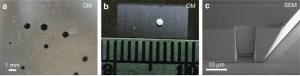
Monocrystalline noble metal flakes present a promising material platform for applications in high-quality and low-loss plasmonic systems. This project will involve development of colloidal synthesis recipe for growth of silver crystals and their subsequent nanopatterning. The fabricated monocrystalline silver nanostructures will be then experimentally characterized using scanning electron microscopy (SEM), optical microscopy and spectroscopy. Furthermore, project will also involve numerical simulations for optimization of the nanostructures dimensions and comparison against experimental results.
Contact: Sergejs Boroviks Dull description of the project (PDF)
3D visualization of the boundaries of the dielectrophoretic trapping volume
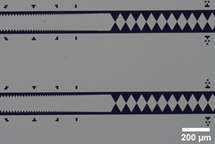
Dielectrophoresis (DEP) is the effect representing the movement of a polarizable particulate caused by the force originating from the interaction with a non-uniform low-frequency electromagnetic field. DEP is utilized for long-range manipulation (trapping, focusing, separation) of various objects, with microscale precision and has acquired wide attention in a variety of applications, including biosensing, cellular analysis, water purification, and nanotechnology. This project will explore the strength of dielectrophoretics forces.
Contact: Siarhei Zavatski Dull description of the project (PDF)