
Project description
The construction sector is a major contributor to environmental burden. In Switzerland, building and mobility infrastructure accounts for 28% of greenhouse gas emissions (Matasci et al., 2019). Given the finite lifespan of such infrastructure, at any given moment, a portion of it is being decommissioned upon reaching end-of-life, while new infrastructure is being built either to replace it or to meet growing demand (Herren and Hellweg, 2019).
Selecting materials and construction processes carries significant responsibility, as these decisions determine the infrastructure’s ecological footprint across its entire lifecycle. This environmental burden can be mitigated through a range of measures, including the implementation of circular economy strategies, the adoption of alternative energy sources, and/or the integration of carbon sinks.
In line with this logic, this project aims to investigate the use of glass products and their associated framing systems used in buildings, flat glass and glass wool with a view to supporting sustainable resource management and carbon neutrality by 2050 in Switzerland (Federal Act on Climate Protection Targets, Innovation and Enhanced Energy Security, 2025). By examining current practices, the project will identify existing approaches to manufacturing, material selection, patterns of use, and end-of-life management. This analysis will guide future optimization of circular and climate-aligned design and material recovery strategies and is part of a collaborative project with the Canton of Zurich.
Objectives
- Analysis of current production and end-of-life practices for glass in the construction sector.
- Identification of circular economy strategies capable of linking end-of-life processes with the production of new glass products.
- Identification of potential optimizations in production and end-of-life recovery methods.
- Development of alternative variants to the approaches currently employed in the field.
- Multi-criteria analysis with a focus on evaluating the circularity and environmental impacts of the different scenarios.
Method
The comparison of the proposed variants will be conducted using an appropriate functional unit and a bottom-up LCA approach. Life-cycle environmental indicators – including greenhouse gas (GHG) emissions, cumulative energy demand and its non-renewable fraction, and ecological scarcity points (UBP) – will be assessed using the BAFU 2025 database.

Contact
Prof. Rebecca Hartwell (EPFL) [email protected] ; Dr. Didier Vuarnoz (Empa)
Federal Act on Climate Protection Targets, Innovation and Enhanced Energy Security, 2025
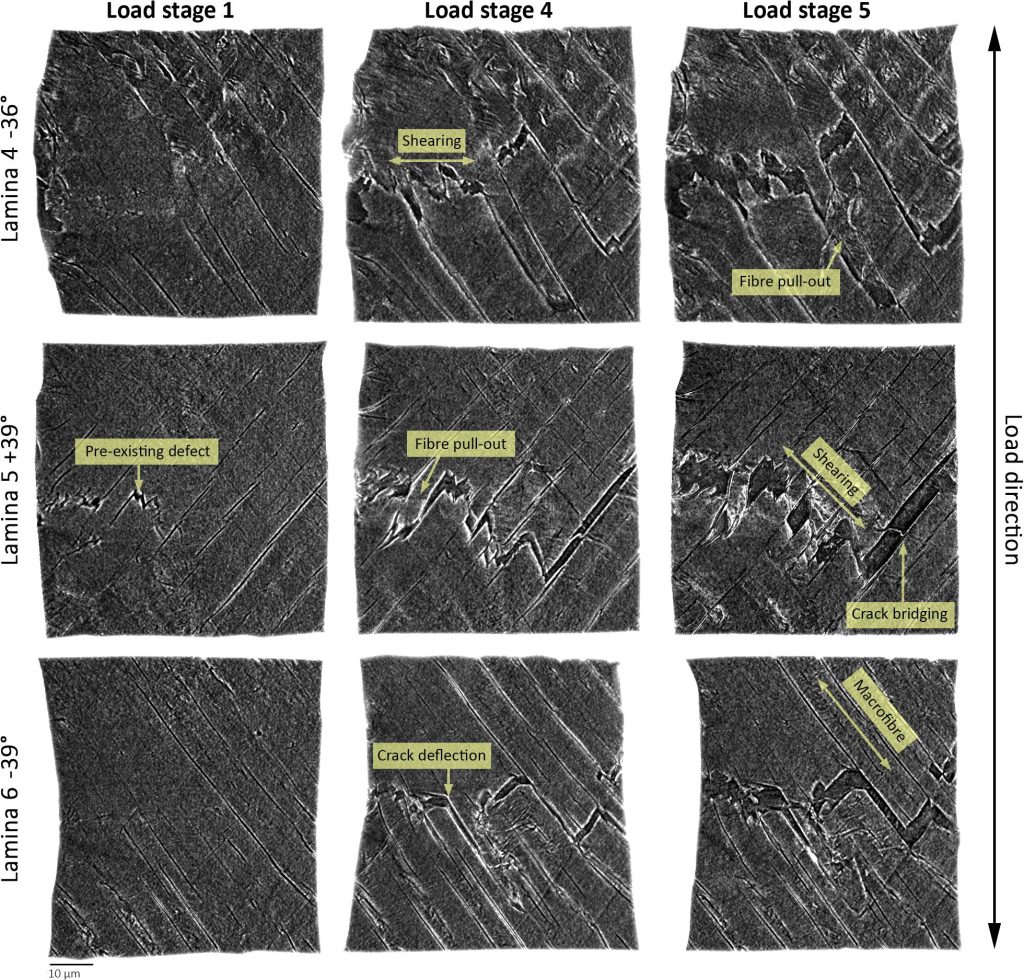
Biological structures have evolved over millions of years to achieve exceptional strength, adaptability, and material efficiency, offering valuable models for innovative architectural materials. This project explores how biological structures and mechanisms can inspire the development of next-generation natural materials and interfaces for sustainable construction. Through practical experimentation you will investigate novel material formulations, digital fabrication and re-assembly approaches, and characterisation methods to develop materials with tailored functional properties. The research focuses on developing an understanding of key structure-property relationships and evaluating the potential of these materials for applications in the construction sector. The overarching goal of the project is to develop material systems that deliver the required functional performance (e.g., mechanical, moisture management, durability, thermal performance) while promoting resource efficiency across multiple life cycles.
Contact
Prof. Rebecca Hartwell (EPFL) [email protected]
Direct reuse and recycling of materials can significantly reduce the net environmental impact of the global construction sector. The feasibility of reuse and recyclability of building systems is affected by the materials used and the interfaces between constituent components. Yet, there is a lack of quantitative methods for assessing the environmental benefits of alternative recovery strategies for multi-component and multi-material systems over the building lifetime. Recent research by the MATR lab has focused on addressing this gap by developing a digital assessment method to enable a systematic and quantitative evaluation of the transient environmental reclamation potential (RP) of building elements. To extend the applicability of this assessment approach, this project could explore one or a combination of the following research directions:
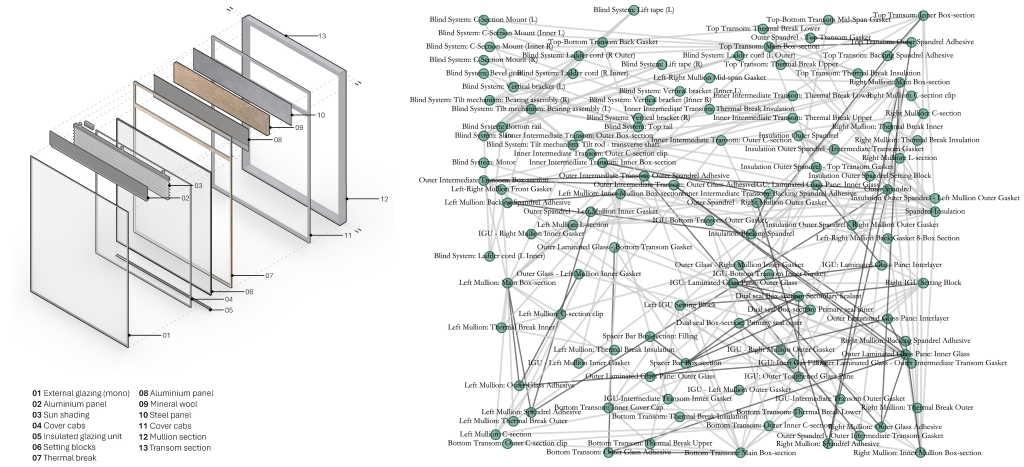
- Development of an interface inventory to support the definition of optimal disassembly sequencing including spatial constraints, connection strengths, and operational sequencing. This could be represented in hierarchical knowledge graphs and digital disassembly models. AI algorithms, such as clustering analysis, could be developed to optimize disassembly sequencing.
- Analyses of the environmental, social and economic impact (e.g. energy supply, land use, water use, critical raw material supply, labour & employment, building ownership models) of existing material value chains and building stock inventories to quantify the adaptation potential of construction elements with consideration for future use scenarios.
- Identification and analysis of underlying mechanisms for deterioration in building envelope performance to determine service life approximations.
- Development of standardised test protocols for non-destructive assessment of building envelope elements.
Contact
Prof. Rebecca Hartwell (EPFL) [email protected]
Contemporary building elements typically comprise of multi-material composite components. The ability to efficiently disassemble these components is essential for enabling scalable practices in building element reuse. This research will explore the primary technical challenges in reversible adhesion, namely: enhancements in bi-material compatibility; optimization of joint geometry through computational modelling and practical experimentation; efficient fabrication methods; and effective techniques for disassembly on demand (e.g., mechanical, thermal, electrical, UV, ultrasound, functional decomposition). You will have the opportunity to investigate the separation of existing composite elements (e.g. structural insulated panels, sandwich panels, fibre-reinforced materials, glazing products, fibre-reinforced materials) or develop new connection methods.
Contact
Prof. Rebecca Hartwell (EPFL) [email protected]
Applications welcome
We welcome applications from Master’s students on topics related to design for disassembly, sustainable material technologies for construction, and digital assessment methods for sustainability.
If you would like to join us, please have a look at the current work being done at MATR, and send us a CV and brief motivation letter, indicating the specific topics you would be interested in, your research questions, and methods you would like to implement.
All applications and questions should be sent to [email protected]