Laboratory for Topological Matter

Topology at Bad Ragartz 2009
(Linea del Tempo continuo · Silvio Santini)

In the Laboratory for Topological Matter we study the influence of topology on the electronic structure, magnetic properties, and phase transitions. The studies systems include, among others, various types of topological insulators, Dirac, Weyl and related semimetals, skyrmions, transition metal oxides, and multiferroic materials. The topological properties are investigated using a variety of photon-based spectroscopic techniques such as ARPES and RIXS both at the Swiss Light Source of the Paul Scherrer Institute and at the LACUS laser facility at the EPFL. Special attention is paid to the reciprocal space spin textures of materials and the possibility to actively influence these.
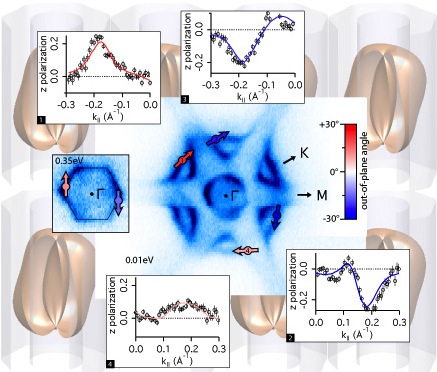

Fermi surface of the TI PbBi4Te7 with spin texture and spindle torus Fermi surface of BiTeI
© EPFL 2026/iStock (bymuratdeniz)

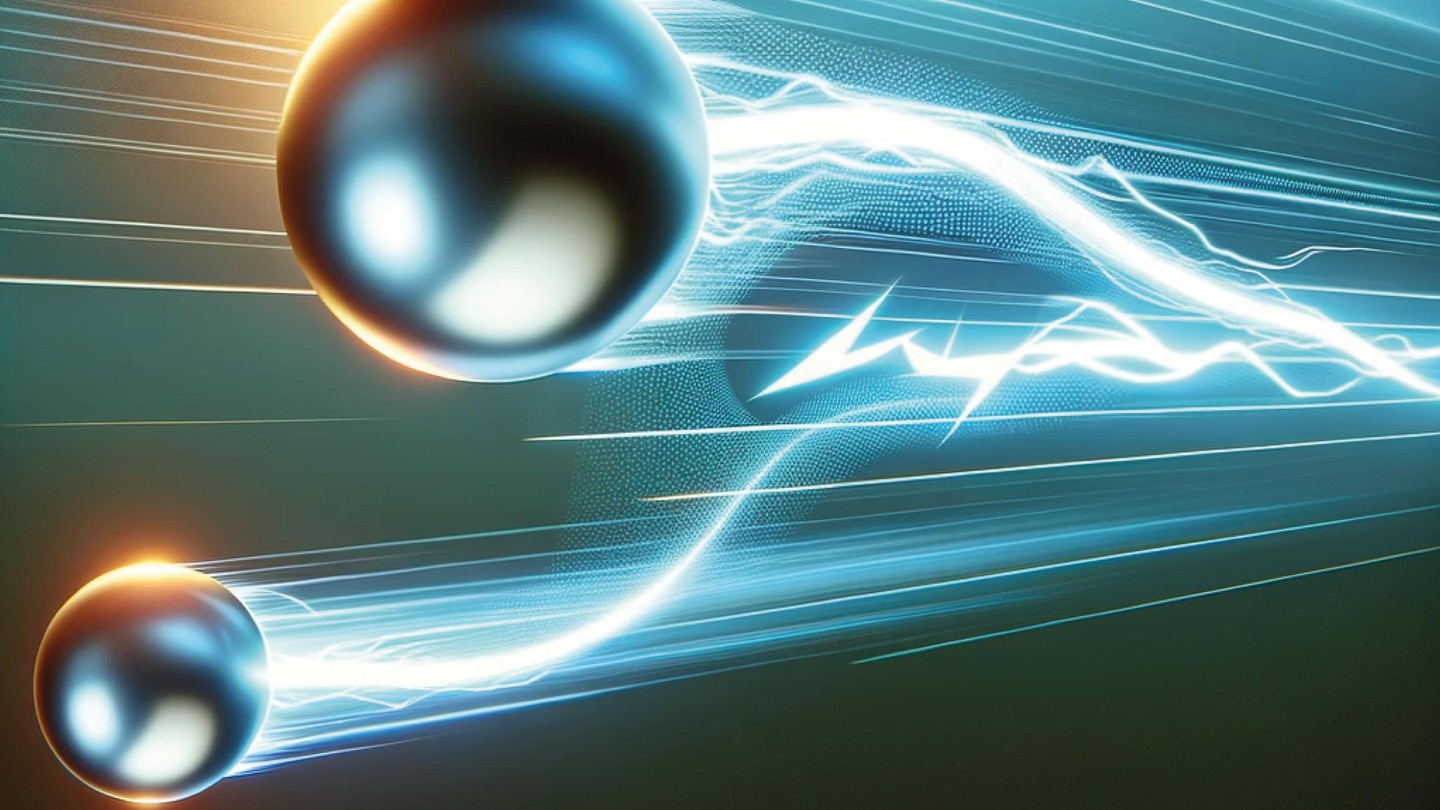
Measuring time at the quantum level

— EPFL physicists have found a way to measure the time involved in quantum events and found it depends on the symmetry of the material.

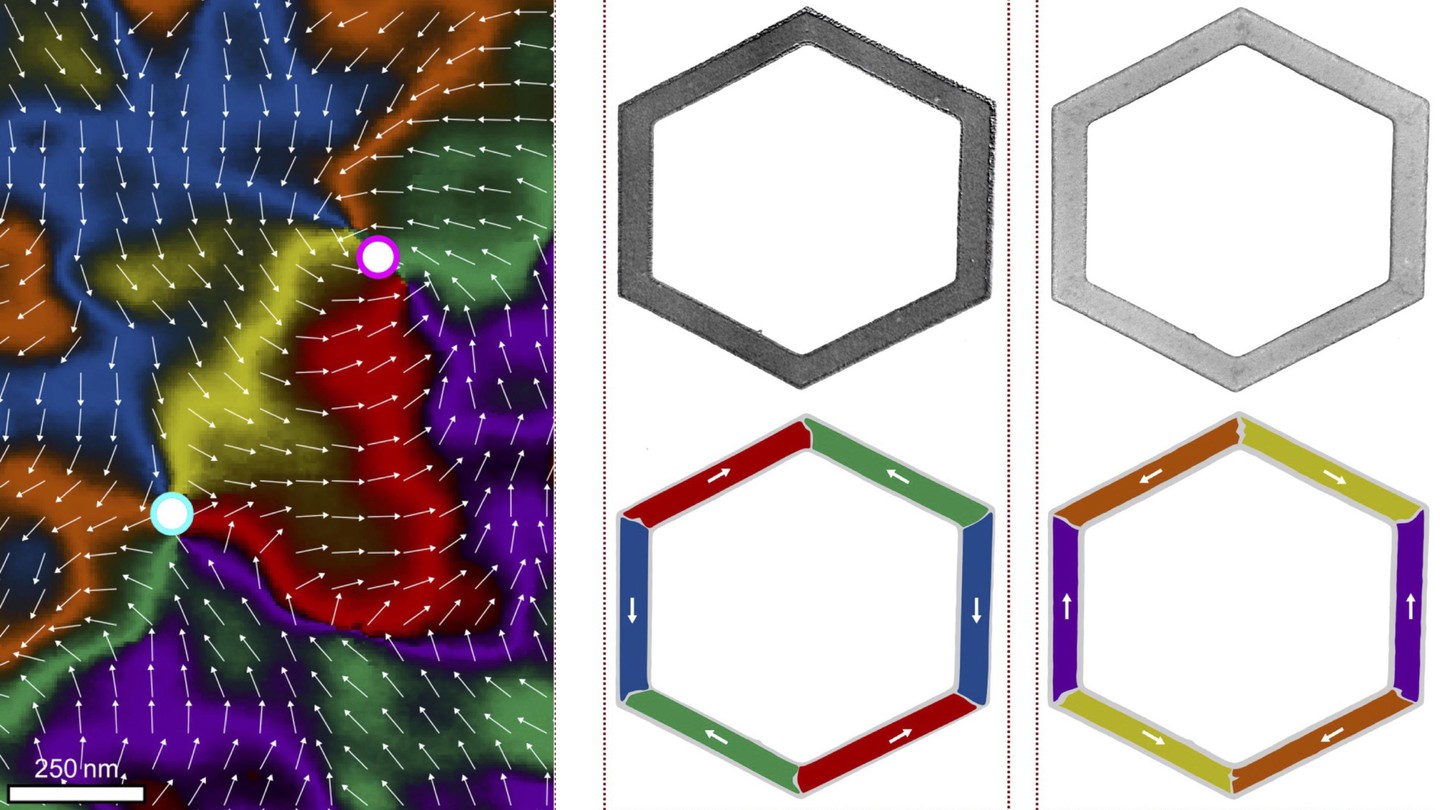
Vortex pair and single domain switching in altermagnetic MnTe. © 2024 EPFL

Nanoscale imaging and control of a new type of magnetism

— An international collaboration including EPFL scientists has for the first time been able to directly image the domains structure of a novel type of magnetism, called altermagnets. Using micro machining they could further create single domain states promising for applications.

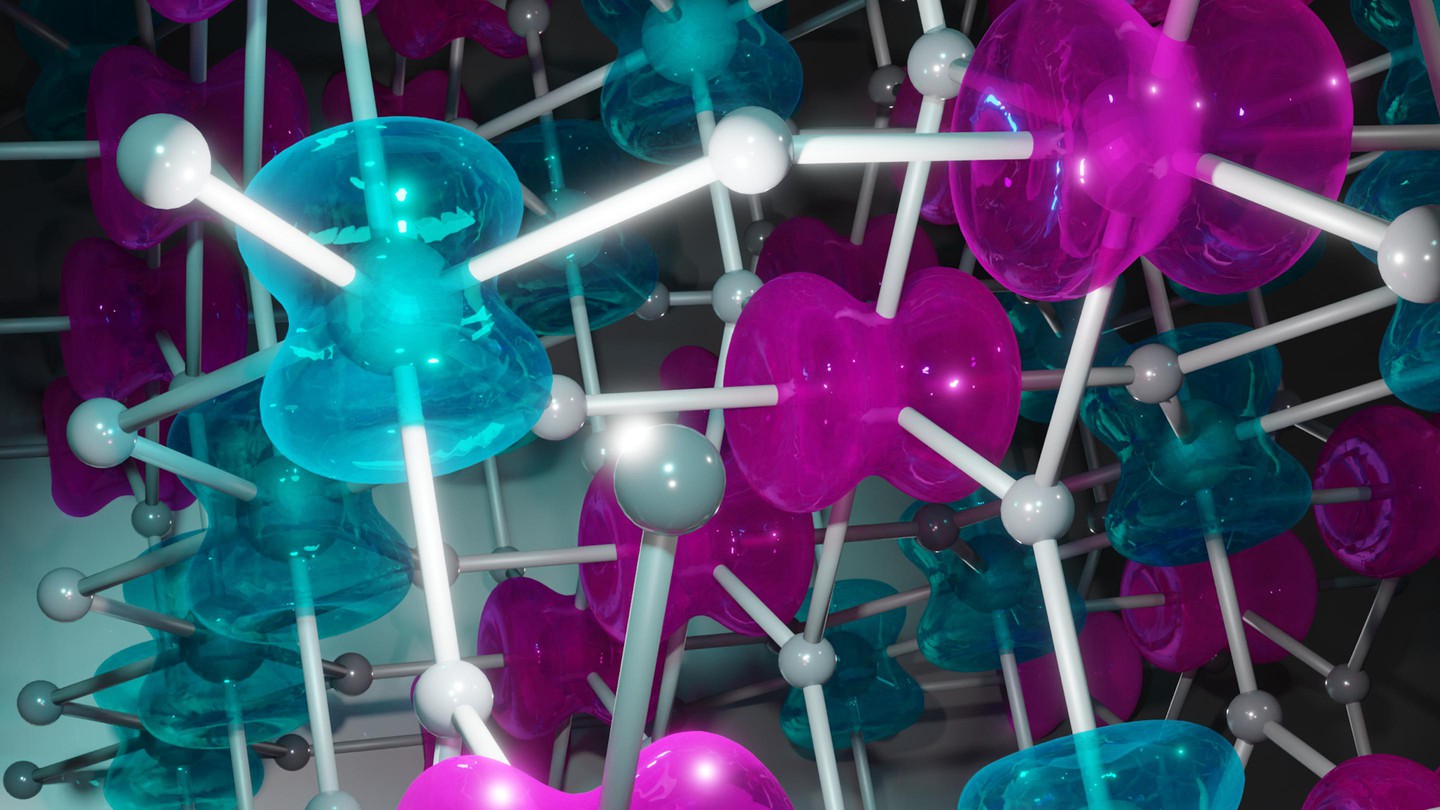
Visualisation of the spin densities in a altermagnetic material, with different spin orientations highlighted in different colours. Credit: Libor Šmejkal and Anna Birk-Hellenes ((Czech Acad. of Sci.)

Altermagnetism proves its place on the magnetic family tree

— Thanks to experiments at the Swiss Light Source SLS, scientists of the Paul Scherrer Institute and EPFL and their international team have proved the existence of altermagnetism, a new addition to the magnetic family. This experimental discovery is reported in Nature and signifies new fundamental physics, with major implications for spintronics.

© 2024 PSI/ Sandy Ekahana

Charge fractionalisation observed spectroscopically

— A research team led by EPFL professor Gabriel Aeppli and the Paul Scherrer Institute has spectroscopically observed fractionalisation of electronic charge in an iron-based metallic ferromagnet. Experimental observation of the phenomenon is not only of fundamental importance. Since it appears in an alloy of common metals at accessible temperatures, it holds potential for future exploitation in electronic devices. The discovery is published in the journal Nature.

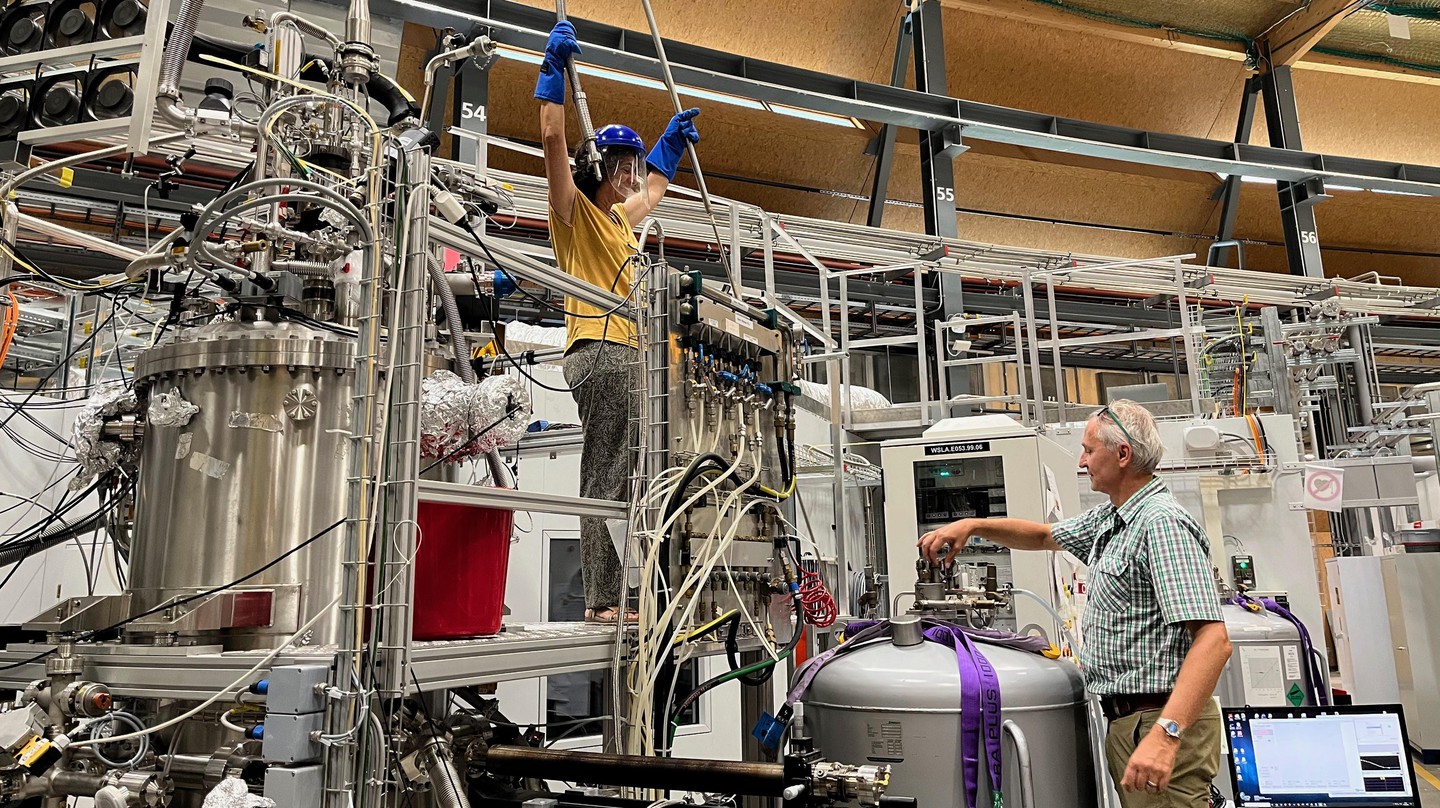
Dr Cinthia Piamonteze and Dr Juraj Krempasky working on an experiment of the study at the Paul Scherrer Institut. Credit: Dominik Kriegner (FZU)

Strange magnetic material could make computing energy-efficient

— A research collaboration co-led by EPFL has uncovered a surprising magnetic property of an exotic material that might lead to computers that need less than one-millionth of the energy required to switch a single bit.

All news