
Indiciary Visualization as Methodology and Digital
Reconstruction as Method for a Theory of Operative Art History.
Filippo Fanciotti | Doctoral research
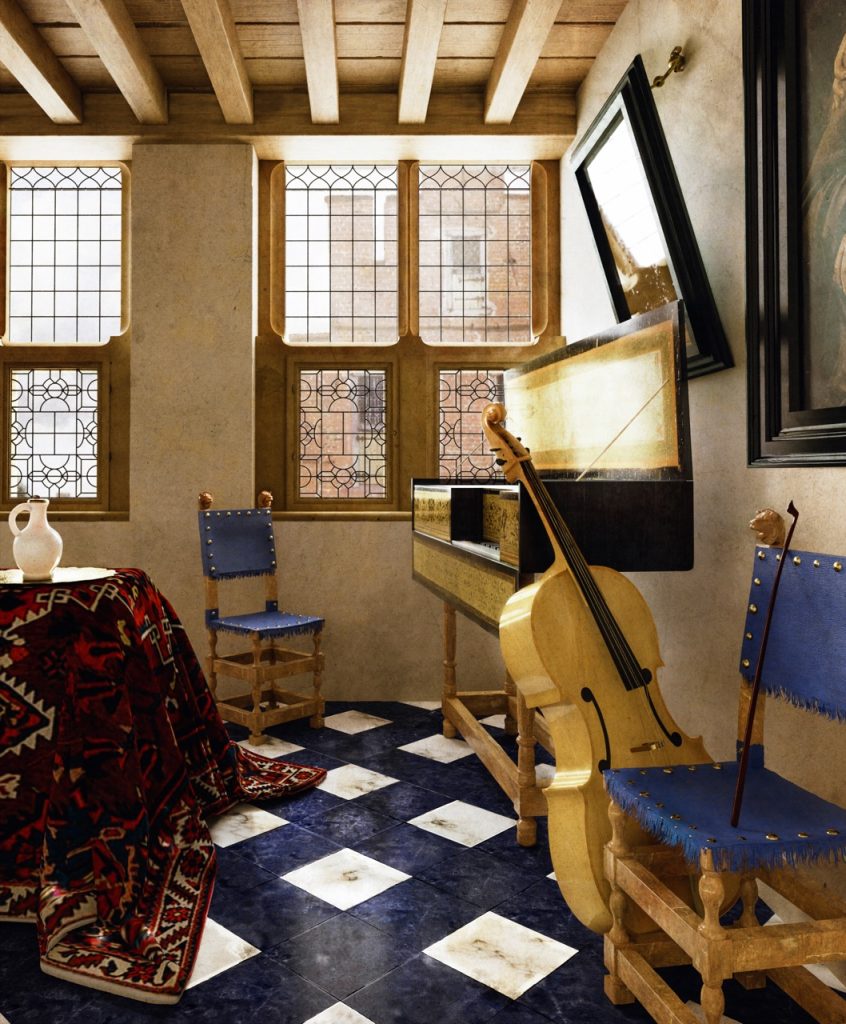
This research proposes a theoretical framework, a methodological perspective, and an operative method for analyzing depicted architecture (architectura depicta) through the tools of digital visualization. Starting from the hypothesis that also domestic interior scenes, whether from genre painting or broader figurative traditions, encode a culturally situated architectural discourse, the study challenges the conventional view of such images as passive backgrounds. Instead, it argues that the represented architectural envelope actively constructs the scene, mediates social meanings, and encodes the artist’s narrative into the expression of a collective imagery.
The research object unfolds through a five-phase reconstruction method designed to extract, verify, and reinterpret latent data embedded in these images. Each phase produces a specific dataset whose progressive elaboration transforms the painting into an operative laboratory for hypothesis testing and for opening a dialogue with other methodological approaches. The aim is not merely to reproduce the image, but to reconstruct the conditions that made it possible, thus repositioning visualization from a technical toolset to a critical discipline.
The methodological reflection is supported by three case studies selected to stress the method and maximise its consistency across different figurative traditions. Taken together, they show how architectural visualization can operate within art-historical inquiry, reconnecting it with architectural design (storia operativa), research and pedagogy.
The result is a renewed disciplinary space in which the architect acts as an operative intellectual, capable of producing critical knowledge through reading and speaking in images, that is, through their own language. In this way, architects can re-enter the artistic debate by offering original contributions rooted in their professional bias and maintain their role as critics within a new digital turn marked by the rise of AI.