Predict Lab Student Projects

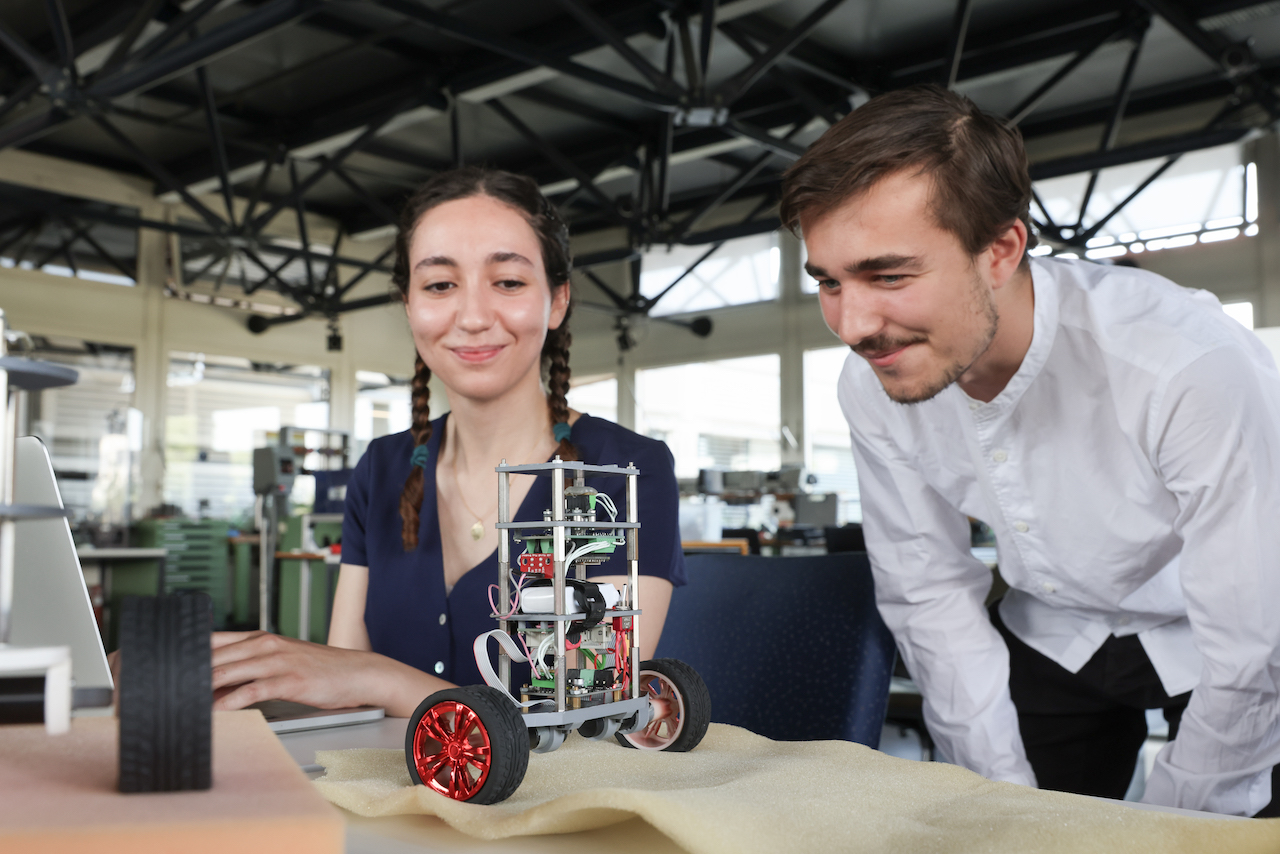
Bachelor project : Mini-segway racing

We regularly run student projects at the bachelor and master levels. We update the list of offered projects below before each term.

If you’re an EPFL team that would benefit from better control, please do contact us, as we do regularly run projects with a number of teams.

If you have a project in control or robotics that you’re excited about, please get in touch and we can try and make it work!

ALT

The Industrial Internet of Things (IIoT) generates vast quantities of data from interconnected sensors and devices. To utilize the full potential of this data, it’s essential to go beyond individual sensor readings and understand the complex relationships between them. These relationships can be diverse: sensors may monitor specific equipment, while actuators directly control or operate parts of a process. Graph Neural Networks (GNNs) are powerful tools to model complex sensor networks, leveraging relationship information typically lost in traditional machine learning approaches.

Analyzing IIoT data without considering sensor relationships can lead to missed insights and suboptimal decision-making. By inferring a graph structure from an IIoT sensor network, we create a structure capable of representing these relationships. GNNs, by learning directly from this graph, can model and distinguish between different relationship types (“monitors,” “operates,” etc.), leading to more accurate and interpretable predictions, fault/anomaly detections, and diagnostics. This thesis aims to bridge this gap, developing methods to capture sensor relationships and leverage GNNs for their analysis.

Thesis Goal

This thesis aims to develop a framework for inferring sensor networks from raw IIoT data and applying GNNs to perform downstream tasks such as predictive maintenance and fault diagnosis. The goal is to bridge the gap between raw data and actionable insights, optimizing real-time decision-making in the industrial sector. By focusing on the integration of knowledge graphs and GNNs, the thesis seeks to demonstrate the viability and benefits of a combined approach in handling the complexity and scale of data in IIoT environments.

Requirements

– Good knowledge of Python programming.

– Good understanding of fundamental machine learning concepts.

– Experience with GNNs is advantageous.

Professor(s)
Mengjie Zhao (Laboratoire d’automatique 3), Colin Neil Jones
Administration
Barbara Marie-Louise Frédérique Schenkel
Site
https://sirop.org/app/6bd357eb-d958-4b1c-b40d-ef3ee4d31176?_k=VXrSaqjZ7UDEUApl