
Workshops | Research Focuses
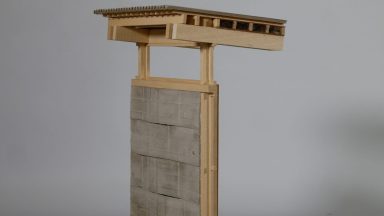
Tremplin de saut à ski des JO d’hiver de Grenoble (1968)
Saint-Nizier-du-Moucherotte, Isère, France / Pierre Dalloz (arch.)
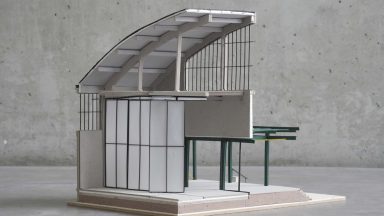
La Halle Tapponnier (1929)
Annemasse, Haute-Savoie, France / Hennebique (ing.)

Les premiers bâtiments de l’EPFL (1971-84)
Ecublens Canton de Vaud, Suisse / Zweifel + Strickler + Associés (arch.)
Research | Focuses
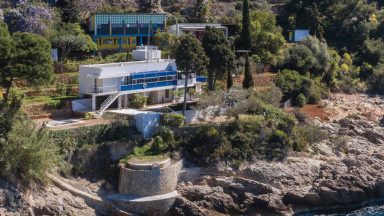
E-1027 (1929)
Roquebrune-Cap-Martin, Alpes-Maritimes, France / Eileen Gray et Jean Badovici (arch.)
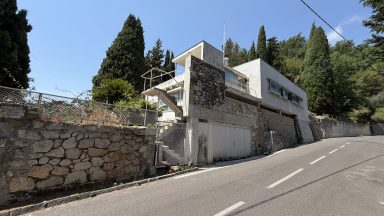
Tempe a Pailla (1932)
Menton, Alpes-Maritimes, France / Eileen Gray (arch.)

Les Colombières (1927)
Menton, Alpes-Maritimes, France / Ferdinand Bac (arch.)
Teaching and research in the design studio, both within the course itself and as part of the supervision of Master’s Projects, contribute to developing an informed understanding of the existing built environment. This means being able to situate a building within its historical, economic, and social context; assess its architectural, material, and construction characteristics; and understand its technical potential and weaknesses.
Revealing the potential of an existing building, whether protected or ordinary, requires a preliminary study. The first step is therefore to become familiar with the specific methods and tools of heritage assessment. Mastering these methods, which the teaching provided within the laboratory seeks to introduce students to, contributes to a better understanding of what is already there, with a view to possible intervention. It is also important to recognise that this study constitutes an integral part of the project, rather than merely a preliminary phase devoid of conceptual intent. Heritage assessment encompasses the documentation and survey of the existing building, its historical study and assessment of authenticity, as well as its technical and condition assessment. Successfully carrying out such a study requires a multidisciplinary approach involving specialists such as engineers, contractors, and researchers. This phase of investigation also provides an opportunity to question the ways in which architecture and landscape are represented. Furthermore, it is important to emphasise that these methods and tools do not constitute merely a fixed body of established procedures, but rather a contemporary, experimental, and ongoing field of research, which the adher laboratory actively explores.
Intervention in the existing built environment is an old practice, yet one that is resolutely contemporary and closely aligned with today’s ecological and social challenges. The functional obsolescence of part of the twentieth-century heritage is itself an important lesson. It draws our attention to the capacity of what already exists—and of what we build—to adapt. This adaptability is, of course, understood in programmatic terms, but also in environmental terms. The location of some of these buildings in upland areas, for example, requires us to engage with the issue of climate change, which is particularly tangible in such environments. The location of others in city centres, in neighbourhoods that are sometimes undergoing major redevelopment, requires us to reflect on the contemporary challenges of transformation in an urban context and, once again, on those arising from climate change. Recognising its effects should make us aware of our responsibilities and encourage us to act by considering the existing built environment as a resource, in order to demolish less and build less.
Only reactivation through use can ensure the long-term survival of what already exists. Reprogramming therefore constitutes a preliminary phase of reflection that is essential to rehabilitation. This is followed by the various forms of intervention in the existing built environment, ranging from restoration to creation, with transformation in between. These should not be determined a priori, but should instead emerge from the conclusions of the heritage assessment, particularly those concerning the heritage value of the existing building. The potential of heritage is only concretely revealed through such interventions. In order to serve present-day needs, what already exists may therefore require total or partial restoration, involve the transformation of one of its parts, or even call for new construction, in the form of an extension, for example. Beyond the type of intervention itself, there is also the question of the design approach. Indeed, each type of intervention can take different forms in order to contribute as effectively as possible to a coherent project. These interventions must be contextualised—that is, defined in relation to the site, materials, construction techniques, and so forth—and integrated into the work of numerous partners, including specialised engineers and contractors.
Ultimately, the common objective of this teaching and research is to share and debate a conviction: the potential of heritage. In doing so, the aim is to enable each individual to fully and consciously reveal, through their future projects, the potential of what is already there.