
By Beatrice Lugli, Head of Outreach & Ziad Sahlab, President
On 21–22 April 2026, Geneva hosted the Regional Forum on Sustainable Development (RFSD) with the theme “Transforming Together: Innovative and Equitable Actions for the SDGs”. With fewer than five years left to reach the 2030 targets, the Forum brought together governments and stakeholders to push forward on the SDGs.
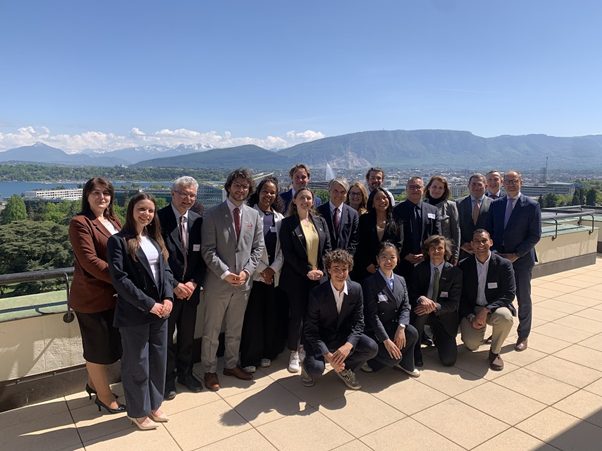
On the margins of the RFSD, SPAN participated in “Rethinking Sustainable Development Beyond 2030: A Student–Diplomacy Professionals’ Dialogue”, an event organised by EPFL and the University of Geneva in collaboration with UNECE (United Nations Economic Commission for Europe), designed to bridge the gap between students, academic institutions, and the diplomats and international organisations shaping these conversations. Ziad (SPAN’s president) and I (head of outreach) each joined a roundtable: his on ethics, science diplomacy and emerging technologies; mine on AI and sustainable development. What follows draws on both.
What We Talked About
AI as a tool, not a replacement. AI has real potential to improve lives, helping doctors detect cancer earlier, enabling farmers to optimise crops through weather prediction, expanding access to healthcare where it doesn’t exist. However, if productivity gains from AI aren’t redistributed, we risk displacing workers at a pace no government is equipped to absorb. The technology is neutral; the choices around it are not.
The policy gap is real and needs to be closed proactively. Both tables returned to this. Regulation tends to be reactive, and by the time a response is drafted, the technology has moved on. Approaches discussed to address this included embedding technical experts in ministry-level teams, pre-defined “red lines” that automatically trigger regulatory action, and formally integrating scientific consultants into policy meetings. Crucially, frameworks should assume these technologies will be misused and build in safeguards from the start, not as an afterthought.
International institutions need to keep pace. The UN has a global AI dialogue planned for July 2026 and a summit in Geneva in 2027, but whether traditional multilateral frameworks can move fast enough remains an open question. The selective sharing of advanced AI models, often restricted to major tech firms on cybersecurity grounds, was flagged as a concrete transparency problem. Bridging the gap between commercially driven AI developers and the public interest will require academic–policymaker collaboration to ensure safety testing, benchmark-setting, liability frameworks, and transparent risk reporting.
Academia’s role is changing. Scientists can no longer work in isolation. Universities are expected not just to generate research but to curate and translate it into accessible knowledge and actionable policy. Both tables noted the gap between the proliferation of introductory AI courses and the scarcity of deeper, applied training for students, postdocs, and policy professionals alike. The goal isn’t to use AI to do students’ work; it’s to build the critical thinking skills to use it well.
Intergenerational collaboration isn’t optional. Young people who have grown up with these tools aren’t just future policy beneficiaries, they can make policy better. Defining what skills are needed at the science-policy interface requires exactly this kind of dialogue across generations. The event itself was a demonstration of what that looks like in practice.
Why This Kind of Dialogue Matters
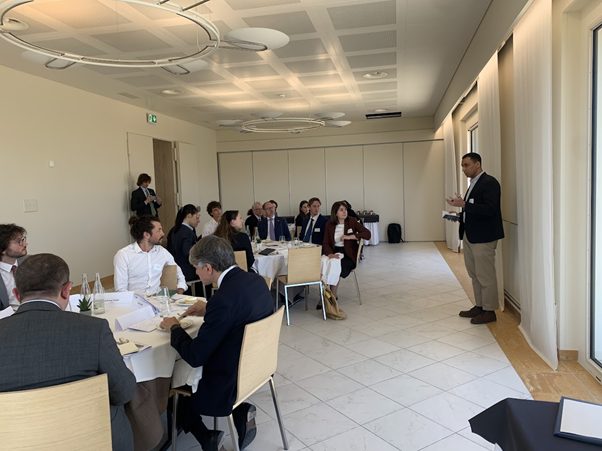
Events like this don’t produce policy changes by themselves. But they build connections and a shared language that makes the harder conversations more productive. Tackling the ethical and regulatory challenges of emerging technologies cannot be done in silos, it requires sustained, multidisciplinary engagement among students, scientists, and policymakers. SPAN’s role is to show up in these spaces with something to contribute.
The 2030 deadline is approaching fast. Meeting it will require more than technical solutions, it will require governance structures that are honest about risk, inclusive of different voices, and built before the next wave arrives, not after.