SoNo Lab
Led by architect and civil engineer Assistant Professor Aziza Chaouni, the SoNo Lab (South–North Laboratory for Sustainable Construction and Conservation) is an architecture and construction research laboratory at EPFL dedicated to advancing sustainable building practices and heritage conservation through equitable, reciprocal collaboration between the Global South and the Global North.
The lab is housed at EPFL’s Smart Living Lab in Fribourg, a leading research environment for sustainable construction and the built environment. SoNo benefits in particular from access to the Hall Bleue, a large-scale experimental space dedicated to full-scale prototyping, testing, and assembly. The lab will also be integrated into the Smart Living Lab’s forthcoming state-of-the-art new building, which will further strengthen its capacity for interdisciplinary research, experimentation, and collaboration across architecture, engineering, and environmental sciences.
SoNo’s research is grounded in design, prototyping, testing, and implementation, bridging academic inquiry with real-world application. Rather than remaining speculative, the lab develops and evaluates construction and conservation models in situ, ensuring that architectural research is both scientifically rigorous and socially impactful. By working directly within diverse environmental, cultural, and economic contexts—particularly across Africa and the Global South—SoNo positions architecture as an active agent of transformation.
At its core, SoNo frames South-North knowledge exchange as a mutually beneficial process. Contexts of scarcity, climate vulnerability, and cultural resilience in the Global South serve as powerful laboratories for innovation, generating insights that are increasingly relevant to the Global North as it confronts climate change, resource constraints, and social inequity. Conversely, technologies and methodologies developed in the Global North are critically reassessed and adapted by the lab to ensure they are locally grounded, culturally resonant, and socially just. This approach moves beyond one-directional knowledge transfer toward the co-production of shared architectural futures. The ambition of SoNo is to combine the genius loci of places with innovative materials, construction techniques, and circular practices. The lab seeks to develop low-carbon, resource-efficient solutions that address pressing social needs such as affordable housing, climate resilience, and cultural continuity. Working across scales—from material assemblies and building components to neighborhoods, cities, and heritage landscapes—SoNo produces strategies that are both context-sensitive and globally transferable, in close collaboration with other EPFL laboratories and research platforms.
One of SoNo’s inaugural research initiatives focuses on the development of low-cost housing prototypes across the African continent. These dwellings are co-designed with regional academic and institutional partners, tested through simulation and full-scale prototyping at the Smart Living Lab in Fribourg, constructed on site, and evaluated through post-occupancy and performance studies. The objective is to generate adaptable, replicable models for sustainable housing that respond to climate, material availability, and social practices.
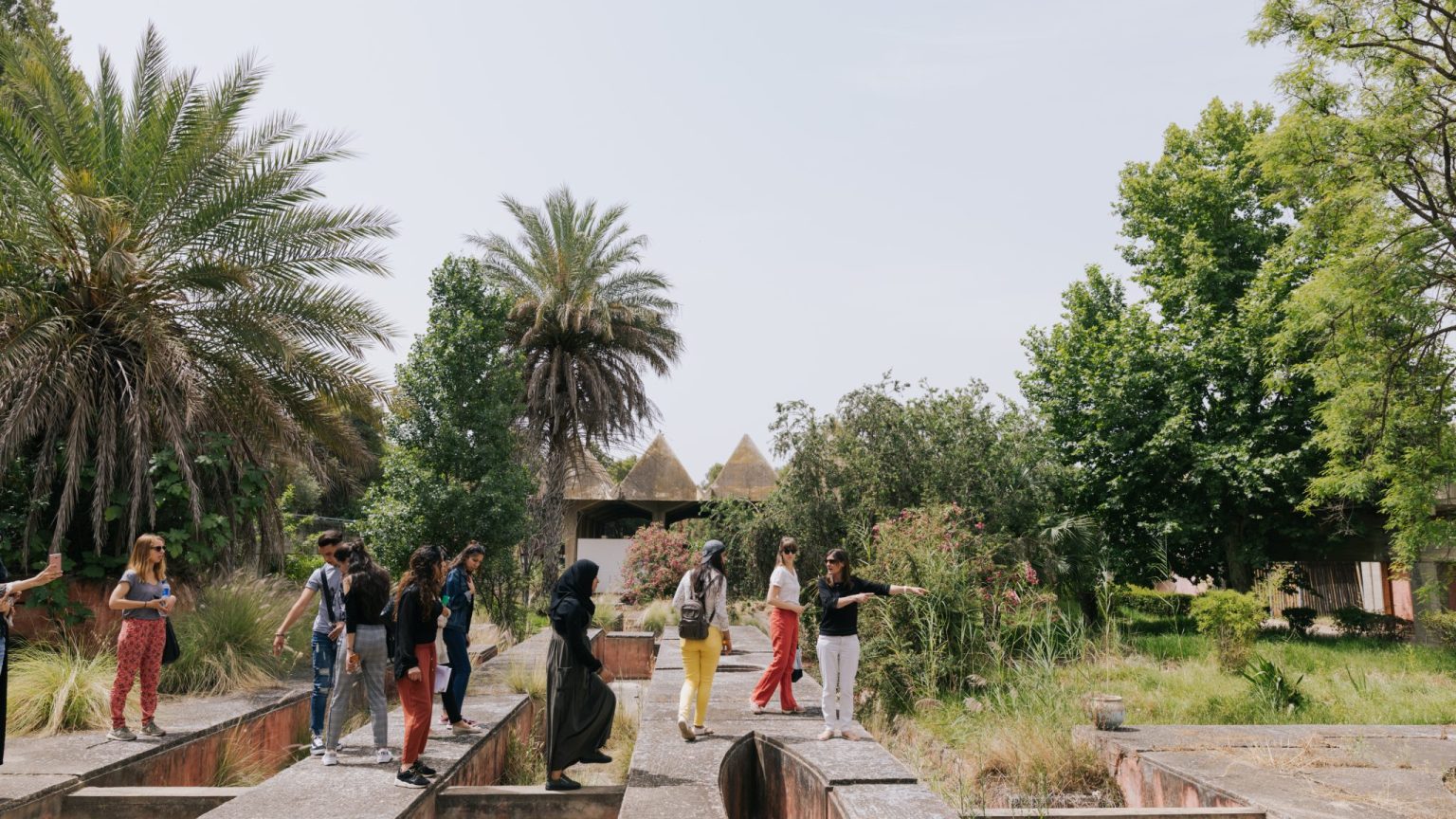
In parallel, SoNo advances research on the conservation and adaptive reuse of architectural heritage in the Global South, with a particular focus on post-independence African modern heritage. This under-documented body of work often integrates sophisticated passive environmental strategies that remain highly relevant to contemporary construction. Through documentation, analysis, repair, and retrofit research, the lab develops conservation approaches that integrate traditional knowledge, local materials, and contemporary technologies, enabling heritage sites to remain socially and economically active.
Capacity building is a central pillar of SoNo’s mission. The lab is committed to training architecture and engineering students in the Global South in sustainable construction and conservation through a range of pedagogical formats, including intensive short courses bringing together EPFL students and partner institutions, online training modules, and professional development programs developed in collaboration with organizations such as the World Monuments Fund and other international partners.
Dissemination is integral to the lab’s work. SoNo shares its research through its website and digital platforms, academic publications, conferences, books, exhibitions, and public workshops, including outreach programs with schools in Switzerland. These activities ensure that knowledge generated by the lab reaches academic, professional, and public audiences alike.
Through its dual focus on construction and conservation, SoNo positions itself as a hub at EPFL for rethinking architecture’s role in an interconnected world—where sustainability, equity, and cultural continuity are inseparable challenges. By combining scientific rigor with social responsibility, the lab contributes to shaping an architectural practice that is innovative yet grounded, experimental yet pragmatic, and global in scope while deeply rooted in local realities.
The lab is housed at EPFL’s Smart Living Lab in Fribourg, a leading research environment for sustainable construction and the built environment. SoNo benefits in particular from access to the Hall Bleue, a large-scale experimental space dedicated to full-scale prototyping, testing, and assembly. The lab will also be integrated into the Smart Living Lab’s forthcoming state-of-the-art new building, which will further strengthen its capacity for interdisciplinary research, experimentation, and collaboration across architecture, engineering, and environmental sciences.
SoNo’s research is grounded in design, prototyping, testing, and implementation, bridging academic inquiry with real-world application. Rather than remaining speculative, the lab develops and evaluates construction and conservation models in situ, ensuring that architectural research is both scientifically rigorous and socially impactful. By working directly within diverse environmental, cultural, and economic contexts—particularly across Africa and the Global South—SoNo positions architecture as an active agent of transformation.
At its core, SoNo frames South-North knowledge exchange as a mutually beneficial process. Contexts of scarcity, climate vulnerability, and cultural resilience in the Global South serve as powerful laboratories for innovation, generating insights that are increasingly relevant to the Global North as it confronts climate change, resource constraints, and social inequity. Conversely, technologies and methodologies developed in the Global North are critically reassessed and adapted by the lab to ensure they are locally grounded, culturally resonant, and socially just. This approach moves beyond one-directional knowledge transfer toward the co-production of shared architectural futures. The ambition of SoNo is to combine the genius loci of places with innovative materials, construction techniques, and circular practices. The lab seeks to develop low-carbon, resource-efficient solutions that address pressing social needs such as affordable housing, climate resilience, and cultural continuity. Working across scales—from material assemblies and building components to neighborhoods, cities, and heritage landscapes—SoNo produces strategies that are both context-sensitive and globally transferable, in close collaboration with other EPFL laboratories and research platforms.
One of SoNo’s inaugural research initiatives focuses on the development of low-cost housing prototypes across the African continent. These dwellings are co-designed with regional academic and institutional partners, tested through simulation and full-scale prototyping at the Smart Living Lab in Fribourg, constructed on site, and evaluated through post-occupancy and performance studies. The objective is to generate adaptable, replicable models for sustainable housing that respond to climate, material availability, and social practices.
In parallel, SoNo advances research on the conservation and adaptive reuse of architectural heritage in the Global South, with a particular focus on post-independence African modern heritage. This under-documented body of work often integrates sophisticated passive environmental strategies that remain highly relevant to contemporary construction. Through documentation, analysis, repair, and retrofit research, the lab develops conservation approaches that integrate traditional knowledge, local materials, and contemporary technologies, enabling heritage sites to remain socially and economically active.
Capacity building is a central pillar of SoNo’s mission. The lab is committed to training architecture and engineering students in the Global South in sustainable construction and conservation through a range of pedagogical formats, including intensive short courses bringing together EPFL students and partner institutions, online training modules, and professional development programs developed in collaboration with organizations such as the World Monuments Fund and other international partners.
Dissemination is integral to the lab’s work. SoNo shares its research through its website and digital platforms, academic publications, conferences, books, exhibitions, and public workshops, including outreach programs with schools in Switzerland. These activities ensure that knowledge generated by the lab reaches academic, professional, and public audiences alike.
Through its dual focus on construction and conservation, SoNo positions itself as a hub at EPFL for rethinking architecture’s role in an interconnected world—where sustainability, equity, and cultural continuity are inseparable challenges. By combining scientific rigor with social responsibility, the lab contributes to shaping an architectural practice that is innovative yet grounded, experimental yet pragmatic, and global in scope while deeply rooted in local realities.